


[Public Comment Submission] World Health Organization (WHO) Consultations on the Reform of the Global Health Architecture (GHA) (June 10, 2026)
date : 6/17/2026

![[Public Comment Submission] World Health Organization (WHO) Consultations on the Reform of the Global Health Architecture (GHA) (June 10, 2026)](https://hgpi.org/en/wp-content/uploads/sites/2/HGPI_GHA-Reform-Consultation-Input_20260611.png)
Health and Global Policy Institute (HGPI) submitted its input to two rounds of written consultations conducted by the World Health Organization (WHO) on the reform of the Global Health Architecture (GHA).
The global health architecture encompasses the overall system of actors, including countries and governments, United Nations organizations, global health institutions and partnerships, regional bodies, civil society, academia, philanthropy, and the private sector that guide, coordinate, finance, and implement efforts to protect and improve health worldwide. While the current GHA has contributed to significant achievements in global health, it has not kept pace with evolving national health sovereignty, regional capacities, changing disease burdens, advances in science and technology, and a shifting financing landscape. These challenges are compounded by fragmentation, duplication, misaligned priorities, and persistent power imbalances.
In response, the WHO Executive Board at its 158th session (February 2026) requested the Director-General to design a proposal on a joint, inclusive, transparent, and time-bound process to support transformation of the GHA, hosted by WHO and led by Member States. This process is also closely linked to the UN80 Initiative, which calls for substantive reform of the United Nations system. To guide the design of the reform process, WHO conducted two rounds of written consultations with Member States and other global health stakeholders. The first round sought input on the purpose, scope and principles; functional areas for proposed workstreams; coordination approach; anticipated timeline and phases; and stakeholder engagement strategy. The second round built on the first and sought further input on purpose, principles and objectives; process governance and set-up; stakeholder participation; timeline and phases; and resources and risks. (The call for public comments is now closed.)
HGPI’s input draws on over two decades of experience as an independent, non-profit, non-partisan health policy think tank. It reflects insights from HGPI’s work on citizen- and patient-centered health policy, multi-stakeholder deliberation, and global health governance.
Over the past 20 years, HGPI has developed and applied a three-stage policy methodology:
- Agenda Setting: Identifying emerging issues of social importance before they reach mainstream policy discourse
- Agenda Shaping: Creating sustained spaces where diverse stakeholders — particularly citizens and patients — can engage on an equal footing
- Agenda Delivery: Advocating persistently until recommendations are reflected in actual policy
The perspectives contributed to these consultations are grounded in this methodology.
Key Points of HGPI’s Inputs
- Citizen- and Patient-Centeredness: Patient and Public Involvement (PPI) should be systematically embedded across all workstreams, ensuring meaningful participation in agenda-setting and decision-making rather than mere consultation.
- Adaptation to Rapid Structural Changes: Governance must adapt to technological innovation (AI, synthetic biology), climate change, and geopolitical shifts.
- Lived Experience as Evidence: Lived experience of patients, communities, and frontline health workers should be explicitly recognized as legitimate evidence alongside scientific data to ensure legitimacy.
- Meaningful Social Participation: The reform should move beyond formal consultation by providing participation support, transparent feedback mechanisms, and recognizing diversity within civil society.
- Real-World Impact at Local Levels: Global decisions must translate coherently into national and local implementation, delivering tangible improvements to communities and individuals.
This proposal was submitted for discussion at the 79th World Health Assembly (WHA79), held in Geneva from 18–23 May 2026, where a joint process for Global Health Architecture Reform was endorsed. HGPI will continue to contribute perspectives from Japan and the Asia-Pacific region on global health governance and to support efforts to bridge technical evidence with the lived experiences of patients and communities.
Related Posts
-
2026-06-11
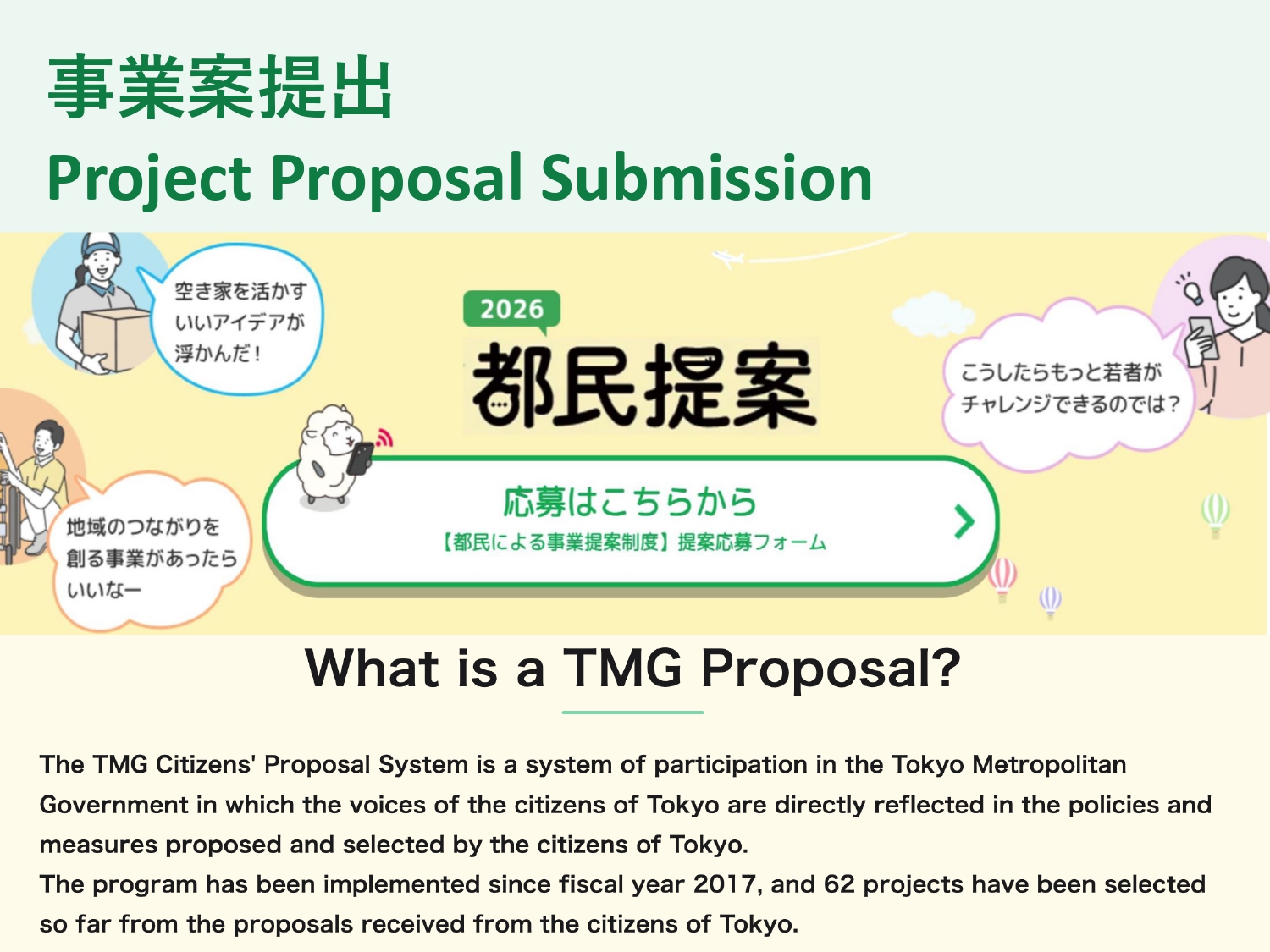
[Public Comment Submission] Planetary Health Project “FY2026 Tokyo Metropolitan Citizens’ Project Proposal Initiative” Project Proposal (May 31, 2026)
-
2026-05-15
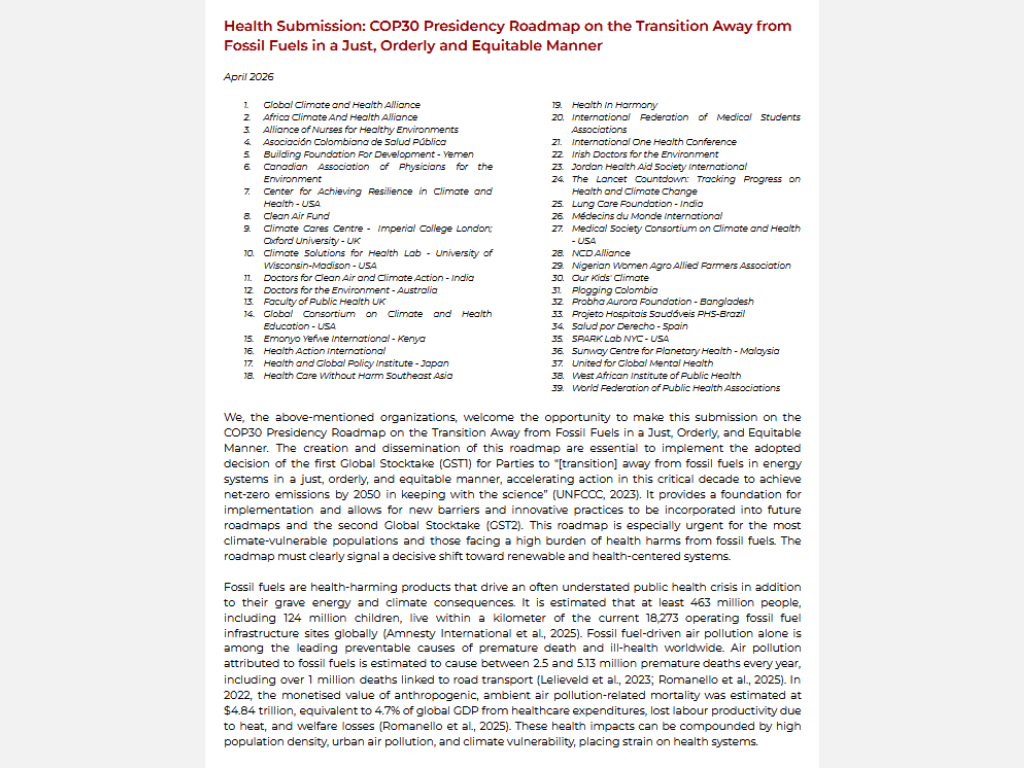
[Announcement] HGPI Endorsed “GCHA Health Submission: COP30 Presidency Roadmap on the Transition Away from Fossil Fuels in a Just, Orderly and Equitable Manner” (May 15, 2026)
-
2026-05-07
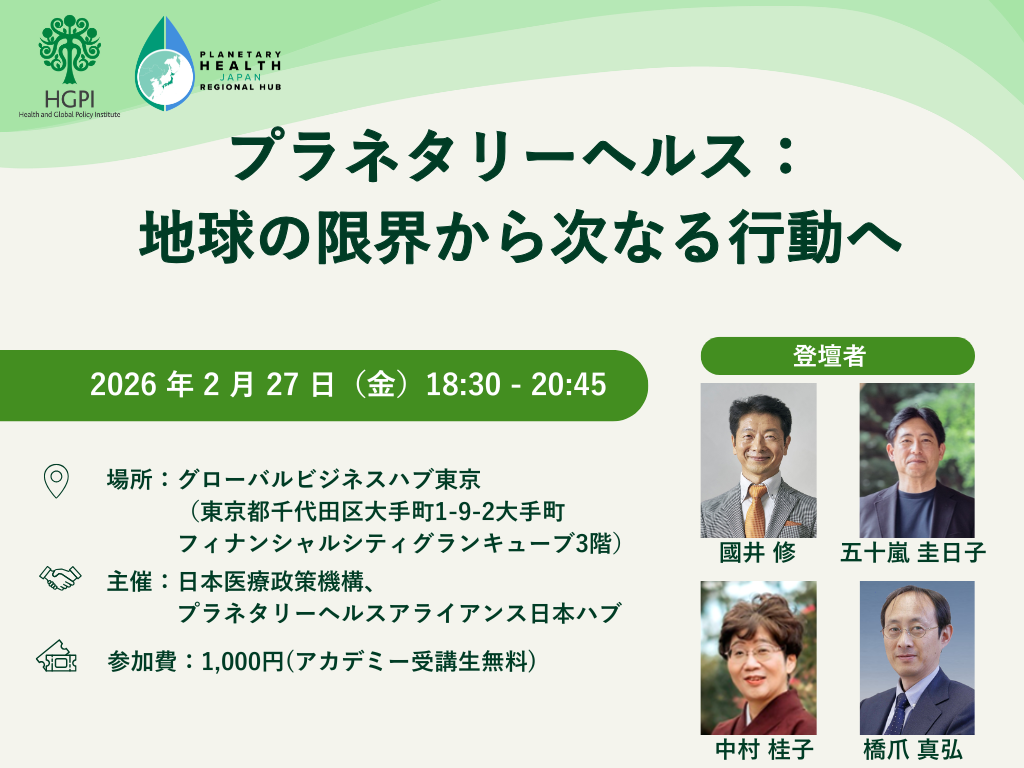
[Event Report] Planetary Health Academy In-Person Event “Planetary Health: From Planetary Boundaries to the Next Actions” (February 27, 2026)
-
2025-10-09
[Announcement] Endorsement of the Open Letter “The UN at 80: Every Human Deserves a Longer, Healthier Future” (September 30, 2025)
-
2026-04-15
[HGPI Policy Column] (No.70) — From the Planetary Health Project “Part 17: The Lancet Countdown: A ‘Lifeline’ for Health and Economy Brought about by Climate Action”
Top Research & Recommendations Posts
Featured Posts
-
2026-05-18
[Registration Closed] Kick-off Panel Discussion “From Africa and Japan, Drawing from Perspectives Around the World:A Platform for Cultivating a Philosophical Health Dialogue Together” (June 15, 2026)
![[Registration Closed] Kick-off Panel Discussion “From Africa and Japan, Drawing from Perspectives Around the World:A Platform for Cultivating a Philosophical Health Dialogue Together” (June 15, 2026)](https://hgpi.org/en/wp-content/uploads/sites/2/HGPI_20260615_Eyecathch_panel-discussion-From-Japan-and-Africa-in-Discussion-with-the-World_2.png)
-
2026-08-28
[Announcement] The 3rd Kiyoshi Kurokawa Award: Call for Nominations (Deadline: November 30, 2026)
![[Announcement] The 3rd Kiyoshi Kurokawa Award: Call for Nominations (Deadline: November 30, 2026)](https://hgpi.org/en/wp-content/uploads/sites/2/Kiyoshi-Kurokawa-Award_3rd_nominations_eyecatch_caseB_ENG_web_20260929_v0.5.jpg)
-
2026-09-01
[Registration Closed] HGPI Salon 2025-2026 Looking Ahead to the Future of Japan’s Social Security System “Session 6: Japan’s Health Policy through the Lens of Global Security” (October 13, 2026)
![[Registration Closed] HGPI Salon 2025-2026 Looking Ahead to the Future of Japan’s Social Security System “Session 6: Japan’s Health Policy through the Lens of Global Security” (October 13, 2026)](https://hgpi.org/en/wp-content/uploads/sites/2/HGPISalon2025-20266.png)
-
2026-09-17
[Registration Open] (Webinar) The 145th HGPI Seminar “Toward Better AMR Measures at Elderly Care Facilities—Considering Infectious Disease Control in a Super-Aged Society From a Policy Perspective” (October 27, 2026)
![[Registration Open] (Webinar) The 145th HGPI Seminar “Toward Better AMR Measures at Elderly Care Facilities—Considering Infectious Disease Control in a Super-Aged Society From a Policy Perspective” (October 27, 2026)](https://hgpi.org/en/wp-content/uploads/sites/2/HGPIseminar145.png)
-
2026-10-06
[Registration Open] (Webinar) The 146th HGPI Seminar “How We Can Build a Society That Supports Choices Around Organ Donation: Exploring Decision-Making by Citizens and a Multi-Layered Approach Through Strategic Social Marketing” (November 9, 2026)
![[Registration Open] (Webinar) The 146th HGPI Seminar “How We Can Build a Society That Supports Choices Around Organ Donation: Exploring Decision-Making by Citizens and a Multi-Layered Approach Through Strategic Social Marketing” (November 9, 2026)](https://hgpi.org/en/wp-content/uploads/sites/2/HGPI_20261001_Eyecatch_HGPIseminer-146th-1.png)
