


[Registration Closed] Second Session of the Planetary Health Academy (Starts September 2026)
date : 7/22/2026
Tags: Planetary Health

![[Registration Closed] Second Session of the Planetary Health Academy (Starts September 2026)](https://hgpi.org/en/wp-content/uploads/sites/2/HGPI_20260828_PLH-Academy-2_v.02.2.png)
Health and Global Policy Institute (HGPI) is now accepting applications for the second term of the Planetary Health Academy.
■ Application Deadline: Monday, September 7, 2026; 23:59 JST (Extended)
■ Course Duration: Friday, September 25, 2026 – Wednesday, December 16, 2026
*Please note that this program is available in Japanese only.
Human activities are affecting the Earth’s natural systems more rapidly than ever before, resulting in significant changes to our health as well. Due to these challenges, the concept of planetary health has gained traction. Planetary Health is an interdisciplinary field that transcends traditional boundaries, examining how environmental changes profoundly impact human health while pioneering sustainable solutions that benefit both people and our planet. In particular, climate change, biodiversity loss, pollution of air, water, and soil, and shortages of food and water resources are threatening the foundation of public health, raising concerns about their impact on future generations. The complexity of these challenges calls for approaches that draw from various perspectives and multidisciplinary collaboration.
The philosophy behind planetary health is not new to Japan. Long before the term was coined, a sense of people and nature as intrinsically linked rather than set apart ran through daily life, carried in practices such as satoyama, the tended landscapes where farming and biodiversity sustain one another, and satoumi, coastal waters managed so that communities and marine ecosystems both thrive. That sensibility, which resists any firm line between human welfare and the health of the natural world, sits close to what planetary health is today.
Recent international developments have brought the stakes into sharper focus. In July 2025, the International Court of Justice (ICJ) affirmed that protecting the climate is an obligation under international law, and that the adverse effects of climate change can impair the exercise of human rights, including the rights to life and health. Health has also become an enduring agenda in international climate policy since the 28th Conference of the Parties (COP28) declaration. The Belém Health Action Plan was launched at COP30 in 2025, and resilient health systems are expected to be among the priorities at COP31 in Antalya, Türkiye. As the climate and health discourse continues to gain traction, both a planetary health perspective and the people needed to carry this forward into practice will be in greater demand.
The Planetary Health Academy is an educational program launched by Health and Global Policy Institute (HGPI) and the Planetary Health Alliance Japan Hub (PHA-J) in 2025, anchored in HGPI’s work on health policy and built to deepen understanding and public awareness of how health and the environment are interconnected. The first term brought together about 40 participants from medicine, public health, the private sector, academia, and civil society, building knowledge and networks through interactive learning and laying the groundwork for advancing planetary health discussions both domestically and internationally. This second term looks ahead to the Planetary Health Annual Meeting 2027 (PHAM 2027), to be held in Tokyo, aiming to generate momentum and build networks for anticipated collaboration.
■ Organizers
- Health and Global Policy Institute (HGPI)
- Planetary Health Alliance Japan Hub (PHA-J)
*Applicants will be asked to answer several open-ended questions. Responses will be shared with the organizers and lecturers to better understand your expectations and what you hope to learn from the academy.
■ Course Contents
| Date (2026) | Theme | Lecturer (Title omitted) | |
|---|---|---|---|
| 1 | Friday, September 25 18:30-20:00 |
Introduction to Planetary Health | Joji Sugawara (Vice-President, Health and Global Policy Institute) Chiho Watanabe (Professor, Interfaculty Initiative in Planetary Health, Nagasaki University / President, Planetary Health Alliance Japan Hub) |
| 2 | Wednesday, October 7 18:30-20:00 |
Climate Change and Health | Masahiro Hashizume (Professor, Department of Global Health Policy, Graduate School of Medicine, The University of Tokyo / Professor & Dean, School of Tropical Medicine and Global Health, Nagasaki University) |
| 3 | Wednesday, October 21 18:30-20:00 |
Environmental Pollution and Health | Yu Ait Bamai (Specially Appointed Associate Professor, Hokkaido University Center for Environmental and Health Sciences (CEHS); WHO Collaborating Centre for Environmental Health and Prevention of Chemical Hazards) |
| 4 | Wednesday, November 4 18:30-20:00 |
Biodiversity and Health | Masashi Soga (Associate Professor, Graduate School of Agricultural and Life Sciences, The University of Tokyo) |
| 5 | Wednesday, November 18 18:30-20:00 |
Planetary Health in Practice 1: Global Water, Sanitation, and Hygiene (WASH) and Co-Creation |
Taro Yamauchi (Professor, Faculty of Health Sciences, Hokkaido University) |
| 6 | Wednesday, December 2 18:30-20:00 |
Planetary Health in Practice 2: Urban Planning, Cities, and Communities |
Keiko Nakamura (Emeritus Professor, Institute of Science Tokyo / President, Promotion Committee for Healthy Cities) |
| 7 | Wednesday, December 16 18:30-20:00 |
Planetary Health in Practice 3: Clinical Practice, Lifestyle, and Consumer Behavior |
Kei Yokota (Director of Emergency Department, Department of General Medicine, Okayama Kyoritsu Hospital / Board Member, Green Practice Japan) |
■ Format
- Course period: Friday, September 25, 2026 – Wednesday, December 16, 2026 (7 sessions, every other week)
- Time: 18:30–20:00 (90 minutes)
- Format: Online (via Zoom Meeting)
- Language: Japanese only
- Participation fee: JPY 45,000
- Capacity: 30 participants
- Application deadline: Monday, September 7, 2026; 23:59 JST (Extended)
- Payment deadline: Monday, September 21, 2026; 23:59 JST (Extended)
■ Recommended for:
Those interested in planetary health who can commit to the full program — 7 sessions over approximately 3 months. Open to participants from any background, including healthcare, public health, the private sector, academia, and civil society.
■ Participation Benefits
- Detailed summaries of each lecture
- Access to archived recordings (1 year)
- Certificate of Completion issued by HGPI and Planetary Health Alliance Japan Hub (requirements apply – see below)
- Opportunities to collaborate on and participate in future HGPI planetary health initiatives
- Expand your professional circle and forge meaningful ties with participants from diverse fields
■ Participation Requirements
This Academy is built on the premise of continuous participation and engagement with assignments — it is not intended to end with only attending the sessions. The items below are also the requirements for certificate issuance. Please confirm that you are able to commit to the following before applying:
- Attendance (at least 5 of the 7 sessions / attendance rate of 70% or higher)
- A short quiz after each session (to be completed within 1 week of each session / minimum 70% cumulative score across all 7 sessions)
- Presentation and submission of group work outcomes with fellow participants
Certificates of completion will be issued by HGPI and the Planetary Health Alliance Japan Hub to those who meet all three of the above requirements.
■ Lecturer Profiles
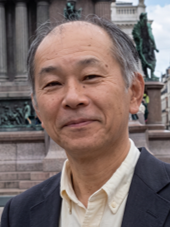 Chiho Watanabe
( Specially Appointed Professor, Interfaculty Initiative in Planetary Health, Nagasaki University / President, Planetary Health Alliance Japan Hub)
Professor Chiho Watanabe completed his coursework without degree from the University of Tokyo Graduate School of Medicine in 1989. He was appointed as Professor of Human Ecology at the University of Tokyo Graduate School of Medicine in 2005, and as President of the National Institute for Environmental Studies in 2017. He served as Professor and Executive Advisor to the President (Planetary Health), School of Tropical Medicine and Global Health, Nagasaki University from 2021 to 2022, and as Dean (first) for Interfaculty Initiative in Planetary Health and Professor of School of Tropical Medicine and Global Health from 2022 to 2023.He is Professor Emeritus of the University of Tokyo and holds a Doctor of Health Science degree. His other positions include President of the Planetary Health Alliance Japan Hub and Steering Committee Member of the Planetary Health Alliance (PHA), as well as former President of the Japanese Society of Health and Human Ecology (2017–2022), Chairman of the Society of Environmental Science (2021–2023), Associate Member of Section II of the Science Council of Japan, former Third Vice President of the Society for Human Ecology, and former Chair of the Human Ecology Section of the Ecological Society of America.
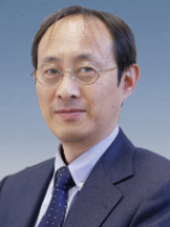 Masahiro Hashizume
(Professor, Department of Global Health Policy, Graduate School of Medicine, The University of Tokyo / Professor & Dean, School of Tropical Medicine and Global Health, Nagasaki University)
Professor Masahiro Hashizume is a physician and environmental epidemiologist. His research focuses on climate change and human health, particularly current impacts, future projections, adaptation strategies, and health co-benefits of mitigation policies. Trained in pediatrics in Tokyo, Japan, he obtained an MSc in Environmental Health and Policy and a Ph.D. from the London School of Hygiene and Tropical Medicine. Professor Hashizume served as a Lead Author of the IPCC Sixth Assessment Report and is a member of the WHO Technical Advisory Groups on Global Air Pollution and Health, as well as Climate Change and Environment in the Western Pacific Region.
 Yu Ait Bamai
(Specially Appointed Associate Professor, Hokkaido University Center for Environmental and Health Sciences (CEHS); WHO Collaborating Centre for Environmental Health and Prevention of Chemical Hazards)
Professor Yu Ait Bamai graduated from the Hokkaido Pharmaceutical University School of Pharmacy in 2002 and obtained a national pharmacist license in the same year. She completed a doctoral program in the Department of Public Health Sciences, Hokkaido University Graduate School of Medicine in 2014. After serving as a Research Assistant, Assistant Professor, and Lecturer at the Hokkaido University Center for Environmental and Health Sciences (CEHS), she studied abroad at the University of Antwerp in Belgium, where she worked on the analysis of chemicals in biological samples. She was appointed as a Specially Appointed Associate Professor at CEHS and became an active member of the WHO Collaborating Centre for Environmental Health and Prevention of Chemical Hazards in 2023. Her research focuses on understanding how environmental chemical exposures impact human health, particularly among vulnerable populations such as children. Recent research projects include the Hokkaido Study of Environment and Children’s Health and the Japan Environment and Children’s Study (JECS), a birth cohort study examining the effects of prenatal and early-life exposure to multiple environmental factors on human health.
 Masashi Soga
(Associate Professor, Graduate School of Agricultural and Life Sciences, The University of Tokyo)
Dr. Masashi Soga graduated from the Faculty of Agriculture, Tokyo University of Agriculture and Technology in 2010, received his Master’s degree from the Graduate School of Agriculture, Tokyo University of Agriculture and Technology in 2012, and received his Ph.D. (Agricultural Science) from the Research Faculty of Agriculture, Hokkaido University in 2015. After receiving his degree, he worked as a Japan Society for the Promotion of Science (JSPS) Research Fellow for Young Scientists and as an Assistant Professor at the Graduate School of Agricultural and Life Sciences, The University of Tokyo, before assuming his current position in November 2019. His specialty is ecology, but he also has expertise in environmental psychology, urban planning, and public health. He conducts interdisciplinary research on human–nature interactions, including the effects of interactions with nature on urban residents’ health, wellbeing, and conservation-related attitudes and behaviors. His major publication includes History and Future of Urban Ecosystems (Asakura Shoten, 2020).
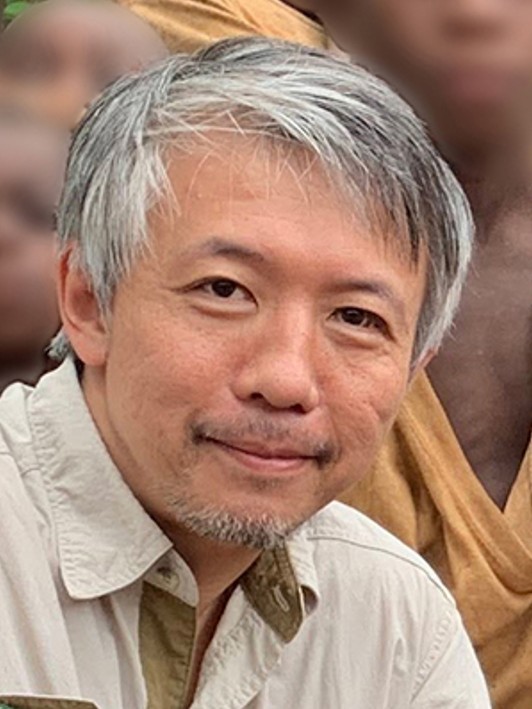 Taro Yamauchi
(Professor, Faculty of Health Sciences, Hokkaido University)
Professor Taro Yamauchi graduated from the School of International Health, Graduate School of Medicine, The University of Tokyo in 1998. Since 2007, he has worked at the Faculty of Health Sciences, Hokkaido University, and has served as Professor since 2013. He also worked at the Research Institute for Humanity and Nature (RIHN) as Professor and Project Leader of the “Sanitation Value Chain” project between 2015 and 2021. After completing a cross-appointment between RIHN and Hokkaido University, he became Director of the Hokkaido University Center for Environmental and Health Sciences in April 2022. He was appointed Advisor to the President in April 2024.
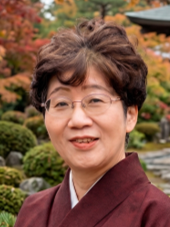 Keiko Nakamura
(Emeritus Professor, Institute of Science Tokyo / President, Promotion Committee for Healthy Cities)
Professor Keiko Nakamura graduated from the Faculty of Medicine at Tokyo Medical and Dental University. She served as Professor and Chair of the Department of Global Health Entrepreneurship, Division of Public Health, Tokyo Medical and Dental University, and Director of the WHO Collaborating Centre for Healthy Cities and Urban Policy Research from 2016 to 2025. She is currently President of the Promotion Committee for Healthy Cities, a Steering Committee Member of the Planetary Health Alliance Japan Hub, and Chair of the Environmental Risk Subcommittee of the Science Council of Japan. Her research focuses on urban environment and health, health promotion, healthy cities and urban policy, and planetary health.
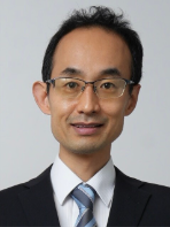 Kei Yokota
(Director of Emergency Department, Department of General Medicine, Okayama Kyoritsu Hospital / Board Member, Green Practice Japan)
Dr. Kei Yokota graduated from Jichi Medical University in 2008 and has been engaged in primary care in Yamaguchi and Kanagawa Prefectures. From 2016, he worked at Yamaguchi Prefectural General Medical Center, where he was involved in rural healthcare support and the training of general practitioners. Since 2022, he has been a member of Green Practice Japan. In 2023, he joined the Department of General Medicine at Okayama Kyoritsu Hospital. He is also working on the translation and promotion of the “Climate Impact Checkup Tool,” a carbon footprint calculator for healthcare facilities, in Japan.
Related Posts
-
2026-05-07
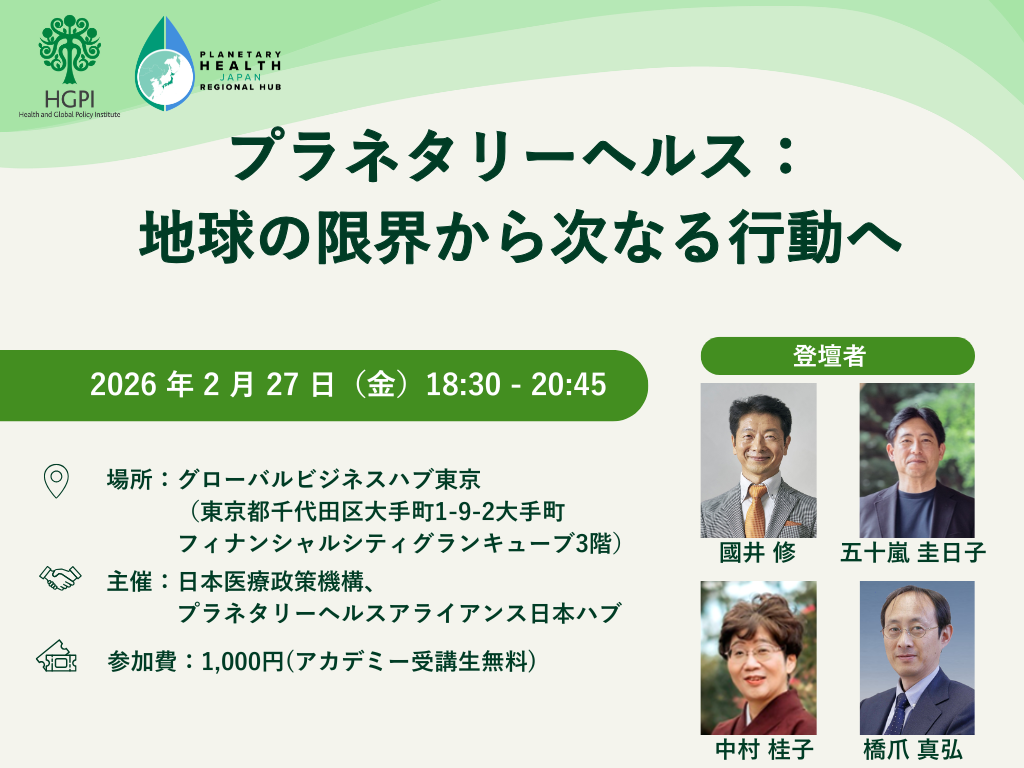
[Event Report] Planetary Health Academy In-Person Event “Planetary Health: From Planetary Boundaries to the Next Actions” (February 27, 2026)
-

2025-12-09
[Event Report] Planetary Health Academy: Final Half (October 15-November 5, 2025)
-
2025-10-10
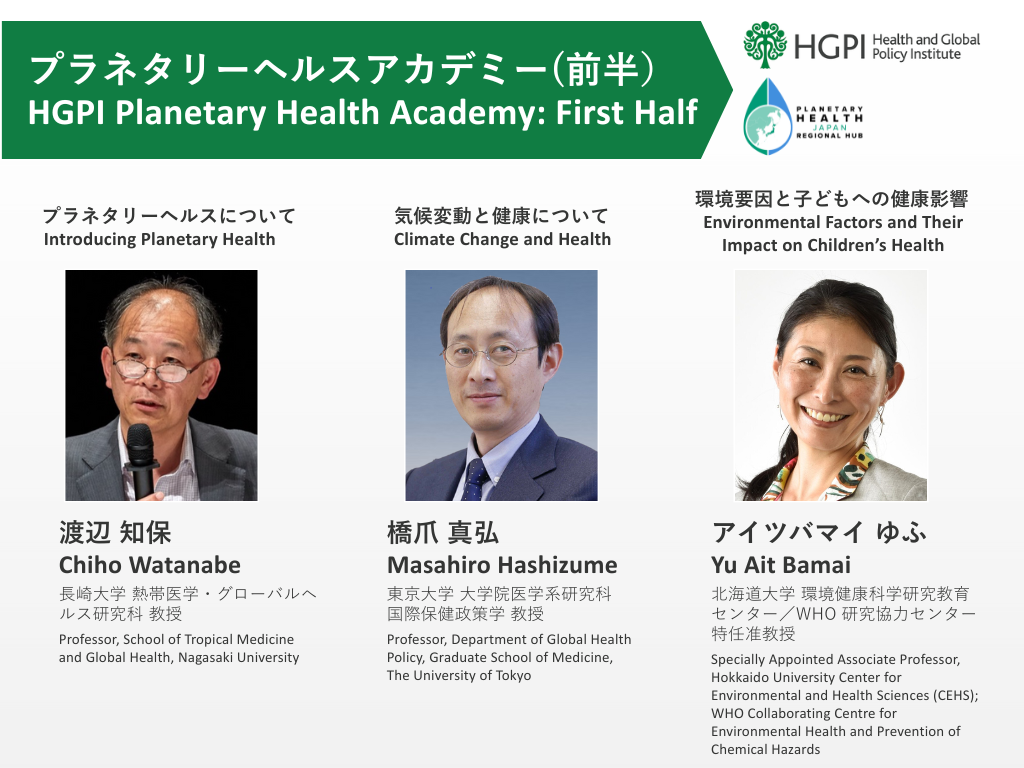
[Event Report] Planetary Health Academy: First Half (August 27-September 24, 2025)
Top Research & Recommendations Posts
Featured Posts
-
2026-05-18
[Registration Closed] Kick-off Panel Discussion “From Africa and Japan, Drawing from Perspectives Around the World:A Platform for Cultivating a Philosophical Health Dialogue Together” (June 15, 2026)
![[Registration Closed] Kick-off Panel Discussion “From Africa and Japan, Drawing from Perspectives Around the World:A Platform for Cultivating a Philosophical Health Dialogue Together” (June 15, 2026)](https://hgpi.org/en/wp-content/uploads/sites/2/HGPI_20260615_Eyecathch_panel-discussion-From-Japan-and-Africa-in-Discussion-with-the-World_2.png)
-
2026-08-28
[Announcement] The 3rd Kiyoshi Kurokawa Award: Call for Nominations (Deadline: November 30, 2026)
![[Announcement] The 3rd Kiyoshi Kurokawa Award: Call for Nominations (Deadline: November 30, 2026)](https://hgpi.org/en/wp-content/uploads/sites/2/Kiyoshi-Kurokawa-Award_3rd_nominations_eyecatch_caseB_ENG_web_20260929_v0.5.jpg)
-
2026-09-01
[Registration Closed] HGPI Salon 2025-2026 Looking Ahead to the Future of Japan’s Social Security System “Session 6: Japan’s Health Policy through the Lens of Global Security” (October 13, 2026)
![[Registration Closed] HGPI Salon 2025-2026 Looking Ahead to the Future of Japan’s Social Security System “Session 6: Japan’s Health Policy through the Lens of Global Security” (October 13, 2026)](https://hgpi.org/en/wp-content/uploads/sites/2/HGPISalon2025-20266.png)
-
2026-09-17
[Registration Open] (Webinar) The 145th HGPI Seminar “Toward Better AMR Measures at Elderly Care Facilities—Considering Infectious Disease Control in a Super-Aged Society From a Policy Perspective” (October 27, 2026)
![[Registration Open] (Webinar) The 145th HGPI Seminar “Toward Better AMR Measures at Elderly Care Facilities—Considering Infectious Disease Control in a Super-Aged Society From a Policy Perspective” (October 27, 2026)](https://hgpi.org/en/wp-content/uploads/sites/2/HGPIseminar145.png)
-
2026-10-06
[Registration Open] (Webinar) The 146th HGPI Seminar “How We Can Build a Society That Supports Choices Around Organ Donation: Exploring Decision-Making by Citizens and a Multi-Layered Approach Through Strategic Social Marketing” (November 9, 2026)
![[Registration Open] (Webinar) The 146th HGPI Seminar “How We Can Build a Society That Supports Choices Around Organ Donation: Exploring Decision-Making by Citizens and a Multi-Layered Approach Through Strategic Social Marketing” (November 9, 2026)](https://hgpi.org/en/wp-content/uploads/sites/2/HGPI_20261001_Eyecatch_HGPIseminer-146th-1.png)
