


[Public Comment Submission] Planetary Health Project “FY2026 Tokyo Metropolitan Citizens’ Project Proposal Initiative” Project Proposal (May 31, 2026)
date : 6/11/2026
Tags: Planetary Health

![[Public Comment Submission] Planetary Health Project “FY2026 Tokyo Metropolitan Citizens’ Project Proposal Initiative” Project Proposal (May 31, 2026)](https://hgpi.org/en/wp-content/uploads/sites/2/HGPI_PlanetaryHealthPJT_20260615_TominTeian_English.jpg)
The Planetary Health Project at Health and Global Policy Institute (HGPI) has submitted three project proposals in response to the “FY2026 Tokyo Metropolitan Citizens’ Project Proposal Initiative” introduced by the Tokyo Metropolitan Government’s Bureau of Finance. Please note that the call for proposals has already closed.
The Citizens’ Project Proposal Initiative is a new form of civic participation by the Tokyo Metropolitan Government, designed to reflect citizens’ voices directly in policymaking by allowing them to both propose and select projects. Aimed at solving Tokyo’s urgent policy issues through fresh perspectives and unconventional thinking, FY2026 proposals were received from April 3 to May 31, 2026. Proposals encompassed a wide range of policy areas including support for marriage, pregnancy, childbirth, and parenting, youth support, disaster preparedness and community safety, women’s empowerment, the realization of a sustainable, environmentally advanced city that serves as a model for the world, and digital transformation.
Under this initiative, individuals aged 15 or older who reside, work, or study in Tokyo, as well as organizations and groups based in Tokyo, are eligible to submit proposals. Projects are expected to fall within a budget cap of 200 million yen (in principle, for a single fiscal year). Submitted proposals will undergo review by the Tokyo Metropolitan Government and will be subject to an online public vote scheduled for late July 2026. Based on the voting results, selected proposals may be incorporated into their FY2027 budget.
A Citizens-Driven Approach Harnessing Flexible Thinking to Address Tokyo’s Policy Challenges
In recent years, the environment surrounding the policy landscape in Tokyo has been changing at an unprecedented pace due to shifts in socio-economic circumstances, the worsening climate crisis, and rapid demographic aging. To address these evolving challenges, the Tokyo Metropolitan Government introduced this initiative to reflect citizens’ perspectives directly into policymaking and encourage flexible thinking that goes beyond existing policy frameworks. At HGPI, we advocate for stronger integration of environmental and health policies in Tokyo’s governance from the perspective of planetary health, which recognizes the interconnectedness of human health and climate change. Guided by this approach, we have submitted three project proposals under this initiative that focus on mitigating the health impacts of climate change and promoting sustainable health policy. The summaries of these proposals are as follows.
Project Proposals Submitted by HGPI Aspiring for a Sustainable and Healthy Tokyo
Theme 1: Heatstroke Countermeasures (Heat Risk Management)
In response to intensifying extreme heat, HGPI proposed a project to develop a “Heat Health Risk Map” that visualizes vulnerability to heat and to establish a government-wide heat risk management system. To prevent not only direct deaths from heatstroke but also the “invisible deaths” (excess mortality) caused by the worsening of cardiovascular and respiratory diseases, which are roughly seven times as numerous, the map will integrate the heat index with factors such as building density, the distribution of elderly people living alone and patients with underlying conditions, and air-conditioner installation rates to assess and publish heat vulnerability by area. Training for municipal staff and local support workers, along with door-to-door visits for elderly residents and operations linked to alert issuance, will be piloted to enable focused, data-driven support. By advancing cross-sectoral collaboration spanning the environment, public health, and urban infrastructure, the project is also expected to serve as a foundation for establishing a function equivalent to the Chief Heat Officer (CHO), which has been pioneered overseas.Theme 2: Supporting Decarbonization in Medical Institutions
HGPI submitted a proposal to advance medical Green Transformation (GX) and strengthen resilience in a way that balances GX at small- and mid-sized medical institutions with “health security” in times of emergency. To remove the funding constraints that are the greatest barrier, the project will conduct emissions diagnostics using existing global tools that keep development costs low, such as the “Climate Impact Checkup (CIC),” and will create a “Zero Carbon Health Center” certification system unique to Tokyo. Certified facilities will receive expert support in developing reduction plans, along with priority subsidies for capital investment in energy-saving and renewable energy equipment. This will simultaneously reduce CO2 emissions and energy costs while establishing a system that maintains local primary care functions even during energy shortages, aiming to build sustainable healthcare infrastructure.Theme 3: Promoting a Circular Economy through the Adoption of Reprocessed Single-use Medical Devices (R-SUD)
To tackle the infection risks and environmental burden caused by medical waste, HGPI proposed a project to promote the adoption of Reprocessed Single-use Medical Devices (R-SUD). Given that only 12 items have been approved and adoption remains sluggish, and in light of the supply risks for medical materials posed by unstable international circumstances, the project will integrate awareness-raising, implementation support, and regulatory development. It will dispatch experts to hospitals interested in adoption and “make visible” the waste- and cost-reduction effects through pilot facilities. Capitalizing on the momentum from the FY2025 easing of QMS regulations, the project will advance commercialization subsidies for remanufacturers and the establishment of a council under a cross-bureau structure that includes the Bureau of Industrial and Labor Affairs, the Bureau of Environment, and the Bureau of Public Health. Through this, the project aims to build Tokyo’s own medical circular-economy network that balances reduced environmental burden with supply stability while curbing excessive dependence on petroleum-derived materials.
For more details regarding the initiative, please click here (Japanese only).
Related Posts
-
2026-05-15
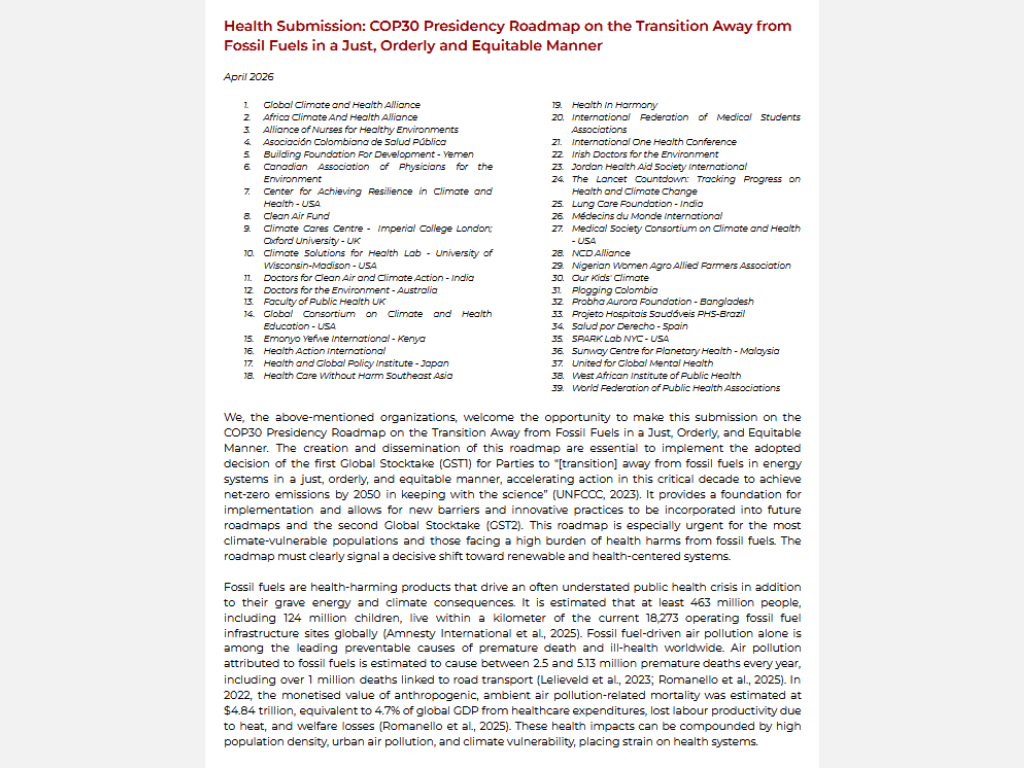
[Announcement] HGPI Endorsed “GCHA Health Submission: COP30 Presidency Roadmap on the Transition Away from Fossil Fuels in a Just, Orderly and Equitable Manner” (May 15, 2026)
-
2026-05-07
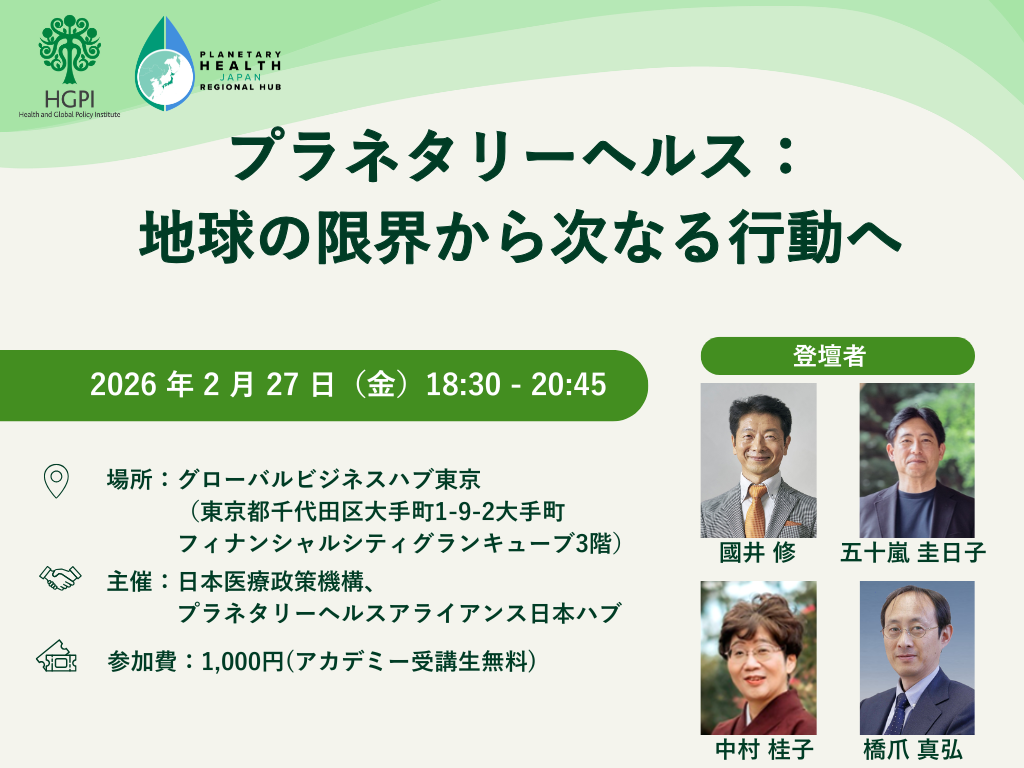
[Event Report] Planetary Health Academy In-Person Event “Planetary Health: From Planetary Boundaries to the Next Actions” (February 27, 2026)
-
2026-03-16
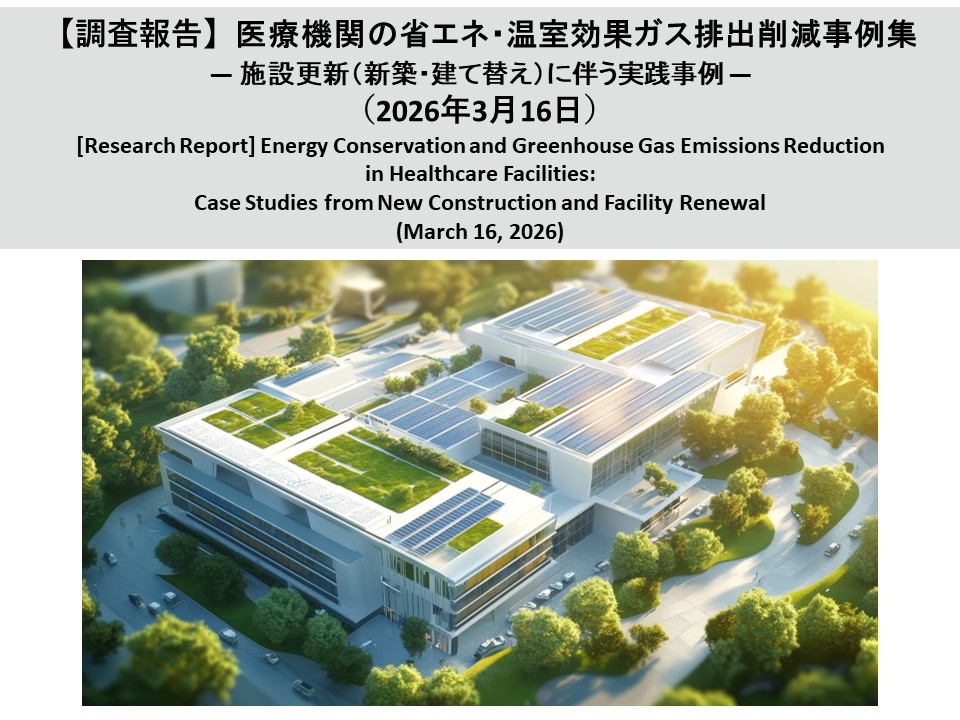
[Research Report] Energy Conservation and Greenhouse Gas Emissions Reduction in Healthcare Facilities: Case Studies from New Construction and Facility Renewal (March 16, 2026)
-
2026-04-15
[HGPI Policy Column] (No.70) — From the Planetary Health Project “Part 17: The Lancet Countdown: A ‘Lifeline’ for Health and Economy Brought about by Climate Action”
Top Research & Recommendations Posts
Featured Posts
-
2026-05-18
[Registration Closed] Kick-off Panel Discussion “From Africa and Japan, Drawing from Perspectives Around the World:A Platform for Cultivating a Philosophical Health Dialogue Together” (June 15, 2026)
![[Registration Closed] Kick-off Panel Discussion “From Africa and Japan, Drawing from Perspectives Around the World:A Platform for Cultivating a Philosophical Health Dialogue Together” (June 15, 2026)](https://hgpi.org/en/wp-content/uploads/sites/2/HGPI_20260615_Eyecathch_panel-discussion-From-Japan-and-Africa-in-Discussion-with-the-World_2.png)
-
2026-08-28
[Announcement] The 3rd Kiyoshi Kurokawa Award: Call for Nominations (Deadline: November 30, 2026)
![[Announcement] The 3rd Kiyoshi Kurokawa Award: Call for Nominations (Deadline: November 30, 2026)](https://hgpi.org/en/wp-content/uploads/sites/2/Kiyoshi-Kurokawa-Award_3rd_nominations_eyecatch_caseB_ENG_web_20260929_v0.5.jpg)
-
2026-09-01
[Registration Closed] HGPI Salon 2025-2026 Looking Ahead to the Future of Japan’s Social Security System “Session 6: Japan’s Health Policy through the Lens of Global Security” (October 13, 2026)
![[Registration Closed] HGPI Salon 2025-2026 Looking Ahead to the Future of Japan’s Social Security System “Session 6: Japan’s Health Policy through the Lens of Global Security” (October 13, 2026)](https://hgpi.org/en/wp-content/uploads/sites/2/HGPISalon2025-20266.png)
-
2026-09-17
[Registration Open] (Webinar) The 145th HGPI Seminar “Toward Better AMR Measures at Elderly Care Facilities—Considering Infectious Disease Control in a Super-Aged Society From a Policy Perspective” (October 27, 2026)
![[Registration Open] (Webinar) The 145th HGPI Seminar “Toward Better AMR Measures at Elderly Care Facilities—Considering Infectious Disease Control in a Super-Aged Society From a Policy Perspective” (October 27, 2026)](https://hgpi.org/en/wp-content/uploads/sites/2/HGPIseminar145.png)
-
2026-10-06
[Registration Open] (Webinar) The 146th HGPI Seminar “How We Can Build a Society That Supports Choices Around Organ Donation: Exploring Decision-Making by Citizens and a Multi-Layered Approach Through Strategic Social Marketing” (November 9, 2026)
![[Registration Open] (Webinar) The 146th HGPI Seminar “How We Can Build a Society That Supports Choices Around Organ Donation: Exploring Decision-Making by Citizens and a Multi-Layered Approach Through Strategic Social Marketing” (November 9, 2026)](https://hgpi.org/en/wp-content/uploads/sites/2/HGPI_20261001_Eyecatch_HGPIseminer-146th-1.png)
