


[Policy Recommendations] Hearing Loss Project “Recommendations on Coherent Countermeasures for Hearing Loss Throughout the Life Course: Building a Society Where Everyone Can Access Appropriate Hearing Care” (July 30, 2026)
date : 7/30/2026
Tags: Hearing Loss, Other Activities

![[Policy Recommendations] Hearing Loss Project “Recommendations on Coherent Countermeasures for Hearing Loss Throughout the Life Course: Building a Society Where Everyone Can Access Appropriate Hearing Care” (July 30, 2026)](https://hgpi.org/en/wp-content/uploads/sites/2/ENG_hearing-loss-recommendation_eyecatch.png)
*The policy recommendations have been revised and updated. (August 14, 2026)
Health and Global Policy Institute (HGPI) launched the Hearing Loss Project in FY2025 and, on July 30, 2026, published its policy recommendations, “Recommendations on Coherent Countermeasures for Hearing Loss Throughout the Life Course: Building a Society Where Everyone Can Access Appropriate Hearing Care.”
Globally, an estimated 430 million people, approximately 5% of the world’s population, including 34 million children, currently require intervention for hearing loss. By 2050, some 2.5 billion people are projected to have some degree of hearing loss, of whom about 700 million will require hearing rehabilitation. In Japan as well, the number of people with hearing loss stands at approximately 14.3 million, which is approximately 10% of the population.
Hearing loss is not limited to aging. It arises from different causes, including chronic exposure to loud noise, excessive earphone use among younger people, as well as congenital factors, and can affect any individual at any stage of life. It is also cited as the leading risk factor for dementia and has been associated with social isolation, depression, and a decline in quality of life (QOL). At the same time, early detection and appropriate intervention can help mitigate these risks, thereby highlighting the need for coherent measures throughout the life course. In Japan, however, systems for linking people to timely diagnosis and intervention remain insufficient, and the adoption rate of hearing aids is among the lowest among high income countries.
To address these challenges, HGPI’s recommendations set out concrete proposals along four directions aimed at realizing coherent hearing loss measures across the life course.
For more details, please refer to the PDF at the bottom of this page.
[Structure of the Policy Recommendation]
Ⅰ. Elevating public awareness regarding hearing loss and hearing devices and promoting early intervention
- Dispel the stigma attached to hearing loss and hearing devices and attenuate psychological resistance toward the use of such devices with the intent of spreading the right understanding of hearing loss and a more positive image of early intervention
- Review and revise advertising regulations on hearing devices and create an environment in which people can proactively access information
- Present evidence-based information regarding the importance of early intervention for hearing loss
Ⅱ. Designing systems and frameworks for the early detection and appropriate treatment of hearing loss
- Establish a screening system for the early detection of hearing loss so that people become aware of hearing loss in daily life and that provides broader coverage across generations
- Establish a system for providing early intervention at each life stage by linking and managing hearing data over the long term
- Build mechanisms and systems that ensure people receive medical attention and follow up after screening
Ⅲ. Establishing a hearing care provision system
- Promote the right understanding of hearing loss treatment among otolaryngologists and medical practitioners in other departments and encourage collaboration between hospitals and clinics
- Determine best practice for designing premiums in the medical service fee schedule to advance hearing loss treatment
- Train and expand the roles of speech-language-hearing therapists specializing in audiology and encourage their employment
- Leverage the latest technology to address shortages and the uneven distribution of hearing care specialists
Ⅳ. Establishing coherent pathways and ensuring access to high-quality hearing devices at each stage of hearing loss
- Working from the perspectives of those most affected, multi-stakeholders should identify, develop, and formally establish systematic pathways to appropriate care and specialists for all levels of hearing loss and create an environment that ensures these pathways are effective
- For adults with mild-to-moderate hearing loss (30–70 dB) not covered by current subsidies, create and establish multi-tiered public support and insurance systems for hearing aid purchases; design sustainable systems by clarifying national and municipal role division
- Design a cross-sectoral, collaborative framework that eliminates gaps faced by children with mild to moderate hearing loss at age 18, ensuring coherent support across the lifespan
- Gather real-world evidence and clarify priorities for expanded public support for hearing loss
- Instead of relying solely on public support, reduce the financial burden of purchasing hearing aids through a multi-tiered framework of public-private partnerships that combines manufacturers, retailers, and the insurance and tax systems
※This document was compiled by HGPI as an independent health policy think tank, based on discussions at the Advisory Board meetings. It does not represent the views of the stakeholders involved or the organizations to which they belong.
![[Summary] Recommendations on Coherent Countermeasures for Hearing Loss Throughout the Life Course: Building a Society Where Everyone Can Access Appropriate Hearing Care](/assets/img/katsudo/icon_pdf_l.png)
Related Posts
-
2026-07-29
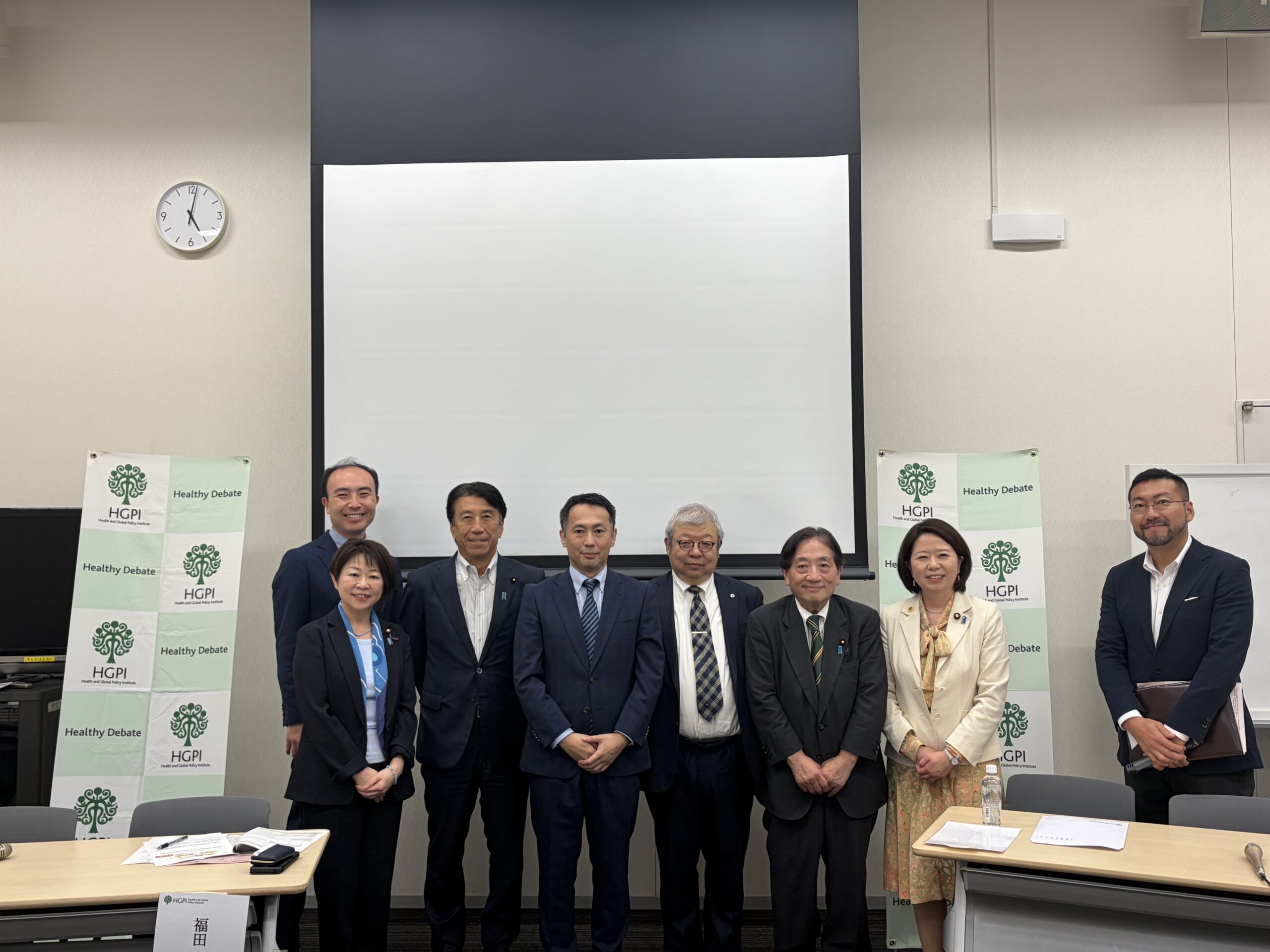
[Event Report] Non-partisan Diet Member Briefing "Addressing Hearing Loss in Japan: Current Status and Policy Challenges" (July 13, 2026)
-

2026-06-10
[Event Report] Second Advisory Board Meeting of the Hearing Loss Project “Exploring Solutions to Hearing Loss Challenges in Japan through Multi-Stakeholder Collaboration Across Government, Industry, Academia, and Civil Society” (March 16, 2026)
-
2026-02-03
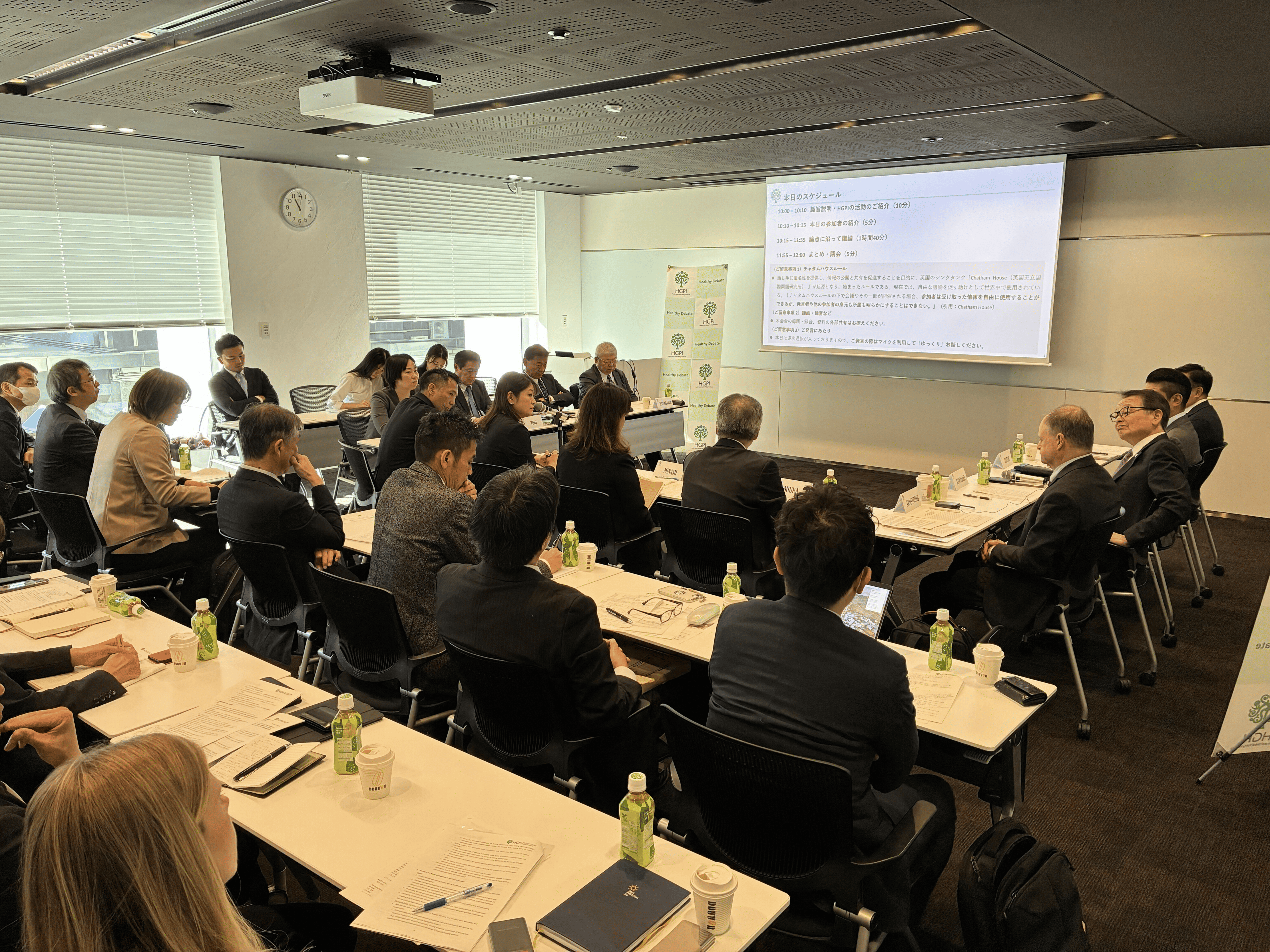
[Event Report] First Advisory Board Meeting “Examining Solutions to Japan’s Hearing Loss Challenges through Industry, Government, Academia, and Civil Society Collaboration” (January 22, 2026)
Top Research & Recommendations Posts
Featured Posts
-
2026-05-18
[Registration Closed] Kick-off Panel Discussion “From Africa and Japan, Drawing from Perspectives Around the World:A Platform for Cultivating a Philosophical Health Dialogue Together” (June 15, 2026)
![[Registration Closed] Kick-off Panel Discussion “From Africa and Japan, Drawing from Perspectives Around the World:A Platform for Cultivating a Philosophical Health Dialogue Together” (June 15, 2026)](https://hgpi.org/en/wp-content/uploads/sites/2/HGPI_20260615_Eyecathch_panel-discussion-From-Japan-and-Africa-in-Discussion-with-the-World_2.png)
-
2026-08-28
[Announcement] The 3rd Kiyoshi Kurokawa Award: Call for Nominations (Deadline: November 30, 2026)
![[Announcement] The 3rd Kiyoshi Kurokawa Award: Call for Nominations (Deadline: November 30, 2026)](https://hgpi.org/en/wp-content/uploads/sites/2/Kiyoshi-Kurokawa-Award_3rd_nominations_eyecatch_caseB_ENG_web_20260929_v0.5.jpg)
-
2026-09-01
[Registration Closed] HGPI Salon 2025-2026 Looking Ahead to the Future of Japan’s Social Security System “Session 6: Japan’s Health Policy through the Lens of Global Security” (October 13, 2026)
![[Registration Closed] HGPI Salon 2025-2026 Looking Ahead to the Future of Japan’s Social Security System “Session 6: Japan’s Health Policy through the Lens of Global Security” (October 13, 2026)](https://hgpi.org/en/wp-content/uploads/sites/2/HGPISalon2025-20266.png)
-
2026-09-17
[Registration Open] (Webinar) The 145th HGPI Seminar “Toward Better AMR Measures at Elderly Care Facilities—Considering Infectious Disease Control in a Super-Aged Society From a Policy Perspective” (October 27, 2026)
![[Registration Open] (Webinar) The 145th HGPI Seminar “Toward Better AMR Measures at Elderly Care Facilities—Considering Infectious Disease Control in a Super-Aged Society From a Policy Perspective” (October 27, 2026)](https://hgpi.org/en/wp-content/uploads/sites/2/HGPIseminar145.png)
-
2026-10-06
[Registration Open] (Webinar) The 146th HGPI Seminar “How We Can Build a Society That Supports Choices Around Organ Donation: Exploring Decision-Making by Citizens and a Multi-Layered Approach Through Strategic Social Marketing” (November 9, 2026)
![[Registration Open] (Webinar) The 146th HGPI Seminar “How We Can Build a Society That Supports Choices Around Organ Donation: Exploring Decision-Making by Citizens and a Multi-Layered Approach Through Strategic Social Marketing” (November 9, 2026)](https://hgpi.org/en/wp-content/uploads/sites/2/HGPI_20261001_Eyecatch_HGPIseminer-146th-1.png)
