


[Policy Recommendations] Toward Further Advancement of Measures Against Antimicrobial Resistance (AMR) (July 15, 2026)
date : 7/24/2026
Tags: AMR

![[Policy Recommendations] Toward Further Advancement of Measures Against Antimicrobial Resistance (AMR) (July 15, 2026)](https://hgpi.org/en/wp-content/uploads/sites/2/AMR_HonebutoPolicy_20260715.png)
*The English version of the policy recommendations has been published. (July 24, 2026)
AMR Alliance Japan (Secretariat: Health and Global Policy Institute (HGPI)) has published a policy recommendation titled “Toward Further Advancement of Measures Against Antimicrobial Resistance (AMR).” In this recommendation, we make the following proposals so that, in upcoming discussions on antimicrobial resistance (AMR) measures—including the Basic Policy on Economic and Fiscal Management and Reform 2026 (the “Honebuto Policy 2026”)—the importance of AMR measures continues to be recognized and effective initiatives are steadily advanced:
- Establish AMR-related medical countermeasures as a priority area in national growth strategy and affirm their significance for national security
- Strengthen domestic systems in harmony with global trends
- Advance AMR measures grounded in public understanding
AMR is a complex challenge that spans humans, animals, food, and the environment. It is a foundation for protecting the health and lives of the public and is at the same time directly linked to economic security and health security. Antimicrobials in particular have a distinctive characteristic in that their use should be curbed; as a result, growth in sales volume is difficult to anticipate and investment in research and development tends to stagnate, making the strengthening of production capacity a priority issue from the perspective of economic security.
At the World Health Assembly in May 2026, Global action plan on antimicrobial resistance (GAP-AMR) 2026–2036 was adopted, further reinforcing the One Health approach and a prevention-focused policy direction. As discussions on formulating Japan’s next AMR Action Plan are expected to gain full momentum, there is a need for effective systems that reflect these international trends, including expanding epidemiological surveillance systems, reviewing market incentives to secure a stable supply of antimicrobials, and developing diagnostic technologies.
Furthermore, AMR measures cannot be completed by government and clinical settings alone. The understanding and actions of each individual citizen, such as the appropriate use of antimicrobials, are indispensable. The investment that underpins these measures relies on public funding, and it is essential to broaden public understanding of its significance.
Recommendation for the Basic Policy on Economic and Fiscal Management and Reform has consistently included language on AMR measures every year since 2016, with industry, government, academia, and civil society working together to support these efforts. Ten years have since passed, and the importance of AMR measures has grown alongside changes in the social environment. Measures against infectious diseases, including AMR, cannot be completed by a single country or within a single domain alone. Building on the achievements and solidarity accumulated to date, we must further enhance the effectiveness of these measures and accelerate them while earning broad public understanding.
![[Policy Recommendations] Toward Further Advancement of Measures Against Antimicrobial Resistance (AMR)](/assets/img/katsudo/icon_pdf_l.png)
Related Posts
-
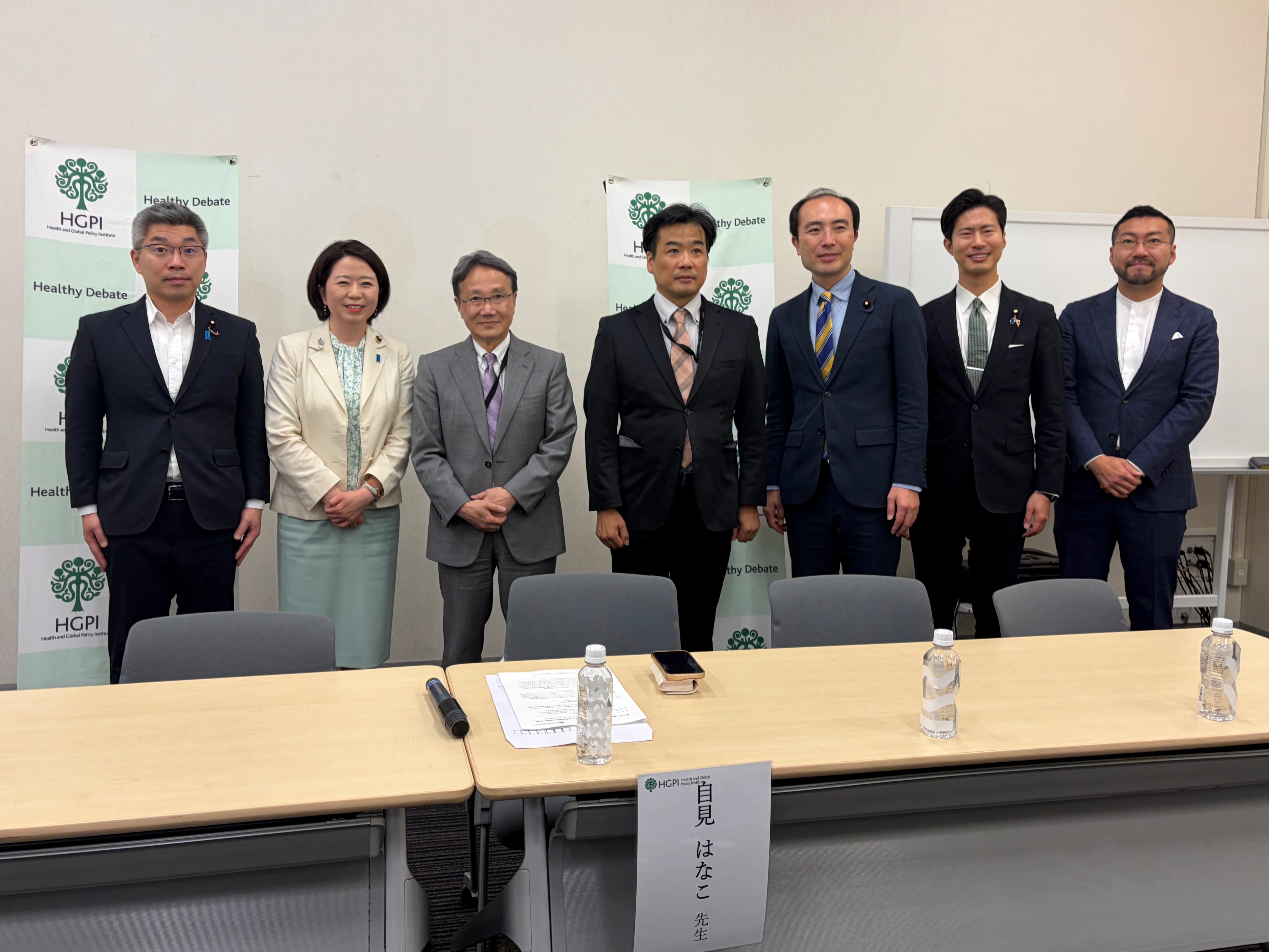
2026-07-02
[Event Report] Non-partisan Diet Member Briefing “Addressing Antimicrobial Resistance (AMR) through Drug Discovery and Crisis Response” (June 24, 2026)
-
2026-06-19
[Recommendations] Strengthening Epidemiology Education in the Veterinary Field for the One Health Era (June 19, 2026)
-
2026-06-02
[Activity Report] Joint Review Committee of Seven Academic Societies for the Promotion of Infectious Disease Therapy and Drug Discovery — Recommendations: "Towards the Treatment of Infectious Diseases and the Promotion of Drug Discovery" (May 13, 2026)
-
2026-07-01
[Research Report] AMR Policy Update #8: Fostering AMR-Conscious Youth: The Antibiotic Smart Sweden Certificate Program and its Implications for Early Childhood Education (July 1, 2026)
Top Research & Recommendations Posts
Featured Posts
-
2026-05-18
[Registration Closed] Kick-off Panel Discussion “From Africa and Japan, Drawing from Perspectives Around the World:A Platform for Cultivating a Philosophical Health Dialogue Together” (June 15, 2026)
![[Registration Closed] Kick-off Panel Discussion “From Africa and Japan, Drawing from Perspectives Around the World:A Platform for Cultivating a Philosophical Health Dialogue Together” (June 15, 2026)](https://hgpi.org/en/wp-content/uploads/sites/2/HGPI_20260615_Eyecathch_panel-discussion-From-Japan-and-Africa-in-Discussion-with-the-World_2.png)
-
2026-08-28
[Announcement] The 3rd Kiyoshi Kurokawa Award: Call for Nominations (Deadline: November 30, 2026)
![[Announcement] The 3rd Kiyoshi Kurokawa Award: Call for Nominations (Deadline: November 30, 2026)](https://hgpi.org/en/wp-content/uploads/sites/2/Kiyoshi-Kurokawa-Award_3rd_nominations_eyecatch_caseB_ENG_web_20260929_v0.5.jpg)
-
2026-09-01
[Registration Closed] HGPI Salon 2025-2026 Looking Ahead to the Future of Japan’s Social Security System “Session 6: Japan’s Health Policy through the Lens of Global Security” (October 13, 2026)
![[Registration Closed] HGPI Salon 2025-2026 Looking Ahead to the Future of Japan’s Social Security System “Session 6: Japan’s Health Policy through the Lens of Global Security” (October 13, 2026)](https://hgpi.org/en/wp-content/uploads/sites/2/HGPISalon2025-20266.png)
-
2026-09-17
[Registration Open] (Webinar) The 145th HGPI Seminar “Toward Better AMR Measures at Elderly Care Facilities—Considering Infectious Disease Control in a Super-Aged Society From a Policy Perspective” (October 27, 2026)
![[Registration Open] (Webinar) The 145th HGPI Seminar “Toward Better AMR Measures at Elderly Care Facilities—Considering Infectious Disease Control in a Super-Aged Society From a Policy Perspective” (October 27, 2026)](https://hgpi.org/en/wp-content/uploads/sites/2/HGPIseminar145.png)
-
2026-10-06
[Registration Open] (Webinar) The 146th HGPI Seminar “How We Can Build a Society That Supports Choices Around Organ Donation: Exploring Decision-Making by Citizens and a Multi-Layered Approach Through Strategic Social Marketing” (November 9, 2026)
![[Registration Open] (Webinar) The 146th HGPI Seminar “How We Can Build a Society That Supports Choices Around Organ Donation: Exploring Decision-Making by Citizens and a Multi-Layered Approach Through Strategic Social Marketing” (November 9, 2026)](https://hgpi.org/en/wp-content/uploads/sites/2/HGPI_20261001_Eyecatch_HGPIseminer-146th-1.png)
