


[Research Report] AMR Policy Update #8: Fostering AMR-Conscious Youth: The Antibiotic Smart Sweden Certificate Program and its Implications for Early Childhood Education (July 1, 2026)
date : 7/1/2026
Tags: AMR

![[Research Report] AMR Policy Update #8: Fostering AMR-Conscious Youth: The Antibiotic Smart Sweden Certificate Program and its Implications for Early Childhood Education (July 1, 2026)](https://hgpi.org/en/wp-content/uploads/sites/2/HGPI_eyecatch_AMR_Policy-Update_08.png)
Antimicrobial Resistance (AMR) poses a significant threat to global public health, necessitating a multi-faceted approach that includes public awareness and education. While many initiatives target healthcare professionals and adults, it is established that the foundation for lifelong health habits starts in early childhood. The AMR team at Health and Global Policy Institute (HGPI) has actively worked to promote good practices that foster citizen awareness and engagement with AMR. During a visit to Sweden in September, 2025, manager Yui Kohno and program specialist Clara Isabella Ann Lim spoke with staff at Pratbubblan Preschool, a preschool in Vindeln about their exemplary infection prevention work in early childhood education.
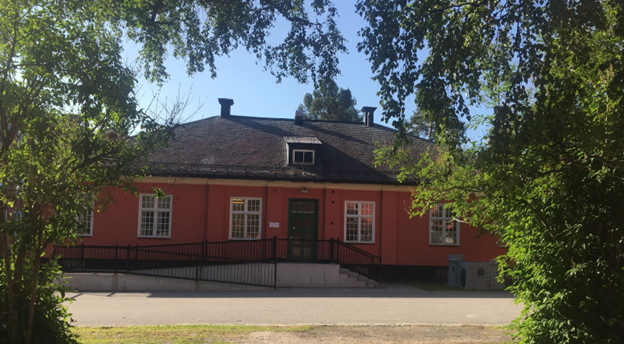 Image 1: The outside of Pratbubblan Preschool in Vindeln, Sweden
(Source: Pratbubblan Preschool’s official Facebook)
A perspective on AMR education and actions in early childhood
The Antibiotic Smart Sweden initiative aims to encourage Swedish society to participate in efforts to address antibiotic resistance. The initiative is led by the Public Health Agency of Sweden, RISE Research Institutes of Sweden, Strama and ReAct, in collaboration with several Swedish municipalities and regions.
The Antibiotic Smart Sweden initiative recognises the critical period of opportunity in early childhood education by offering a certificate program for preschools. This program aims to embed principles of hygiene and infection prevention into the daily routines of young children, thereby reducing the spread of illness, minimizing the need for antibiotics, and cultivating a foundational understanding of health and hygiene. By engaging children, teachers, and parents, the certification program creates a healthier community by tackling the challenge of AMR through preventing infections before they start.
The experience of Pratbubblan Preschool, a pioneering school in AMR awareness and has been certified as an Antibiotic Smart Sweden school since 2024, offers a compelling example of the program’s successful implementation and its implications. Located in Vindeln, the initiative at Pratbubblan was driven by the strong initiative of its teaching staff, Lina and Helena, who were eager to support the health of their students by joining the program. With the support of the principal, Galatia, the journey from starting the program work in February to achieving certification in November was a collaborative effort guided by materials and training provided by the Antibiotic Smart Sweden team.
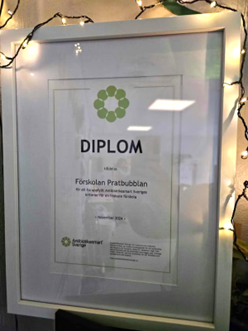 Image 2: Pratbubblan Preschool’s Antibiotic Smart Sweden certification obtained in November, 2024
(Source: Sweden newspaper “Folkbladet”)
A Curriculum Focused on Cleanliness and Care
A core component of the certification process involved establishing structured routines centered on hygiene. To ensure consistency, Pratbubblan’s teachers developed detailed checklists covering key daily practices. These included mandatory hand washing for all students in the morning and before lunch, the use of single-use washable towels to prevent cross-contamination, and specific toilet routines to promote proper hygiene. In addition, the staff implemented reactive cleaning measures, increasing the frequency of disinfecting classroom equipment such as tables and chairs whenever signs of illness began to spread. Since the school’s own staff handled all cleaning, they could directly implement and oversee these new protocols. The training from Antibiotic Smart Sweden was also vital, providing practical advice such as proper disinfection techniques. For example, staff were trained to spray a towel rather than directly onto body fluids to prevent the aerosolization and spread of germs.
Education at Pratbubblan was also redesigned to integrate the value of hygiene into the curriculum through engaging, age-appropriate activities designed to make the invisible world of germs understandable to young children. These lessons included visual experiments like a cinnamon and oil test, which was used to visually demonstrate how bacteria can move and spread, and a blow painting bacteria activity which connects a lesson on germs into a fun and artistic activity for children. The teachers also gave formal lessons on personal hygiene, including teaching proper hand washing, sneezing, and coughing etiquette. The school also frequently utilises stories and books to reinforce messages about health, wellbeing and self-care.
Building a Community of Health
The program’s success also included actively involving parents. Antibiotic Smart Sweden provided informational materials for parents, and the preschool aims to maintain frequent communication about the health of the children. Parents were encouraged to be partners in prevention by washing personal items, reinforcing the hygiene practices learned at school. This holistic approach ensures that healthy habits are consistently applied in all areas of a child’s life.
While the One Health approach to AMR, which links human, animal, and environmental health, is not yet a formal part of the certificate program, Pratbubblan Preschool has integrated its principles into practice. The children spend a significant amount of time outdoors, with four hours dedicated to outside play each day. This time in nature is used as a teaching opportunity, with lessons on environmental stewardship such as how to correctly sort garbage and recycle. This approach encourages a wholistic understanding of health that encompasses personal well-being, hygiene, and environmental responsibility.
Challenges and Implications for Early AMR Education
The experience at Pratbubblan also sheds light on potential challenges for wider implementation. The program demands a significant time commitment, which can be a barrier for preschools and staff. Furthermore, the structure of the school’s staffing can play a crucial role. At Pratbubblan, the teachers’ direct involvement in cleaning was an advantage. In schools where cleaning is handled by separate staff, additional training and coordination are required. The success at Pratbubblan is rooted in the strong willingness and close collaboration of the teachers and principal. Their dedication not only led to their own certification but has had a tangible impact, resulting in a healthier school community with less sickness. They have also expanded their work to become advocates for the program, encouraging other preschools to join and spreading the word about its benefits.
The Antibiotic Smart Sweden certificate program for preschool demonstrates a compelling model for introducing AMR awareness at the earliest stages of education. By focusing on practical, preventative actions, it makes complex scientific topics accessible and actionable for children, educators, and parents. The example of Pratbubblan Preschool also demonstrates that instilling fundamental hygiene habits in preschools can lead to immediate health benefits and lay the groundwork for a more health-literate society.
Authors
Clara Isabella Ann Lim (Program Specialist, Health and Global Policy Institute)
Yui Kohno (Manager, Health and Global Policy Institute)
Related Posts
-
2026-06-16
[Research Report] AMR Policy Update #7: The New Global Action Plan on AMR (Part 2)
-
2026-06-15
[Research Report] AMR Policy Update #6: The New Global Action Plan on AMR (Part 1)
-
2026-02-06
[Research Report] AMR Policy Update #5: Cancer Care and AMR (Part 2)
-
2026-02-05
[Research Report] AMR Policy Update #4: Cancer Care and AMR (Part 1)
-
2025-12-24
[Research Report] AMR Policy Update #3: Human Mobility and AMR
-
2025-11-26
[Research Report] AMR Policy Update #2: WHO’s First Report on Fungal Infection—Bridging the Gap Between Clinical Practice and R&D
-
2025-11-21
[Research Report] AMR Policy Update #1: AMR Policy for the Next Decade and the Next Century
-
2026-06-17
[Lived Experiences] Lymphoma, Sepsis, and Reflections on the Role of Patient Advocacy in Antimicrobial Resistance (June 12, 2026)
Top Research & Recommendations Posts
Featured Posts
-
2026-05-18
[Registration Closed] Kick-off Panel Discussion “From Africa and Japan, Drawing from Perspectives Around the World:A Platform for Cultivating a Philosophical Health Dialogue Together” (June 15, 2026)
![[Registration Closed] Kick-off Panel Discussion “From Africa and Japan, Drawing from Perspectives Around the World:A Platform for Cultivating a Philosophical Health Dialogue Together” (June 15, 2026)](https://hgpi.org/en/wp-content/uploads/sites/2/HGPI_20260615_Eyecathch_panel-discussion-From-Japan-and-Africa-in-Discussion-with-the-World_2.png)
-
2026-08-28
[Announcement] The 3rd Kiyoshi Kurokawa Award: Call for Nominations (Deadline: November 30, 2026)
![[Announcement] The 3rd Kiyoshi Kurokawa Award: Call for Nominations (Deadline: November 30, 2026)](https://hgpi.org/en/wp-content/uploads/sites/2/Kiyoshi-Kurokawa-Award_3rd_nominations_eyecatch_caseB_ENG_web_20260929_v0.5.jpg)
-
2026-09-01
[Registration Closed] HGPI Salon 2025-2026 Looking Ahead to the Future of Japan’s Social Security System “Session 6: Japan’s Health Policy through the Lens of Global Security” (October 13, 2026)
![[Registration Closed] HGPI Salon 2025-2026 Looking Ahead to the Future of Japan’s Social Security System “Session 6: Japan’s Health Policy through the Lens of Global Security” (October 13, 2026)](https://hgpi.org/en/wp-content/uploads/sites/2/HGPISalon2025-20266.png)
-
2026-09-17
[Registration Open] (Webinar) The 145th HGPI Seminar “Toward Better AMR Measures at Elderly Care Facilities—Considering Infectious Disease Control in a Super-Aged Society From a Policy Perspective” (October 27, 2026)
![[Registration Open] (Webinar) The 145th HGPI Seminar “Toward Better AMR Measures at Elderly Care Facilities—Considering Infectious Disease Control in a Super-Aged Society From a Policy Perspective” (October 27, 2026)](https://hgpi.org/en/wp-content/uploads/sites/2/HGPIseminar145.png)
-
2026-10-06
[Registration Open] (Webinar) The 146th HGPI Seminar “How We Can Build a Society That Supports Choices Around Organ Donation: Exploring Decision-Making by Citizens and a Multi-Layered Approach Through Strategic Social Marketing” (November 9, 2026)
![[Registration Open] (Webinar) The 146th HGPI Seminar “How We Can Build a Society That Supports Choices Around Organ Donation: Exploring Decision-Making by Citizens and a Multi-Layered Approach Through Strategic Social Marketing” (November 9, 2026)](https://hgpi.org/en/wp-content/uploads/sites/2/HGPI_20261001_Eyecatch_HGPIseminer-146th-1.png)
