


[Research Report] AMR Policy Update #4: Cancer Care and AMR (Part 1)

![[Research Report] AMR Policy Update #4: Cancer Care and AMR (Part 1)](https://hgpi.org/en/wp-content/uploads/sites/2/HGPI_20260204_AMR-Policy-Update-4.png)
<POINTS>
- Advances in cancer care have heightened the importance of infectious disease control. In cancer patients with compromised immunity, infections are more likely to occur, and even mild infections can take a serious course.
- For febrile neutropenia (FN), prompt administration of broad‑spectrum antibacterial agents is the international standard of care. At the same time, as antimicrobial resistance (AMR) progresses, it has been pointed out that in countries and regions where drug‑resistant organisms are prevalent, multiple broad‑spectrum agents may be required to achieve effective treatment during FN.
- The spread of resistant organisms has the potential to undermine the quality and safety of cancer treatment itself. When antibacterial agents become less effective, treatment delays or interruptions in cancer treatment arising from infection complications creates a risk that patients will be unable to receive cancer therapy that would otherwise be possible.
Cancer treatment has made remarkable progress in recent years. Chemotherapy, radiotherapy, and more recently, immune checkpoint inhibitors and other new modalities have dramatically improved survival among cancer patients. However, alongside this, another major challenge—infectious diseases—has always run in parallel in oncology practice. In this update, we will explain four key points: (1) the types of infections that occur in cancer patients; (2) why antibacterial agents are required in febrile neutropenia; (3) how the efficacy of antibacterial agents has declined as antimicrobial resistance (AMR) has progressed; and (4) how the increasing prevalence of resistant organisms can affect cancer treatment itself.
Advances in Cancer Care and Infectious Diseases
Cancer and infectious diseases are closely linked because cancer patients often experience immunosuppression as a result of treatments such as chemotherapy, making them more susceptible to infections than healthy individuals. In addition, non-threatening infections can take a serious clinical course in cancer patients.
Among these, febrile neutropenia (FN) is a complication in which antibacterial agents play a particularly important role. FN refers to a state in which a patient develops a fever from any cause in the setting of a marked, temporary reduction in neutrophils—a type of white blood cell that plays a central role in immunity—due to treatments such as chemotherapy. When neutrophil counts decrease, the body’s ability to protect itself from bacteria and viruses that enter the body is significantly impaired. As a result, patients not only become more susceptible to infections caused by nonpathogenic commensal bacteria and viruses (opportunistic infections), but also become more prone to progression to severe infection.1 In this way, infections are a major cause of fever in FN.
The incidence of FN varies depending on the type of cancer and the treatment regimen. For example, it is said that just under 10% of patients with solid tumors such as breast cancer or lung cancer experience FN,2 3 whereas in hematologic malignancies—particularly acute leukemia—nearly 90% of patients experience FN.4 5 Because some infections can progress very rapidly, domestic and international guidelines recommend initiating broad‑spectrum antibacterial agents promptly, as they are effective against a wide range of bacteria.6
The Antibiotic Dilemma in Cancer Treatment
In recent years, it has been pointed out that antibacterial agents may be becoming less effective for FN. In the past, it was expected that prophylactic administration of antibacterial agents to cancer patients could substantially reduce deaths from infections. In fact, an integrated analysis of studies published between 1973 and 2010 reported that prophylactic antibacterial therapy reduced mortality risk among cancer patients by 34%.7 8 However, studies from 2006 to 2014 suggest that while antibacterial administration reduces the frequency of infectious complications, it may no longer be expected to reduce mortality risk.9 This implies that the emergence of resistant organisms is making it difficult to prevent severe infections. In addition, reports from countries and regions with a high burden of resistance, such as Spain, suggest that antibacterial agents traditionally recommended for FN may no longer provide sufficient efficacy.10 This is a concerning trend for both clinical practice and society as a whole.
References
- Bodey, G. P., Buckley, M., Sathe, Y. S., & Freireich, E. J. (1966). Quantitative relationships between circulating leukocytes and infection in patients with acute leukemia. Annals of Internal Medicine, 64(2), 328–340. https://doi.org/10.7326/0003-4819-64-2-328
- Culakova, E., Thota, R., Poniewierski, M. S., et al. (2014). Patterns of chemotherapy-associated toxicity and supportive care in US oncology practice: A nationwide prospective cohort study. Cancer Medicine, 3(2), 434–444. https://doi.org/10.1002/cam4.200
- Rajme-López, S., Tello-Mercado, J., Ortiz-Brizuela, E., et al. (2024). Clinical and microbiological characteristics of febrile neutropenia during induction chemotherapy in adults with acute leukemia. Cancer Reports (Hoboken), 7(8), e2129. https://doi.org/10.1002/cnr2.2129
- Flowers, C. R., Seidenfeld, J., Bow, E. J., et al. (2013). Antimicrobial prophylaxis and outpatient management of fever and neutropenia in adults treated for malignancy: American Society of Clinical Oncology clinical practice guideline. Journal of Clinical Oncology, 31(6), 794–810. https://doi.org/10.1200/JCO.2012.45.8661
- Hansen, B. A., Wendelbo, Ø., & Bruserud, Ø. (2019). Febrile neutropenia in acute leukemia: Epidemiology, etiology, pathophysiology and treatment. Mediterranean journal of hematology and infectious diseases, 12(1), e2020009. https://doi.org/10.4084/MJHID.2020.009
- Japan Society of Clinical Oncology. (2023). Febrile Neutropenia (FN) Clinical Practice Guidelines, Third Revised Edition. Japan Society of Clinical Oncology. (in Japanese).
- Gafter-Gvili, A., Fraser, A., Paul, M., et al. (2012). Antibiotic prophylaxis for bacterial infections in afebrile neutropenic patients following chemotherapy. The Cochrane database of systematic reviews, 1(1), CD004386. https://doi.org/10.1002/14651858.CD004386.pub3
- Keiji Okinaka. (2020). Infection control practices in cancer patients undergoing chemotherapy. Japanese Journal of Chemotherapy, 68(1), 132–140. (in Japanese). https://www.chemotherapy.or.jp/journal/jjc/06801/068010132.pdf
- Mikulska, M., Averbuch, D., Tissot, F., et al. (2018). Fluoroquinolone prophylaxis in haematological cancer patients with neutropenia: ECIL critical appraisal of previous guidelines. The Journal of infection, 76(1), 20–37. https://doi.org/10.1016/j.jinf.2017.10.009
- Chumbita, M., Puerta-Alcalde, P., Gudiol, C., et al. (2022). Impact of Empirical Antibiotic Regimens on Mortality in Neutropenic Patients with Bloodstream Infection Presenting with Septic Shock. Antimicrobial agents and chemotherapy, 66(2), e0174421. https://doi.org/10.1128/AAC.01744-21
Acknowledgements
Keiji Okinaka (Division of Infectious Diseases, National Cancer Center Hospital East / Division of Hematopoietic Stem Cell Transplantation, National Cancer Center Hospital)
We would like to express our sincere gratitude for the many helpful comments and suggestions we received in preparing this report.
Authors
Kenta Wakatabe (Intern, Health and Global Policy Institute)
Shotaro Tsukamoto (Senior Associate, Health and Global Policy Institute)
Gail Co (Program Specialist, Health and Global Policy Institute)
Yui Kohno (Manager, Health and Global Policy Institute)
Related Posts
-
2026-02-06
[Research Report] AMR Policy Update #5: Cancer Care and AMR (Part 2)
-
2025-12-24
[Research Report] AMR Policy Update #3: Human Mobility and AMR
-
2025-11-26
[Research Report] AMR Policy Update #2: WHO’s First Report on Fungal Infection—Bridging the Gap Between Clinical Practice and R&D
-
2025-11-21
[Research Report] AMR Policy Update #1: AMR Policy for the Next Decade and the Next Century
-
2025-07-01
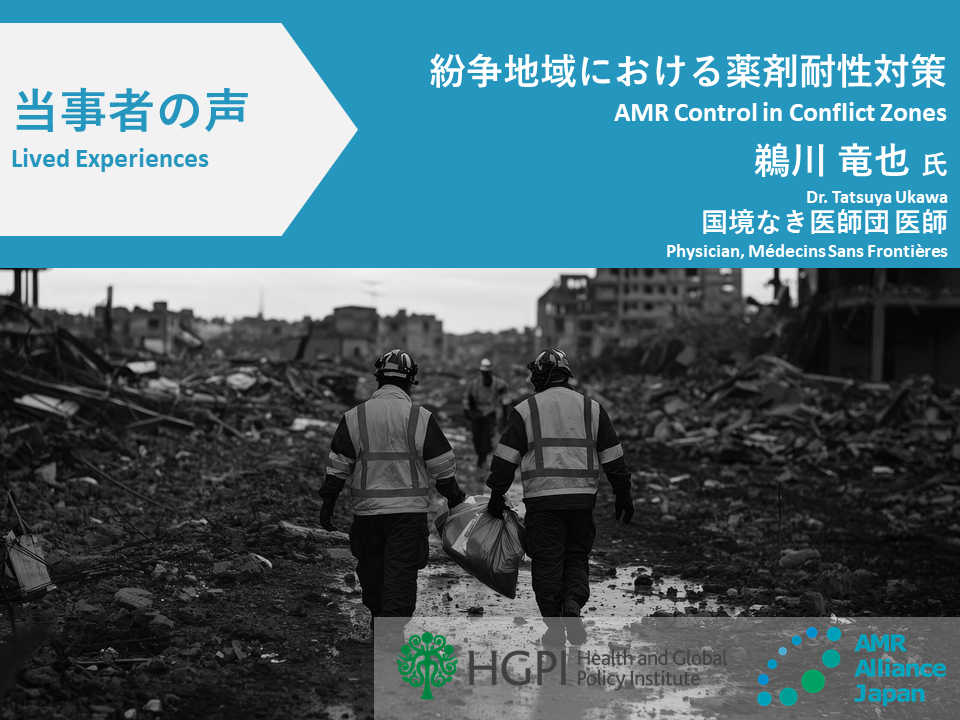
[Lived Experiences] AMR Control in Conflict Zones: Challenges and New Perspectives on AMR Control in Conflict Zones as Seen in Medical Practice in the Gaza Strip (July 1, 2025)
-
2025-06-12
[Lived Experiences] Experiences with Eye Disease and AMR (June 10, 2025)
-

2024-05-10
[Event Report] Global Expert Meeting “Race Against Resistance - What Will Happen When Drug Resistance Spreads?” (April 23, 2024)
-
2022-03-18
[Lived Experiences] Ms. Sachiko Ito - Non-Tuberculosis Mycobacterial Lung Disease (March 18, 2022)
Top Research & Recommendations Posts
Featured Posts
-
2026-05-18
[Registration Closed] Kick-off Panel Discussion “From Africa and Japan, Drawing from Perspectives Around the World:A Platform for Cultivating a Philosophical Health Dialogue Together” (June 15, 2026)
![[Registration Closed] Kick-off Panel Discussion “From Africa and Japan, Drawing from Perspectives Around the World:A Platform for Cultivating a Philosophical Health Dialogue Together” (June 15, 2026)](https://hgpi.org/en/wp-content/uploads/sites/2/HGPI_20260615_Eyecathch_panel-discussion-From-Japan-and-Africa-in-Discussion-with-the-World_2.png)
-
2026-08-28
[Announcement] The 3rd Kiyoshi Kurokawa Award: Call for Nominations (Deadline: November 30, 2026)
![[Announcement] The 3rd Kiyoshi Kurokawa Award: Call for Nominations (Deadline: November 30, 2026)](https://hgpi.org/en/wp-content/uploads/sites/2/Kiyoshi-Kurokawa-Award_3rd_nominations_eyecatch_caseB_ENG_web_20260929_v0.5.jpg)
-
2026-09-01
[Registration Closed] HGPI Salon 2025-2026 Looking Ahead to the Future of Japan’s Social Security System “Session 6: Japan’s Health Policy through the Lens of Global Security” (October 13, 2026)
![[Registration Closed] HGPI Salon 2025-2026 Looking Ahead to the Future of Japan’s Social Security System “Session 6: Japan’s Health Policy through the Lens of Global Security” (October 13, 2026)](https://hgpi.org/en/wp-content/uploads/sites/2/HGPISalon2025-20266.png)
-
2026-09-17
[Registration Open] (Webinar) The 145th HGPI Seminar “Toward Better AMR Measures at Elderly Care Facilities—Considering Infectious Disease Control in a Super-Aged Society From a Policy Perspective” (October 27, 2026)
![[Registration Open] (Webinar) The 145th HGPI Seminar “Toward Better AMR Measures at Elderly Care Facilities—Considering Infectious Disease Control in a Super-Aged Society From a Policy Perspective” (October 27, 2026)](https://hgpi.org/en/wp-content/uploads/sites/2/HGPIseminar145.png)
-
2026-10-06
[Registration Open] (Webinar) The 146th HGPI Seminar “How We Can Build a Society That Supports Choices Around Organ Donation: Exploring Decision-Making by Citizens and a Multi-Layered Approach Through Strategic Social Marketing” (November 9, 2026)
![[Registration Open] (Webinar) The 146th HGPI Seminar “How We Can Build a Society That Supports Choices Around Organ Donation: Exploring Decision-Making by Citizens and a Multi-Layered Approach Through Strategic Social Marketing” (November 9, 2026)](https://hgpi.org/en/wp-content/uploads/sites/2/HGPI_20261001_Eyecatch_HGPIseminer-146th-1.png)
