


[Research Report] AMR Policy Update #5: Cancer Care and AMR (Part 2)

![[Research Report] AMR Policy Update #5: Cancer Care and AMR (Part 2)](https://hgpi.org/en/wp-content/uploads/sites/2/HGPI_20260204_AMR-Policy-Update-5.png)
<POINTS>
- The spread of antimicrobial-resistant bacteria is increasing infection risk among cancer patients in both inpatient and outpatient settings. In Japan, approximately 40% of Escherichia coli are resistant to fluoroquinolones, which are commonly used for prophylaxis in febrile neutropenia.
- Unnecessary use of broad-spectrum antibiotics may also affect cancer treatment outcomes. Among patients receiving immunotherapies such as immune checkpoint inhibitors, antibiotic-induced changes in the gut microbiota have been reported to be associated with poorer treatment outcomes, making it increasingly important to balance infectious disease management with optimal cancer care.
- To fully realize the benefits of continued progress in cancer care, AMR measures should be recognized as an increasingly critical issue. Policy discussions that address cancer control and AMR as an integrated agenda are also warranted.
Why have we begun to see such changes in which antibiotics appear less effective? One major contributing factor is the progression of antimicrobial resistance (AMR). AMR refers to the phenomenon in which bacteria (pathogens), after repeated exposure to antibiotics, acquire resistance through mechanisms such as genetic mutations, thereby becoming less susceptible to the same drugs. As a result, the effectiveness of antibiotics diminishes over time, or may stop working altogether.
E. coli is one of the major causative pathogens of infections, which are a leading cause of fever during neutropenia. Fluoroquinolones are often used as prophylaxis for febrile neutropenia; however, it is well known that resistance rates in E. coli are high in Japan.
Differences in resistance rates across countries and regions
Bacterial resistance rates are strongly influenced by patterns of antibiotic use and hygiene conditions and thus vary by region. For example, in Europe, particularly in Southern European countries, fluoroquinolone-resistant E. coli has historically accounted for a high proportion around 30% to 40%.1 In recent years, Japan has shown similarly high resistance rates: the proportion of fluoroquinolone-resistant E. coli increased from 35.5% in 2013 to 40.4% in 2021, indicating a continued upward trend.2
Higher risks in inpatient settings
In Japan, resistance rates among hospitalized patients are even higher. Among E. coli isolates recovered from inpatients, the proportion resistant to fluoroquinolones rose from 24% in 2007 to 41.5% in 2020.3 4 In inpatient settings, where many patients have impaired immunity due to cancer treatment, resistant bacteria are more likely to emerge and become established, raising concerns that preventing and treating infections with antibiotics will become increasingly difficult. This risk is amplified by repeated use of broad-spectrum antibiotics—agents that act against a wide range of organisms—which can promote the emergence of resistant bacteria. In some cases, by the time resistance is recognized, the organisms may already have spread among multiple patients within a ward.
Outpatient cancer care and challenges posed by resistant bacteria
At the same time, some patients receiving outpatient chemotherapy also develop neutropenia, and face risks that differ from those who are hospitalized, such as exposure to community-circulating infections such as influenza and COVID-19, along with potential issues related to resistant bacteria.
Nevertheless, outpatient care is increasingly being opted for, because of the ongoing shift of cancer treatment to outpatient settings in recent years, as well as improvements in patients’ living environments that make ambulatory care feasible in a growing number of cases. In terms of expanding patients’ options for daily life, this represents a major advancement in cancer care. On the other hand, even patients at high risk of infection due to profound neutropenia may, in some cases, still be managed as outpatients.
Cutting-edge therapies and the antibiotic dilemma
In recent years, immune checkpoint inhibitors have become widely used in clinical practice, particularly for patients with solid tumors. However, many studies have reported that exposure to broad-spectrum antibiotics in patients receiving these therapies is associated with poorer treatment outcomes.5 In particular, it has been reported that patients who received broad-spectrum antibiotics within one month prior to administration of an immune checkpoint inhibitor had lower post-treatment survival compared with those who did not. A pooled analysis integrating 107 studies conducted around 2020 also reported significant reductions in overall survival and progression-free survival among patients with cancer.6
One proposed mechanism is that broad-spectrum antibiotic use disrupts the balance of the gut microbiota, which in turn impairs the function of T cells that attack tumors, thereby weakening the efficacy of immune checkpoint inhibitors and reducing antitumor effects. While broad-spectrum antibiotics are indispensable for treating severe infections, there is a strong need for appropriate antibiotic use in oncology as well, and for approaches that minimize impacts on the gut microbiota.
Protecting cancer care through AMR measures
If antibiotics become less effective due to AMR and infections become more difficult to prevent and treat, patients with cancer may be forced to forgo the care they should otherwise be able to receive. When infections occur during chemotherapy, treatment may need to be interrupted temporarily. Severe infections during cancer treatment can also lead to situations in which the next cycle of chemotherapy cannot be administered at the planned dose, or treatment itself must be postponed. As a result, there is a risk that adequate chemotherapy dosing cannot be delivered as scheduled. There is also the possibility of death from infection, or serious sequelae and complications.
To fully benefit from continued advances in cancer care, AMR measures will become an even more critical issue going forward. In 2026, Japan will mark 20 years since the enactment of the Cancer Control Act, and the mid-term evaluation of the Fourth Basic Plan to Promote Cancer Control Programs will begin in earnest. At this important juncture, it is hoped that policy discussions will advance by viewing cancer control and AMR measures as an integrated agenda and addressing both in tandem.
This article was developed based on discussions from the Global Expert Meeting “Race Against Resistance – What Will Happen When Drug Resistance Spreads?” held on April 23, 2024, and was supplemented with additional interviews.
References
- European Centre for Disease Prevention and Control. (2025). Surveillance of antimicrobial resistance in Europe, 2024 data [Executive summary]. Stockholm: ECDC. Retrieved from https://www.ecdc.europa.eu/en/publications-data/surveillance-antimicrobial-resistance-europe-2024-data
- Ministry of Health, Labour and Welfare. (2023). National Action Plan on Antimicrobial Resistance (AMR) 2023-2027. Ministry of Health, Labour and Welfare. https://www.mhlw.go.jp/content/10900000/0000138942.pdf
- Tsuzuki, S., et al. (2022). Antimicrobial prescription practices for outpatients with respiratory infections in Japan: A retrospective claims database study. Scientific Reports, 12, 5949. https://www.nature.com/articles/s41598-022-09946-8
- Ministry of Health, Labour and Welfare. (2024). Annual Open Report 2024 (All Facilities). Japan Nosocomial Infections Surveillance (JANIS), Clinical Laboratory Division. https://janis.mhlw.go.jp/report/kensa.html
- Pinato, D. J., Howlett, S., Ottaviani, D., et al. (2019). Association of prior antibiotic treatment with survival and response to immune checkpoint inhibitor therapy in patients with cancer. JAMA Oncology, 5(12), 1774–1778. https://doi.org/10.1001/jamaoncol.2019.2785
- Crespin, A., Vasseur, A., et al. (2023). Impact of antibiotic use on clinical outcomes of cancer patients treated with immune checkpoint inhibitors: A systematic review and meta-analysis. Frontiers in Oncology, 13, 1075593. https://doi.org/10.3389/fonc.2023.1075593
Acknowledgements
Keiji Okinaka (Division of Infectious Diseases, National Cancer Center Hospital East / Division of Hematopoietic Stem Cell Transplantation, National Cancer Center Hospital)
We would like to express our sincere gratitude for the many helpful comments and suggestions we received in preparing this report.
Authors
Kenta Wakatabe (Intern, Health and Global Policy Institute)
Shotaro Tsukamoto (Senior Associate, Health and Global Policy Institute)
Gail Co (Program Specialist, Health and Global Policy Institute)
Yui Kohno (Manager, Health and Global Policy Institute)
Related Posts
-
2026-02-05
[Research Report] AMR Policy Update #4: Cancer Care and AMR (Part 1)
-
2025-12-24
[Research Report] AMR Policy Update #3: Human Mobility and AMR
-
2025-11-26
[Research Report] AMR Policy Update #2: WHO’s First Report on Fungal Infection—Bridging the Gap Between Clinical Practice and R&D
-
2025-11-21
[Research Report] AMR Policy Update #1: AMR Policy for the Next Decade and the Next Century
-
2024-05-10
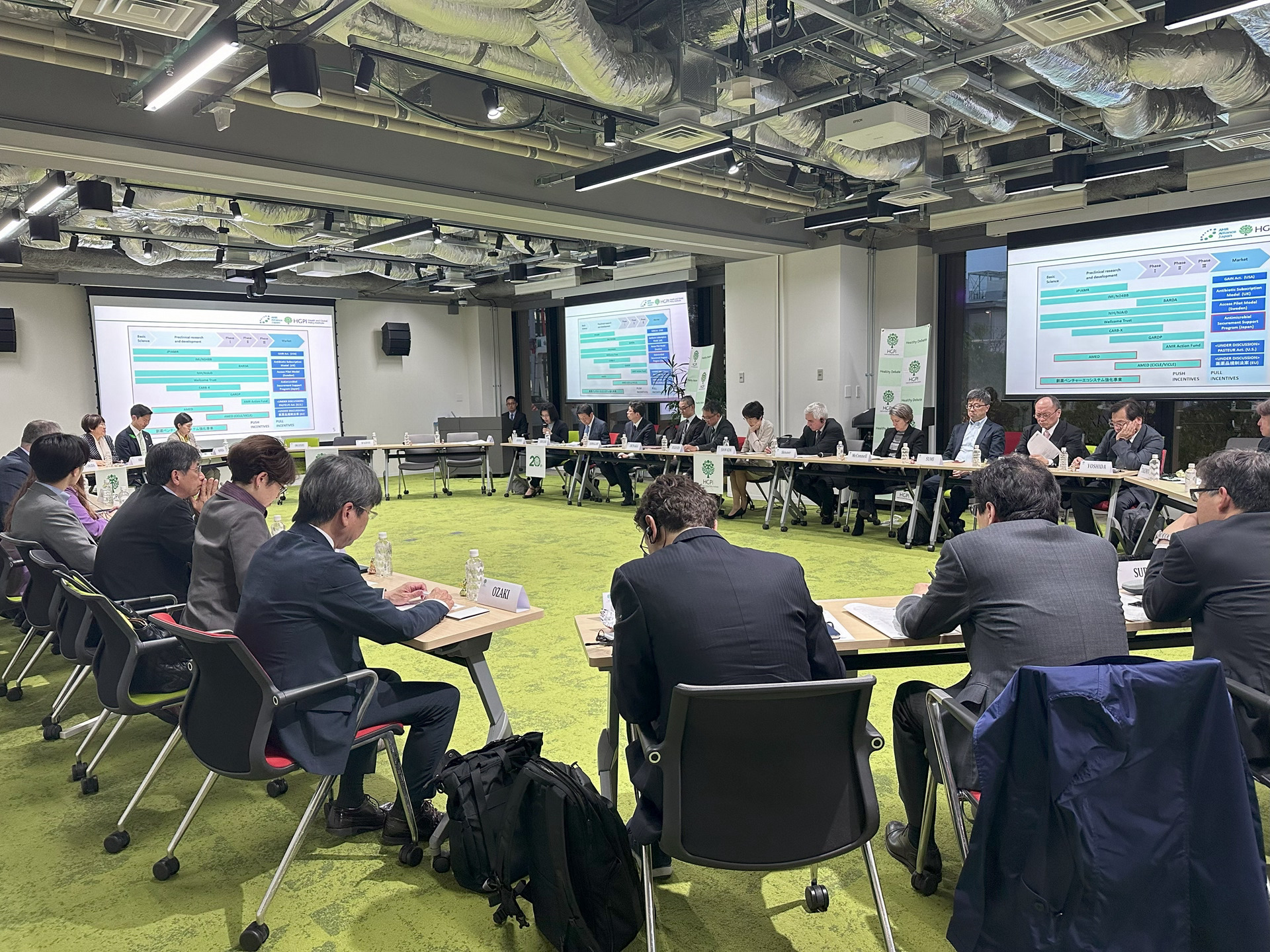
[Event Report] Global Expert Meeting “Race Against Resistance - What Will Happen When Drug Resistance Spreads?” (April 23, 2024)
-
2025-07-01
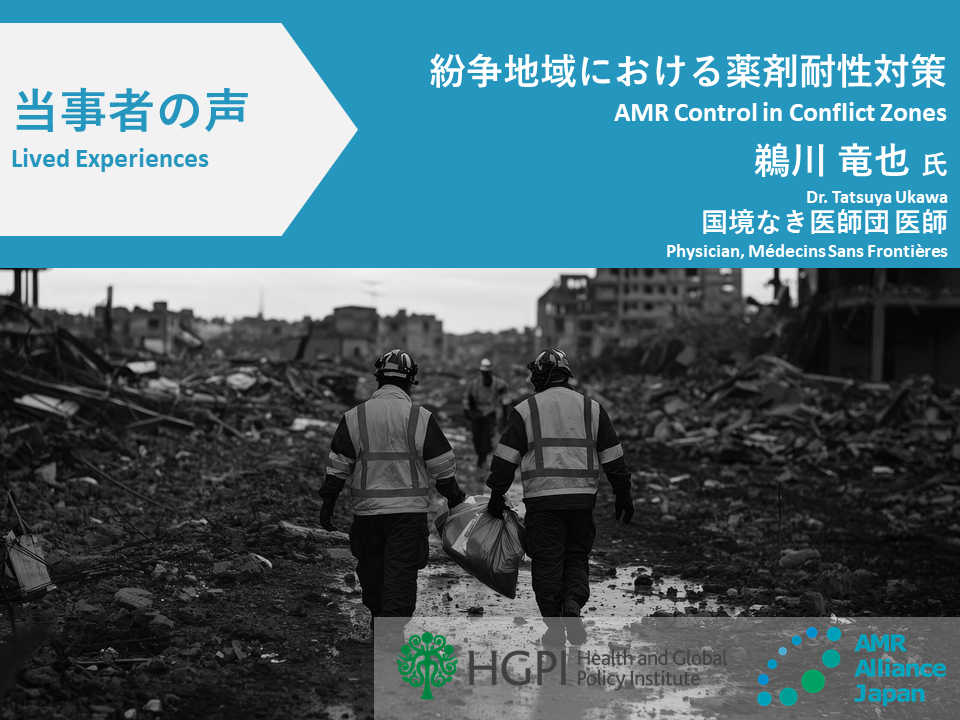
[Lived Experiences] AMR Control in Conflict Zones: Challenges and New Perspectives on AMR Control in Conflict Zones as Seen in Medical Practice in the Gaza Strip (July 1, 2025)
-
2025-06-12
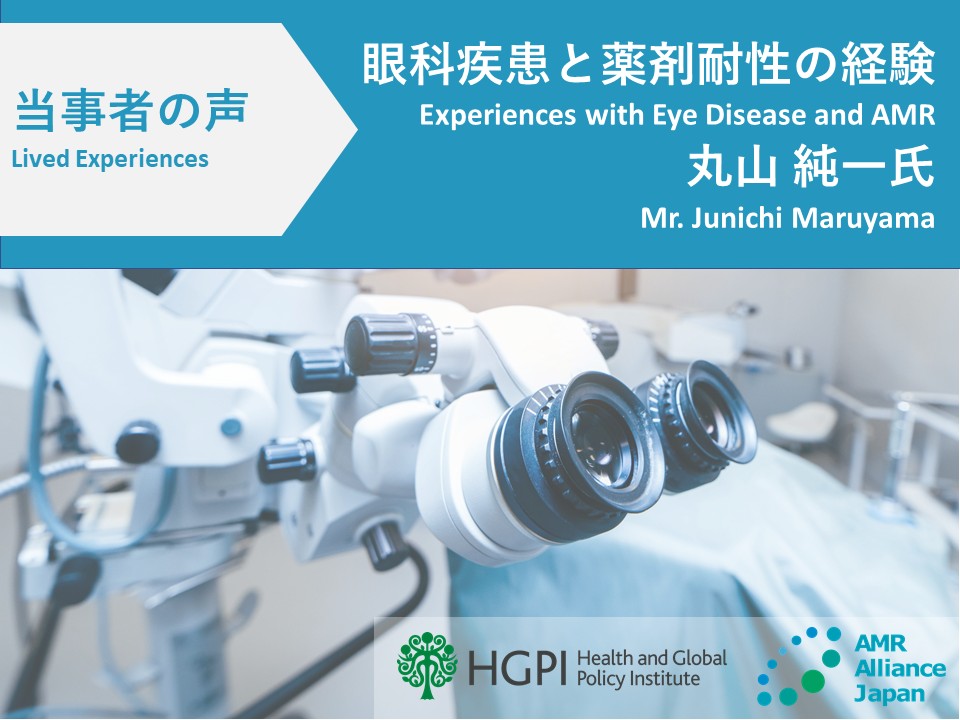
[Lived Experiences] Experiences with Eye Disease and AMR (June 10, 2025)
-
2022-03-18
[Lived Experiences] Ms. Sachiko Ito - Non-Tuberculosis Mycobacterial Lung Disease (March 18, 2022)
Top Research & Recommendations Posts
Featured Posts
-
2026-05-18
[Registration Closed] Kick-off Panel Discussion “From Africa and Japan, Drawing from Perspectives Around the World:A Platform for Cultivating a Philosophical Health Dialogue Together” (June 15, 2026)
![[Registration Closed] Kick-off Panel Discussion “From Africa and Japan, Drawing from Perspectives Around the World:A Platform for Cultivating a Philosophical Health Dialogue Together” (June 15, 2026)](https://hgpi.org/en/wp-content/uploads/sites/2/HGPI_20260615_Eyecathch_panel-discussion-From-Japan-and-Africa-in-Discussion-with-the-World_2.png)
-
2026-08-28
[Announcement] The 3rd Kiyoshi Kurokawa Award: Call for Nominations (Deadline: November 30, 2026)
![[Announcement] The 3rd Kiyoshi Kurokawa Award: Call for Nominations (Deadline: November 30, 2026)](https://hgpi.org/en/wp-content/uploads/sites/2/Kiyoshi-Kurokawa-Award_3rd_nominations_eyecatch_caseB_ENG_web_20260929_v0.5.jpg)
-
2026-09-01
[Registration Closed] HGPI Salon 2025-2026 Looking Ahead to the Future of Japan’s Social Security System “Session 6: Japan’s Health Policy through the Lens of Global Security” (October 13, 2026)
![[Registration Closed] HGPI Salon 2025-2026 Looking Ahead to the Future of Japan’s Social Security System “Session 6: Japan’s Health Policy through the Lens of Global Security” (October 13, 2026)](https://hgpi.org/en/wp-content/uploads/sites/2/HGPISalon2025-20266.png)
-
2026-09-17
[Registration Open] (Webinar) The 145th HGPI Seminar “Toward Better AMR Measures at Elderly Care Facilities—Considering Infectious Disease Control in a Super-Aged Society From a Policy Perspective” (October 27, 2026)
![[Registration Open] (Webinar) The 145th HGPI Seminar “Toward Better AMR Measures at Elderly Care Facilities—Considering Infectious Disease Control in a Super-Aged Society From a Policy Perspective” (October 27, 2026)](https://hgpi.org/en/wp-content/uploads/sites/2/HGPIseminar145.png)
-
2026-10-06
[Registration Open] (Webinar) The 146th HGPI Seminar “How We Can Build a Society That Supports Choices Around Organ Donation: Exploring Decision-Making by Citizens and a Multi-Layered Approach Through Strategic Social Marketing” (November 9, 2026)
![[Registration Open] (Webinar) The 146th HGPI Seminar “How We Can Build a Society That Supports Choices Around Organ Donation: Exploring Decision-Making by Citizens and a Multi-Layered Approach Through Strategic Social Marketing” (November 9, 2026)](https://hgpi.org/en/wp-content/uploads/sites/2/HGPI_20261001_Eyecatch_HGPIseminer-146th-1.png)
