


[Event Report] The 138th HGPI Seminar “Stress Management Education that Protects Children’s Futures – The Importance of Preventive Mental Health Support” (August 28, 2025)
date : 1/5/2026
Tags: Child Health, HGPI Seminar

![[Event Report] The 138th HGPI Seminar “Stress Management Education that Protects Children’s Futures – The Importance of Preventive Mental Health Support” (August 28, 2025)](https://hgpi.org/en/wp-content/uploads/sites/2/hs138-topr-1.png)
The situation surrounding children’s mental health in Japan has become extremely serious in recent years. For example, the number of suicides among elementary, middle school, and high school students has remained near record highs since such statistics were first collected. Given this context, there has been growing public interest in children’s mental health care and recognition of the importance of preventive approaches that help children learn to respond appropriately to stress and other challenges. Research has also shown that when attempting to elevate children’s lifelong wellbeing and adaptability to the environment over the long-term, preventive approaches are more effective than symptomatic support provided after problems have become serious.
Against this backdrop, Health and Global Policy Institute (HGPI) Child Health Project launched a three-year initiative with support from the Nippon Foundation to develop a stress management program that is based on the Cognitive Behavioral Therapy (CBT) for a wide range of age groups, from preschoolers to high school students.
In this HGPI Seminar, we were honored to welcome Prof. Shunsuke Koseki (Associate Professor, College of Liberal Arts and Sciences, J. F. Oberlin University), who has provided extensive support for this project over a wide range of areas, from program design to the implementation of outcome evaluation, and who has been leading research on children’s stress management in Japan. Prof. Koseki spoke on the importance of preventive mental health support and introduced practical approaches for implementing it.
<POINTS>
- While child suicides and school non-attendance have reached record highs, opportunities for stress management education are extremely limited, totaling only about two hours over the nine years of compulsory education, posing a major challenge in the lack of preventive support opportunities.
- The goal of stress management education is not to eliminate stress entirely, but to understand stress as a mind-body “alarm function” and to gradually develop self-control skills to manage it appropriately.
- Stress management is rooted in CBT, an approach that breaks the vicious cycle of stress and enhances self-regulatory skills by adjusting two intervening factors between a stressor (event) and a stress response: cognition (way of thinking) and coping (actions).
- The three core pillars of stress management education are: “understanding how the mind works”, “noticing positive events in daily life”, and “acquiring help-seeking skills (how to reach out for SOS)”.
- While knowledge of stress management can be acquired in a single lesson, it is essential to implement it in daily life and accumulate successful experiences. To ensure lasting effects, it is necessary to secure opportunities for multi-layered and continuous support through collaboration with teachers and parents/guardians.
Deteriorating Children’s Mental Health and the Lack of Preventive Support Opportunities in Education
In Japan, with the number of suicides among elementary, middle, and high school students remaining at record levels, while bullying and school non-attendance are also on the rise, the mental health situation for children is extremely dire. Despite various measures, including education on how to reach out for help, countermeasures for non-attendance such as the “COCOLO Plan,” and anti-bullying initiatives, significant improvements have not yet been realized. Stress is believed to be the underlying cause for these behaviors, and in recent years the importance of preventive support before problems become severe has grown.
Although stress management is considered an effective method, current learning opportunities are insufficient. In elementary school in health and physical education classes, only one hour is allocated to stress management out of three hours dedicated to mental health over six years, also only one hour in middle school. This means children receive only two hours of such education across nine years of compulsory education, largely due to a lack of designated teaching slots and a lack of placement within the National Curriculum Standards (Course of Study).
The Significance of CBT-based Stress Management Education to Foster the Ability to Appropriately Manage Stress
Stress management education does not aim to “eliminate” stress, but rather to “appropriately live with” stress as an alarm function. In other words, it is important to focus on the process by which stress occurs.
The foundational method for stress management is CBT, which encompasses various psychological approaches previously implemented in schools, including social skills training, assertiveness, and anger management. CBT starts with the understanding that cognition (thoughts) and coping behaviors intervene between a stressor (event) and a stress response (physical/mental reaction), influencing the level of stress. By breaking the negative cycle of cognition and behavior and reinforcing desirable alternative behaviors, stress management fosters the ability to deal with stress appropriately. A key characteristic is focusing on immediate outcomes of behavior rather than long-term ones, emphasizing the accumulation of small successful experiences.
Implementing Stress Management Education to Learn Mental Mechanisms and Foster Emotional Self-Regulation
In CBT-based stress management education, it is essential for children to first understand the mind’s mechanisms, including the roles of stressors, stress responses, cognition, and coping behaviors. Activities then focus on intentionally identifying small “positive events”—joyful or fun daily occurrences—to create a cycle of positive feelings.Education on how to reach out for help (SOS) is also vital. This involves nurturing the ability to distinguish between problems one can solve alone and those that require external help. In the latter case, children learn skills for selecting the right person to consult (considering the person’s situation and ability to help) and making specific requests (clarifying what they need).
Regarding evaluation, it is important to use the increase in positive events and sense of achievement as primary indicators, rather than just the reduction of problems. The ultimate goal is to gradually develop a child’s self-control skills to self-regulate their own emotions, thoughts, and behaviors.
The Need for Multi-layered and Continuous Support to Solidify Skills
While stress management skills can be gained in a single class, they will not take be fully established without daily implementation and successful experiences in daily life. Therefore, to maximize effectiveness, collaboration with teachers and parents/guardians who interact with children on a daily basis is essential to ensure continuous practice and feedback.
An ideal approach is multi-layered support: first building a common foundation through group support (e.g., classroom-based lessons), followed by stress checks to identify high-risk groups and connecting them to individualized support and medical coordination. Because stress management techniques learned in childhood are universal and applicable in adulthood, acquiring these skills early is beneficial throughout one’s life.
Major barriers to implementing stress management include limited classroom time, a lack of knowledge in teacher training programs, and a lack of skills among implementers. To overcome these challenges, effective methods to support on-site implementation include classroom formats where teachers and school counselors collaborate and the use of teaching materials that include ready-to-use lesson plans.
Stress Management Practice Beyond Schools in the Digital Age and the Importance of Early Support Tailored to Each Child’s Characteristics
For today’s children, digital devices like smartphones and games can be stressors, yet eliminating their use entirely is difficult. The key is learning how to interact effectively with these devices by designing a positive life cycle that balances its use with offline activities such as exercise and interpersonal experiences. While digital technology can also provide self-checks and learning opportunities via apps and videos, it is recommended that these be used alongside face-to-face support for maximum effectiveness.
Furthermore, implementing stress management is meaningful when implemented in a wide range of settings, including not only in schools but also in homes, companies, educational centers, and private developmental support services. Children with intellectual or developmental disabilities in particular face higher stress levels and may have difficulty to recognize stress themselves. Therefore, it is crucial for surrounding adults, such as teachers, parents/guardians, and supporters, to closely observe signs and intervene early to prevent secondary disorders such as depression or anxiety.
[Event Overview]
- Speaker: Prof. Shunsuke Koseki (Associate Professor, College of Liberal Arts and Sciences, J. F. Oberlin University)
- Date & Time: Thursday, August 28, 2025, 17:00-18:15 JST
- Format: Online (Zoom webinar)
- Language: Japanese
- Participation Fee: Free
- Capacity: 1,000 participants
■Profile:
Shunsuke Koseki (Associate Professor, College of Liberal Arts and Sciences, J. F. Oberlin University)
Professor Shunsuke Koseki was born in Yamagata Prefecture. He earned a Ph.D. in School Education from the Joint Graduate School in Science of School Education at the Hyogo University of Teacher Education in 2009. After serving as Research Fellow at the Japan Society for the Promotion of Science (JSPS), and Assistant Professor and Lecturer at Aichi University of Education, he joined J. F. Oberlin University as a Lecturer in 2014 and assumed his current position in 2019. He is a Certified Public Psychologist, a Japan Society of Stress Management Stress Management Practitioner®, and a certified Cognitive Behavioral Therapy Supervisor®. His other roles include Chair, Education and Special Support Board, Japanese Society of Certified Public Psychologist; Executive Director, Japan Society of Stress Management; and Board Member, Japanese Association for Behavioral and Cognitive Therapies. His published works include Stress Management Education Programs that Seamlessly Connect Elementary, Middle, and High School (Kanekoshobo; as co-author), A Guidance Program on Special-Needs Support for High School Students Based on the Perspective of Independent Activities (Kanekoshobo; as co-editor), and Stress Management Techniques for Parents and Children for Managing Life at Preschool (Chuohoki Publishing CO., Ltd.; as editor).

Related Posts
-
2025-12-12
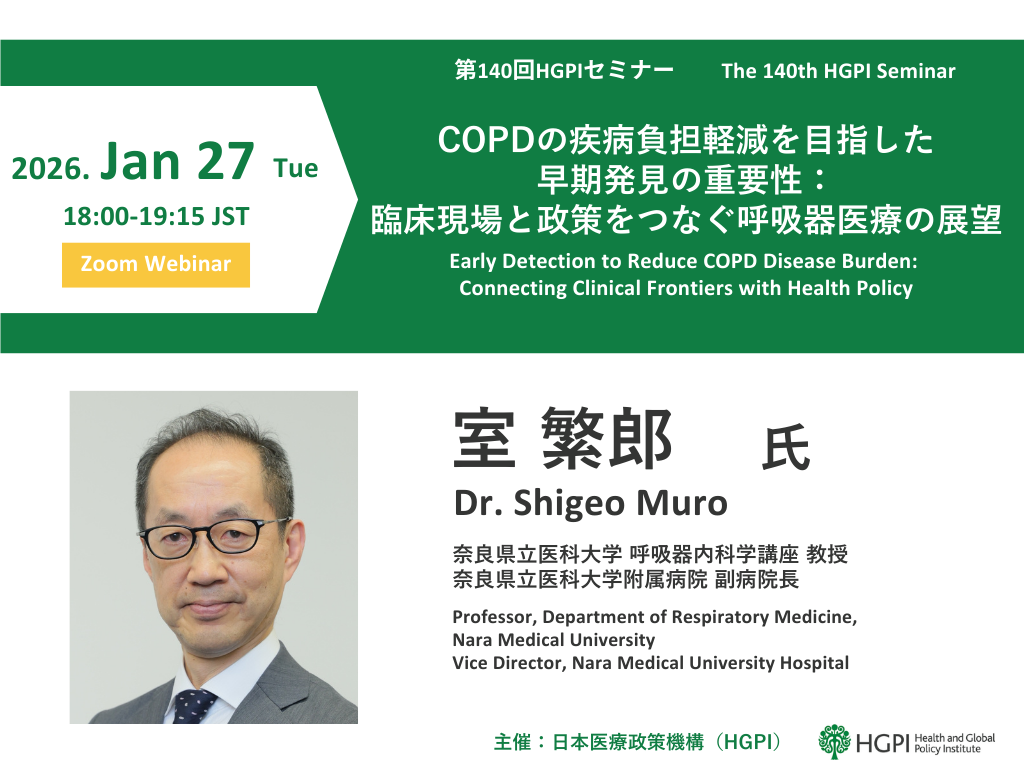
[Registration Closed] (Webinar) The 140th HGPI Seminar “Early Detection to Reduce COPD Disease Burden: Connecting Clinical Frontiers with Health Policy” (January 27, 2026)
-
2025-08-12
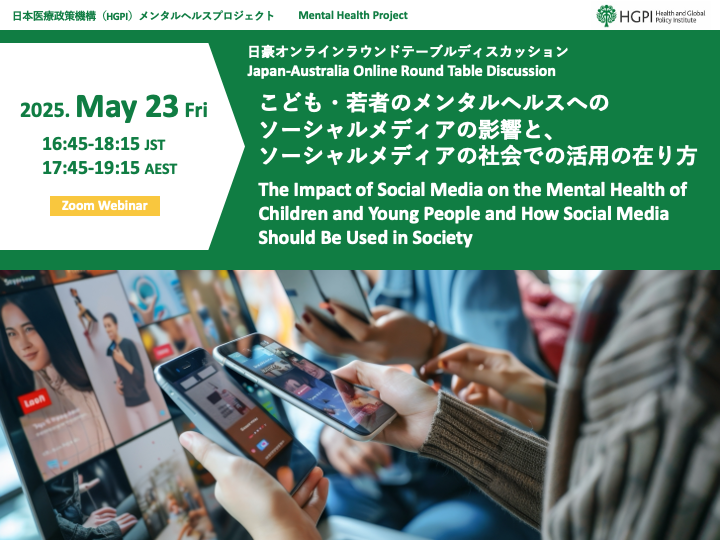
[Event Report] Japan-Australia Online Round Table Discussion “The Impact of Social Media on the Mental Health of Children and Young People and How Social Media Should Be Used in Society“ (May 23, 2025)
-
2025-04-30
[Policy Recommendations] Strengthening Lifelong Mental Health Support for Children with Intellectual Disabilities (April 30, 2025)
-
2025-02-07
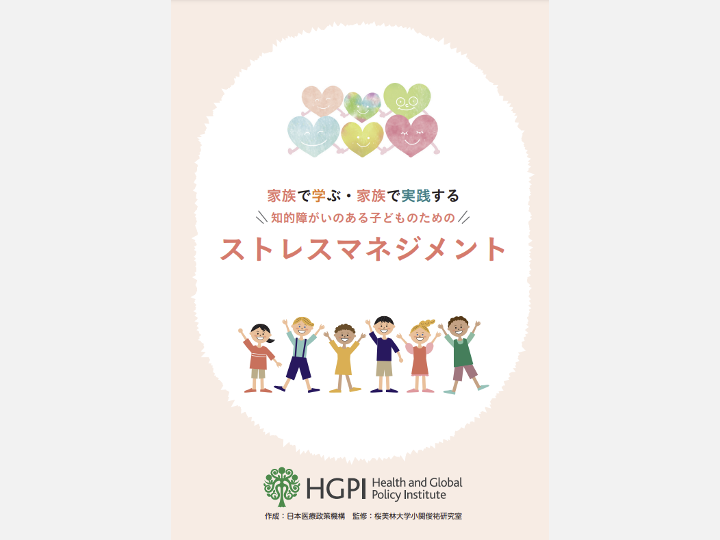
[Publication Report] The Child Health Project Publishes Family Mental Health Booklet “Learning and Practicing at Home – Stress Management for Children with Intellectual Disabilities” (February 3, 2025)
-
2024-11-05
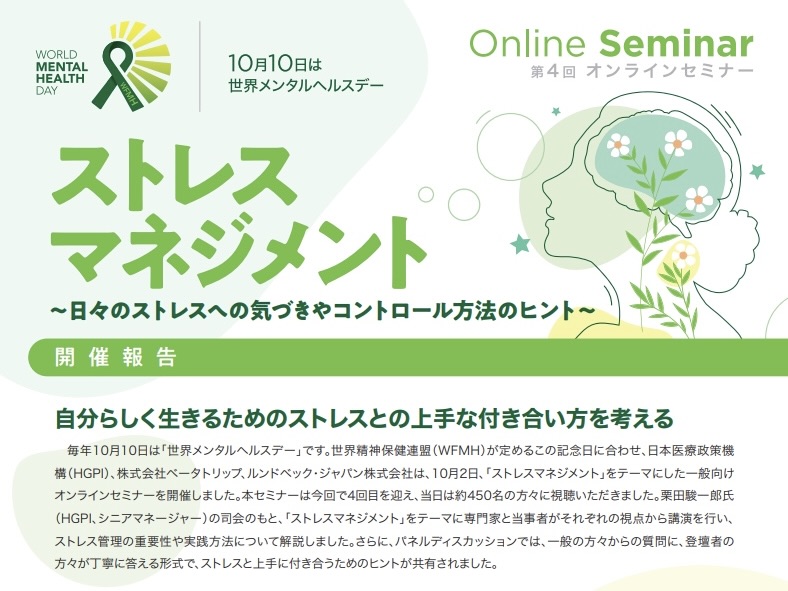
[Event Report] An Online Seminar on Stress Management to Mark World Mental Health Day 2024 (October 2, 2024)
-
2023-03-22
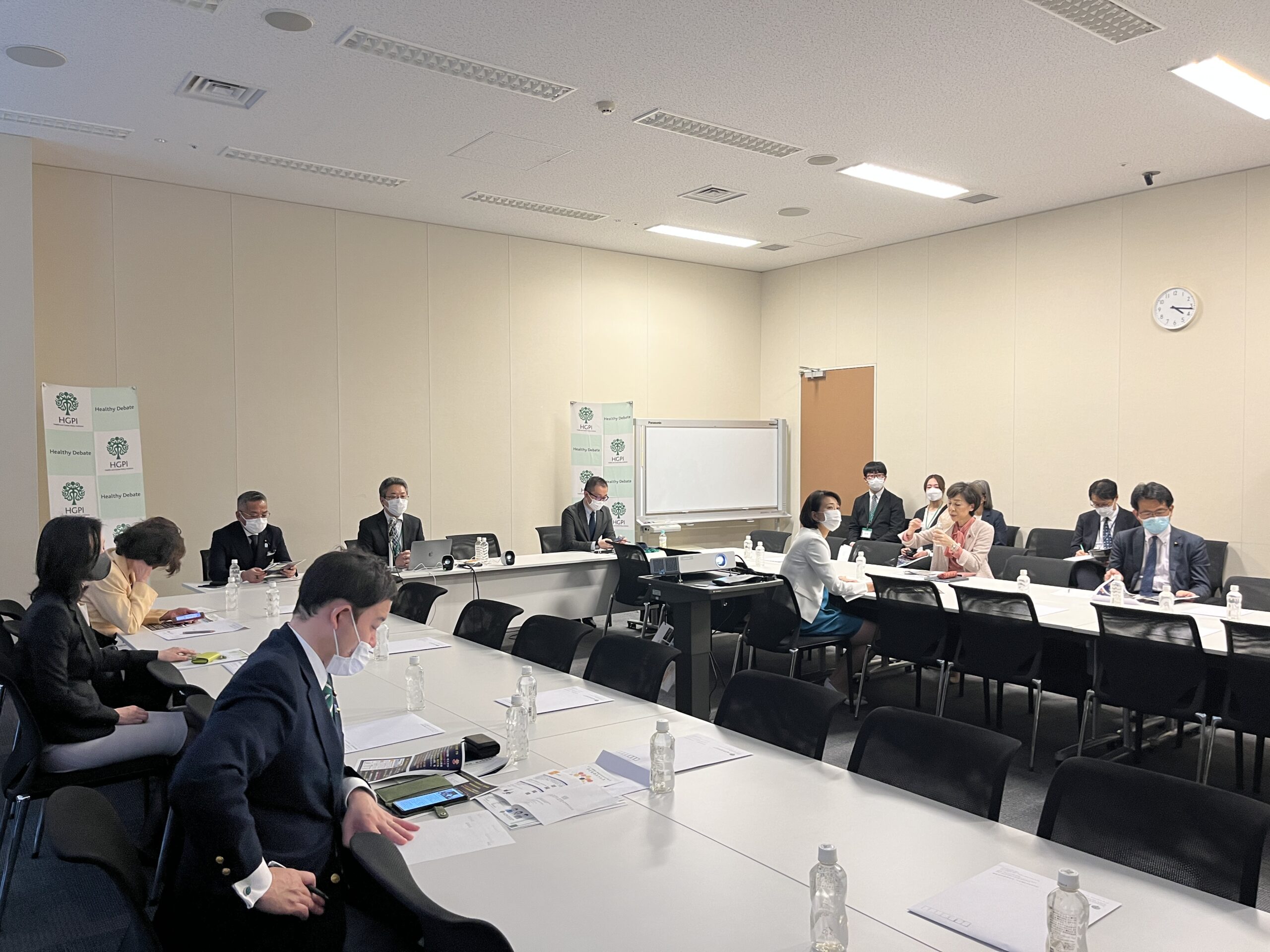
[Event Report] Non-partisan Diet Member Briefing – 30-minute Health Policy Update: “Considering Children’s Mental Health – Issues in Classrooms and Stress Management” (March 9, 2023)
-
2022-06-24
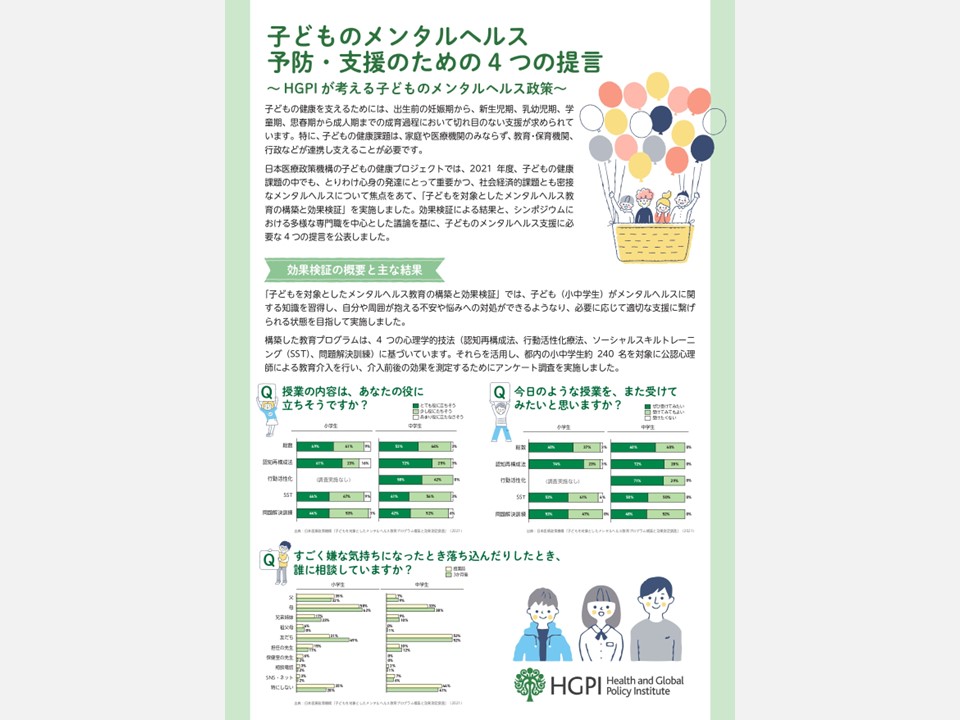
[Recommendations] Four Recommendations for Prevention and Support in Children’s Mental Health – HGPI’s View on Children’s Mental Health Policy (June 24, 2022)
-
2021-09-27
[HGPI Policy Column] No.25 – From the Child Health Team – Child Health Column 4 – Adolescent Mental Health Literacy and Its Importance
Top Research & Recommendations Posts
Featured Posts
-
2026-05-18
[Registration Closed] Kick-off Panel Discussion “From Africa and Japan, Drawing from Perspectives Around the World:A Platform for Cultivating a Philosophical Health Dialogue Together” (June 15, 2026)
![[Registration Closed] Kick-off Panel Discussion “From Africa and Japan, Drawing from Perspectives Around the World:A Platform for Cultivating a Philosophical Health Dialogue Together” (June 15, 2026)](https://hgpi.org/en/wp-content/uploads/sites/2/HGPI_20260615_Eyecathch_panel-discussion-From-Japan-and-Africa-in-Discussion-with-the-World_2.png)
-
2026-08-28
[Announcement] The 3rd Kiyoshi Kurokawa Award: Call for Nominations (Deadline: November 30, 2026)
![[Announcement] The 3rd Kiyoshi Kurokawa Award: Call for Nominations (Deadline: November 30, 2026)](https://hgpi.org/en/wp-content/uploads/sites/2/Kiyoshi-Kurokawa-Award_3rd_nominations_eyecatch_caseB_ENG_web_20260929_v0.5.jpg)
-
2026-09-01
[Registration Closed] HGPI Salon 2025-2026 Looking Ahead to the Future of Japan’s Social Security System “Session 6: Japan’s Health Policy through the Lens of Global Security” (October 13, 2026)
![[Registration Closed] HGPI Salon 2025-2026 Looking Ahead to the Future of Japan’s Social Security System “Session 6: Japan’s Health Policy through the Lens of Global Security” (October 13, 2026)](https://hgpi.org/en/wp-content/uploads/sites/2/HGPISalon2025-20266.png)
-
2026-09-17
[Registration Open] (Webinar) The 145th HGPI Seminar “Toward Better AMR Measures at Elderly Care Facilities—Considering Infectious Disease Control in a Super-Aged Society From a Policy Perspective” (October 27, 2026)
![[Registration Open] (Webinar) The 145th HGPI Seminar “Toward Better AMR Measures at Elderly Care Facilities—Considering Infectious Disease Control in a Super-Aged Society From a Policy Perspective” (October 27, 2026)](https://hgpi.org/en/wp-content/uploads/sites/2/HGPIseminar145.png)
-
2026-10-06
[Registration Open] (Webinar) The 146th HGPI Seminar “How We Can Build a Society That Supports Choices Around Organ Donation: Exploring Decision-Making by Citizens and a Multi-Layered Approach Through Strategic Social Marketing” (November 9, 2026)
![[Registration Open] (Webinar) The 146th HGPI Seminar “How We Can Build a Society That Supports Choices Around Organ Donation: Exploring Decision-Making by Citizens and a Multi-Layered Approach Through Strategic Social Marketing” (November 9, 2026)](https://hgpi.org/en/wp-content/uploads/sites/2/HGPI_20261001_Eyecatch_HGPIseminer-146th-1.png)
