


[Event Report] Open Session at the 84th Annual Meeting of the Japanese Society of Public Health “Municipalities × Planetary Health × Public Health” (October 29, 2025)
date : 12/15/2025
Tags: Planetary Health

![[Event Report] Open Session at the 84th Annual Meeting of the Japanese Society of Public Health “Municipalities × Planetary Health × Public Health” (October 29, 2025)](https://hgpi.org/en/wp-content/uploads/sites/2/HGPI_ph20251029-1-top.png)
On October 29, 2025, Health and Global Policy Institute (HGPI) and the Planetary Health Alliance Japan Hub co-hosted an open session titled “Municipalities × Planetary Health × Public Health” at the 84th Annual Meeting of the Japanese Society of Public Health.
The session brought together participants from a diverse range of positions, including mayors, researchers, practitioners, and students to explore how concrete local issues – such as elder care, living environments, and community-based healthcare coordination – can be addressed through the lens of Planetary Health, which recognizes the “interdependence of human health and the health of the Earth’s natural systems”. Participants discussed practical action plans to generate co-benefits for both health and the environment.
[Overview]
- Date & Time: Wednesday, October 29, 2025, 14:50-16:20 JST
- Format: In-person (Group Work)
- Venue: Room 910, 9th Floor, Venue 8, Granship Shizuoka Convention & Arts Center
- Language: Japanese
- Co-hosts: Health and Global Policy Institute (HGPI), Planetary Health Alliance Japan Hub
Introduction: Towards Action Plans Rooted in Local Challenges
The session opened with introductory remarks from Co-Chairs Prof. Saori Kashima (Director, Planetary Health Innovation Science Center, IDEC Institute for Peace and Coexistence, Hiroshima University / Associate Professor, Laboratory of Environmental Health Sciences, Graduate School of Advanced Science and Engineering, Hiroshima University / Steering Committee Member, Planetary Health Alliance Japan Hub) and Mr. Shu Suzuki (Senior Associate, HGPI).
They explained that the objective of the session was to consider how Planetary Health perspectives can be incorporated into local action plans to address issues related to elderly health, living environments, and healthcare service delivery. They both shared the concept of “human health and the global environment being mutually dependent,” which is at the core of Planetary Health, and they highlighted the importance of multisectoral collaboration among municipalities, public health centers, local communities, and research institutions.
Keynote Explanation: What is Planetary Health?
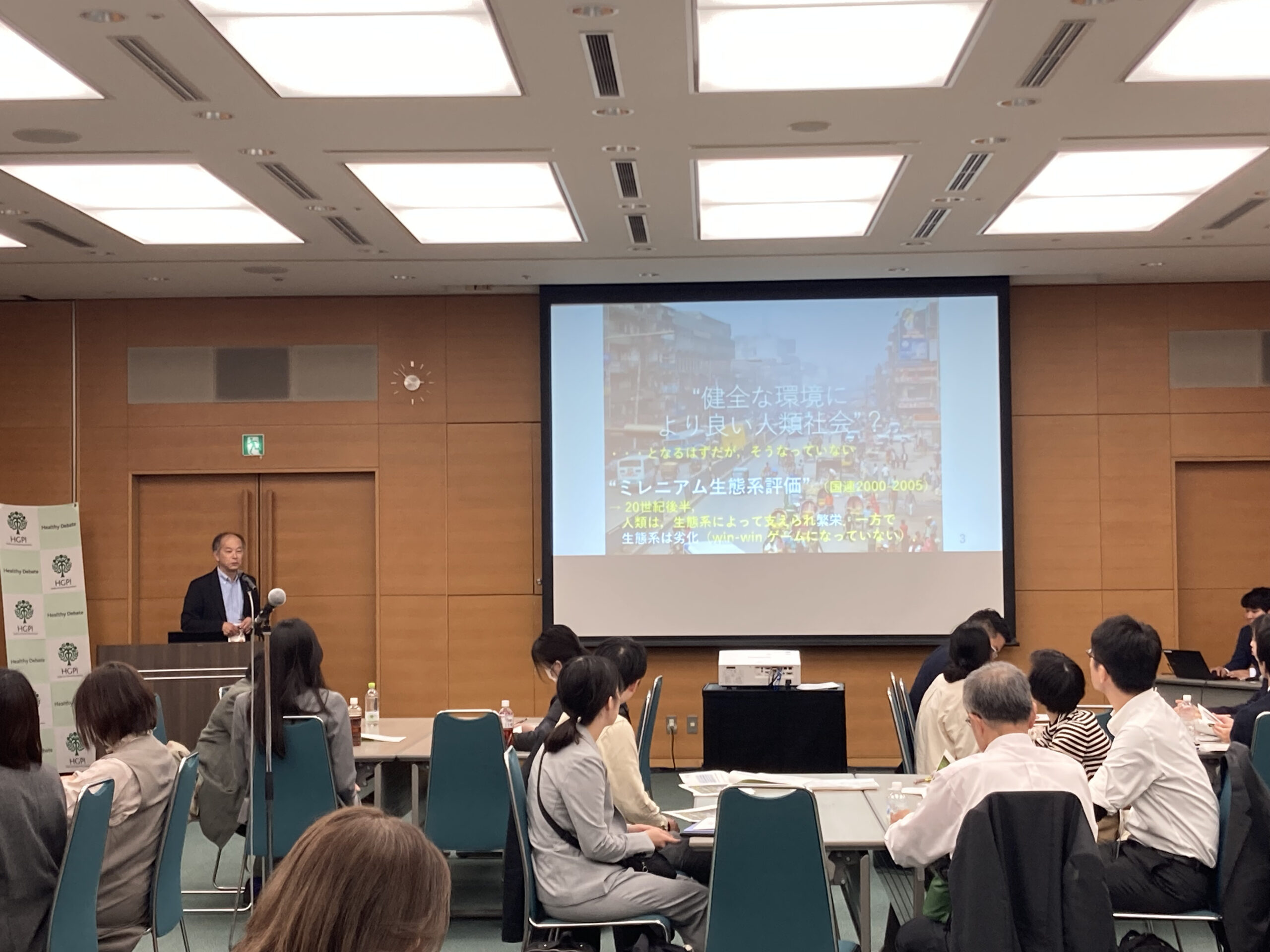
Prof. Chiho Watanabe (Professor, Graduate School of Tropical Medicine and Global Health, Nagasaki University / Chair, Planetary Health Alliance Japan Hub) delivered a keynote presentation titled “What is Planetary Health?”
Professor Watanabe described the essence of Planetary Health as the idea that “a better society can only exist on a healthy environment,” stressing that human development and environmental conservation must advance simultaneously. Referring to the Millennium Ecosystem Assessment, he explained that while humanity has enjoyed increased longevity and economic growth since the second half of the 20th century, the overexploitation of natural resources have simultaneously driven three major crises – climate change, biodiversity loss, and environmental pollution – all of which ultimately threaten human health and well-being.
He also introduced the concept of planetary boundaries, noting that several boundaries are already in a critical state. In this context, he argued that previous implementation of the SDGs has tended to sideline nature-related goals and emphasized the need to understand economic, social, and environmental goals as an “integrated wedding cake structure”.
Planetary Health, he concluded, is a new framework that focuses on the interactions between these elements and calls for pursuing human wellbeing within the limits of the Earth’s systems, with a long-term perspective that includes future generations.
 |
 |
Case Presentation (1): The Healthy City Approach
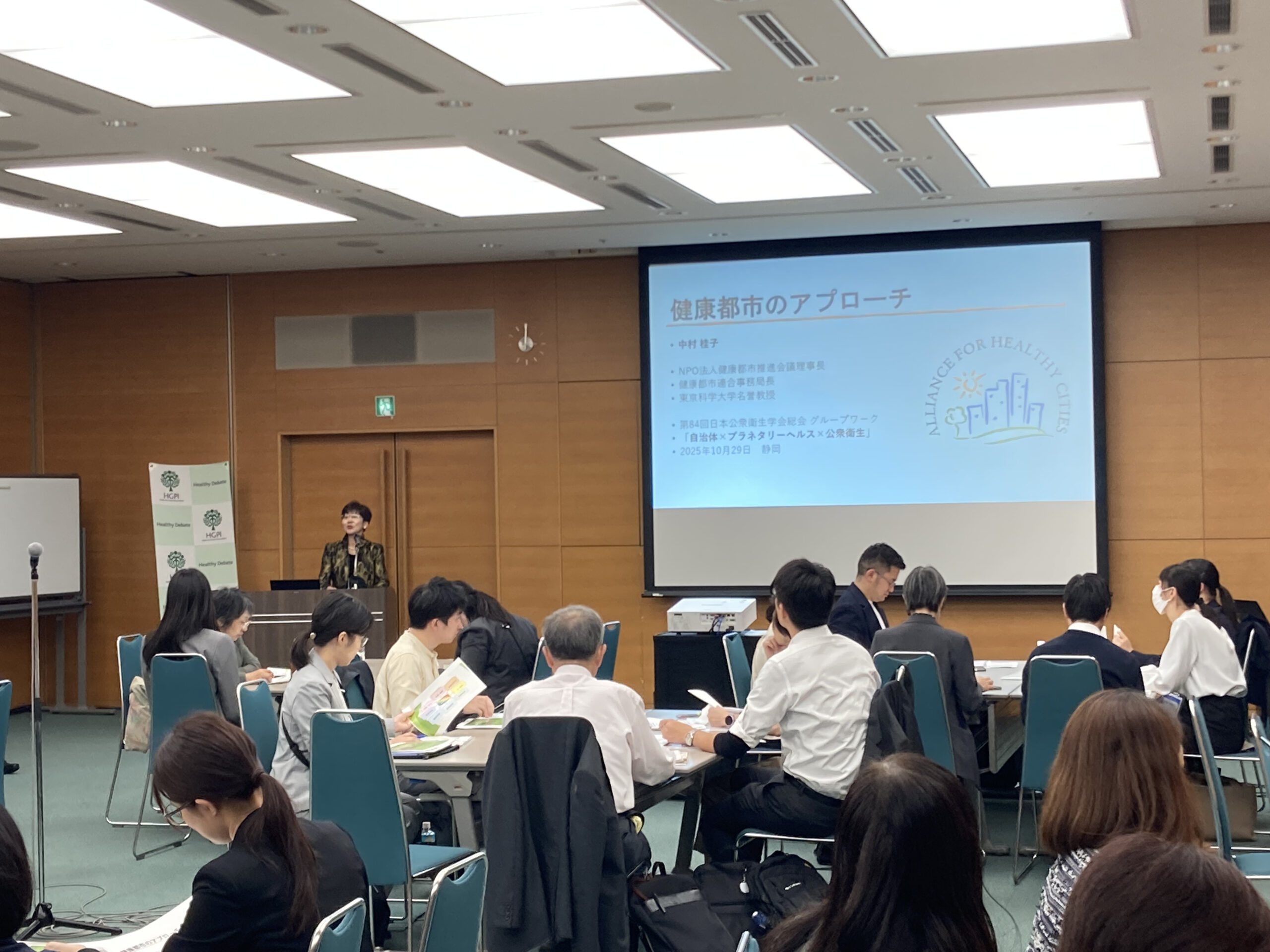
Prof. Keiko Nakamura (Professor Emerita, Institute of Science Tokyo /Director, Authorized NPO Healthy City Support Organization / Steering Committee Member, Planetary Health Alliance Japan Hub) presented the “Healthy City” approach as a practical entry point for implementing Planetary Health at the local level.
A Healthy City is defined as a city that aims to improve the well-being of its residents by integrating health considerations across sectors – including not only healthcare but also the natural environment, economic activities, urban infrastructure, and communities. Professor Nakamura outlined eight key elements for realizing this vision, placing particular emphasis on:
- Incorporating health perspectives into all policies (Health in All Policies)
- Establishing cross-sector collaboration among government departments, citizens, companies, and civil society organizations
- Ensuring leadership, good governance, and institutionalization of initiatives to sustain efforts over time
These elements were presented as important guiding principles for municipalities seeking to implement the concept of Planetary Health into concrete policies.
Case Presentation (2): Fukuroi City, Shizuoka Prefecture “From Local to Global – Practices in Food, Health, and Sustainability”
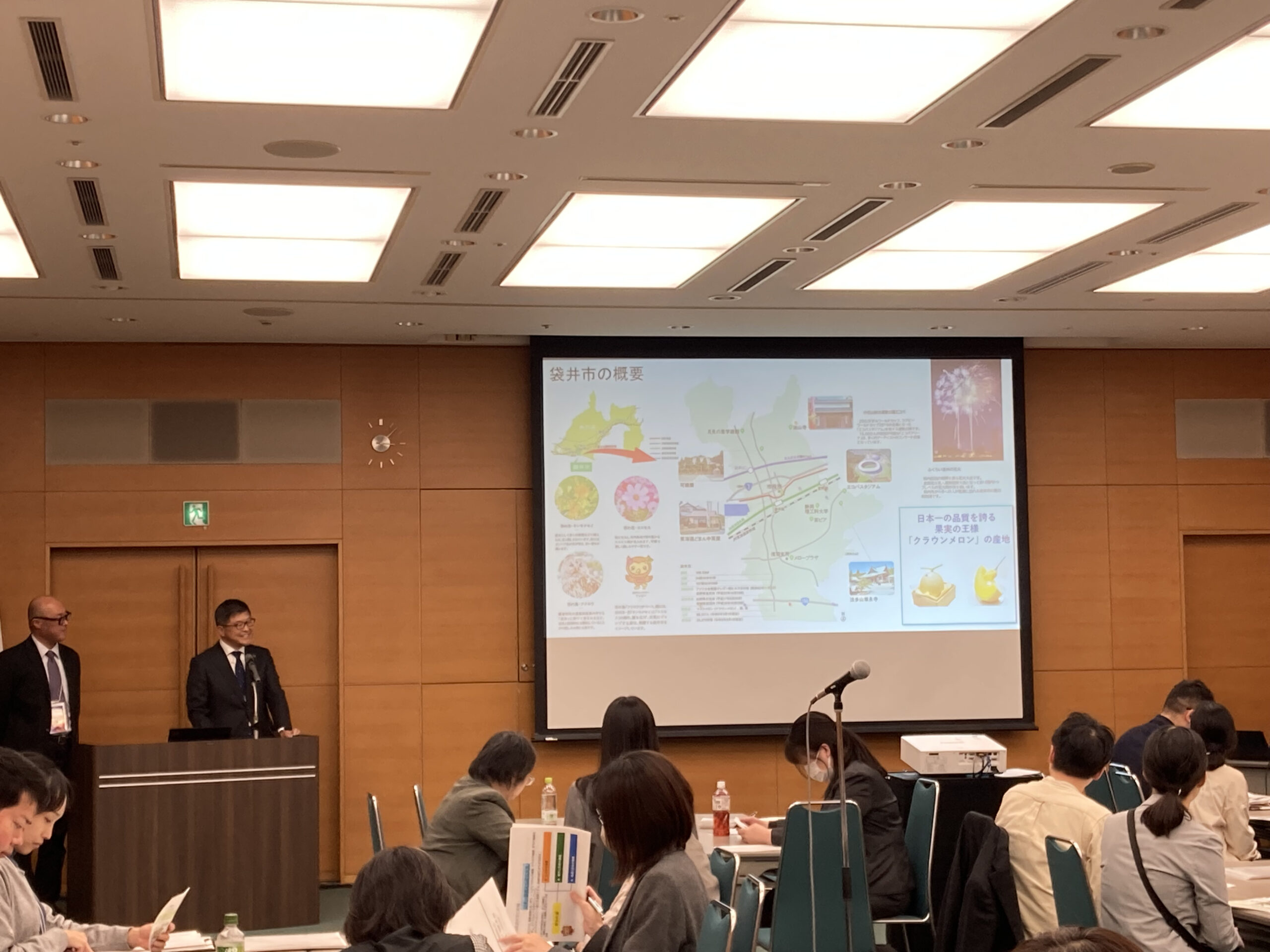
From Fukuroi City, Mr. Noriyuki Oba (Mayor) and Mr. Koji Ishizuka (Municipal Official) introduced the city’s long-term efforts. Fukuroi, a city of approximately 87,000 residents, declared itself “Japan’s Leading Healthy Cultural City” about 30 years ago. Through codifying this vision into an ordinance, the city has been linking health promotion with urban development from an early stage.
Mayor Oba explained that the city prioritizes not only “mental and physical health,” but also the “health of the city and nature,” and has incorporated lessons from international Healthy City networks into its policies.
Mr. Ishizuka presented concrete measures based on the “Fukuroi City Health Promotion Plan,” which aims to make Fukuroi “the city with the longest healthy life expectancy in Japan.” Key initiatives include addressing issues such as increasing risks of diabetes and hypertension, as well as the increasing incidence of skipping breakfast and rising obesity among children.
Particular attention was given to food-related initiatives directly connected to Planetary Health:
- Use of Local Produce and Food Education: Incorporating locally produced ingredients in school meals to make children learn about the journey of food from production to consumption.
- Co-benefits of Salt Reduction and Food Loss Reduction: By improving the taste and appeal of school meals and reducing salt content, Fukuroi is promoting the prevention of non-communicable diseases while reducing plate waste simultaneously.
- CO₂ Reduction: Using local produce reduces food miles. Research has shown an annual reduction of 15.37 tons of CO₂ emissions, demonstrating the environmental benefits of these efforts.
In addition, Fukuroi supports corporate health management by combining tools such as vegetable intake measurement (Veggie Check), data analysis using AI, and exercise programs to simultaneously improve employee health and corporate sustainability.
This case was shared as a noteworthy example of a Planetary Health initiative that uses local school meals and food education to realize a state in which “both people and the environment are healthy.”
Case Presentation (3): Kameyama City, Mie Prefecture “Green Healthy City and Biodiversity Conservation”
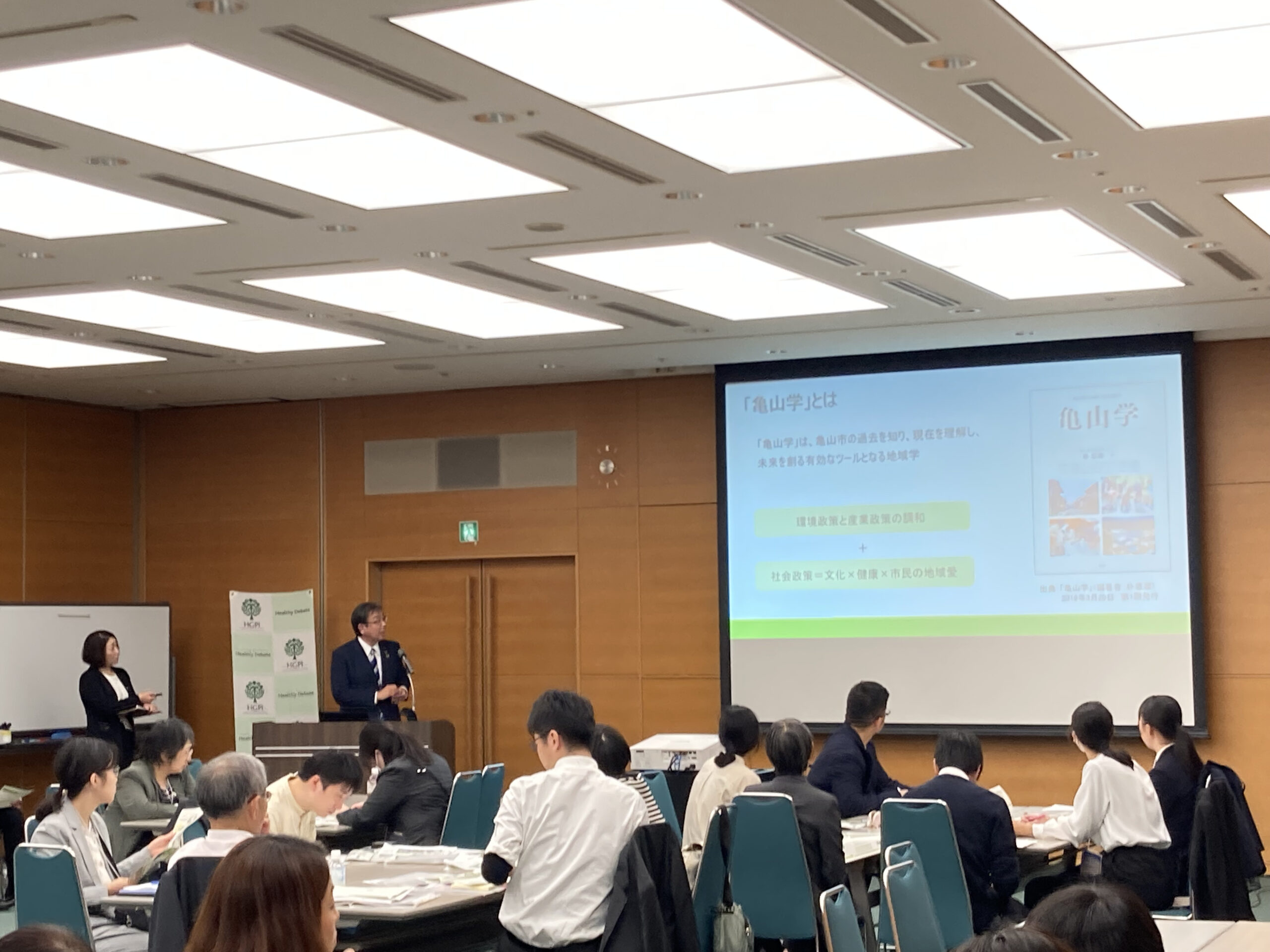
Mr. Yoshiyuki Sakurai (Mayor, Kameyama City) introduced Kameyama, a city of about 50,000 residents with a history as a post town and a strong manufacturing base. Under the vision of “Green Healthy City, Kameyama,” the municipality is promoting urban development that enhances residents’ quality of life (QOL) while conserving the natural environment.
Mayor Sakurai emphasized the importance of integrating health, culture, and community perspectives into urban, economic, and industrial policies, and highlighted the city’s efforts to address global biodiversity loss at the local level through:
- Introduction of a Regional OECM System: To contribute to the global “30 by 30” target, Kameyama designated conservation areas managed by citizens and companies as Other Effective area-based Conservation Measures (OECM), establishing a framework in which the municipality leads biodiversity conservation.
- Nature Positive Declaration and Water Source Forest Conservation: The city promotes reforestation in the headwaters of the Suzuka River under local ordinances, aiming to secure safe drinking water while preserving forest ecosystems.
- Nature Restoration and Health Promotion: Collaborations with citizen groups to restore natural environments and maintain satoyama and mountain trails provide opportunities for physical activity, contact with nature, and improved mental wellbeing.
These initiatives were presented as an example of “Planetary Health-oriented urban management”, which simultaneously advances nature conservation, citizen health, and resilience to disasters.
 |
 |
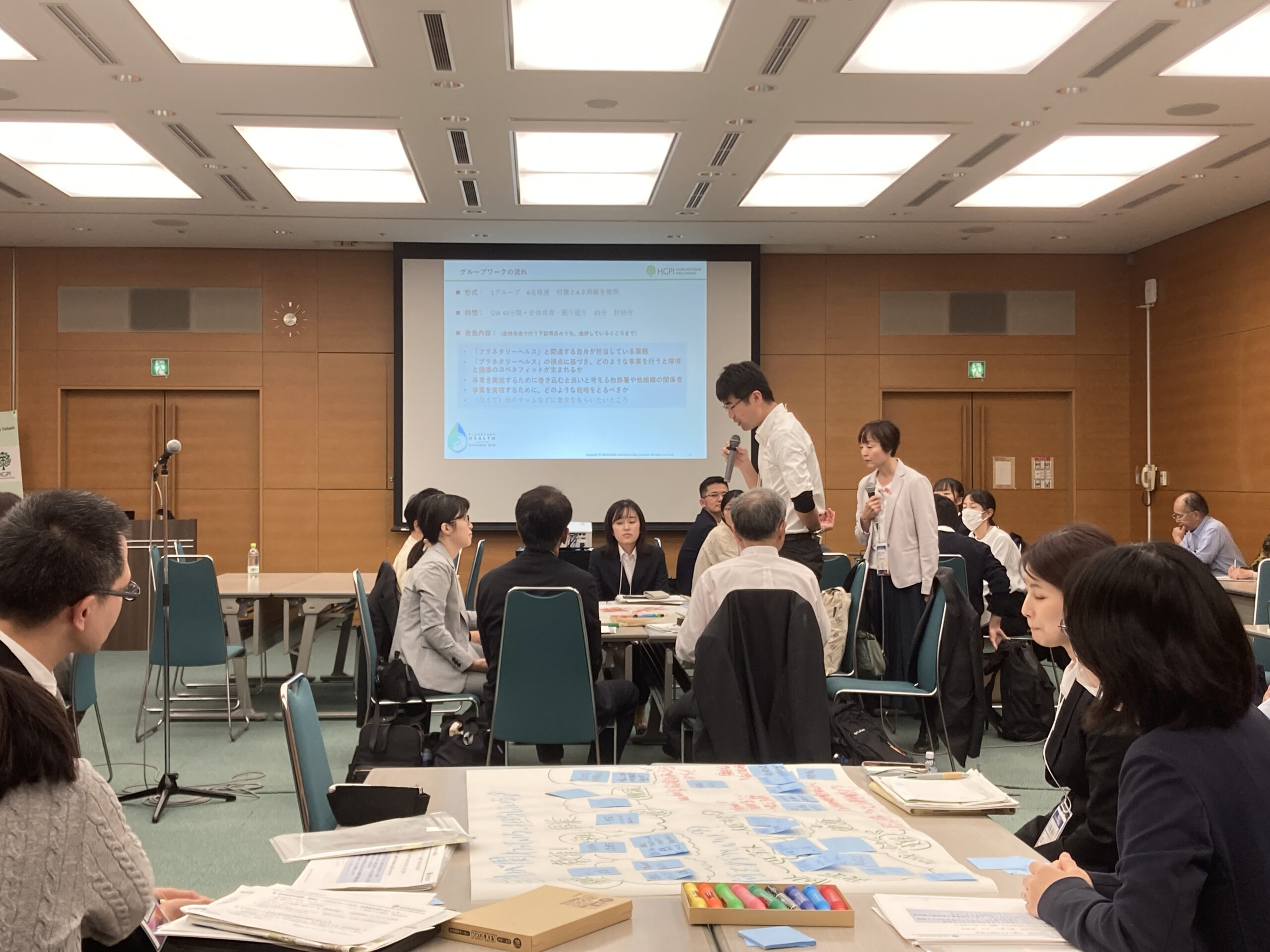
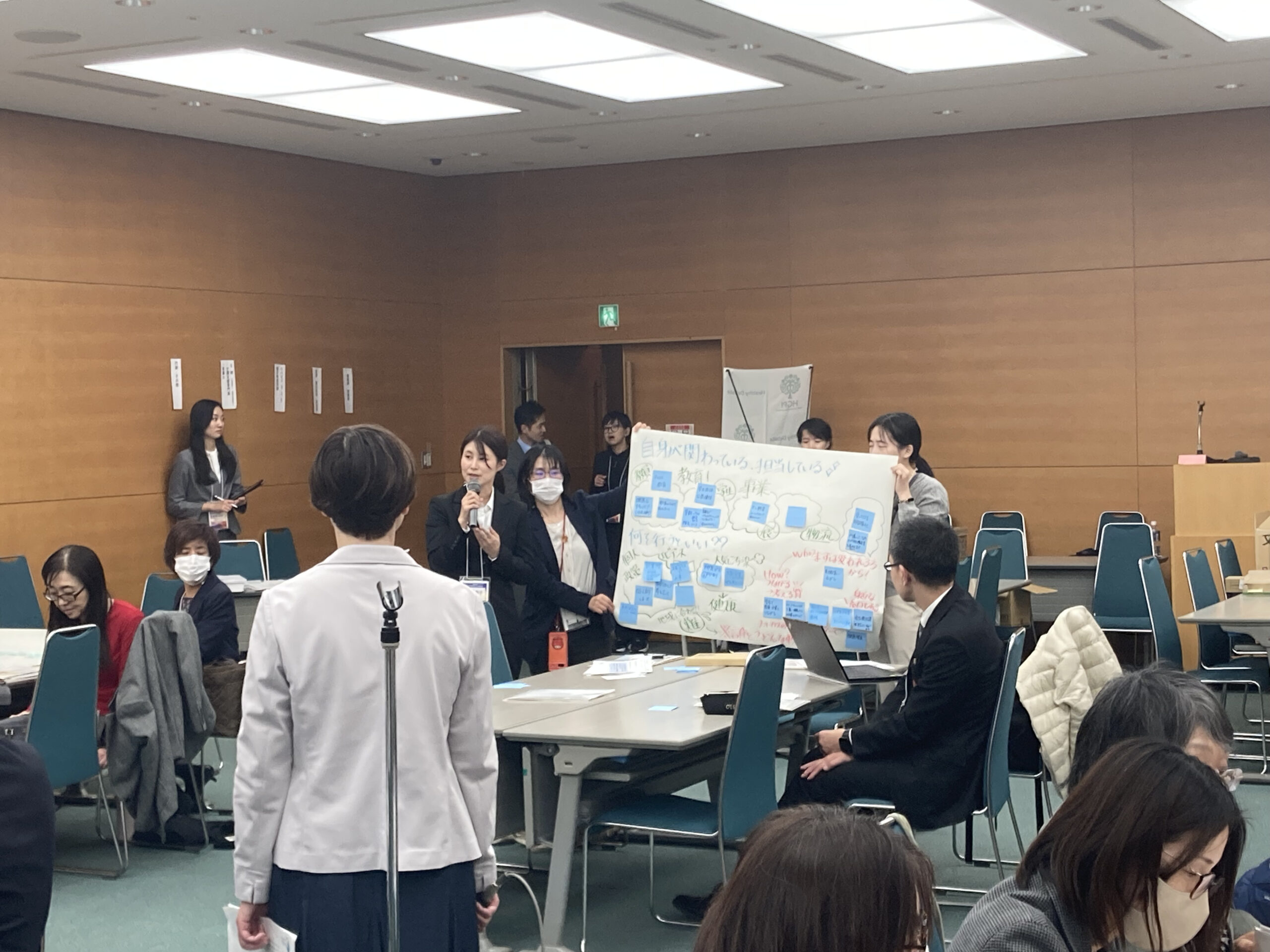
Group Work: First Steps for “Municipalities × Planetary Health”
Following the presentations, participants divided into six groups to discuss feasible action plans in their own contexts, using the idea of co-benefits – measures that are “good for both the environment and health” – as a guiding principle. Key points from each group included:
- Group A: Existing Initiatives and Organizational Silos
Participants shared examples of ongoing initiatives related to Planetary Health, such as food education and nature co-existence programs. However, departmental silos were identified as a major barrier to collaboration among health, construction, transportation, and other sectors. The group emphasized the need to establish cross-departmental teams or coordinating mechanisms.
- Group B: Co-benefit Actions and Multisectoral Collaboration
Proposals included “zero food loss” efforts, “plogging” (jogging while collecting litter), and the use of green curtains as a heat countermeasure that also promotes outdoor activity. To scale such efforts, the group suggested forming core teams across sectors, strengthening shared understanding among staff, and encouraging family-based participation as a sustainable approach.
- Group C: Low-cost Approaches to Align Environment and Health
Participants discussed practical, low-cost options such as reducing food loss, promoting local produce, using existing facilities (e.g., shopping centers) as spaces for physical activity, and reducing single-use materials in healthcare settings. They also underlined the need to address environmental and social inequities, particularly in heat countermeasures for vulnerable populations.
- Group D: Aso Grasslands Conservation and Cross-sectoral Benefits
Using the case of the Aso grasslands as an example, the group examined how protecting a single local resource can connect education, public health, tourism, and the economy. They concluded that grassland conservation can generate multiple benefits when various sectors collaborate, including disease prevention, disaster risk reduction, and regional revitalization.
- Group E: Connecting Individual Choices and Organizational Strategies
This group focused on the importance of individual awareness and behavior change while recognizing the challenges of scaling such changes across communities. Proposals included clarifying contact points within governments and companies for Planetary Health-related initiatives and conducting “internal analyses” of each organization’s mandate and resources to identify realistic pathways for collaboration.
- Group F: Island Communities, Tradition, and Environmental Change
Drawing on experiences from remote islands in Okinawa, participants discussed how traditional lifestyles, diets, and fishing practices are closely connected to both health and the environment. While initiatives such as “catch and eat local fish” contribute to physical activity and lower environmental impact, concerns were raised about the potential impacts of climate change on marine ecosystems and the sustainability of such practices.
Across all groups, there was shared recognition that reframing existing initiatives and local resources through a Planetary Health lens and fostering collaboration across sectors constitute practical first steps for municipalities.
 |
 |
Conclusion and Next Steps
In conclusion, Professor Watanabe commended participants for articulating concrete ideas and Planetary Health perspectives within a limited timeframe, emphasizing that progress in public–private collaboration depends on each individual taking initiative to build teams and drive change within their own context.
Dr. Kashima noted that the issues raised in this 90-minute session were wide-ranging and could not be fully explored within the available time. He highlighted that the Planetary Health Alliance is planning to hold its Annual Meeting in Tokyo in 2027, and expressed hope that the discussions and practices emerging from Japan’s municipalities will help shape contributions to that global platform.
Building on this session, HGPI will continue to work with municipalities, research institutions, and civil society to advance public health policy from a Planetary Health perspective and to provide spaces for dialogue among diverse stakeholders.
[Speaker Profiles]
Chiho Watanabe (Professor, School of Tropical Medicine and Global Health, Nagasaki University)
Chiho Watanabe withdrew from the doctoral program at the Graduate School of Medicine, The University of Tokyo in 1989 after completing required coursework. He was appointed Professor of Human Ecology at the same graduate school in 2005. In 2017, he became President of the National Institute for Environmental Studies (NIES), a national research and development agency. From 2021 to 2022, he served as Professor and Special Advisor to the President (Planetary Health), School of Tropical Medicine and Global Health, Nagasaki University. From 2022 to 2023, he served as the first Dean of the Interfaculty Initiative in Planetary Health and continued as Professor at the same school. He is currently Professor Emeritus at the University of Tokyo and holds a Doctorate in Health Science. His previous roles include President of the Japanese Society of Health and Human Ecology (2017–2022), President of the Society of Environmental Science, Japan (2021–2023), Associate Member of Section II of the Science Council of Japan, former Third Vice President of the Society for Human Ecology, and former Chair of the Human Ecology Section of the Ecological Society of America. He currently serves as a Steering Committee Member of the Planetary Health Alliance (PHA) and Representative of the Planetary Health Alliance Japan Hub.
Keiko Nakamura (Professor Emeritus, Institute of Science Tokyo)
Keiko Nakamura graduated from the Faculty of Medicine at Tokyo Medical and Dental University. She served as Professor in the Department of Global Health Entrepreneurship at the Graduate School of Medical and Dental Sciences at the same university from 2016 to 2025, and became Professor Emeritus at the Institute of Science Tokyo in April 2025. Her past appointments include Board Member of the Society of Environmental Science, Japan (2013–2017), Director of the WHO Collaborating Centre for Healthy Cities and Urban Policy Research (2016–2024), Board Member of the Japanese Society of Public Health (since 2017), Member of the Urban Health and Wellbeing Scientific Committee of the International Science Council (since 2020), and Chair of the Environmental Risk Subcommittee, Science Council of Japan (since 2024). Her research focuses on urban environment and health, health promotion, and Planetary Health.
Noriyuki Oba (Mayor of Fukuroi City, Shizuoka Prefecture)
Born in 1963 in Ugari (Dainichi), Fukuroi City, Shizuoka Prefecture, Noriyuki Oba graduated from the Faculty of Science and Technology at Keio University in 1987 and joined HORIBA, Ltd. the same year. From 1988 to 1992, he was stationed at Horiba Europe in France. In 1993, he became a Director at Wada Juku Co., Ltd., and in 1994, a Director at Showa Co., Ltd. He was first elected to the Shizuoka Prefectural Assembly in 2001 and became a Director of Scene Making Co., Ltd. in 2003. In 2009, he was appointed President and CEO of Wada Juku (now Lighthouse Education Co., Ltd.) and also assumed the role of Representative of ISC Ryugaku-net, a study abroad support service. He became Chairman of the Board in 2015 and Honorary Chairman in 2021. In April 2021, he was elected Mayor of Fukuroi City and is currently serving his first term.
Yoshiyuki Sakurai (Mayor of Kameyama City, Mie Prefecture)
Born in Mie Prefecture in 1963, Yoshiyuki Sakurai graduated from Mie Prefectural Kobe High School in 1981 and from the Faculty of Sociology at Kansai University in 1986. He began his political career as a member of the Kameyama City Council in 1991 (serving one term) and went on to serve four consecutive terms in the Mie Prefectural Assembly from 1995 to 2008. During his time in the prefectural assembly, he held key positions including Chair of the Council for the Promotion of Linear Construction, Mie Prefectural Auditor, and the 101st Vice Speaker of the Assembly. In 2009, he was elected Mayor of Kameyama City and is now serving his fifth consecutive term as of 2025. As mayor, he has worked to strengthen inter-municipal collaboration in Mie Prefecture, serving as Vice President (2015–2016), President (2019–2020), and Auditor (2023–2024) of the Mie Prefecture Mayors Association. He currently serves in multiple leadership roles, including: Head of the Japanese Chapter of the Alliance for Healthy Cities, Board Member of the National Council for the Preservation of Historic Districts for Traditional Buildings, Director of the Mie Prefecture Civil Infrastructure Development Association, and Vice Chair of the Suzuka-Kameyama Regional Union. His motto is: “Think big, start small.”
■ Health and Global Policy Institute (HGPI) https://hgpi.org/en/
Health and Global Policy Institute (HGPI) is a non-profit, independent, non-partisan health policy think tank established in 2004. In its capacity as a neutral think-tank, HGPI involves stakeholders from wide-ranging fields of expertise to provide policy options to the public to successfully create citizen-focused healthcare policies. Looking to the future, HGPI produces novel ideas and values from a standpoint that offers a wide perspective. It aims to realize a healthy and fair society while holding fast to its independence to avoid being bound to the specific interests of political parties and other organizations. HGPI intends for its policy options to be effective not only in Japan, but also in the wider world, and in this vein the institute will continue to be very active in creating policies for resolving global health challenges.
■ Planetary Health Alliance Japan Hub https://phajapan.jp/english
The concept of Planetary Health was introduced in the 2015 report “Safeguarding Human Health in the Anthropocene Epoch,” published by the Rockefeller Foundation–Lancet Commission on Planetary Health in The Lancet in 2016. In the same year, key members of the commission established the Planetary Health Alliance (PHA), a consortium now based at Johns Hopkins University in the United States. PHA has since become a global network of more than 400 universities, NGOs, research institutes, and government agencies from over 60 countries, serving as a leading force in the rapid growth of this interdisciplinary field. In May 2023, the Planetary Health Alliance Japan Hub was established with its secretariat hosted by Nagasaki University. The Japan Hub has since been facilitating discussions to explore frameworks for Planetary Health tailored to Japan and the broader Asia-Pacific region, where the relationship between nature and human society is uniquely situated. The Hub welcomes participation from a wide range of disciplines and age groups—from students to senior professionals.
Related Posts
-
2025-11-13
[Research Report] Perceptions, Knowledge, Actions and Perspectives of Healthcare Organizations in Japan in Relation to Climate Change and Health: A Cross-Sectional Study (November 13, 2025)
-

2025-12-09
[Event Report] Planetary Health Academy: Final Half (October 15-November 5, 2025)
-
2025-12-03
[Event Report] “Climate Change and Health: Actions for the Future” (September 16, 2025)
-
2025-11-11
[Event Report] From Vision to Action: Greening Japan’s Healthcare “Online Seminar: Climate and Health 101” (September 13, 2025)
-
2025-10-15
[Award Report] Sustainable Japan Award 2025 (ESG Category) (The Japan Times, September 18, 2025)
-
2025-12-09
[HGPI Policy Column] (No.66) — From the Planetary Health Project “Part 16: The Global Plastics Treaty: Discourse on Human Health in International Environmental Law”
Top Research & Recommendations Posts
Featured Posts
-
2026-05-18
[Registration Closed] Kick-off Panel Discussion “From Africa and Japan, Drawing from Perspectives Around the World:A Platform for Cultivating a Philosophical Health Dialogue Together” (June 15, 2026)
![[Registration Closed] Kick-off Panel Discussion “From Africa and Japan, Drawing from Perspectives Around the World:A Platform for Cultivating a Philosophical Health Dialogue Together” (June 15, 2026)](https://hgpi.org/en/wp-content/uploads/sites/2/HGPI_20260615_Eyecathch_panel-discussion-From-Japan-and-Africa-in-Discussion-with-the-World_2.png)
-
2026-08-28
[Announcement] The 3rd Kiyoshi Kurokawa Award: Call for Nominations (Deadline: November 30, 2026)
![[Announcement] The 3rd Kiyoshi Kurokawa Award: Call for Nominations (Deadline: November 30, 2026)](https://hgpi.org/en/wp-content/uploads/sites/2/Kiyoshi-Kurokawa-Award_3rd_nominations_eyecatch_caseB_ENG_web_20260929_v0.5.jpg)
-
2026-09-01
[Registration Closed] HGPI Salon 2025-2026 Looking Ahead to the Future of Japan’s Social Security System “Session 6: Japan’s Health Policy through the Lens of Global Security” (October 13, 2026)
![[Registration Closed] HGPI Salon 2025-2026 Looking Ahead to the Future of Japan’s Social Security System “Session 6: Japan’s Health Policy through the Lens of Global Security” (October 13, 2026)](https://hgpi.org/en/wp-content/uploads/sites/2/HGPISalon2025-20266.png)
-
2026-09-17
[Registration Open] (Webinar) The 145th HGPI Seminar “Toward Better AMR Measures at Elderly Care Facilities—Considering Infectious Disease Control in a Super-Aged Society From a Policy Perspective” (October 27, 2026)
![[Registration Open] (Webinar) The 145th HGPI Seminar “Toward Better AMR Measures at Elderly Care Facilities—Considering Infectious Disease Control in a Super-Aged Society From a Policy Perspective” (October 27, 2026)](https://hgpi.org/en/wp-content/uploads/sites/2/HGPIseminar145.png)
-
2026-10-06
[Registration Open] (Webinar) The 146th HGPI Seminar “How We Can Build a Society That Supports Choices Around Organ Donation: Exploring Decision-Making by Citizens and a Multi-Layered Approach Through Strategic Social Marketing” (November 9, 2026)
![[Registration Open] (Webinar) The 146th HGPI Seminar “How We Can Build a Society That Supports Choices Around Organ Donation: Exploring Decision-Making by Citizens and a Multi-Layered Approach Through Strategic Social Marketing” (November 9, 2026)](https://hgpi.org/en/wp-content/uploads/sites/2/HGPI_20261001_Eyecatch_HGPIseminer-146th-1.png)
