


[Event Report] “Climate Change and Health: Actions for the Future” (September 16, 2025)
date : 12/3/2025
Tags: Planetary Health

![[Event Report] “Climate Change and Health: Actions for the Future” (September 16, 2025)](https://hgpi.org/en/wp-content/uploads/sites/2/HGPI_20250916_EXPOClimateandHealth.png)
On September 16, 2025, the event “Climate Change and Health: Actions for the Future” was held at the UK Pavilion within the Expo 2025 Osaka, Kansai.
Co-hosted by the UK Pavilion, AstraZeneca K.K., and Health and Global Policy Institute (HGPI), the event consisted of two sessions.
The first session focused on concrete actions toward decarbonization across the entire healthcare industry, while the second session showcased presentations by high school students on their inquiry-based learning outcomes, sharing practical initiatives and proposals related to climate change and health.
[Event Overview]
- Title: Climate Change and Health: Actions for the Future
- Date & Time: Tuesday, September 16, 2025, 10:00–13:15 JST
- Venue: UK Pavilion, Expo 2025 Osaka, Kansai
- Session 1: “Japan’s Current Situation and Decarbonization in Healthcare”
- Session 2: “Proposals from Youth” – Inquiry-based Learning Presentations by High School Students
- Co-hosted by: UK Pavilion, AstraZeneca K.K., and Health and Global Policy Institute (HGPI)
- Supported by: Japan Pharmaceutical Manufacturers Association (JPMA), Green Practice Japan, Weather Caster Network, Hibarigaoka Gakuen Junior & Senior High School, Nada Junior and Senior High School
- Endorsed by: British Embassy Tokyo, British Consulate General Osaka
Session 1: Japan’s Current Situation and Decarbonization in Healthcare
In the first session, representatives from government agencies, industry associations, pharmaceutical wholesalers, research institutes, and corporations discussed shared understanding and actions toward “decarbonization across the entire healthcare industry.”
Mr. Takashi Horii (President, AstraZeneca K.K.)
Mr. Horii stated that AstraZeneca’s mission is to contribute to people’s health through the provision of innovative medicines and that sustainability is positioned as one of the company’s core strategies. He emphasized that it is “impossible for AstraZeneca alone to overcome this crisis” and that co-creation across the entire value chain—including partnerships with distributors and other stakeholders—is essential.
Prof. Masahiro Hashizume (Professor, Department of Global Health Policy, Graduate School of Medicine, University of Tokyo)
Professor Hashizume delivered a presentation titled “Health Impacts of Climate Change.” He pointed out that with Japan’s average temperature continuing to rise, “heat has become a natural disaster.” He noted that deaths from heatstroke already exceed those from natural disasters and that extreme heat and abnormal weather increase the risks of cardiovascular, respiratory, and infectious diseases, as well as mental health issues. He stressed that balancing adaptation measures with mitigation efforts to reduce environmental impact is essential.
Dr. Keisuke Nansai (Director, Material Cycles Division, National Institute for Environmental Studies (NIES))
Dr. Nanzai presented “Greenhouse Gas (GHG) Emissions in the Healthcare Sector: Current Situation and Challenges.” He explained that the healthcare sector accounts for approximately six percent of Japan’s total CO₂ emissions, spanning a broad supply chain from manufacturing and distribution to medical practice. Referring to Japan’s official participation in the WHO-led initiative, the Alliance for Transformative Action on Climate and Health (ATACH), in 2024 he emphasized that “human health and planetary health are inseparable” and that it is urgent to establish and implement pathways toward resilient, low-carbon, and sustainable health systems.
Panel Discussion: Co-creation Toward Decarbonization Across the Healthcare Value Chain
Moderator: Joji Sugawara (Vice President, HGPI)
Panelists shared concrete initiatives and challenges from their respective perspectives:
Dr. Masato Izutsu (Senior Coordinator, Global Health, International Affairs Division, Ministry of Health, Labour and Welfare)
Dr. Izutsu reviewed the global momentum placing “climate change and health” on the agenda since COP26, noting the establishment of “Health Day” at COP28 and Japan’s commitment to building a “low-carbon, sustainable health system” through participating in ATACH. He emphasized that in addition to adaptation to heat and infectious diseases, mitigation measures are essential, and highlighted the Ministry of the Environment’s Model Project for Supporting Achievement of the Decarbonization targets of the Entire Supply Chains as a best practice from Japan with global relevance.
Mr. Satoru Arima (Chair, Environmental Issues Committee, JPMA; Director, Sustainability Planning & Management Group, Sustainability Department, Daiichi Sankyo Co., Ltd.)
Mr. Arima introduced “JPMA’s Vision for 2035” and explained that reducing Scope 3 emissions from the supply chain is the industry’s greatest challenge. He noted that many suppliers have expressed confusion—saying, “we don’t know where to start”—and that fragmented corporate requests have increased burdens. In response, 12 member companies joined the Ministry of the Environment’s model project to establish fair, transparent, and unified rules for the industry.
Mr. Hironaga Ono (Director, Office for Decarbonized Business Promotion, Climate Change Policy Division, Global Environment Bureau, Ministry of the Environment (MOE))
Mr. Ono introduced the Model Project for Supporting Achievement of the Decarbonization targets of the Entire Supply Chains, explaining that the spread of green products and consumer behavioral change require collaboration across the entire value chain. He praised the pharmaceutical sector’s approach for extending beyond Scope 3 Category 1 (materials) to include Categories 4, 9, and 10 (logistics), calling it a promising model for future initiatives.
Mr. Shuzo Kohno (Board, Japan Pharmaceutical Wholesalers Association (JPWA); President, SAYWELL Inc.)
Mr. Kohno described Japan’s pharmaceutical distribution system, which has far more delivery points and a higher self-delivery rate than those of Europe or the U.S. He introduced examples of joint delivery and AI-based routing optimization that achieved CO₂ reductions while maintaining stable supply. He emphasized that these initiatives represent “co-creation,” contributing to both decarbonization and resilient supply systems during emergencies.
Mr. Etsushi Yoshikoshi (Executive Officer and Chief Financial Officer (CFO), AstraZeneca K.K.)
Mr. Yoshikoshi presented AstraZeneca’s initiatives across Scope 1–3, including EV adoption, renewable energy integration, and solar power utilization. He noted that when asking suppliers to respond to initiatives like the Science Based Targets initiative (SBTi), which supports companies in setting science-based greenhouse gas reduction targets, and the CDP, an international framework promoting environmental information disclosure by companies and municipalities, a common challenge lies in determining “what” to request and “how” to request it. For this reason, he emphasized the importance of establishing common rules across the industry. Finally, he stressed that “AstraZeneca alone cannot create impact—the power of co-creation is what truly matters.
Throughout the first session, representatives from government, industry associations, pharmaceutical wholesalers, and manufacturers shared their initiatives, identifying directions for co-creation toward decarbonization across the healthcare industry.
Session 2: “Proposals from Youth” – Inquiry-based Learning Presentations by High School Students
In the second session, 24 high school students from Nada Junior and Senior High School and Hibarigaoka Gakuen Junior & Senior High School presented the results of a four-month inquiry-based learning program titled “Future Exploration,” co-organized by AstraZeneca and Green Practice Japan.
The students researched and analyzed the impacts of climate change on health and society and presented the following proposals:
- Visualizing links between consumer behavior, CO₂ emissions, and climate-related deaths, and proposing a value-based evaluation system that rewards environmental contribution.
- Developing a “Marine Resilient City” concept focusing on ocean acidification, seaweed restoration, blue carbon utilization, and community-level policy design.
- Addressing clothing waste in the apparel industry through eco-score labeling and shared clothing spaces as part of a circular economy transition.
- Proposing water-quality and health improvement initiatives, including eelgrass-based blue carbon strategies and the creation of “Blue Carbon Zones.”
Through the program, students shared their insights on “what we can do to protect our own health and the planet,” demonstrating how youth engagement can broaden awareness and inspire collective action across society.
Conclusion
The event brought together a wide range of stakeholders—including pharmaceutical companies, wholesalers, government agencies, industry associations, and educational institutions—to discuss challenges surrounding “decarbonization in the healthcare industry” and “climate change and health.”
Participants reaffirmed that the healthcare sector must actively reduce its own emissions while promoting understanding and behavioral change among healthcare professionals, patients, and citizens.
HGPI will continue to advance evidence-based policy recommendations and multi-stakeholder dialogues from the perspective of planetary health.
(Photograph: ken – stock.adobe.com)
Related Posts
-
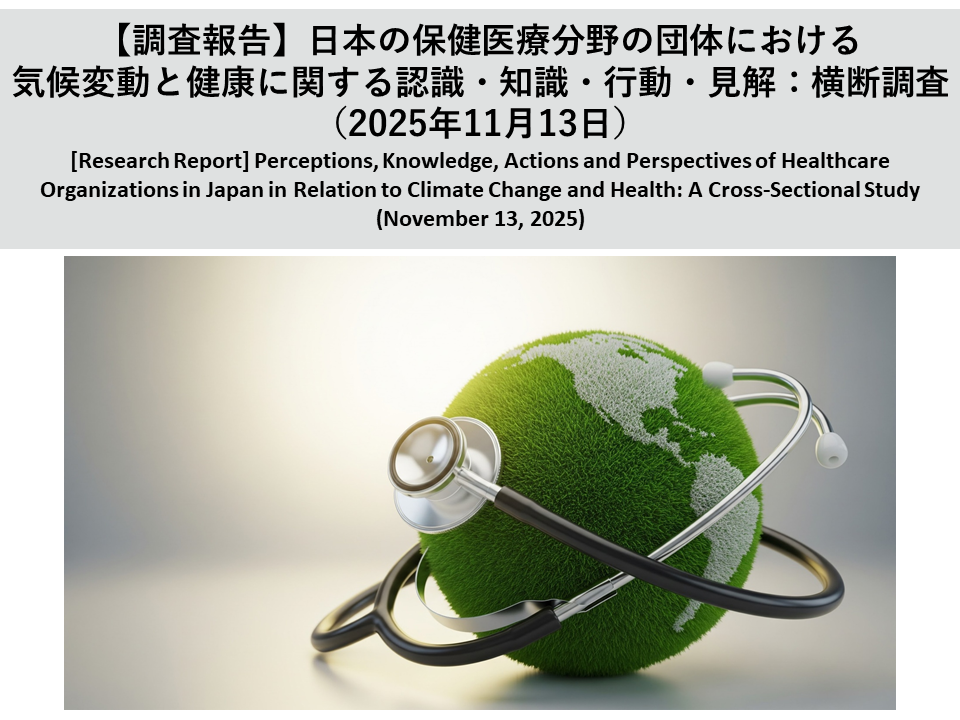
2025-11-13
[Research Report] Perceptions, Knowledge, Actions and Perspectives of Healthcare Organizations in Japan in Relation to Climate Change and Health: A Cross-Sectional Study (November 13, 2025)
-
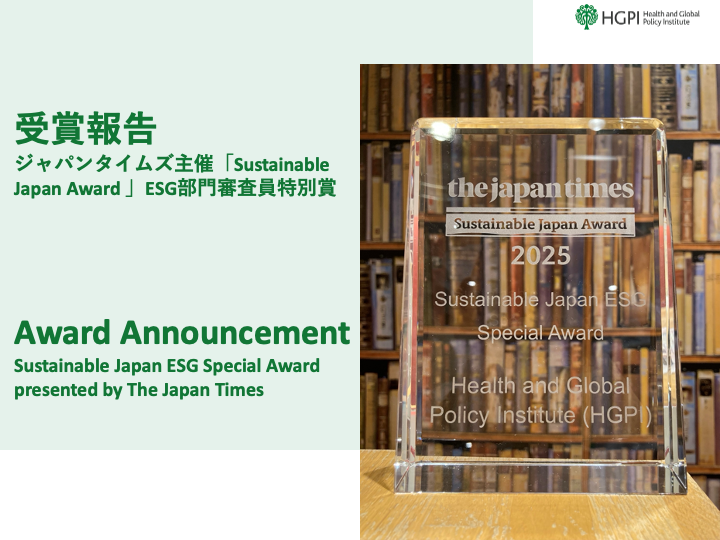
2025-10-15
[Award Report] Sustainable Japan Award 2025 (ESG Category) (The Japan Times, September 18, 2025)
-
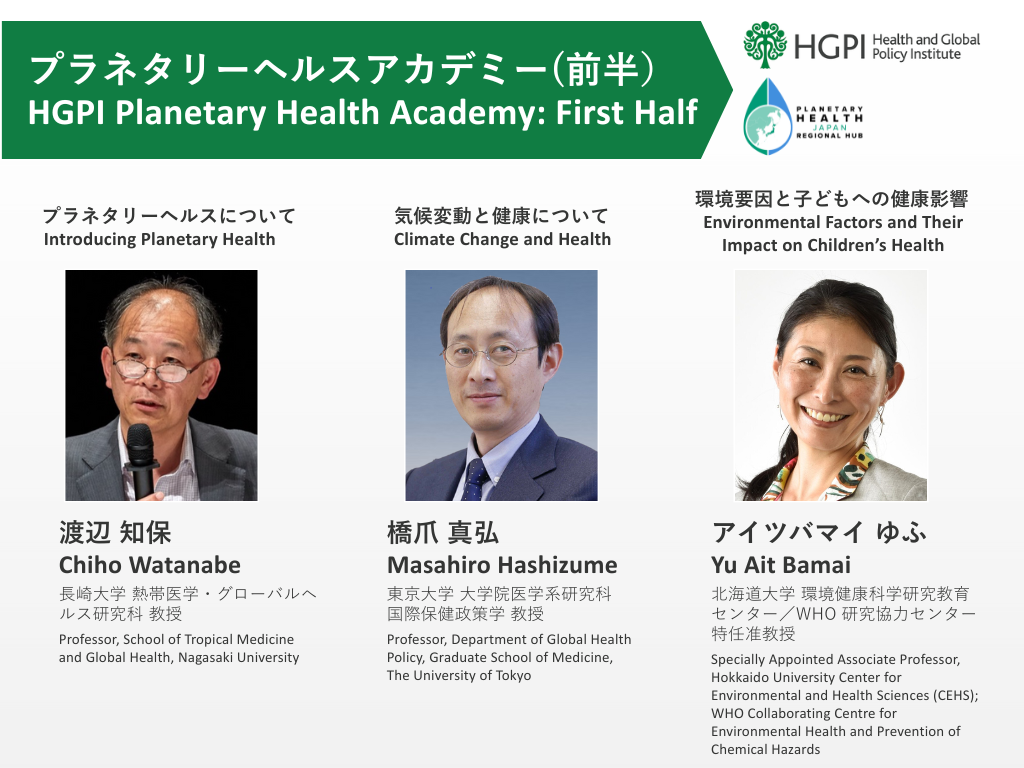
2025-10-10
[Event Report] Planetary Health Academy: First Half (August 27-September 24, 2025)
-
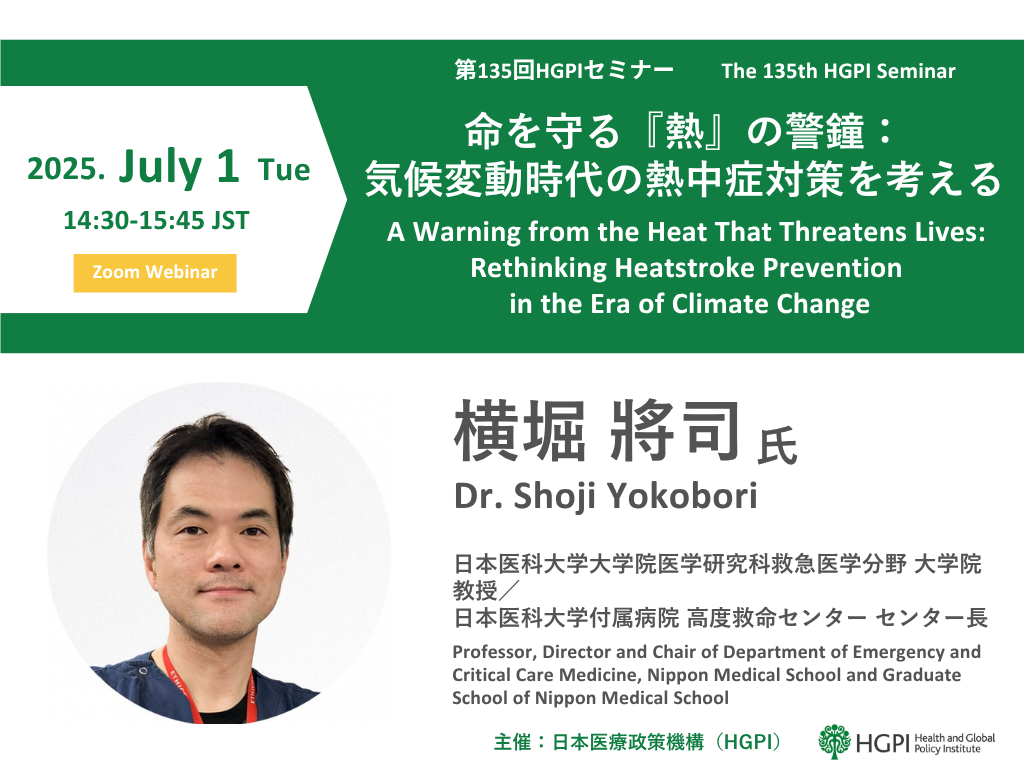
2025-08-12
[Event Report] The 135th HGPI Seminar “A Warning from the Heat That Threatens Lives-Rethinking Heatstroke Prevention in the Era of Climate Change” (July 1, 2025)
-
2025-11-26
[Lecture Report] NIKKEI FT Communicable Diseases Conference at Expo Special Edition “Discussing Future Infectious Communicable Diseases with the Next Generation” (Nikkei Inc., October 9, 2025, Yumeshima, Osaka)
-
2025-12-09
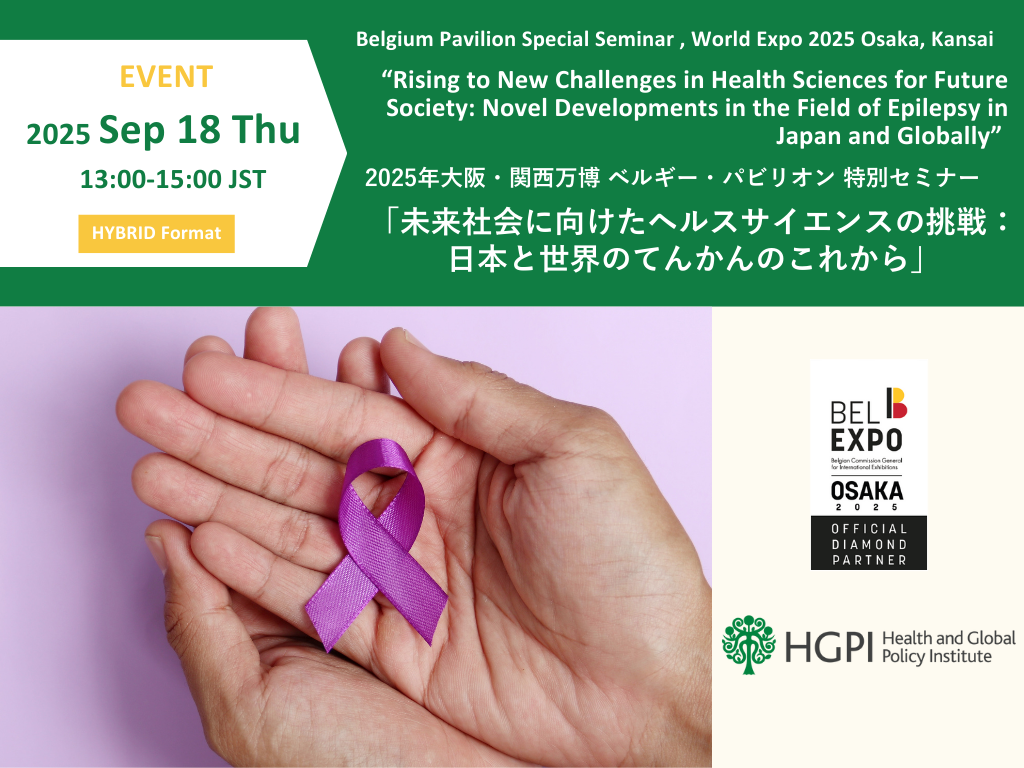
[Event Report] Special Seminar “Rising to New Challenges in Health Sciences for Future Society: Novel Developments in the Field of Epilepsy in Japan and Globally” Belgium Pavilion Special Seminar, World Expo 2025 Osaka, Kansai (September 18, 2025)
-
2025-08-28
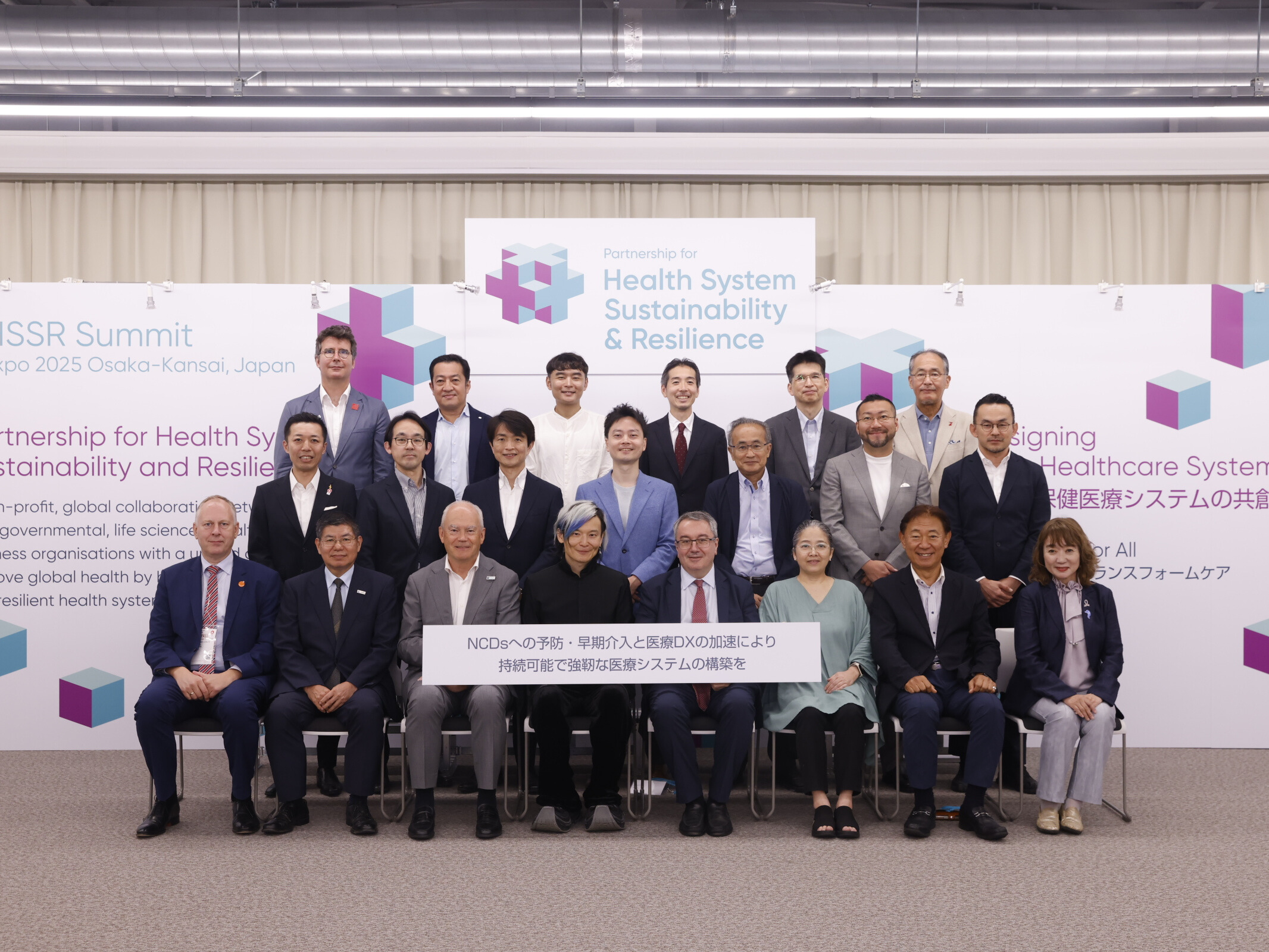
[Event Report] EXPO 2025 Thematic Project “Resonance of Life” PHSSR Summit 2025 “Co-designing Stronger Health Systems – Transforming Care for All” (June 30, 2025)
-
2025-07-08
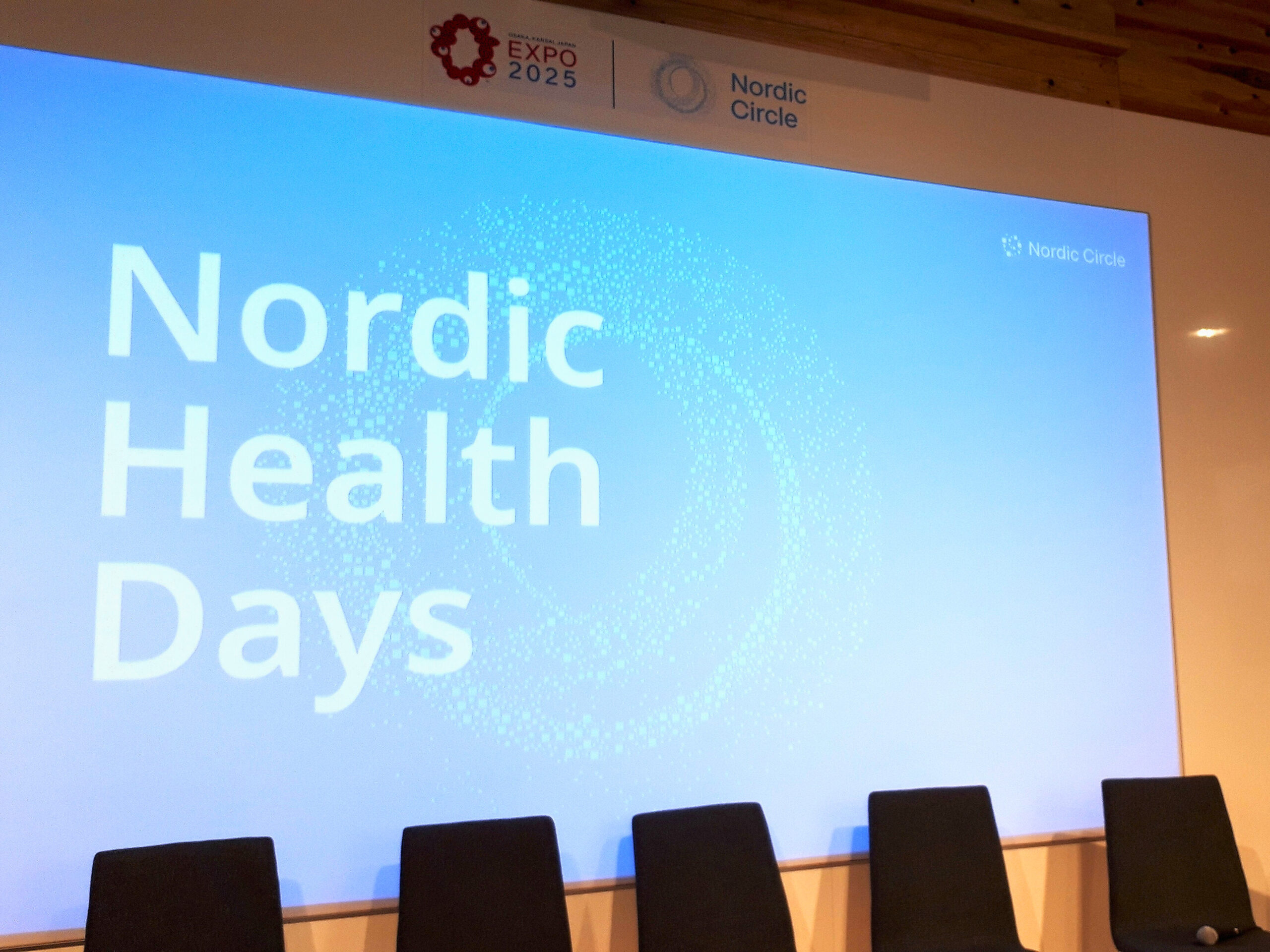
[Activity Report] “Nordic Health Days” at the Nordic Pavillion, Expo 2025 Osaka, Kansai, Japan (June 25-26, 2025, Yumeshima, Osaka)
Top Research & Recommendations Posts
Featured Posts
-
2026-05-18
[Registration Closed] Kick-off Panel Discussion “From Africa and Japan, Drawing from Perspectives Around the World:A Platform for Cultivating a Philosophical Health Dialogue Together” (June 15, 2026)
![[Registration Closed] Kick-off Panel Discussion “From Africa and Japan, Drawing from Perspectives Around the World:A Platform for Cultivating a Philosophical Health Dialogue Together” (June 15, 2026)](https://hgpi.org/en/wp-content/uploads/sites/2/HGPI_20260615_Eyecathch_panel-discussion-From-Japan-and-Africa-in-Discussion-with-the-World_2.png)
-
2026-08-28
[Announcement] The 3rd Kiyoshi Kurokawa Award: Call for Nominations (Deadline: November 30, 2026)
![[Announcement] The 3rd Kiyoshi Kurokawa Award: Call for Nominations (Deadline: November 30, 2026)](https://hgpi.org/en/wp-content/uploads/sites/2/Kiyoshi-Kurokawa-Award_3rd_nominations_eyecatch_caseB_ENG_web_20260929_v0.5.jpg)
-
2026-09-01
[Registration Closed] HGPI Salon 2025-2026 Looking Ahead to the Future of Japan’s Social Security System “Session 6: Japan’s Health Policy through the Lens of Global Security” (October 13, 2026)
![[Registration Closed] HGPI Salon 2025-2026 Looking Ahead to the Future of Japan’s Social Security System “Session 6: Japan’s Health Policy through the Lens of Global Security” (October 13, 2026)](https://hgpi.org/en/wp-content/uploads/sites/2/HGPISalon2025-20266.png)
-
2026-09-17
[Registration Open] (Webinar) The 145th HGPI Seminar “Toward Better AMR Measures at Elderly Care Facilities—Considering Infectious Disease Control in a Super-Aged Society From a Policy Perspective” (October 27, 2026)
![[Registration Open] (Webinar) The 145th HGPI Seminar “Toward Better AMR Measures at Elderly Care Facilities—Considering Infectious Disease Control in a Super-Aged Society From a Policy Perspective” (October 27, 2026)](https://hgpi.org/en/wp-content/uploads/sites/2/HGPIseminar145.png)
-
2026-10-06
[Registration Open] (Webinar) The 146th HGPI Seminar “How We Can Build a Society That Supports Choices Around Organ Donation: Exploring Decision-Making by Citizens and a Multi-Layered Approach Through Strategic Social Marketing” (November 9, 2026)
![[Registration Open] (Webinar) The 146th HGPI Seminar “How We Can Build a Society That Supports Choices Around Organ Donation: Exploring Decision-Making by Citizens and a Multi-Layered Approach Through Strategic Social Marketing” (November 9, 2026)](https://hgpi.org/en/wp-content/uploads/sites/2/HGPI_20261001_Eyecatch_HGPIseminer-146th-1.png)
