

[Event Report] Non-partisan Diet Member Briefing – 30-minute Health Policy Update “Strategic Global Expansion of Japanese Companies: Public-Private Partnerships in Japan’s Health Sector with Unitaid” (June 6, 2025)
date : 7/25/2025
Tags: Diet Member Briefing, Global Health, Global Health Strategy

![[Event Report] Non-partisan Diet Member Briefing – 30-minute Health Policy Update “Strategic Global Expansion of Japanese Companies: Public-Private Partnerships in Japan’s Health Sector with Unitaid” (June 6, 2025)](https://hgpi.org/en/wp-content/uploads/sites/2/HGPI_20250606_UnitaidBriefing_Eyecatch.jpeg)
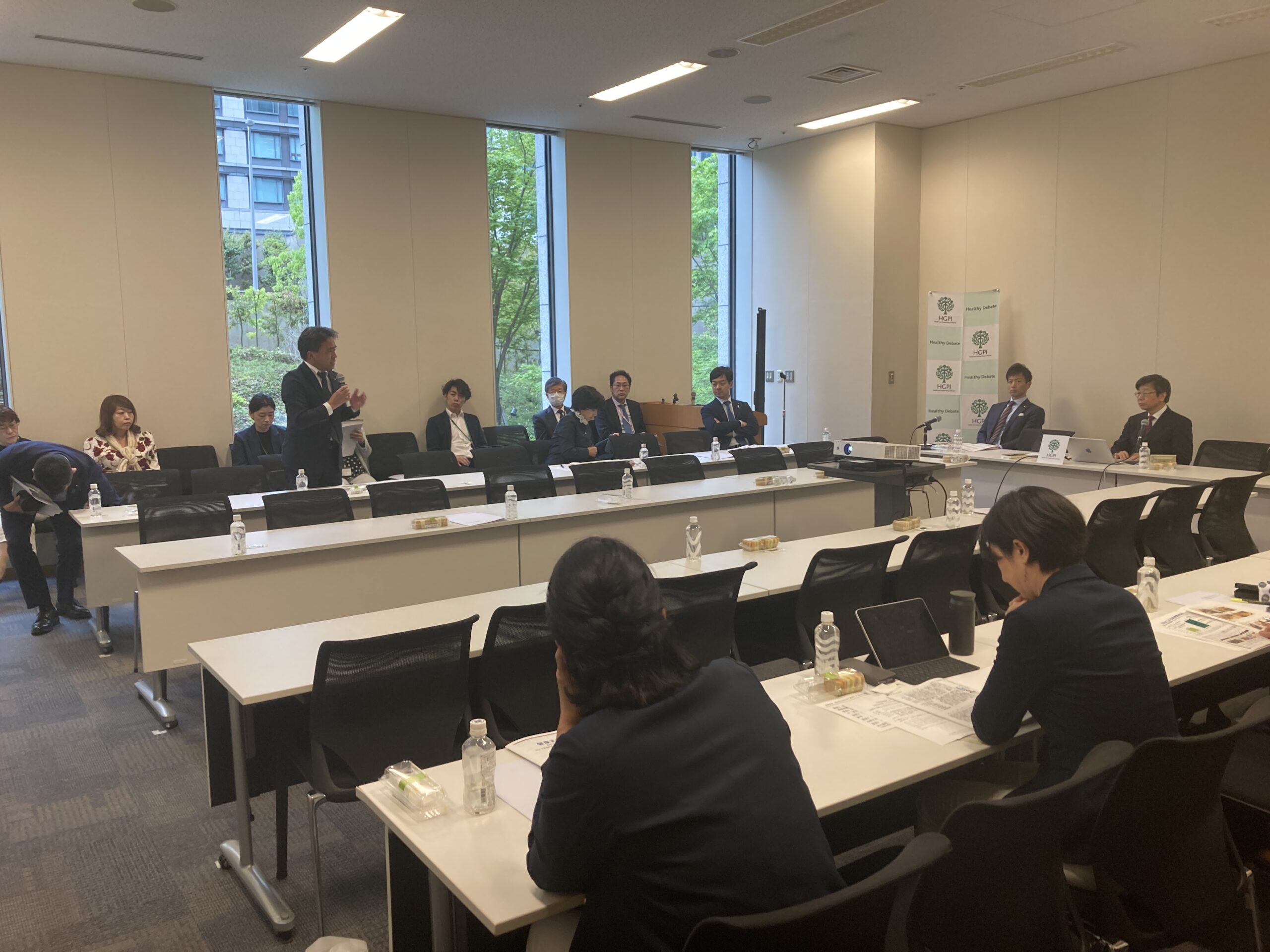
On June 6, 2025, Health and Global Policy Institute (HGPI), in collaboration with Unitaid, held a Non-partisan Diet Member Briefing titled, “Strategic Global Expansion of Japanese Companies: Public-Private Partnerships in Japan’s Health Sector with Unitaid.”
The session welcomed Mr. Tenu Avafia, Deputy Executive Director of Unitaid, as the speaker. He shared leading examples of partnership between the public and private sectors aligned with Japan’s global health strategy, and highlighted efforts to enhance equitable access to healthcare.
Mr. Avafia discussed the background of Unitaid’s establishment, its initiatives to support the introduction and dissemination of new medicines and diagnostic tools in low- and middle-income countries, and its collaboration models with Japanese companies. He also touched on Unitaid’s recent expansion into broader areas beyond its traditional focus on HIV, malaria, and tuberculosis—including pandemic preparedness, universal health coverage (UHC), and women’s and children’s health. Following the lecture, a lively Q&A and discussion session was held, centering on expectations toward the Japanese government and legislature.
■Key points
- Unitaid, established in 2006, is an international organization that supports access to healthcare in low- and middle-income countries, funded through mechanisms such as the airline ticket solidarity levy. Since 2023, Unitaid has expanded its focus beyond infectious diseases like HIV, tuberculosis, and malaria to include pandemic preparedness, UHC, and maternal and child health. Japan has served on Unitaid’s Executive Board since 2019 and contributes both financially and strategically through coordination between the Ministry of Foreign Affairs and the Ministry of Health, Labour and Welfare.
- In many low- and middle-income countries, especially in sub-Saharan Africa, one major obstacle to improving access to medicines is the insufficient development and capacity of national regulatory authorities. These countries often rely on WHO prequalification processes, which face capacity constraints and delays. To address this, Unitaid provides technical support and decision-making tools to complement WHO guidance, helping accelerate the introduction of quality-assured medicines and diagnostics.
- Japanese companies in medical technology and pharmaceuticals are expected to contribute internationally by addressing unmet medical needs through localized initiatives. The Japanese government is expected to play a leading role in global health, improving equity in medical access through partnerships with organizations like Unitaid.
[Program] (Honorifics omitted)
Opening Remarks
Lecture “Strategic Global Expansion of Japanese Companies: Public-Private Partnerships in Japan’s Health Sector with Unitaid”
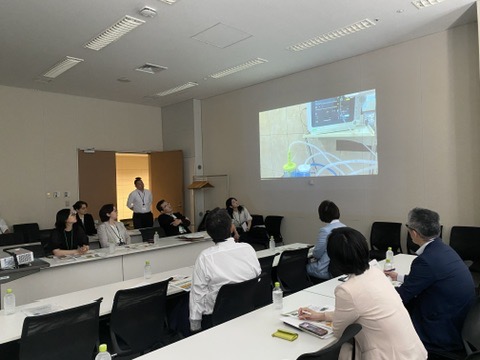 Tenu Avafia (Deputy Executive Director, Unitaid)
Q&A / Discussion
Closing Remarks
Related Posts
-
2025-07-25
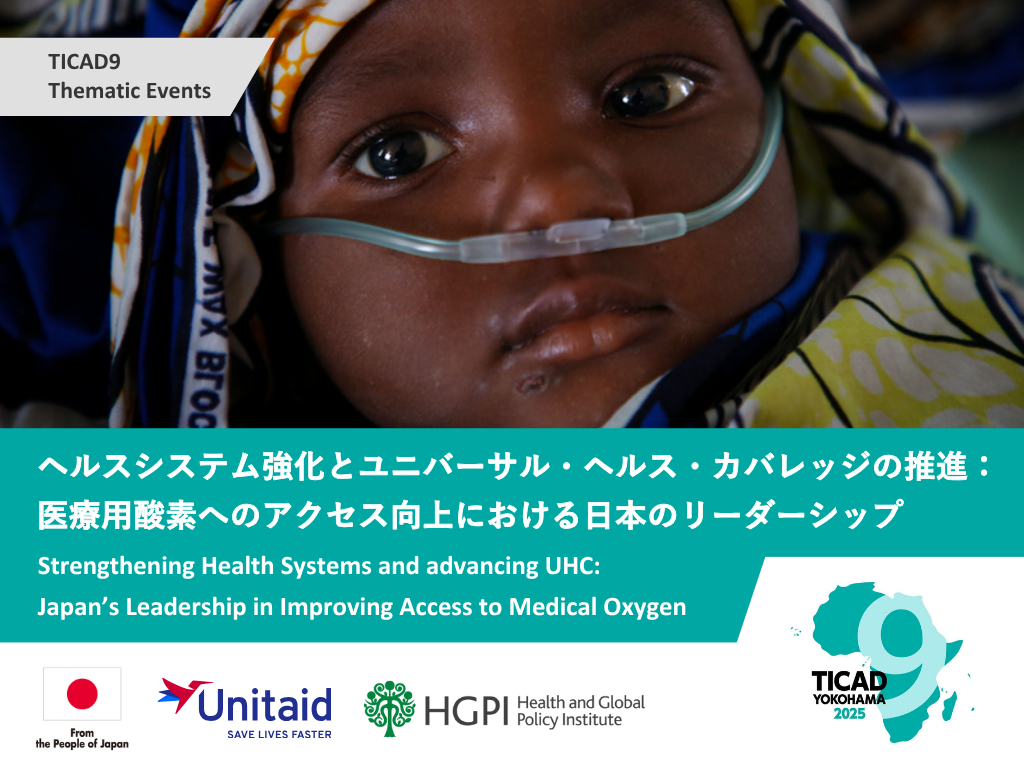
[Registration Closed] TICAD9 Thematic Event “Strengthening Health Systems and advancing UHC: Japan’s Leadership in Improving Access to Medical Oxygen” (August 20, 2025)
-
2025-07-08
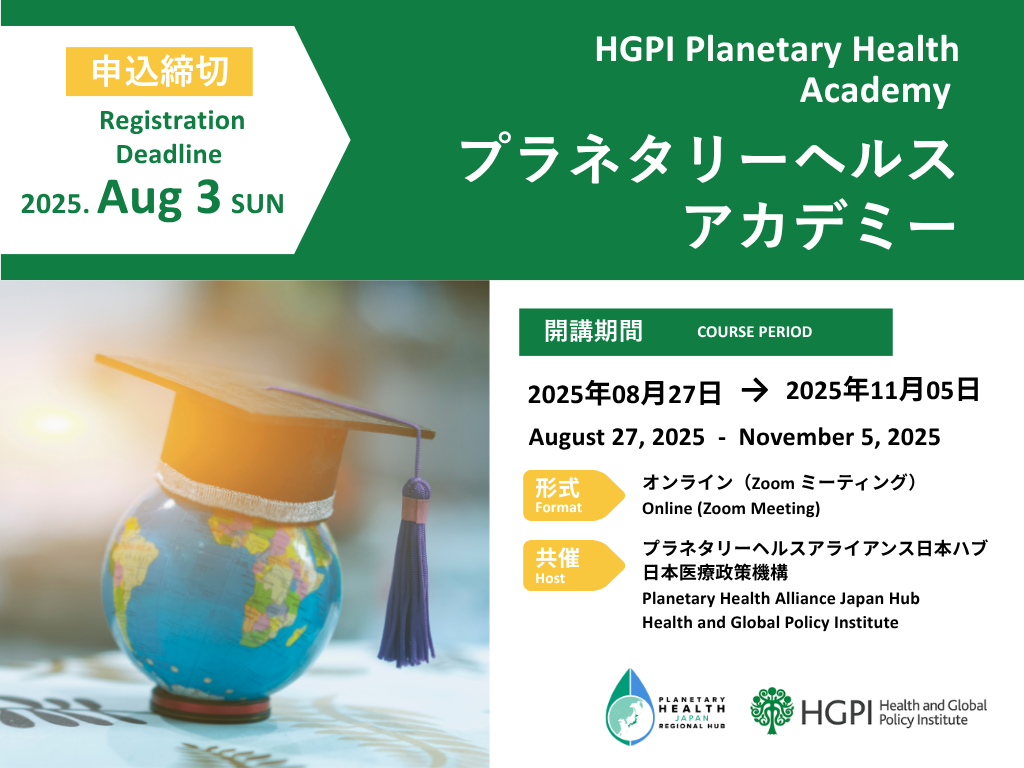
[Registration Closed] Planetary Health Academy (Starts August 2025)
-
2025-07-25
[In the Media] “Unitaid Executives Visit Japan to Tackle Health Issues, Leveraging Japanese Technology” (Asahi Shimbun, June 27, 2025)
-
2025-02-12
[Event Report] Non-partisan Diet Member Briefing – 30-minute Health Policy Update “Promoting the Health of Menopausal Men and Women as a Social Issue” (December 10, 2024)
-
2024-07-17
[Event Report] Non-partisan Diet Member Briefing – 30-minute Health Policy Update: “Towards Overcoming Kidney Disease: Strengthening Measures Against CKD” (June 7, 2024)
-
2024-06-06
[Event Report] Non-partisan Diet Member Briefing – 30-minute Health Policy Update: "Integrating Climate Change Measures and Health Promotion Measures: The Need to Formulate a National Strategy for Climate Change and Health" (May 16, 2024)
-
2024-04-30
[Event Report] Non-partisan Diet Member Briefing – 30-minute Health Policy Update: “Community Development for Senior Health: From Establishing Evidence to Social Implementation” (April 23, 2024)
Top Research & Recommendations Posts
Featured Posts
-
2026-05-18
[Registration Closed] Kick-off Panel Discussion “From Africa and Japan, Drawing from Perspectives Around the World:A Platform for Cultivating a Philosophical Health Dialogue Together” (June 15, 2026)
![[Registration Closed] Kick-off Panel Discussion “From Africa and Japan, Drawing from Perspectives Around the World:A Platform for Cultivating a Philosophical Health Dialogue Together” (June 15, 2026)](https://hgpi.org/en/wp-content/uploads/sites/2/HGPI_20260615_Eyecathch_panel-discussion-From-Japan-and-Africa-in-Discussion-with-the-World_2.png)
-
2026-08-28
[Announcement] The 3rd Kiyoshi Kurokawa Award: Call for Nominations (Deadline: November 30, 2026)
![[Announcement] The 3rd Kiyoshi Kurokawa Award: Call for Nominations (Deadline: November 30, 2026)](https://hgpi.org/en/wp-content/uploads/sites/2/Kiyoshi-Kurokawa-Award_3rd_nominations_eyecatch_caseB_ENG_web_20260929_v0.5.jpg)
-
2026-09-01
[Registration Closed] HGPI Salon 2025-2026 Looking Ahead to the Future of Japan’s Social Security System “Session 6: Japan’s Health Policy through the Lens of Global Security” (October 13, 2026)
![[Registration Closed] HGPI Salon 2025-2026 Looking Ahead to the Future of Japan’s Social Security System “Session 6: Japan’s Health Policy through the Lens of Global Security” (October 13, 2026)](https://hgpi.org/en/wp-content/uploads/sites/2/HGPISalon2025-20266.png)
-
2026-09-17
[Registration Open] (Webinar) The 145th HGPI Seminar “Toward Better AMR Measures at Elderly Care Facilities—Considering Infectious Disease Control in a Super-Aged Society From a Policy Perspective” (October 27, 2026)
![[Registration Open] (Webinar) The 145th HGPI Seminar “Toward Better AMR Measures at Elderly Care Facilities—Considering Infectious Disease Control in a Super-Aged Society From a Policy Perspective” (October 27, 2026)](https://hgpi.org/en/wp-content/uploads/sites/2/HGPIseminar145.png)
-
2026-10-06
[Registration Open] (Webinar) The 146th HGPI Seminar “How We Can Build a Society That Supports Choices Around Organ Donation: Exploring Decision-Making by Citizens and a Multi-Layered Approach Through Strategic Social Marketing” (November 9, 2026)
![[Registration Open] (Webinar) The 146th HGPI Seminar “How We Can Build a Society That Supports Choices Around Organ Donation: Exploring Decision-Making by Citizens and a Multi-Layered Approach Through Strategic Social Marketing” (November 9, 2026)](https://hgpi.org/en/wp-content/uploads/sites/2/HGPI_20261001_Eyecatch_HGPIseminer-146th-1.png)
