


[Event Report] Non-partisan Diet Member Briefing – 30-minute Health Policy Update: “Community Development for Senior Health: From Establishing Evidence to Social Implementation” (April 23, 2024)
date : 4/30/2024
Tags: Dementia, Diet Member Briefing

![[Event Report] Non-partisan Diet Member Briefing – 30-minute Health Policy Update: “Community Development for Senior Health: From Establishing Evidence to Social Implementation” (April 23, 2024)](https://hgpi.org/en/wp-content/uploads/sites/2/cb69d3b6d57341513e48578b7133bdb6-scaled-1.jpg)
Health and Global Policy Institute (HGPI) hosted an installment of 30-minute Health Policy Update, a series of briefings for Diet Members on key health policy issues. This installment was titled, “Community Development for Senior Health: From Establishing Evidence to Social Implementation.”
This briefing featured a lecture from Professor Katsunori Kondo (Project Professor, Center for Preventive Medical Sciences, Chiba University) on promoting health and reducing dementia risk for older adults. In addition to describing the effectiveness of community designs for social participation, sharing case studies of such communities, and establishing evidence for such practices, Professor Kondo also explained methods of implementing initiatives for better senior health in society through frameworks such as Pay For Success (PFS) systems, in which payments are linked to results.
Sharing many questions and insights, Diet Members took the opportunity to engage in a robust exchange of opinions during the Q&A session following the lecture.
Key points of the lecture
- Older adults who live in areas with more opportunities to participate in social activities are less likely to develop the need for long-term care. Long-term care prevention is now transforming from a system in which “the government provides services and community members receive them” to one in which “community members lead the administration and the government supports their efforts.”
- The Pay for Success (PFS) model is one method of providing financial resources for reimbursing successful industry, government, academia, and civil society initiatives and maintaining community member-operated community gatherings. In this context, “success” refers to efficiency gains in terms of social cost. Social Impact Bonds (SIBs) are a type of PFS that use private funding. While steps must still be taken to evaluate how effective these agreements are in the medium- to long-term, SIBs allow funding to reach effective service providers while avoiding ineffective ones, so they are likely to serve as a useful tool for optimizing administrative spending.
Program (Titles omitted)
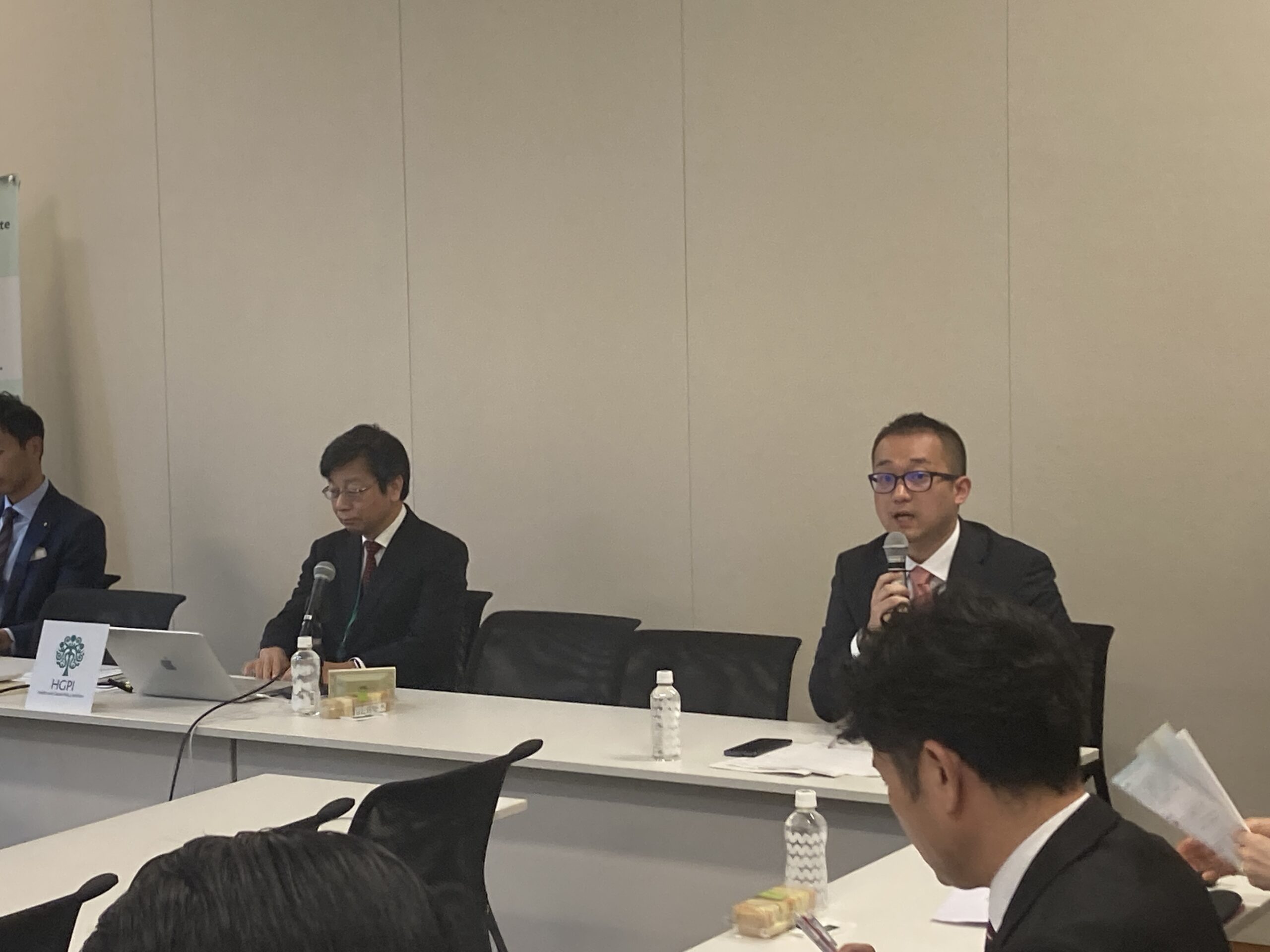 Explanatory introduction and overview of HGPI policy recommendations
Shunichiro Kurita (Senior Manager, HGPI)
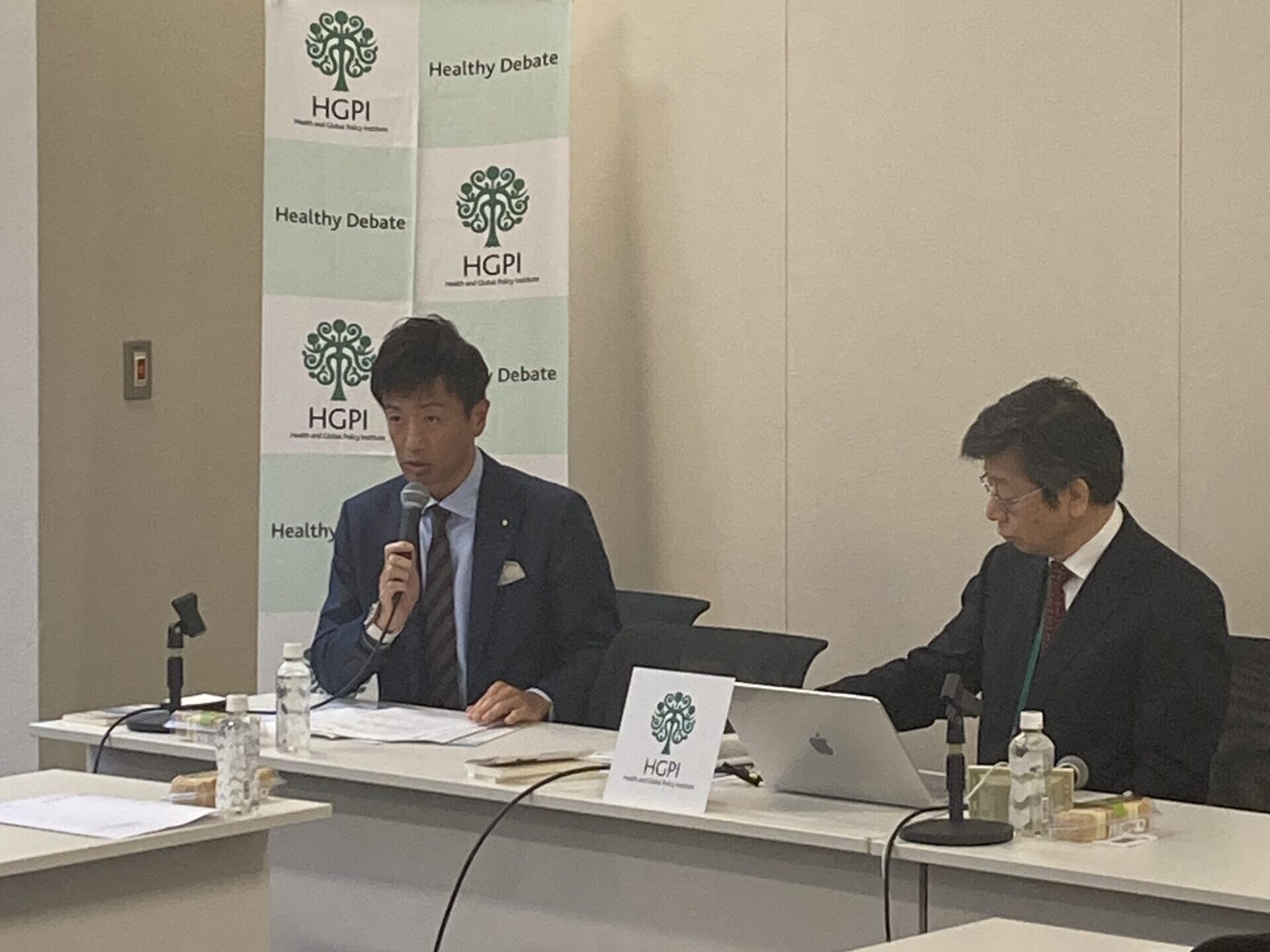 Greetings
Hayato Suzuki (Member, House of Representatives)
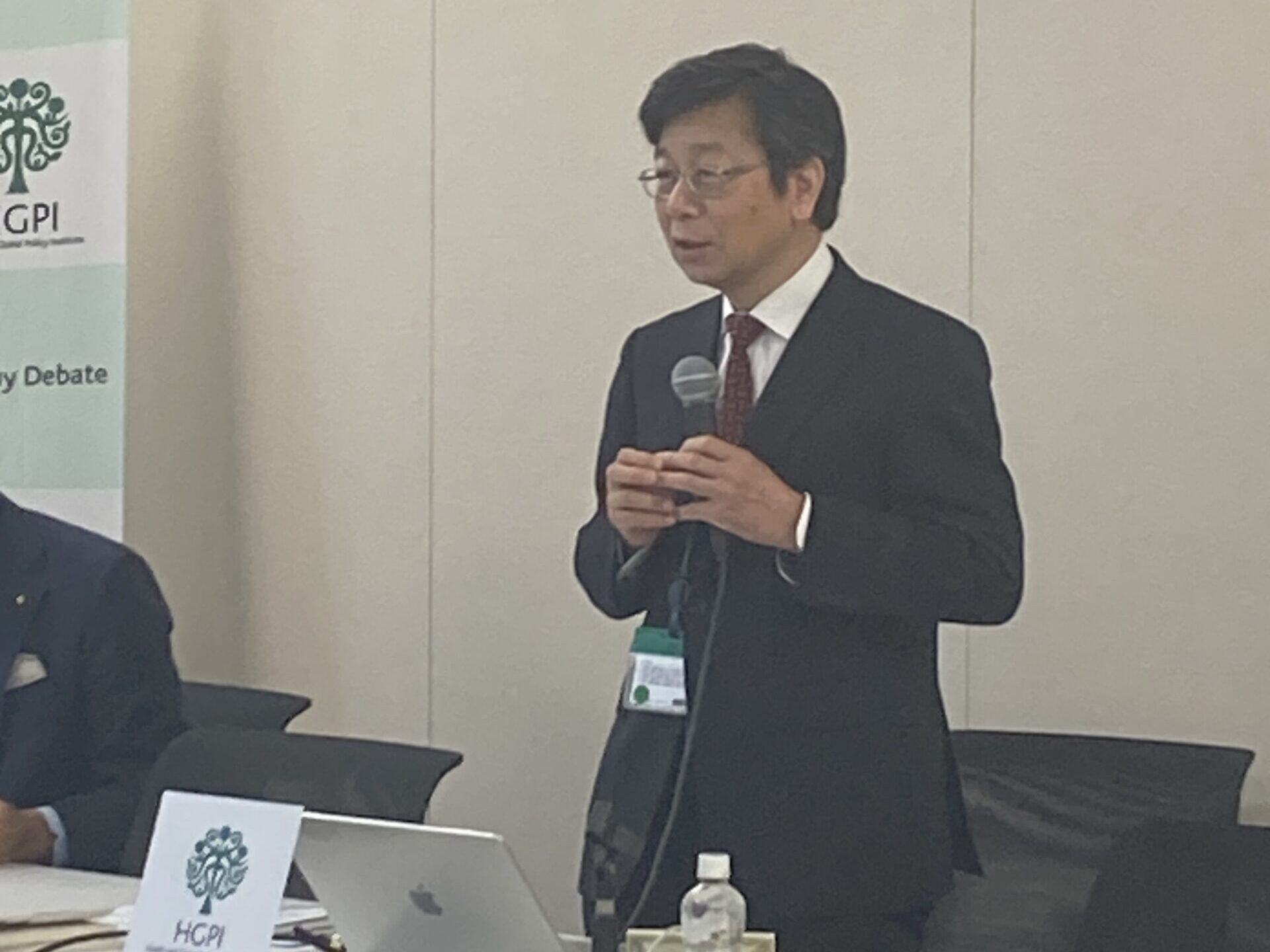 Lecture: The Potential of Pay for Success (PFS) Models to Help Build Healthy Communities
Katsunori Kondo (Project Professor, Center for Preventive Medical Sciences, Chiba University)
Related Posts
-
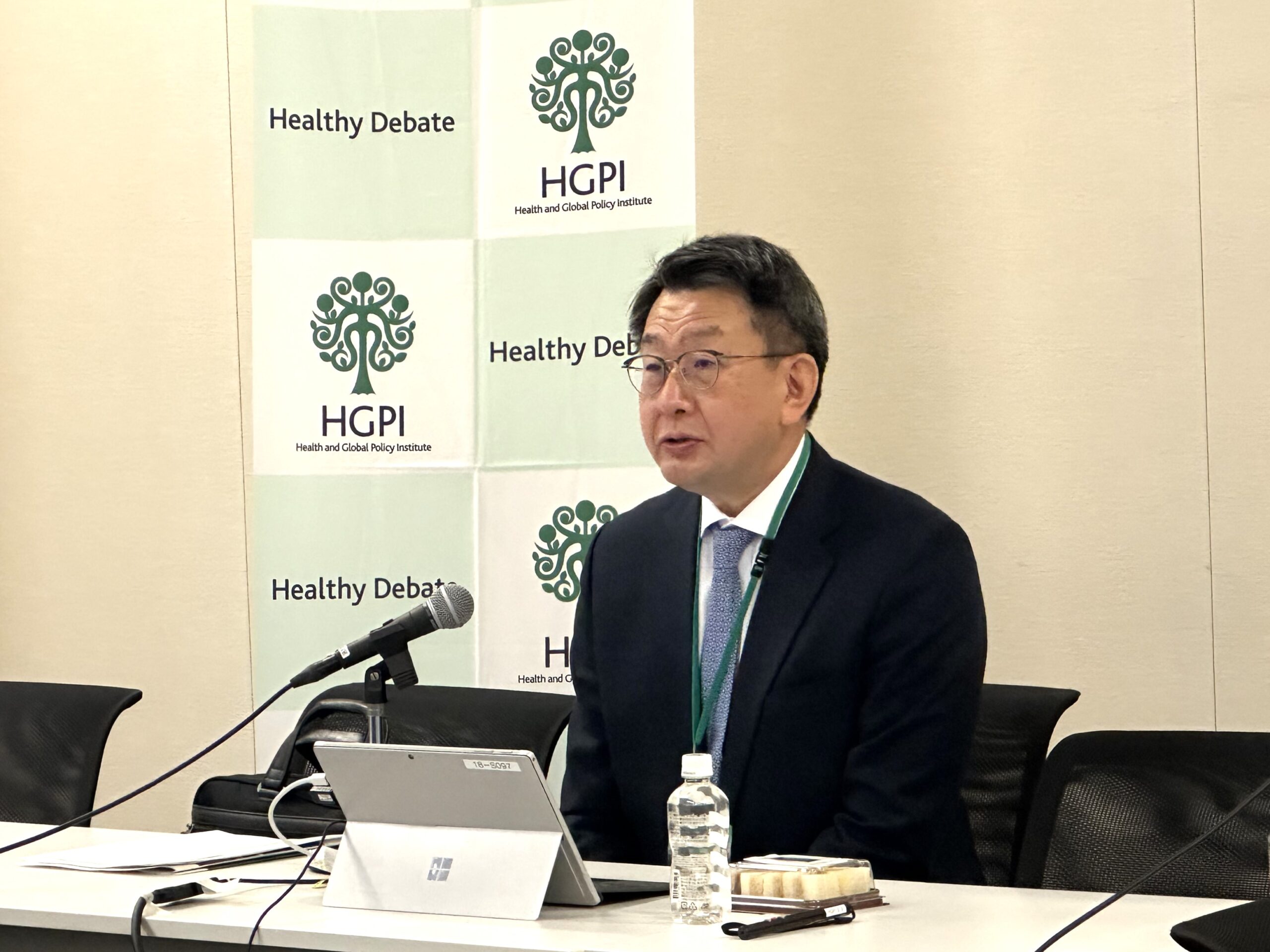
2024-03-04
[Event Report] Non-partisan Diet Member Briefing – 30-minute Health Policy Update: “Issues Surrounding and Necessary Measures Against Obesity Disease” (February 2, 2024)
-
2023-12-18
[Event Report] Non-partisan Diet Member study session: “Challenges and Prospects for Improving Patient Access to Genomic Cancer Medicine” (December 12, 2023)
-
2023-12-19
[Event Report] Non-partisan Diet Member study session: “Urgent Topics in Antimicrobial Resistance: Understanding the Threat of a Silent Pandemic” (December 5, 2023)
-
2023-06-29
[Event Report] Non-partisan Diet Member Briefing – 30-minute Health Policy Update: “Children’s Health – Challenges and Prospects for Implementing and Executing the Basic Law and Basic Plan for Child Health Based on HGPI’s Urgent Recommendations” (June 9, 2023)
-
2023-04-26
[Event Report] Non-partisan Diet Member Briefing – 30-minute Health Policy Update: “Introducing Idiopathic Normal Pressure Hydrocephalus (iNPH), a Form of Dementia That Can Improve With Treatment” (April 11, 2023)
Top Research & Recommendations Posts
Featured Posts
-
2026-05-18
[Registration Closed] Kick-off Panel Discussion “From Africa and Japan, Drawing from Perspectives Around the World:A Platform for Cultivating a Philosophical Health Dialogue Together” (June 15, 2026)
![[Registration Closed] Kick-off Panel Discussion “From Africa and Japan, Drawing from Perspectives Around the World:A Platform for Cultivating a Philosophical Health Dialogue Together” (June 15, 2026)](https://hgpi.org/en/wp-content/uploads/sites/2/HGPI_20260615_Eyecathch_panel-discussion-From-Japan-and-Africa-in-Discussion-with-the-World_2.png)
-
2026-08-28
[Announcement] The 3rd Kiyoshi Kurokawa Award: Call for Nominations (Deadline: November 30, 2026)
![[Announcement] The 3rd Kiyoshi Kurokawa Award: Call for Nominations (Deadline: November 30, 2026)](https://hgpi.org/en/wp-content/uploads/sites/2/Kiyoshi-Kurokawa-Award_3rd_nominations_eyecatch_caseB_ENG_web_20260929_v0.5.jpg)
-
2026-09-01
[Registration Closed] HGPI Salon 2025-2026 Looking Ahead to the Future of Japan’s Social Security System “Session 6: Japan’s Health Policy through the Lens of Global Security” (October 13, 2026)
![[Registration Closed] HGPI Salon 2025-2026 Looking Ahead to the Future of Japan’s Social Security System “Session 6: Japan’s Health Policy through the Lens of Global Security” (October 13, 2026)](https://hgpi.org/en/wp-content/uploads/sites/2/HGPISalon2025-20266.png)
-
2026-09-17
[Registration Open] (Webinar) The 145th HGPI Seminar “Toward Better AMR Measures at Elderly Care Facilities—Considering Infectious Disease Control in a Super-Aged Society From a Policy Perspective” (October 27, 2026)
![[Registration Open] (Webinar) The 145th HGPI Seminar “Toward Better AMR Measures at Elderly Care Facilities—Considering Infectious Disease Control in a Super-Aged Society From a Policy Perspective” (October 27, 2026)](https://hgpi.org/en/wp-content/uploads/sites/2/HGPIseminar145.png)
-
2026-10-06
[Registration Open] (Webinar) The 146th HGPI Seminar “How We Can Build a Society That Supports Choices Around Organ Donation: Exploring Decision-Making by Citizens and a Multi-Layered Approach Through Strategic Social Marketing” (November 9, 2026)
![[Registration Open] (Webinar) The 146th HGPI Seminar “How We Can Build a Society That Supports Choices Around Organ Donation: Exploring Decision-Making by Citizens and a Multi-Layered Approach Through Strategic Social Marketing” (November 9, 2026)](https://hgpi.org/en/wp-content/uploads/sites/2/HGPI_20261001_Eyecatch_HGPIseminer-146th-1.png)
