


[Event Report] Non-partisan Diet Member Briefing – 30-minute Health Policy Update: “Introducing Idiopathic Normal Pressure Hydrocephalus (iNPH), a Form of Dementia That Can Improve With Treatment” (April 11, 2023)
date : 4/26/2023
Tags: Dementia, Diet Member Briefing

![[Event Report] Non-partisan Diet Member Briefing – 30-minute Health Policy Update: “Introducing Idiopathic Normal Pressure Hydrocephalus (iNPH), a Form of Dementia That Can Improve With Treatment” (April 11, 2023)](https://hgpi.org/en/wp-content/uploads/sites/2/dmb-20230411-top-image6-scaled-1.jpeg)
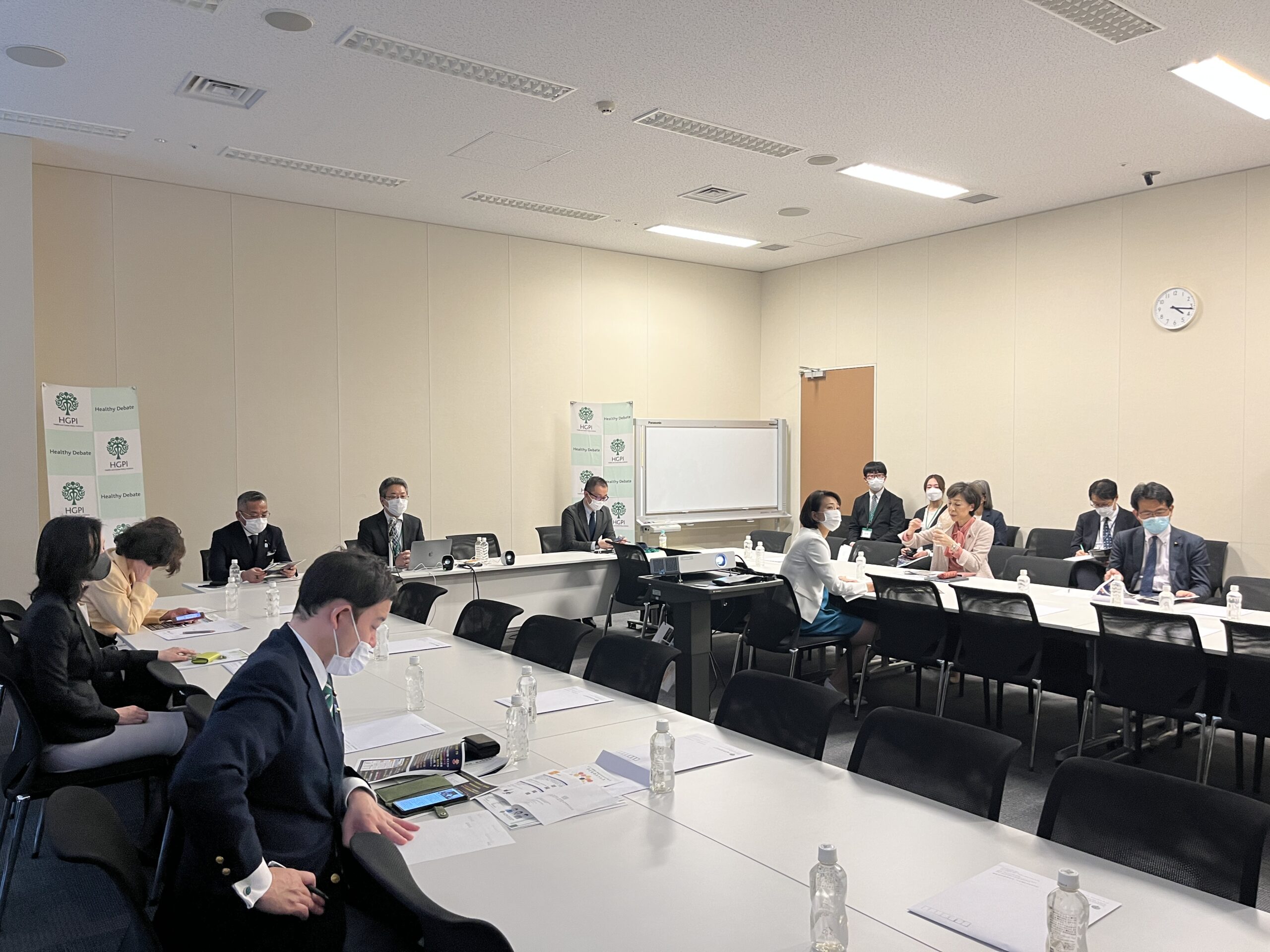
Health and Global Policy Institute (HGPI) hosted an installment of 30-minute Health Policy Update, a series of briefings for Diet Members on key health policy issues. This installment was titled, “Introducing Idiopathic Normal Pressure Hydrocephalus (iNPH), a Form of Dementia That Can Improve With Treatment.”
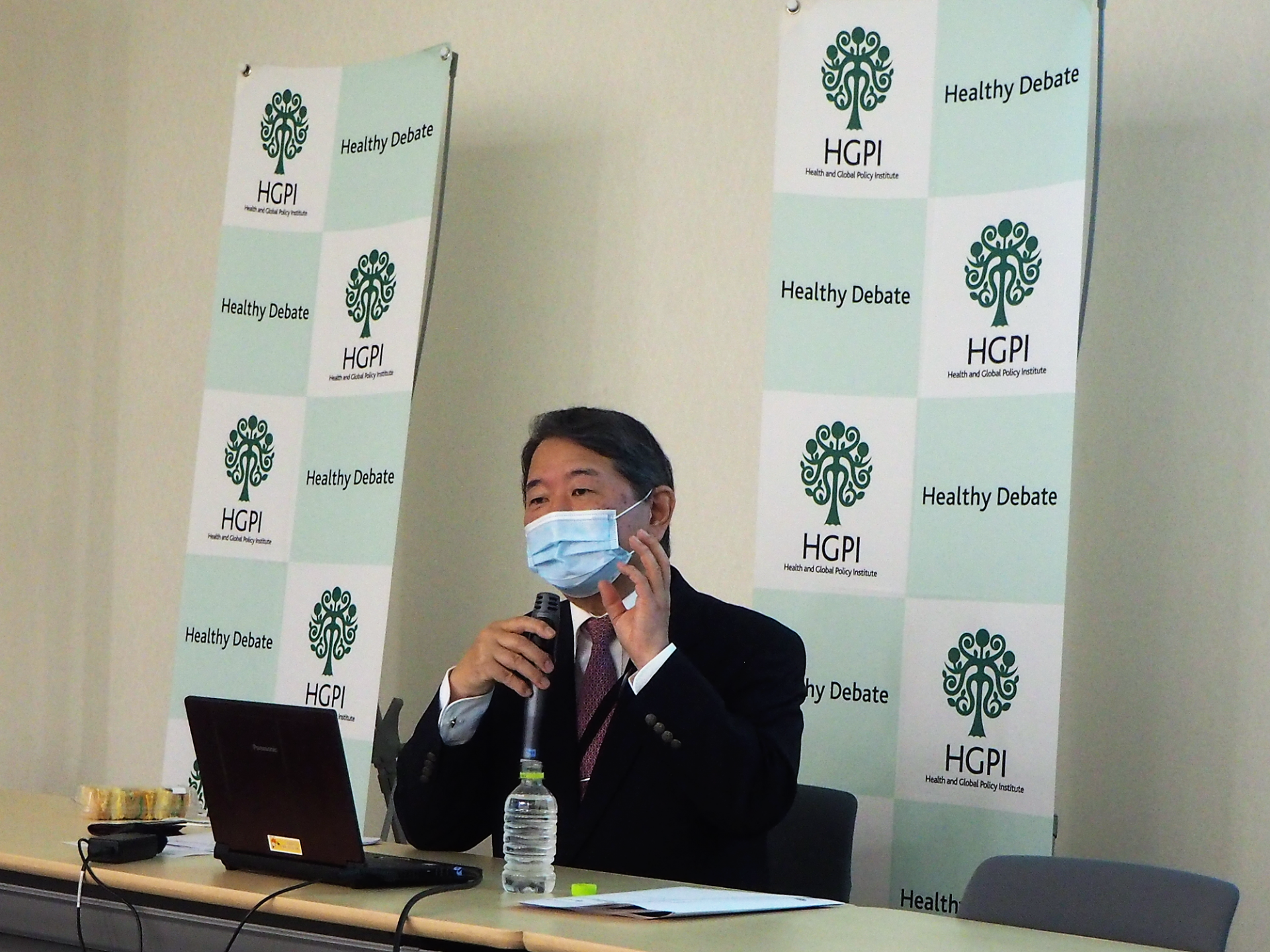
The study session featured a lecture from Professor Hiroaki Kazui (Professor, Department of Neuropsychiatry, Kochi Medical School; Chairman, The Japanese Society of NPH) which provided an explanation of the current circumstances and issues for iNPH, a condition viewed as a form of dementia that can be treated.
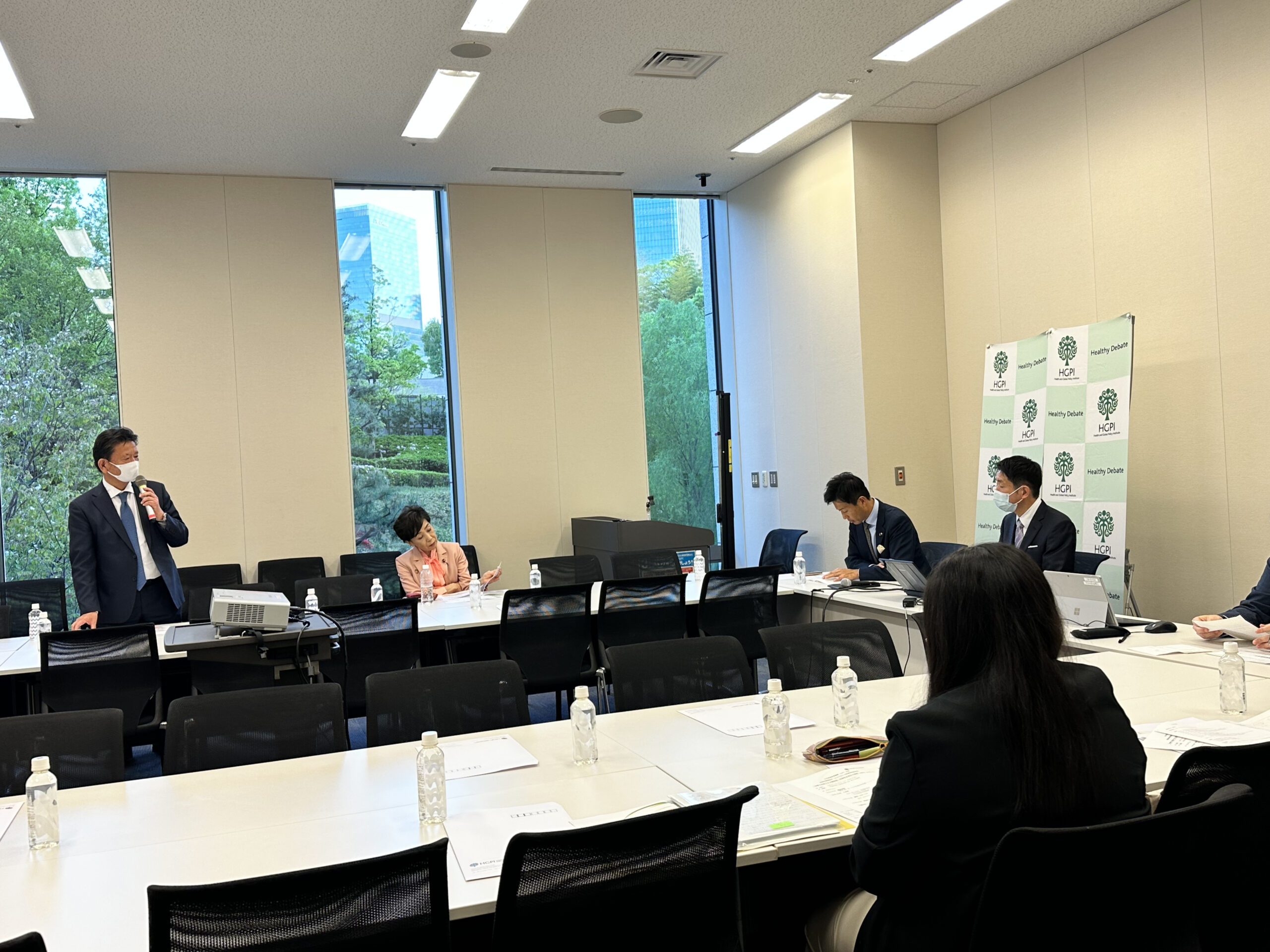
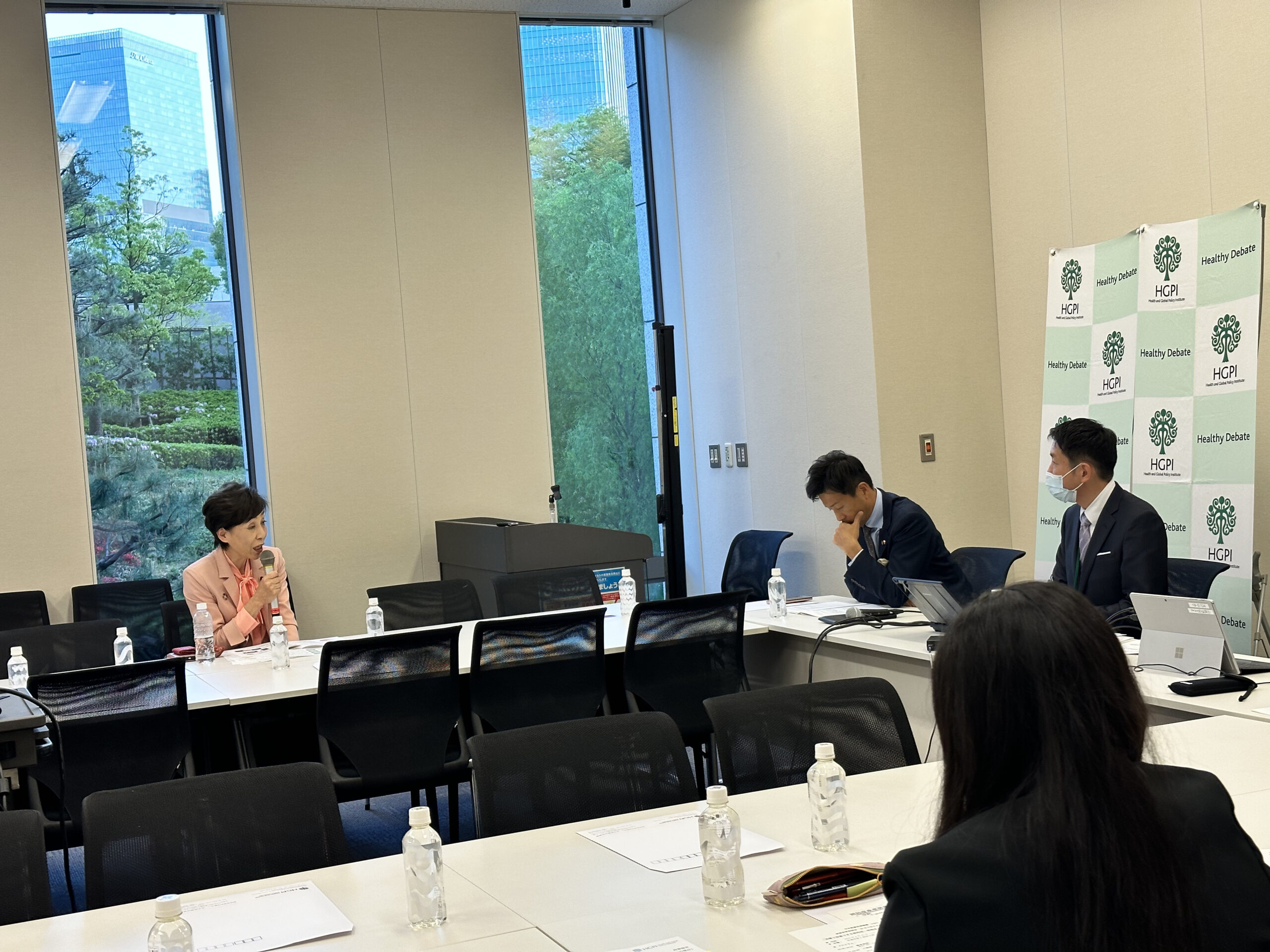
A lively exchange of opinions was held with those in attendance during the question and answer session following the lecture.
<Key points of the lecture>
- It is important to diagnose dementia early and provide treatments that are based on its underlying causes. Diagnosis must be performed from the two perspectives of disease prevalence and treatability. It is particularly important that a treatable form of dementia called idiopathic Normal Pressure Hydrocephalus (iNPH) does not go overlooked.
- Normal Pressure Hydrocephalus (NPH) is a disease that presents the triad symptoms of cognitive impairment, gait disturbance, and urinary incontinence. While cerebrospinal fluid (CSF) pressure is within normal range, people with NPH have excessive intracranial CSF build-up and enlarged ventricles. All three symptoms of NPH improve with shunt surgery, so it is now the subject of attention as a treatable form of dementia. iNPH is a form of NPH that appears and progresses gradually and has no known underlying causes. iNPH is often mistaken for Alzheimer’s disease or other changes caused by aging, which sometimes delays diagnosis and treatment.
- The Guidelines for Management of Idiopathic Normal Pressure Hydrocephalus (Third Edition) categorizes diagnostic criteria for iNPH in four stages. Among these stages, it is particularly important to diagnose “Probable iNPH” so shunt surgery can be considered. “Probable iNPH” refers to cases in which patients’ symptoms improve after undergoing a CSF tap test and/or drainage test, or in which they exhibit gait disturbance and their neuroimaging features include narrowing of the sulci and subarachnoid space over the high-convexity/midline surface (known as Disproportionately Enlarged Subarachnoid-Space Hydrocephalus, or DESH). iNPH with DESH has a high improvement rate with shunt surgery.
- Previous studies have shown that the milder the impairments caused by the triad symptoms are before shunt surgery, the more relief of objective symptoms patients experience after surgery. This is why it is considered best to perform shunt surgery for patients with iNPH during the early stages to ensure they can live independently after the procedure. Doing so is also considered important for lightening the burden of providing long-term care that is placed on their family members. However, when iNPH is comorbid with Alzheimer’s disease, other forms of dementia, or other diseases, it may be impossible for patients to receive the full benefits of shunt surgery. This means diagnosing comorbid conditions is as important as differential diagnosis.
- Future challenges for iNPH include promoting early diagnosis, increasing the number of centers that can perform shunt procedures, conducting surveys to grasp real-world conditions surrounding the prevalence of iNPH and its treatment, and establishing a sufficient healthcare provision system. Although an increasing number of health institutions are beginning to treat iNPH, there are still many that specialize in dementia but do not treat iNPH. In addition to the conventional approach in which iNPH is treated as a neurosurgical disease, we must also improve the healthcare provision system from the perspective of dementia and implement the necessary measures for making those improvements. Furthermore, while building a system for closer cooperation among physicians specializing in internal medicine who provide differential diagnosis for iNPH and diagnose comorbid diseases and neurosurgeons who perform shunt procedures, it will also be necessary to broadly disseminate information that will be useful for diagnosing and treating iNPH and DESH, including the aforementioned Guidelines for Management of Idiopathic Normal Pressure Hydrocephalus.
[Program] (Titles omitted)
16:30-16:35 Welcoming Remarks and Explanatory Introduction
Shunichiro Kurita (Senior Manager, Health and Global Policy Institute)
16:35-16:40 Greetings
Hayato Suzuki (Member, House of Representatives; Secretary-General, Parliamentary Association for Promoting Dementia Policies for an Inclusive Society; Special Advisor, Project for iNPH Countermeasures, HGPI)
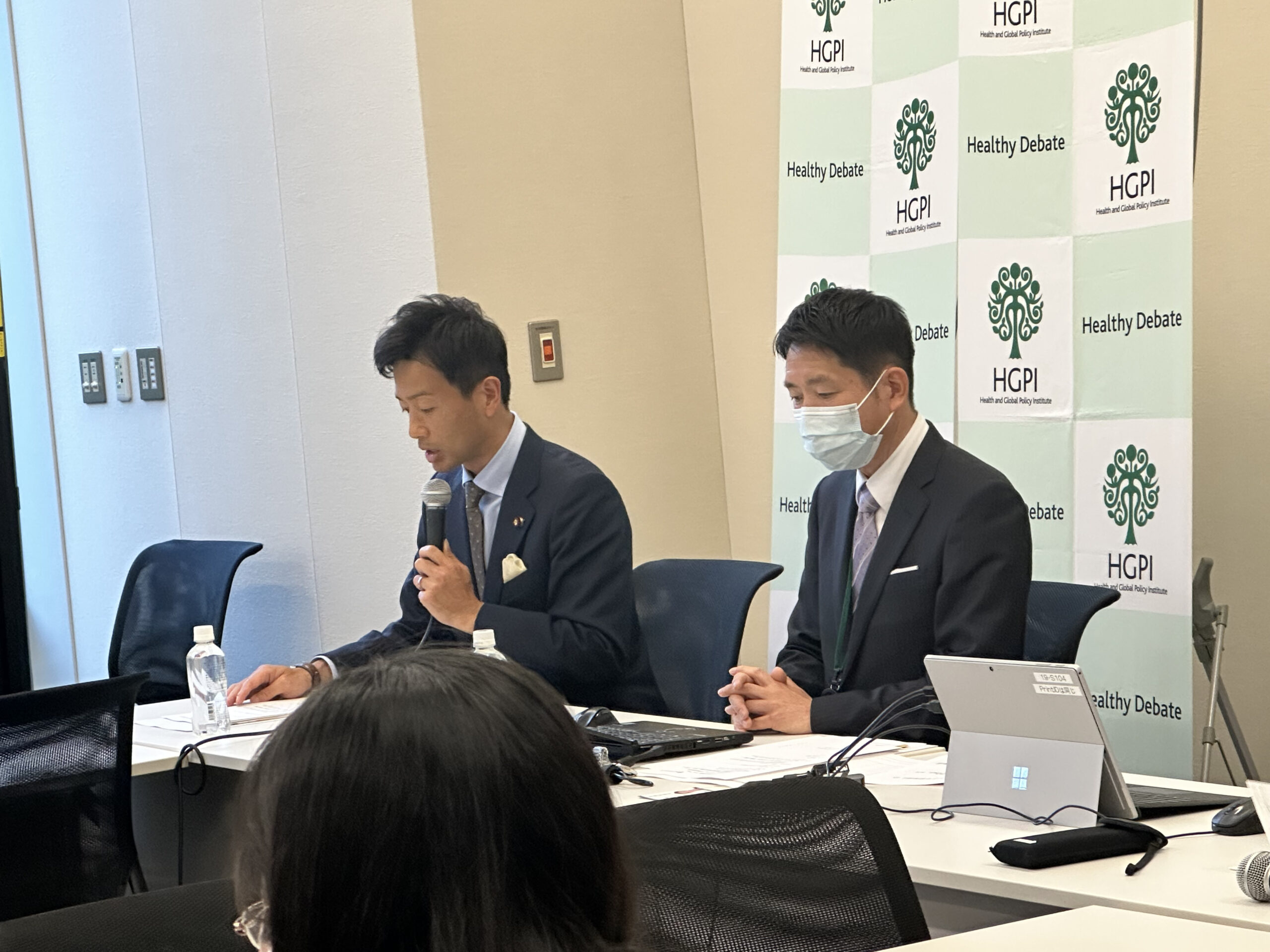
16:40-17:10 Lecture: Introducing Idiopathic Normal Pressure Hydrocephalus (iNPH) – An Overview of a Form of Dementia That Can Improve With Treatment and Issues in this Area
Hiroaki Kazui (Professor, Department of Neuropsychiatry, Kochi Medical School; Chairman, The Japanese Society of NPH)
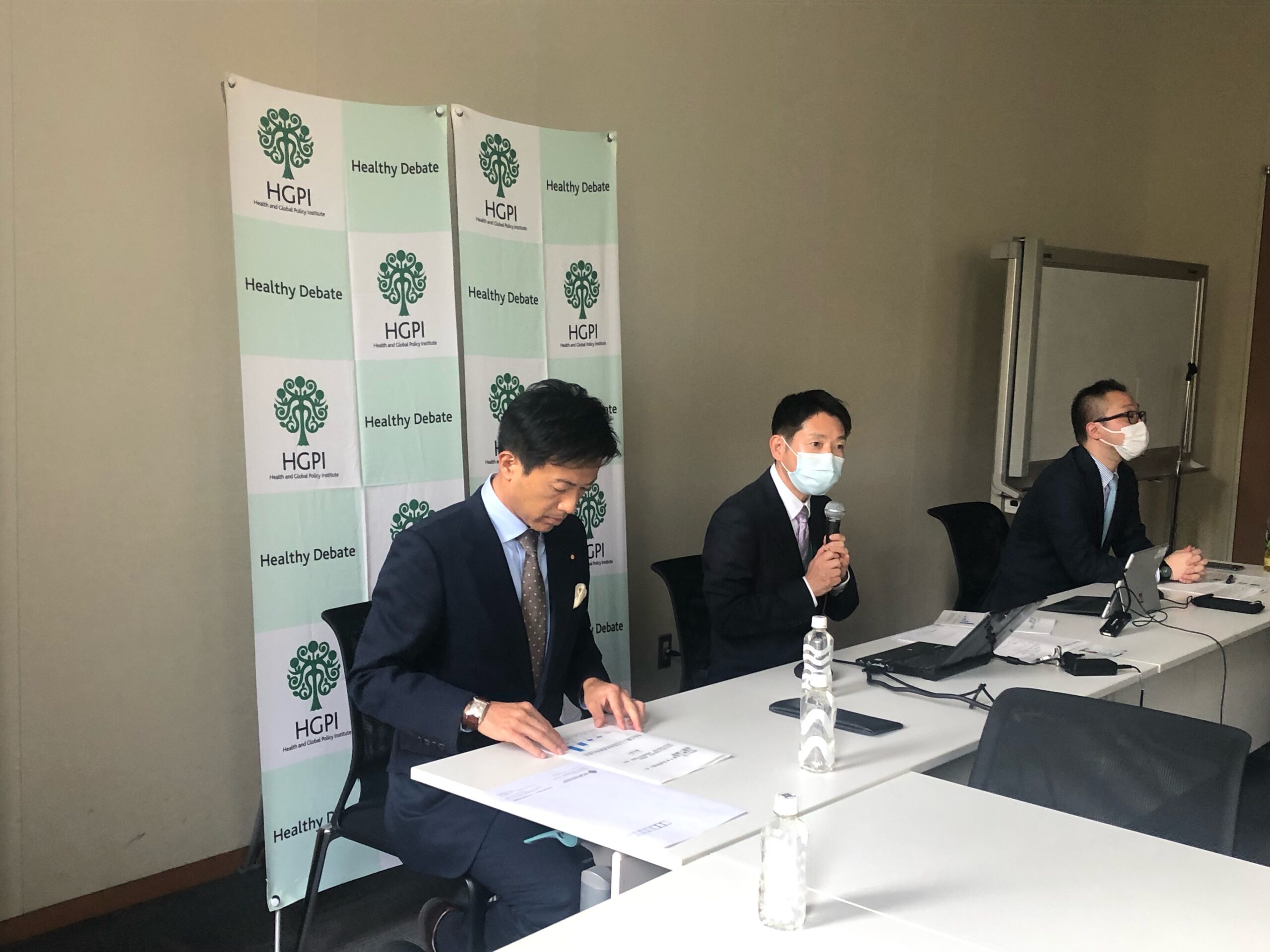
17:10-17:30 Question and answer session
Related Posts
-
2023-03-22
[Event Report] Non-partisan Diet Member Briefing – 30-minute Health Policy Update: “Considering Children’s Mental Health – Issues in Classrooms and Stress Management” (March 9, 2023)
-
2022-07-14
[Event Report] Non-partisan Diet Member Briefing – 30-minute Health Policy Update “The Latest on Cardiovascular Disease Control and Voices From the Frontline – Circumstances Since the Basic Act and Best Practices from Communities and Regions” (June 8, 2022)
-
2023-02-17
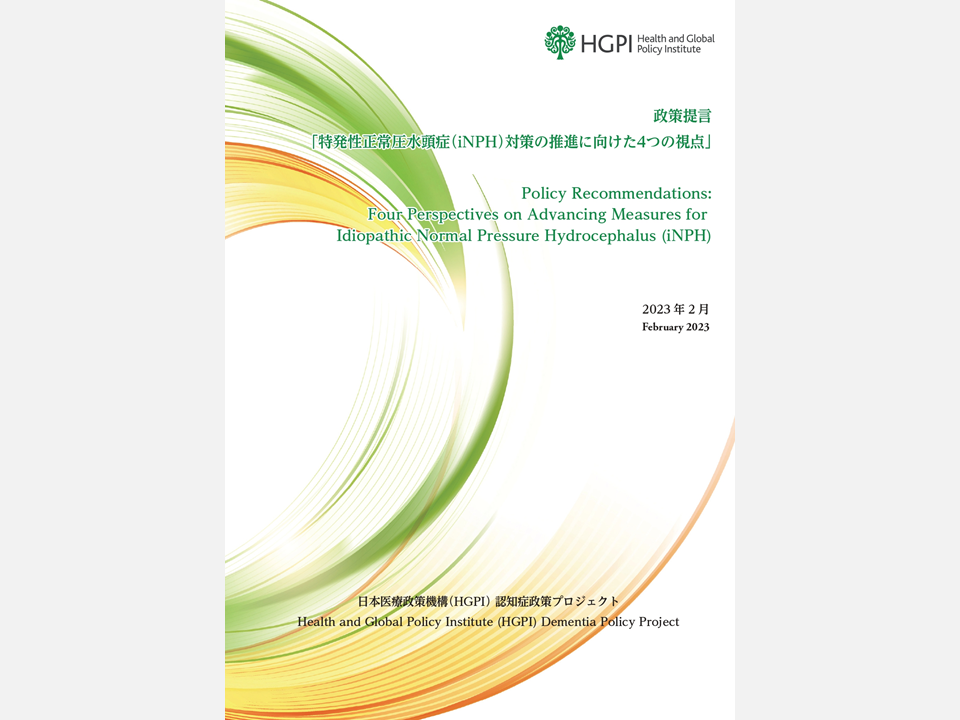
[Policy Recommendations] Four Perspectives on Advancing Measures for Idiopathic Normal Pressure Hydrocephalus (iNPH) (February 16, 2023)
-
2022-11-22
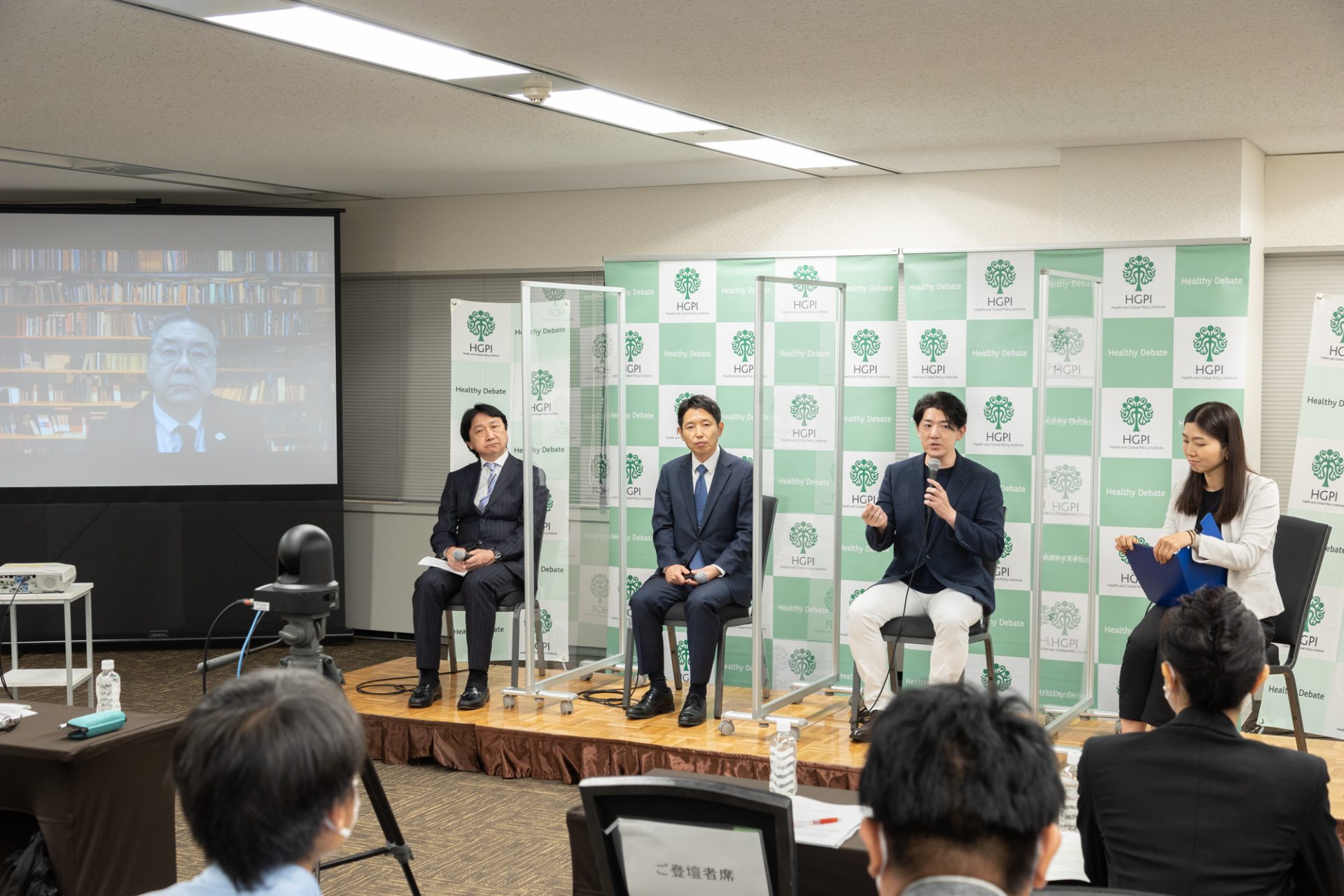
[Event Report] The Health and Global Policy Institute Dementia Policy Project Public Symposium: “Current Issues and Future Prospects for Idiopathic Normal Pressure Hydrocephalus (iNPH) Measures – Focusing on a Form of Dementia that Improves with Treatment” (August 24, 2022)
Top Research & Recommendations Posts
Featured Posts
-
2026-05-18
[Registration Closed] Kick-off Panel Discussion “From Africa and Japan, Drawing from Perspectives Around the World:A Platform for Cultivating a Philosophical Health Dialogue Together” (June 15, 2026)
![[Registration Closed] Kick-off Panel Discussion “From Africa and Japan, Drawing from Perspectives Around the World:A Platform for Cultivating a Philosophical Health Dialogue Together” (June 15, 2026)](https://hgpi.org/en/wp-content/uploads/sites/2/HGPI_20260615_Eyecathch_panel-discussion-From-Japan-and-Africa-in-Discussion-with-the-World_2.png)
-
2026-08-28
[Announcement] The 3rd Kiyoshi Kurokawa Award: Call for Nominations (Deadline: November 30, 2026)
![[Announcement] The 3rd Kiyoshi Kurokawa Award: Call for Nominations (Deadline: November 30, 2026)](https://hgpi.org/en/wp-content/uploads/sites/2/Kiyoshi-Kurokawa-Award_3rd_nominations_eyecatch_caseB_ENG_web_20260929_v0.5.jpg)
-
2026-09-01
[Registration Closed] HGPI Salon 2025-2026 Looking Ahead to the Future of Japan’s Social Security System “Session 6: Japan’s Health Policy through the Lens of Global Security” (October 13, 2026)
![[Registration Closed] HGPI Salon 2025-2026 Looking Ahead to the Future of Japan’s Social Security System “Session 6: Japan’s Health Policy through the Lens of Global Security” (October 13, 2026)](https://hgpi.org/en/wp-content/uploads/sites/2/HGPISalon2025-20266.png)
-
2026-09-17
[Registration Open] (Webinar) The 145th HGPI Seminar “Toward Better AMR Measures at Elderly Care Facilities—Considering Infectious Disease Control in a Super-Aged Society From a Policy Perspective” (October 27, 2026)
![[Registration Open] (Webinar) The 145th HGPI Seminar “Toward Better AMR Measures at Elderly Care Facilities—Considering Infectious Disease Control in a Super-Aged Society From a Policy Perspective” (October 27, 2026)](https://hgpi.org/en/wp-content/uploads/sites/2/HGPIseminar145.png)
-
2026-10-06
[Registration Open] (Webinar) The 146th HGPI Seminar “How We Can Build a Society That Supports Choices Around Organ Donation: Exploring Decision-Making by Citizens and a Multi-Layered Approach Through Strategic Social Marketing” (November 9, 2026)
![[Registration Open] (Webinar) The 146th HGPI Seminar “How We Can Build a Society That Supports Choices Around Organ Donation: Exploring Decision-Making by Citizens and a Multi-Layered Approach Through Strategic Social Marketing” (November 9, 2026)](https://hgpi.org/en/wp-content/uploads/sites/2/HGPI_20261001_Eyecatch_HGPIseminer-146th-1.png)
