


[Public Comment Submission] “2050 Tokyo Strategy: Making Tokyo Even Better (Draft)” (March 3, 2025)
date : 3/21/2025
Tags: Planetary Health

![[Public Comment Submission] “2050 Tokyo Strategy: Making Tokyo Even Better (Draft)” (March 3, 2025)](https://hgpi.org/en/wp-content/uploads/sites/2/2874d75b2b3c42228bfc87bb28f2139d.png)
Health and Global Policy Institute (HGPI) has submitted a public comment regarding the “2050 Tokyo Strategy: Making Tokyo Even Better” (Draft) issued by the Policy Planning Bureau of the Tokyo Metropolitan Government. Please note that the call for public comments has already closed.
The “2050 Tokyo Strategy” is a comprehensive plan developed by the Tokyo Metropolitan Government, building upon the previous “Future Tokyo: Tokyo’s Long-Term Strategy”. It is positioned as Tokyo’s comprehensive strategy that takes into account the “Comprehensive Strategy for the Vision for a Digital Garden City Nation (DIGIDEN)” under Article 9 of the “Act on Overcoming Population Decline and Vitalizing Local Economy in Japan” (Act No. 136 of 2014).
The current draft of the “2050 Tokyo Strategy: Making Tokyo Even Better” has been formulated in response to rapid changes in socio-economic conditions, the intensifying climate crisis, and demographic shifts such as declining birthrates and aging populations. Recognizing these changes as opportunities, the strategy aims to realize Tokyo’s vision for the 2050s by outlining policies to be pursued toward 2035, serving as a new long-term roadmap for Tokyo’s governance.
■ Climate Change and Tokyo’s Role as a Global Leader
As the impacts of climate change become increasingly severe, Tokyo’s leadership can serve as a model for other cities and nations. Tokyo has already implemented innovative environmental policies, such as the “Zero Emission Tokyo Strategy” and “Plastic Smart Tokyo”, taking concrete actions to reduce greenhouse gas (GHG) emissions and waste.
The “Future Tokyo: Tokyo’s Long-Term Strategy” (March 2021) recognized climate change as one of the greatest crises facing humanity and set key targets for GHG reduction and urban resilience. The “2050 Tokyo Strategy” continues to highlight the worsening climate crisis as a critical challenge, incorporating comprehensive inputs and setting even more ambitious targets. Furthermore, during the broad listening process introduced for the consideration of this draft, Tokyo residents expressed aspirations such as “aiming to build a disaster-resilient city through redevelopment that leverages the power of nature,” “developing eco-friendly infrastructure across the entire city,” and “realizing a healthy Tokyo based on the principles of planetary health.” However, while climate change, environmental pollution, and biodiversity loss are global challenges that directly and severely impact human health, the strategy does not fully integrate planetary health perspectives. Given Tokyo’s status as a leading global city, it is imperative to create a society where residents can enjoy health and longevity by incorporating planetary health principles.
■ HGPI’s Recommendations for a Sustainable and Healthy Future
HGPI urges the Tokyo Metropolitan Government to strengthen collaborations with organizations such as Bloomberg Philanthropies, the World Health Organization (WHO), and other partners under the “Partnership for Healthy Cities” initiative. HGPI also proposes the establishment of a “Green Health System” to protect and promote the health and well-being of the planet, the world, Japan, and the residents of Tokyo.
Additionally, Tokyo has experienced increasingly severe heatwaves and extreme temperatures, leading to a rise in heat-related emergency transportations and deaths. To address this issue, HGPI recommends adopting comprehensive heatwave strategies similar to those implemented in Miami and Los Angeles, USA and Athens, Greece. Specifically, HGPI calls for the establishment of a Chief Heat Officer (CHO), a role responsible for coordinating interdepartmental efforts to protect residents from extreme heat.
■ Existing Global and Domestic Initiatives
For healthcare facilities, international discussions on decarbonization and sustainability are advancing through initiatives such as Global Green and Healthy Hospitals (GGHH). In Japan, the Japan Primary Care Association has issued the “Declaration of Climate Emergency in Primary Care (Hamamatsu Declaration)“, promoting climate action among healthcare professionals. These efforts are expected to expand further in the future.
Key Points of HGPI’s Public Comment Submission
- Establish a health system that adapts to climate change-related diseases, including heatstroke.
- Integrate climate action into child-centered policies.
- Promote sustainable agriculture, forestry, and fisheries, by incorporating planetary health diets.
- Include well-being indicators in the “Green and Water” goals.
- Emphasize the direct and indirect health impacts of climate change in “Urban Resilience” and promote heat countermeasures.
- Advance the decarbonization of hospitals in Tokyo.
- Develop solutions for urban heat challenges and related health risks.
- Strengthen collaboration with the “Partnership for Healthy Cities.”
- Promote heat adaptation measures through the establishment of a Chief Heat Officer (CHO).
For more details regarding this public comment, please click here.
Related Posts
-
2025-03-03
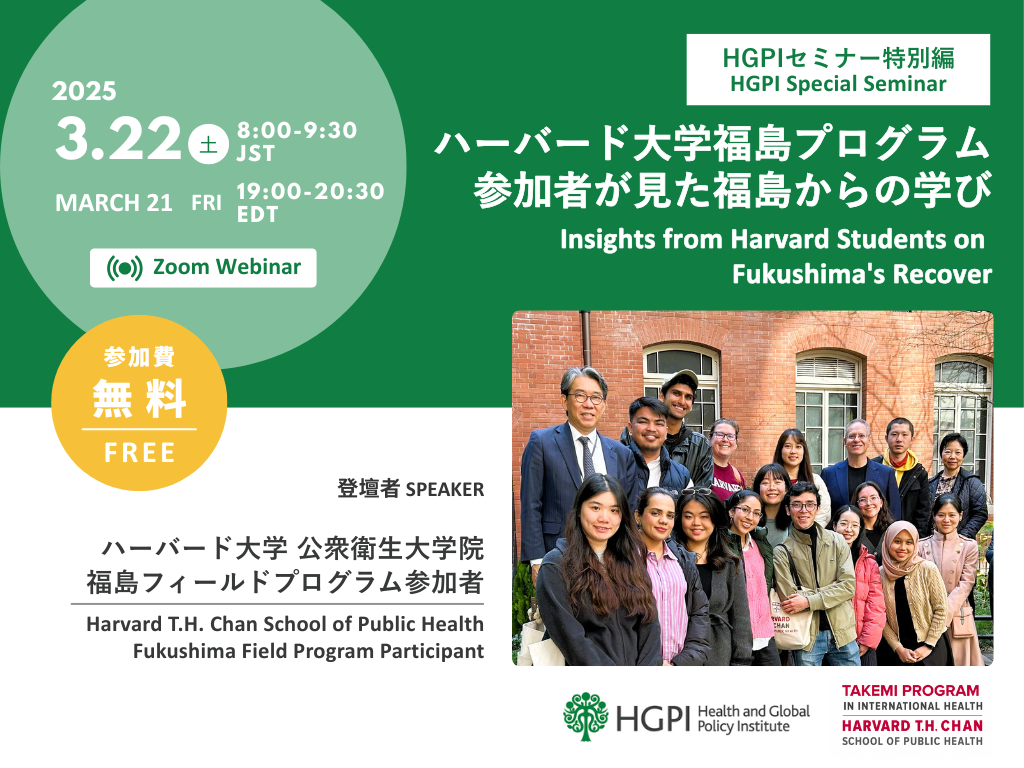
[Registration Closed] (Webinar) HGPI Special Seminar "Insights from Harvard Students on Fukushima's Recover" (March 21, 2025 EDT | March 22, 2025 JST)
-
2024-12-20
[Policy Recommendations] Achieving a Sustainable Society of Health and Longevity Through the Integration of Environment and Healthcare-Incorporating a Planetary Health Perspective into the 3rd Phase of The Healthcare Policy-(December 20, 2024)
-
2024-12-09
[Policy Recommendations] Integrating Climate and Health for a Sustainable Society: Incorporating a Planetary Health Perspective into Nationally Determined Contributions (NDCs)(December 9, 2024)
-
2025-01-30
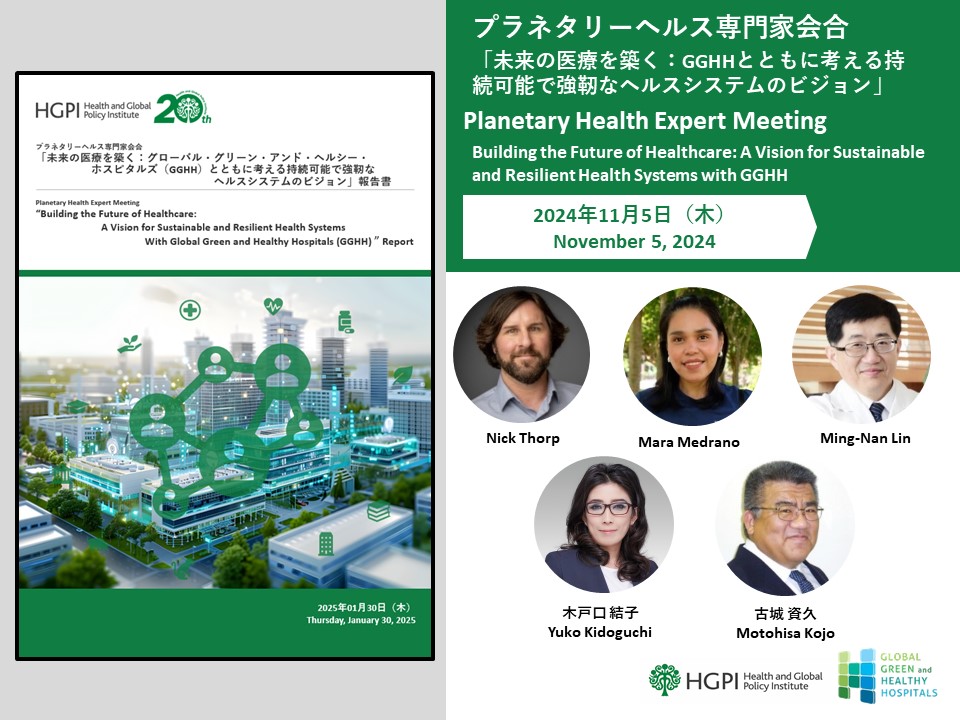
[Event Report] Planetary Health Expert Meeting “Building the Future of Healthcare: A Vision for Sustainable and Resilient Health Systems with GGHH” (November 5, 2024)
-
2024-06-26
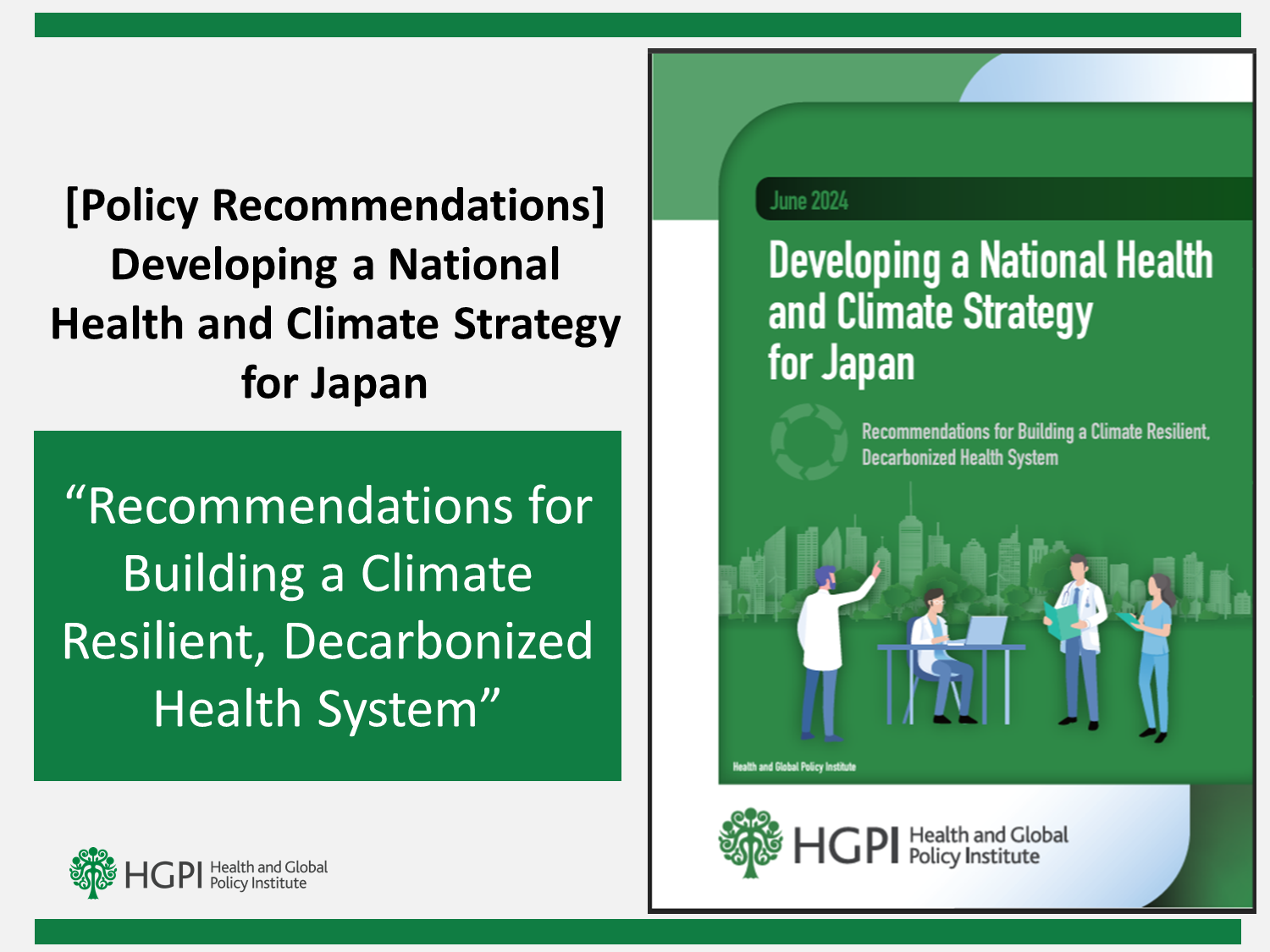
[Policy Recommendations] Developing a National Health and Climate Strategy for Japan (June 26, 2024)
-
2024-04-15
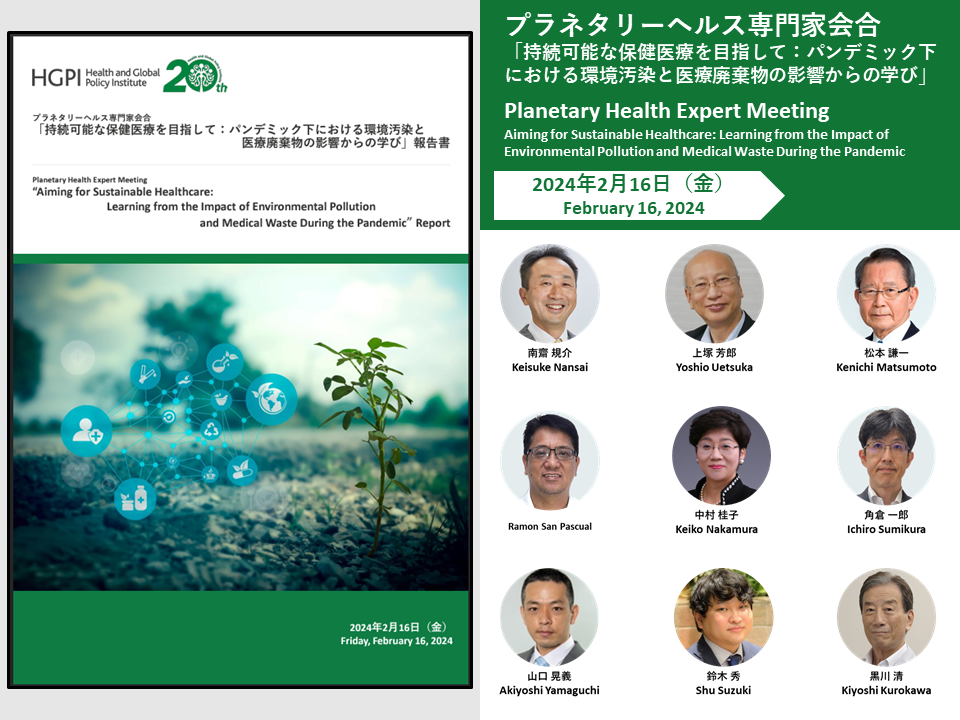
[Event Report] Planetary Health Expert Meeting Aiming for Sustainable Healthcare: Learning from the Impact of Environmental Pollution and Medical Waste During the Pandemic (February 16, 2024)
-
2023-08-01
[Announcement] HGPI Joins Global Green and Healthy Hospitals (August 1, 2023)
-
2024-12-12
[HGPI Policy Column] (No. 51) From the Planetary Health Project “Part 11: Efforts Toward Achieving Carbon Neutrality in Japan's Pharmaceutical Industry”
Top Research & Recommendations Posts
Featured Posts
-
2026-05-18
[Registration Closed] Kick-off Panel Discussion “From Africa and Japan, Drawing from Perspectives Around the World:A Platform for Cultivating a Philosophical Health Dialogue Together” (June 15, 2026)
![[Registration Closed] Kick-off Panel Discussion “From Africa and Japan, Drawing from Perspectives Around the World:A Platform for Cultivating a Philosophical Health Dialogue Together” (June 15, 2026)](https://hgpi.org/en/wp-content/uploads/sites/2/HGPI_20260615_Eyecathch_panel-discussion-From-Japan-and-Africa-in-Discussion-with-the-World_2.png)
-
2026-08-28
[Announcement] The 3rd Kiyoshi Kurokawa Award: Call for Nominations (Deadline: November 30, 2026)
![[Announcement] The 3rd Kiyoshi Kurokawa Award: Call for Nominations (Deadline: November 30, 2026)](https://hgpi.org/en/wp-content/uploads/sites/2/Kiyoshi-Kurokawa-Award_3rd_nominations_eyecatch_caseB_ENG_web_20260929_v0.5.jpg)
-
2026-09-01
[Registration Closed] HGPI Salon 2025-2026 Looking Ahead to the Future of Japan’s Social Security System “Session 6: Japan’s Health Policy through the Lens of Global Security” (October 13, 2026)
![[Registration Closed] HGPI Salon 2025-2026 Looking Ahead to the Future of Japan’s Social Security System “Session 6: Japan’s Health Policy through the Lens of Global Security” (October 13, 2026)](https://hgpi.org/en/wp-content/uploads/sites/2/HGPISalon2025-20266.png)
-
2026-09-17
[Registration Open] (Webinar) The 145th HGPI Seminar “Toward Better AMR Measures at Elderly Care Facilities—Considering Infectious Disease Control in a Super-Aged Society From a Policy Perspective” (October 27, 2026)
![[Registration Open] (Webinar) The 145th HGPI Seminar “Toward Better AMR Measures at Elderly Care Facilities—Considering Infectious Disease Control in a Super-Aged Society From a Policy Perspective” (October 27, 2026)](https://hgpi.org/en/wp-content/uploads/sites/2/HGPIseminar145.png)
-
2026-10-06
[Registration Open] (Webinar) The 146th HGPI Seminar “How We Can Build a Society That Supports Choices Around Organ Donation: Exploring Decision-Making by Citizens and a Multi-Layered Approach Through Strategic Social Marketing” (November 9, 2026)
![[Registration Open] (Webinar) The 146th HGPI Seminar “How We Can Build a Society That Supports Choices Around Organ Donation: Exploring Decision-Making by Citizens and a Multi-Layered Approach Through Strategic Social Marketing” (November 9, 2026)](https://hgpi.org/en/wp-content/uploads/sites/2/HGPI_20261001_Eyecatch_HGPIseminer-146th-1.png)
