


[Discussion Points] Obesity Control as a Challenge for Society: Promoting Understanding of Obesity and Finding Solutions Through Multi-Stakeholder Collaboration (August 21, 2025)

![[Discussion Points] Obesity Control as a Challenge for Society: Promoting Understanding of Obesity and Finding Solutions Through Multi-Stakeholder Collaboration (August 21, 2025)](https://hgpi.org/en/wp-content/uploads/sites/2/ncd-ob-20250821-top_ENG.png)
*A discussion points paper written in English and its summary paper are published on September 26, 2025.
The Health and Global Policy Institute (HGPI) Obesity Control Promotion Project formulated Recommendations in Obesity Disease titled “Obesity Control as a Challenge for Society: Promoting Understanding of Obesity and Finding Solutions Through Multi-Stakeholder Collaboration”.
In recent years, the number of people living with obesity in Japan continues to increase due to evolving lifestyle habits and urbanization. According to the FY2023 National Health and Nutrition Survey, the age-adjusted rate of obesity (defined as having a BMI ≥25 kg/m 2 ) among adults age 20 years and older was 31.3% for men and 19.4% for women. Since obesity is a known risk factor for atherosclerotic diseases like myocardial infarction and type 2 diabetes , it is vital that Japan introduce measures to address obesity. TheJapan Society for the Study of Obesity (JASSO) defines “obesity disease” as a disease with a medical need for weight loss accompanied by health disorders, recognizing it as a disease that requires medical treatment. However, obesity disease is often still attributed to personal lifestyle choices, which has delayed efforts to build systems to provide suitable support. Addressing this challenge requires establishing an integrated support system that goes beyond health promotion and includes a socioeconomic approach, not just individual efforts. Although the recognition of obesity disease as a disease is gradually building, the central Government has yet to implement any such policy.
In light of these circumstances, a survey was conducted by HGPI to grasp the current status of existing obesity and obesity disease policies in Japan and to suggest a desirable direction for such policies in the future. HGPI performed this analysis and compiled concrete discussion points by conducting interviews with people living with obesity, healthcare providers, experts in social epidemiology or public health, and policymakers. Furthermore, HGPI reviewed the history of obesity and NCD policies to analyze the challenges of related policies. The result is a compilation of concrete discussion points spanning prevention to the establishment of a healthcare provision system to address obesity disease.
The main points from the full report are outlined below.
What makes obesity a challenge for society?
- In Japan, the number of people living with obesity is on the rise. The FY2023 National Health and Nutrition Survey found that 31.3% of men and 19.4% of women age 20 years and older live with obesity (defined as BMI ≥ 25 kg/m²).
- Obesity disease is defined as, “A disease with a medical need for weight loss due to complications or potential complications resulting from or related to the condition of obesity” (Guidelines for the Management of Obesity Disease 2022). In other words, obesity disease does not mean someone is only overweight; it is a disease that requires medical treatment.
- Obesity disease is a risk factor for various non-communicable diseases (NCDs) like diabetes, hypertension, and dyslipidemia. It is also associated with myocardial infarction, stroke, obesity-related kidney disease, certain forms of cancer, sleep apnea, and joint disorders.
- These diseases not only impact individuals, but they can also increase healthcare costs, lower workplace productivity, and have other impacts across society.
Common obesity-related misunderstandings and issues in society
- The multifaceted challenges related to obesity and obesity disease are not well-understood by society. Obesity is often viewed as a problem rooted in personal habits. People living with obesity, citizens, and health professionals lack sufficient awareness that obesity can be the result of genetic or socioeconomic factors, or that obesity disease is a disease that requires specialized medical intervention.
- In addition to physical difficulties, people living with obesity often experience psychosocial issues like social isolation, discrimination, prejudice, and stigma. However, support systems needed for the prevention of obesity or treatment of obesity disease have yet to be fully established.
- Japan does not treat obesity disease as an individual policy issue like cancer prevention or COVID-19 control, and has almost no policies specifically targeting obesity disease.
- For people facing socioeconomic challenges in particular, access to necessary healthcare and support is often limited. They also have difficulty finding opportunities to share their issues with others. Addressing the structural challenges encountered by people living with obesity will require establishing an integrated support system that goes beyond health promotion and includes a socioeconomic approach.
Key issues and the future direction for obesity and obesity disease control
- National statistics and data
Challenges: Problems like participation disparities among age groups in the National Health and Nutrition Survey make it hard to obtain an accurate grasp on the actual circumstances surrounding obesity and obesity disease. In addition, it is not common practice for physicians to register cases of obesity disease. There are also difficulties in applying the diagnostic criteria for obesity disease, and to identify the health disorders associated with obesity disease.
Approach: The design of the National Health and Nutrition Survey must be reviewed and statistical indicators for reliability must be included. Research that encompasses Quality of Life (QOL) from the perspectives of those most affected and that utilizes various sources of data for obesity disease must be promoted. Those data sources should include databases linked to electronic medical records and the National Database of Health Insurance Claims and Specific Health Checkups of Japan (NDB).
- Obesity control by age group
Children
Challenges: Childhood obesity is associated with poverty and other social factors. The existing support system requires people to submit applications, which can make it difficult to reach families in need. There may also be regional disparities in collaboration among schools and healthcare institutions.
Approach: A system designed for easy access to socioeconomic and health support must be built, and how to best structure collaboration among schools and healthcare institutions must be examined. It will also be necessary to conduct additional scientific research on the effectiveness of nutrition education provided from early childhood as an obesity prevention measure.
Working-age adults
Challenges: Access to occupational health services varies among companies of different sizes. There may be gaps in awareness of and responses to metabolic syndrome and obesity disease.
Approach: Examine intervention methods for occupational health services that are tailored to each age group and consider obesity countermeasures that utilize existing health checkup systems. Promote science-based health programs.
Senior citizens
Challenges: Sarcopenic obesity* is a relatively new concept and efforts to address it are limited.
Approach: Advance efforts to generate evidence and adopt society-wide measures focusing on senior citizens.
*Sarcopenia is a form of progressive loss of skeletal muscle mass that occurs with aging and that causes reduced strength and physical function. Sarcopenic obesity is a combination of sarcopenia and obesity.
- The healthcare provision system for obesity disease
Challenges: Both healthcare professionals and patients lack awareness of treatment options for obesity disease. Stigma among healthcare professionals may be causing delays in diagnosis or intervention. There are also deficiencies in access to obesity disease treatment, medical facilities specializing in the treatment of obesity disease, and systems for multidisciplinary collaboration.
Approach: Awareness must be raised among healthcare professionals and stigma must be eliminated. A holistic healthcare provision system must be built by reviewing medical service fees, outlining the roles of clinics and specialized medical facilities, and reinforcing lifestyle support provided through collaboration among healthcare institutions and local governments.
- The cosmetic use of obesity drugs and voluntary healthcare
Challenges: The off-label use of obesity drugs for weight loss is not covered by the Adverse Drug Reaction Relief System, so people who experience severe health damage cannot receive compensation. Extravagant advertising or misleading information may be contributing to obesity stigma.
Approach: It is urgent that regulations on medical advertising for health services covered by out-of-pocket payments are strengthened and that steps are taken to examine the establishment of a system for forms of health damage that are ineligible for compensation.
In conclusion
In Japan, obesity control measures lack robust scientific evidence, the voices of people living with obesity and those close to them are not reflected in policy, and cross-disciplinary discussions are not being held. Action should be taken to integrate prevention, education, health promotion, health services, and healthcare and to advance obesity policy with a cross-cutting perspective.
For details, please view the PDF provided bottom.
![[Discussion Points-Summary] Obesity Control as a Challenge for Society: Promoting Understanding of Obesity and Finding Solutions Through Multi-Stakeholder Collaboration](/assets/img/katsudo/icon_pdf_l.png)
Related Posts
-
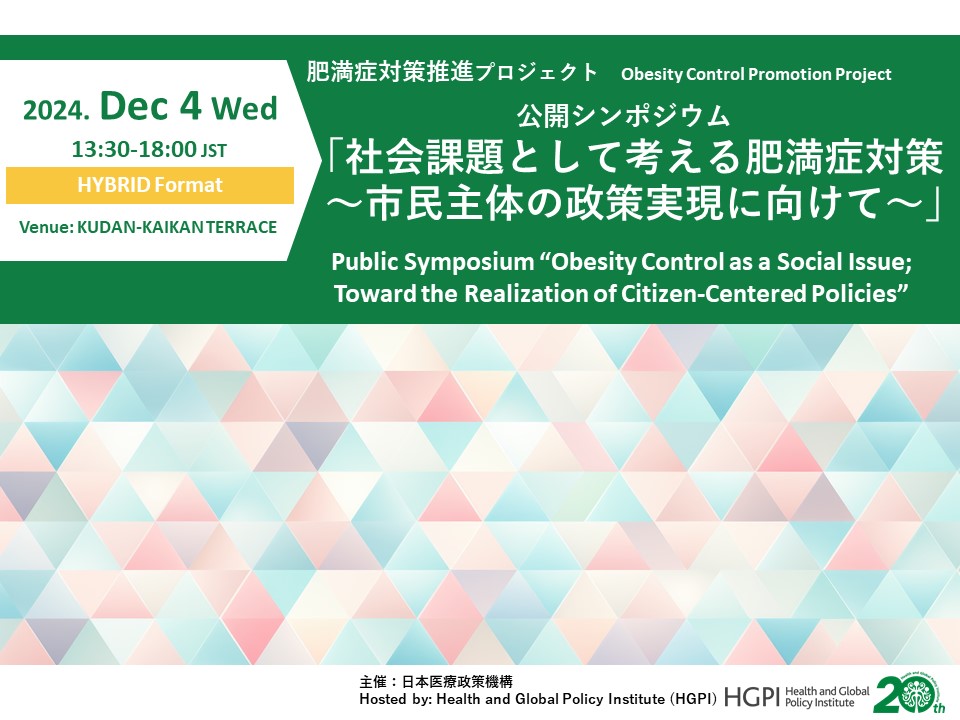
2025-06-30
[Event Report] Obesity Control Promotion Project Public Symposium “Obesity Control as a Social Issue; Toward the Realization of Citizen-Centered Policies” (December 4, 2024)
-
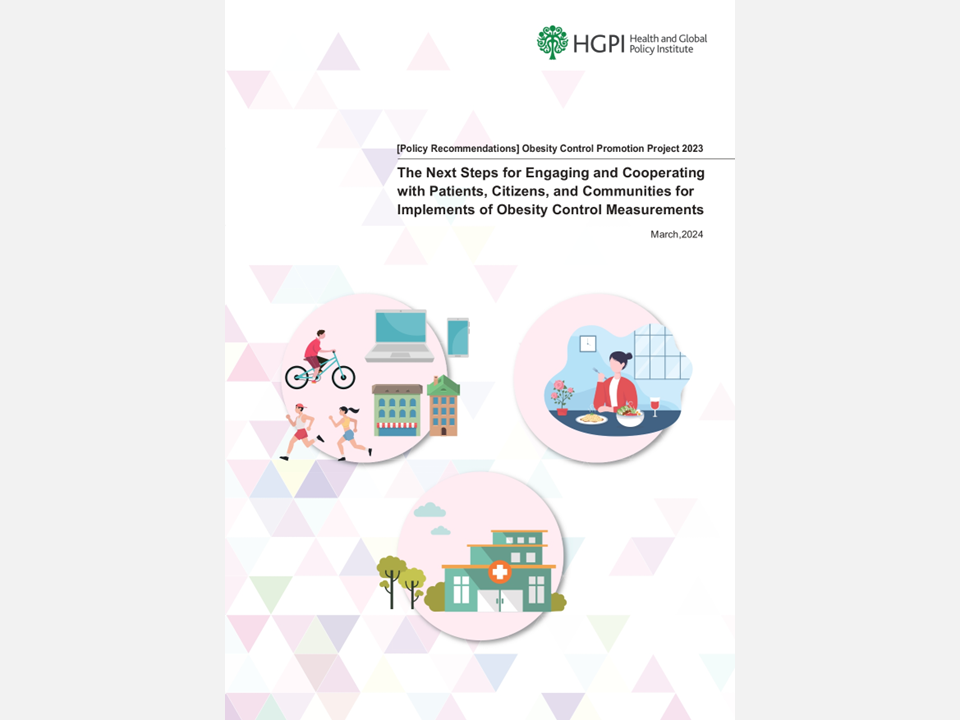
2024-04-26
[Policy Recommendations] Obesity Control Promotion Project 2023 “The Next Steps for Engaging and Cooperating with Patients, Citizens, and Communities for Implements of Obesity Control Measurements” (April 8, 2024)
-
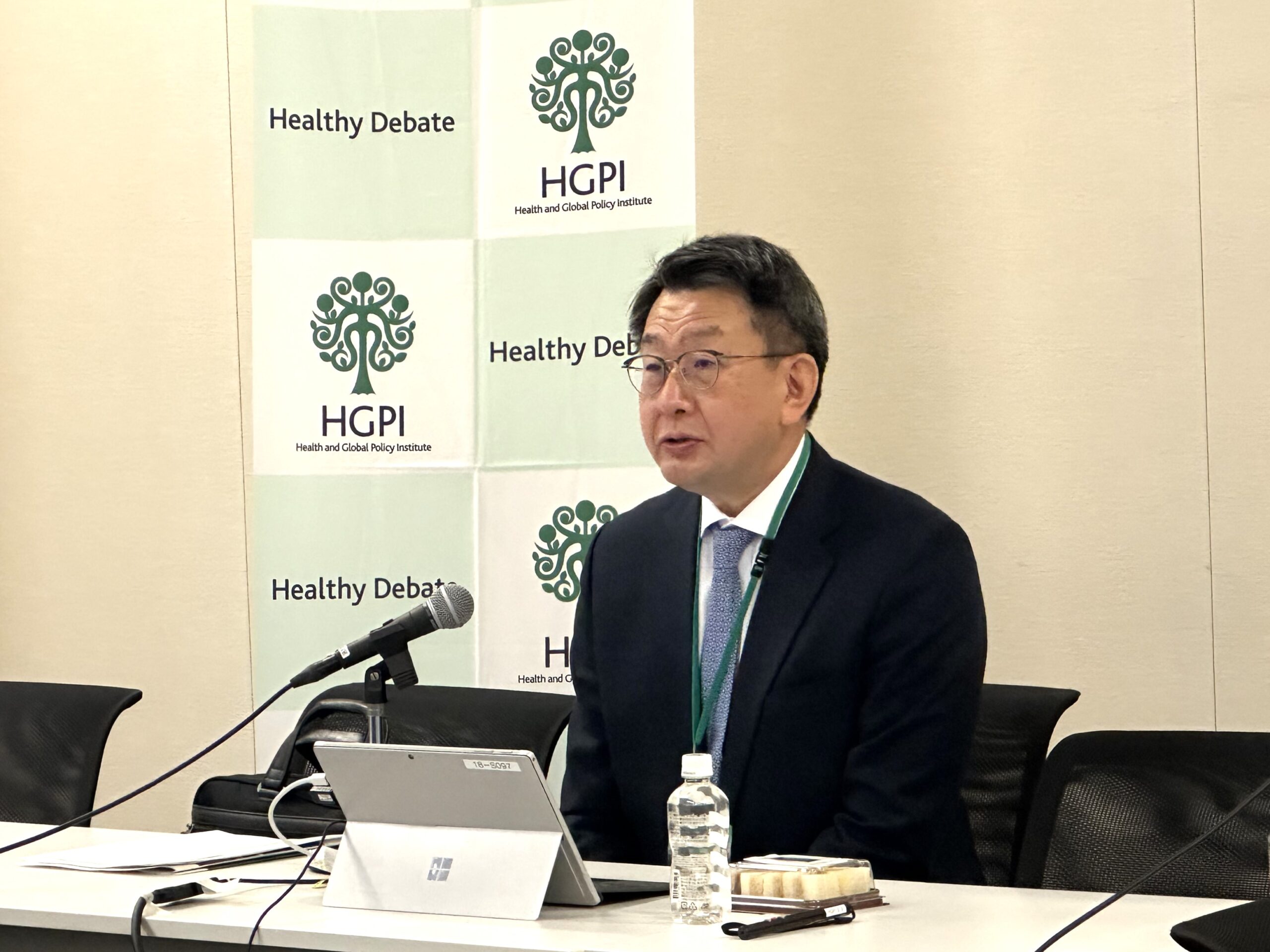
2024-03-04
[Event Report] Non-partisan Diet Member Briefing – 30-minute Health Policy Update: “Issues Surrounding and Necessary Measures Against Obesity Disease” (February 2, 2024)
-
2023-11-01
[Policy Recommendations] The 6 Steps for Engaging and Cooperating with Patients, Citizens, and Communities for Obesity Control (November 1, 2023)
-
2024-08-19
[Discussion Points] NCDs-related Cross-project “Lessons and Challenges Drawn from NCDs Responses in Local Governments and Future Visions” (June 17, 2024)
Top Research & Recommendations Posts
Featured Posts
-
2026-05-18
[Registration Closed] Kick-off Panel Discussion “From Africa and Japan, Drawing from Perspectives Around the World:A Platform for Cultivating a Philosophical Health Dialogue Together” (June 15, 2026)
![[Registration Closed] Kick-off Panel Discussion “From Africa and Japan, Drawing from Perspectives Around the World:A Platform for Cultivating a Philosophical Health Dialogue Together” (June 15, 2026)](https://hgpi.org/en/wp-content/uploads/sites/2/HGPI_20260615_Eyecathch_panel-discussion-From-Japan-and-Africa-in-Discussion-with-the-World_2.png)
-
2026-08-28
[Announcement] The 3rd Kiyoshi Kurokawa Award: Call for Nominations (Deadline: November 30, 2026)
![[Announcement] The 3rd Kiyoshi Kurokawa Award: Call for Nominations (Deadline: November 30, 2026)](https://hgpi.org/en/wp-content/uploads/sites/2/Kiyoshi-Kurokawa-Award_3rd_nominations_eyecatch_caseB_ENG_web_20260929_v0.5.jpg)
-
2026-09-01
[Registration Closed] HGPI Salon 2025-2026 Looking Ahead to the Future of Japan’s Social Security System “Session 6: Japan’s Health Policy through the Lens of Global Security” (October 13, 2026)
![[Registration Closed] HGPI Salon 2025-2026 Looking Ahead to the Future of Japan’s Social Security System “Session 6: Japan’s Health Policy through the Lens of Global Security” (October 13, 2026)](https://hgpi.org/en/wp-content/uploads/sites/2/HGPISalon2025-20266.png)
-
2026-09-17
[Registration Open] (Webinar) The 145th HGPI Seminar “Toward Better AMR Measures at Elderly Care Facilities—Considering Infectious Disease Control in a Super-Aged Society From a Policy Perspective” (October 27, 2026)
![[Registration Open] (Webinar) The 145th HGPI Seminar “Toward Better AMR Measures at Elderly Care Facilities—Considering Infectious Disease Control in a Super-Aged Society From a Policy Perspective” (October 27, 2026)](https://hgpi.org/en/wp-content/uploads/sites/2/HGPIseminar145.png)
-
2026-10-06
[Registration Open] (Webinar) The 146th HGPI Seminar “How We Can Build a Society That Supports Choices Around Organ Donation: Exploring Decision-Making by Citizens and a Multi-Layered Approach Through Strategic Social Marketing” (November 9, 2026)
![[Registration Open] (Webinar) The 146th HGPI Seminar “How We Can Build a Society That Supports Choices Around Organ Donation: Exploring Decision-Making by Citizens and a Multi-Layered Approach Through Strategic Social Marketing” (November 9, 2026)](https://hgpi.org/en/wp-content/uploads/sites/2/HGPI_20261001_Eyecatch_HGPIseminer-146th-1.png)
