


[Policy Recommendations] Joint Statement Published: “Protecting the Health of Both the Planet and People — A Japan-Model Planetary Health Strategy to Turn the Climate Crisis into an Opportunity for Health, the Economy, and Growth” (June 24, 2026)
date : 6/24/2026

![[Policy Recommendations] Joint Statement Published: “Protecting the Health of Both the Planet and People — A Japan-Model Planetary Health Strategy to Turn the Climate Crisis into an Opportunity for Health, the Economy, and Growth” (June 24, 2026)](https://hgpi.org/en/wp-content/uploads/sites/2/JS_20260624_ENG.png)
Health and Global Policy Institute’s (HGPI) Planetary Health Project and Advisory Board Members and likeminded supporters have published a joint statement, presenting recommendations for the Administration’s Basic Policy on Economic and Fiscal Management and Reform (“Honebuto no Hoshin”) and the Growth Strategy.
The “triple planetary crisis” of climate change, biodiversity loss, and environmental pollution represents a structural risk that will determine the sustainability of Japan’s economy and public finances—and, at the same time, the greatest opportunity of the 21st century to simultaneously advance health, the economy, and society. This statement calls for a fundamental shift in mindset: away from regarding the natural environment merely as something “to be protected,” and toward treating it as an “essential foundation” that sustains people’s health and the prosperity of society, in which we invest strategically—in short, a shift to planetary health, which seeks to protect the health of both the planet and people.
International Context and Japan’s Initiatives
At the international level, the Belém Health Action Plan (BHAP) was formally adopted at the 30th Conference of the Parties (COP30) to the UN Framework Convention on Climate Change, mobilizing the international community toward building climate-resilient and environmentally sustainable healthcare systems. The Japanese government has endorsed BHAP, identifying “health equity,” “building resilient systems in the Asia-Pacific region,” and “Universal Health Coverage (UHC)” as priority areas.
According to the 2024 report of the Lancet Countdown on Health and Climate Change, heat exposure in Japan in 2024 is estimated to have caused the loss of 1.42 billion potential labor hours, with a potential income loss reaching approximately JPY 7.9 trillion (equivalent to about 1% of GDP). Furthermore, the heightened tensions in the Middle East in 2026 have highlighted the structural vulnerability of modern medicine’s dependence on petrochemical products and imported supplies.
[Five Key Recommendations]
To reinforce the government’s stated goals—”responsible proactive fiscal policy,” “crisis-management investment,” “proactive preventive healthcare,” and the “17 strategic fields”—from an integrated environment-and-health perspective, the statement presents the following five recommendations:
1. Rebuild Governance
Redefine climate and health as a core issue that determines macroeconomic and national sustainability, and establish a cross-government integrated assessment structure under the Council on Economic and Fiscal Policy. Explicitly stipulate Health Impact Assessment (HIA) and “Health in All Policies” (HiAP) in the next Climate Change Adaptation Plan, and achieve policy coordination that cuts across institutional silos.
2. Strengthen Supply-Chain Resilience and Green Hospitals as Crisis-Management Investment
Position the dependence on imported medical supplies and the power grid, together with the problem of aging hospitals, as a serious national-governance risk. Clarify the phased decarbonization of healthcare facilities and the promotion of ZEB Ready (Net Zero Energy Building Ready) as “crisis-management investment,” and advance one-stop support through four-ministry cooperation and facility development linked to community planning.
3. Link the Disaster Management Agency’s Proactive-Prevention Function with the Next Climate Change Adaptation Plan
Substantively incorporate health-adaptation measures—for heat illness, infectious diseases, mental health, and the like—into the next plan, and link them institutionally with the functions of the Disaster Management Agency. Explicitly position Nature-based Solutions (NbS) and green infrastructure in the National Resilience Plan, and seamlessly connect national and local efforts.
4. Implement Sustainable Systems for the Growth Strategy and Proactive Preventive Healthcare
Advance preventive healthcare through the integration of health and environmental data, adopt heat-adaptation measures as evaluation metrics in Health and Productivity Management, and support the continued employment of older workers. Incorporate One Health–based environmental-constraint requirements into the public-private investment roadmap for the “17 strategic fields,” and synchronize the new-technology-nation policy with international rule-making.
5. Secure Fiscal Sustainability
Explicitly evaluate climate and health risks as fiscal risks, and position adaptation investment in the health, medical, and long-term-care sectors across the Basic Policy, the Growth Strategy, and the next Climate Change Adaptation Plan. Building on the shift away from single-year budgeting, and through multi-year budgets and a dedicated investment framework—assessed in an integrated manner together with local governments’ decarbonization efforts—forestall future surges in medical and long-term-care costs.
Looking Forward
Responding to the climate crisis is not a burden but the greatest of opportunities. The healthcare sector must transform from one that merely “gives consideration to the environment” into one that “actively contributes to environmental regeneration.” Through cross-sectoral collaboration and in partnership with diverse stakeholders, HGPI will chart a concrete path for a Japan-model planetary health strategy in this era of climate crisis.
■ Acknowledgments:
In preparing this statement, we received valuable opinions from the experts and Advisory Board members listed below, through their cooperation in our past activities. We express our deepest gratitude. This statement has been compiled by the Health and Global Policy Institute (HGPI) as an independent health policy think tank, and does not represent the views of the organizations to which the Advisory Board members and other supporters belong.
■Planetary Health Project
Advisory Board Members and experts expressed their support: (in no particular order; honorifics omitted)
- Yutaka Mitsutake (Director, Japan Sustainability, AstraZeneca K.K./Vice-chair of Japan Climate Leaders’ Partnership (JCLP))
- Sayuri Takimoto (Associate Director, Policy Engagement & Advocacy, AstraZeneca K.K.)
- Kenichi Matsumoto (Chairman and Representative Director, Sakura Global Holding Co., Ltd. (SGHC))
- Yukiko Imada (Associate Professor, Division of Climate System Research, Atmosphere and Ocean Research Institute and Atmospheric and Oceanic Science Group, Department of Earth and Planetary Science, University of Tokyo)
- Saori Kashima (Director, Center for the Planetary Health and Innovation Science (PHIS), IDEC Institute; Professor, Environmental Health Sciences Laboratory, Graduate School of Advanced Science and Engineering, Hiroshima University)
- Eisaku Kikuchi (Head, Office for Social and International Collaboration / Specially Appointed Associate Professor, One Health Research Center, Hokkaido University)
- Naoki Kondo (Professor and Chair, Department of Social Epidemiology, Graduate School of Medicine and School of Public Health, Kyoto University)
- Masashi Soga (Associate Professor, Graduate School of Agricultural and Life Sciences, The University of Tokyo)
- Keiko Nakamura (Emeritus Professor, Institute of Science Tokyo/President, Promotion Committee for Healthy Cities)
- Keisuke Nansai (Director, Material Cycles Division of National Institute for Environmental Studies (NIES))
- Masahiro Hashizume (Professor, Department of Global Health Policy, Graduate School of Medicine, The University of Tokyo / School of Tropical Medicine and Global Health, Nagasaki University)
- Kenji Fuma (Specially Appointed Professor, Co-Creative Organization for Green Society, Shinshu University / CEO, Neural, Inc.)
- Hiroaki Matsuura (Provost and Vice President for Academic Affairs, Shoin University/Chair, Technical Advisory Groups on the Economics of Environment, Climate Change and Health, WHO)
- Hiroya Yamano (Professor, Department of Earth and Planetary Science, Graduate School of Science, The University of Tokyo)
- Naoko Yamamoto(Vice President/Professor, International University of Health and Welfare (IUHW); Director, Global Medical Cooperation Center)
- Chiho Watanabe (Professor, School of Tropical Medicine and Global Health, Nagasaki University/Chair, Planetary Health Alliance Japan Hub)
- Yoshiro Uetsuka (Supreme Adviser, Japan R-SUD Association / Adviser, Matsumoto Memorial Foundation)
- Taiko Kudo (Visiting Professor, Research Institute for Humanity and Nature / Lecturer (Part time), Meiji University)
- Yusuke Sakurai (Secretary-General, Japan Zero Carbon Welfare Council)
- So Sugawara (Representative Director, Green innovation)
- Yukari Nakano (Executive Director, Japanese Nursing Association)
- Masafumi Nozawa (Director, Healthcare Industry Office, Corporate Finance Department Division 6, Development Bank of Japan)
- Kinya Hamaguchi (Executive Board Member, Japan Medical Association)
- Makoto Haraguchi (Fellow, Sustainability Department, MS&AD Insurance Group Holdings, Inc.)
- Yusuke Matsuo (Executive Director, Japan Climate Leaders’ Partnership)
- Akihito Watabe (Health Specialist, Human and Social Development Office, Sector Department 3 / Health Impact Investment Specialist, Social Sector Office, Private Sector Operation Department, Asian Development Bank)
- Green Practice Japan
- Asian Medical Students’ Association Japan (AMSA Japan)
- Japan Association for Global Health, Students Section (jagh-s)
- International Federation of Medical Students’ Associations Japan (IFMSA-Japan)
For details, please view the PDF provided below.
![[Joint Statement] Protecting the Health of Both the Planet and People — A Japan-Model Planetary Health Strategy to Turn the Climate Crisis into an Opportunity for Health, the Economy, and Growth](/assets/img/katsudo/icon_pdf_l.png)
Related Posts
-
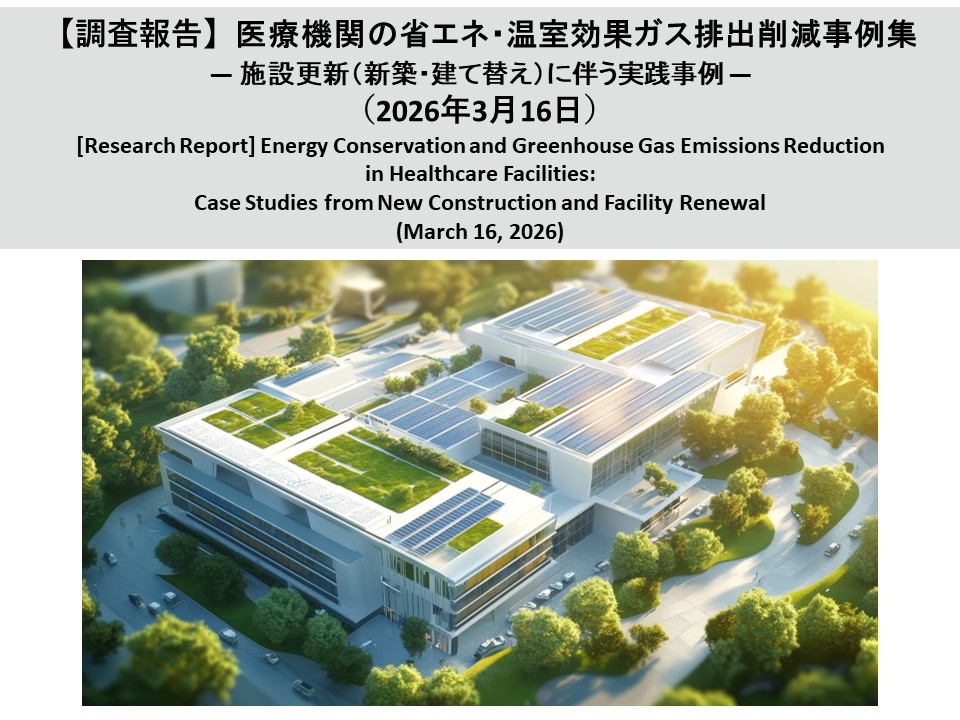
2026-03-16
[Research Report] Energy Conservation and Greenhouse Gas Emissions Reduction in Healthcare Facilities: Case Studies from New Construction and Facility Renewal (March 16, 2026)
-
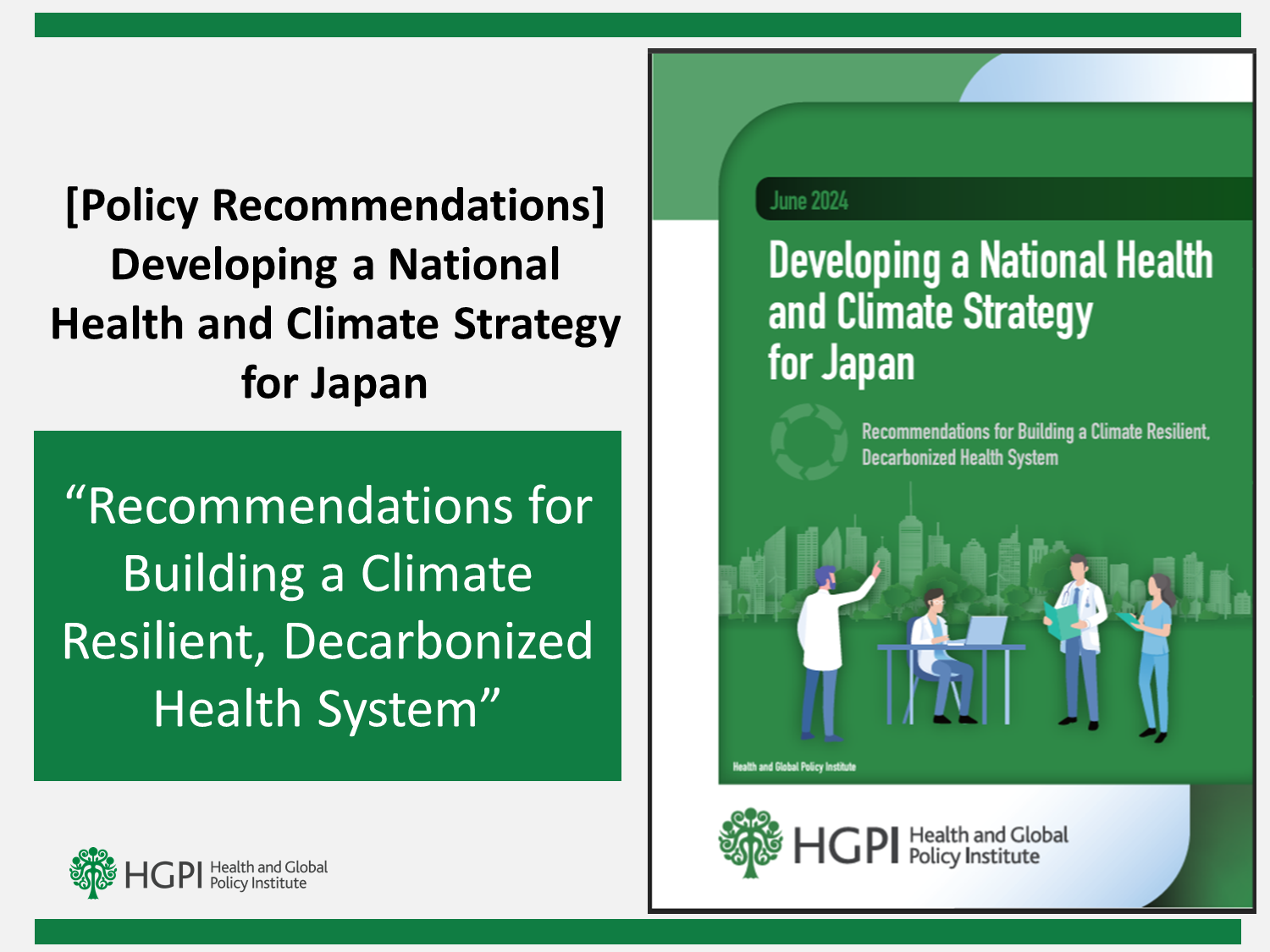
2024-06-26
[Policy Recommendations] Developing a National Health and Climate Strategy for Japan (June 26, 2024)
-
2023-12-03
[Research Report] Survey of Japanese Physicians Regarding Climate Change and Health (December 3, 2023)
-
2024-11-14
[Research Report] Survey of Japanese Nursing Professionals Regarding Climate Change and Health (Final Version) (November 14, 2024)
Top Research & Recommendations Posts
- [Policy Recommendations] Improving Patient Access to Genomic Cancer Medicine (August 10, 2023)
- [Research Report] Perceptions, Knowledge, Actions and Perspectives of Healthcare Organizations in Japan in Relation to Climate Change and Health: A Cross-Sectional Study (November 13, 2025)
- [Policy Recommendations] Reshaping Japan’s Immunization Policy for Life Course Coverage and Vaccine Equity: Challenges and Prospects for an Era of Prevention and Health Promotion (April 25, 2025)
- [Research Report] Energy Conservation and Greenhouse Gas Emissions Reduction in Healthcare Facilities: Case Studies from New Construction and Facility Renewal (March 16, 2026)
- [Policy Recommendations] Developing a National Health and Climate Strategy for Japan (June 26, 2024)
- [Public Comment Submission] “The 7th Science, Technology and Innovation Basic Plan” (Draft) (February 19, 2026)
- [Policy Recommendations] Policy Recommendations in the Field of Blood Disorders “Building a Healthcare Ecosystem Centered on Patients and Those Affected” (April 13, 2026)
- [Event Report and Discussion Points] AI Diagnostic Support Project Expert Meeting: “The Roles of Industry, Government, Academia, and Civil Society in the Era of AI-Assisted Diagnosis” (May 25, 2026)
- [Research Report] The 2026 Public Opinion Survey on Healthcare in Japan (February 13, 2026)
- [Announcement] Signs Health Policy Recommendations to the G7 by the C7 Global Health Working Group (March 30, 2026)
Featured Posts
-
2026-05-13
[Registration Open] HGPI Salon 2025-2026 Looking Ahead to the Future of Japan’s Social Security System “Session 5: The Value of Healthcare in Society – Perspectives from the Reiwa Era” (June 29, 2026)
![[Registration Open] HGPI Salon 2025-2026 Looking Ahead to the Future of Japan’s Social Security System “Session 5: The Value of Healthcare in Society – Perspectives from the Reiwa Era” (June 29, 2026)](https://hgpi.org/en/wp-content/uploads/sites/2/5thHGPISalon_20260629.png)
-
2026-06-04
[Registration Open] (Webinar) The 3rd J-PEP Seminar “Social Participation of People with Intractable Diseases and the Potential of a New Way of Working — ‘RD Workers’ — Lessons from Policy Advocacy Practice” (July 22, 2026)
![[Registration Open] (Webinar) The 3rd J-PEP Seminar “Social Participation of People with Intractable Diseases and the Potential of a New Way of Working — ‘RD Workers’ — Lessons from Policy Advocacy Practice” (July 22, 2026)](https://hgpi.org/en/wp-content/uploads/sites/2/HGPI_20260722_The3rd-J-PEPseminar.jpg)
-
2026-06-15
[Registration Open] (Hybrid Format) Multidisciplinary Symposium for Cardiology, Nephrology, and Metabolic Medicine “Future Actions for Making Full Use of the Health Checkup System: Connecting Checkups to Treatment From the Perspective of Data Linkage” (July 6, 2026)
![[Registration Open] (Hybrid Format) Multidisciplinary Symposium for Cardiology, Nephrology, and Metabolic Medicine “Future Actions for Making Full Use of the Health Checkup System: Connecting Checkups to Treatment From the Perspective of Data Linkage” (July 6, 2026)](https://hgpi.org/en/wp-content/uploads/sites/2/cvd-ckd-ncd-20260706_r2.png)
-
2026-06-19
[Recommendations] Strengthening Epidemiology Education in the Veterinary Field for the One Health Era (June 19, 2026)
![[Recommendations] Strengthening Epidemiology Education in the Veterinary Field for the One Health Era (June 19, 2026)](https://hgpi.org/en/wp-content/uploads/sites/2/HGPI_eyecatch_20260619_AMR_Recommendations.png)
