


[Event Report] The 62nd Special Breakfast Meeting “The FY2026 Medical Fee Revision and the Sustainability of the Healthcare Insurance System” (June 23, 2026)
date : 9/18/2026

![[Event Report] The 62nd Special Breakfast Meeting “The FY2026 Medical Fee Revision and the Sustainability of the Healthcare Insurance System” (June 23, 2026)](https://hgpi.org/en/wp-content/uploads/sites/2/HGPI_eyechatch_speaker_headshot.jpg)
Health and Global Policy Institute (HGPI) was honored to welcome Mr. Ryuichiro Hazama (Director-General, Health Insurance Bureau, Ministry of Health, Labour and Welfare) to speak at the 62nd Special Breakfast Meeting. At this meeting, Mr. Hazama, who has been deeply involved in the formulation of the FY2026 Medical Fee Revision and the Act to Partially Amend the Health Insurance Act, etc., delivered a lecture on how Japan’s universal health insurance system can be passed on to the next generation amid a declining population, and on how the “simultaneous equation” of benefits and burdens has been addressed through the Medical Fee Revision, drug pricing system reform, and healthcare insurance system reform.
Key Points of the Lecture
- Amid the unavoidable decline in population and shifting healthcare demand, restructuring the healthcare delivery system and securing the sustainability of the universal health insurance system have become urgent priorities. A theme running through this series of reforms is how to enhance public empathy with, and understanding of, social insurance as a mechanism of mutual assistance.
- Public health insurance is funded through insurance premiums, public funds, and patient co-payments. One challenge to its sustainability lies in resolving the “simultaneous equation” created by conflicting demands: reducing the insurance premium burden on the working-age generation, raising officially set prices in response to rising prices and wages, and restraining the burden on patients.
- In recent years, the healthcare insurance system has faced a new challenge: how to fund the advancement of medical technology. An annual cap has been newly established for the High-Cost Medical Expense Benefit, strengthening the mechanism by which society as a whole prepares for economic burdens that individuals cannot bear alone. At the same time, efforts to enhance fairness between benefits and burdens are underway, including a review of insurance coverage for drugs similar to over-the-counter (OTC) medicines.
- The Act to Partially Amend the Health Insurance Act, etc., which incorporates these reviews, was enacted with cross-party support. A social security system cannot be sustained by shifting the burden onto any single group. It is essential to carefully build a system that can gain as broad a consensus as possible, while also giving due consideration to the transition to the reformed system.
■The Sustainability of Universal Health Insurance in a Society with a Declining Population
Japan has entered a society with a declining population, and this structural change cannot be halted for the foreseeable future. As the shortage of healthcare personnel progresses and healthcare demand declines in some regions, it is becoming increasingly difficult to maintain the existing healthcare delivery system in its current form. Under these circumstances, individual healthcare institutions need to build on their respective strengths, while each region determines which healthcare functions it truly needs. A situation in which “health insurance exists but healthcare services do not” must be avoided. Considering, region by region, what to preserve and what to consolidate, and passing healthcare and long-term care on to the next generation, is the fundamental theme.
At the same time, public scrutiny of social security is intensifying. In recent years, it appears that people in their twenties and thirties with a certain degree of economic literacy have grown increasingly skeptical of the very concept of mutual assistance (kyōjo). Under these circumstances, how to enhance empathy with, and understanding of, social insurance as a mechanism of mutual assistance has become an important challenge in reforming the public healthcare insurance system.
■Trends in Healthcare Demand and Costs Underlying the Reform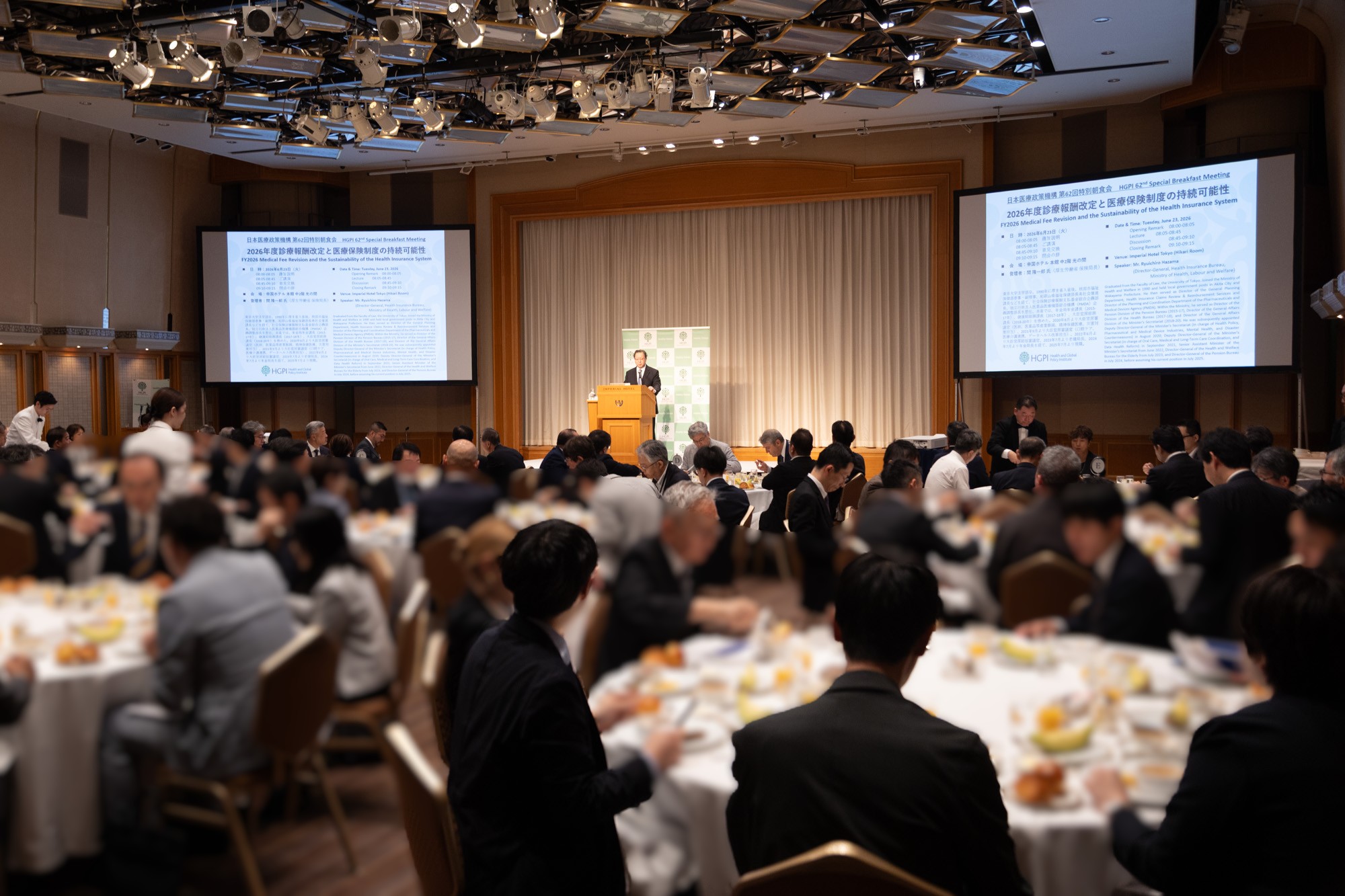
The background to the reform is also reflected in the data. While the number of inpatients has been on an overall upward trend, inpatient demand had already peaked by 2020 in 98 secondary medical care areas, and the number of outpatients has entered a declining phase in many medical care areas. The average amount of the top 100 high-cost claims at health insurance societies (Kenpo-kumiai) rose from approximately JPY 19.87 million in FY2015 to approximately JPY 42.50 million in FY2024 (with the highest single claim reaching approximately JPY 168.71 million). This trend reflects the insurance coverage of advanced treatments such as particle beam therapy and high-cost drugs such as delandistrogene moxeparvovec (approximately JPY 304.97 million). Both the per-capita insurance premium for the Latter-Stage Elderly and the per-capita support contribution paid by the working-age generation have continued to rise, raising questions about how the burden should be shared across generations.
■Strengthening Ability-to-Pay-Based Burden Sharing and Reflecting Financial Income
There is a wide range in the income and assets of elderly individuals. The median income of those aged 75 and older stands at only JPY 1.37 million. Regarding savings, while more than 40 percent of households hold JPY 10 million or more, 13.7 percent of households have no savings at all. Given this economic disparity, the continuing challenge is how to achieve burden-sharing based on ability to pay, rather than uniform treatment by age. Previously, financial income (such as dividends and interest earned in specified accounts) was reflected in the calculation of insurance premiums and the co-payment ratio only when a final tax return had been filed. Under this revision, information on financial income obtained by tax authorities through statutory reports and other means is now electronically linked to the calculations performed by municipalities, making it possible to reflect financial income regardless of whether a final tax return has been filed. This has established a mechanism for more fairly determining insurance premiums and the 10, 20, or 30 percent co-payment ratios under the Latter-Stage Elderly Healthcare System based on ability to pay, including financial income, thereby strengthening ability-to-pay-based burden sharing.
■The Medical Fee Revision and Insurance Premium Burden: A “Simultaneous Equation”
In recent years, amid rising prices and wages, concerns have grown over the sustainability of the management of healthcare institutions and pharmacies, while securing take-home pay for the working-age generation and reducing their insurance premium burden have become major political themes. The healthcare insurance system faces a simultaneous equation of conflicting demands, including reducing insurance premiums for the working-age generation, raising the Medical Fee (an officially set price), reducing the burden on patients, and reducing the consumption tax.
In response, the FY2026 Medical Fee Revision set the base revision rate at +3.09% (as a two-year average for FY2026–FY2027, including +1.70% for wage increases and +0.76% for price responses), securing a rate in the 3% range for the first time in approximately 30 years. Drug prices were revised by -0.86% and material prices by -0.01% (a combined -0.87%). At the same time, on the premise that the change would remain within a range that would not raise insured persons’ premium rates, the average premium rate of the Japan Health Insurance Association (JHIA) was lowered by 0.1 percentage points for the first time since the system’s founding. The employment insurance premium rate was also lowered by 0.1 percentage points, which, as a result, effectively offset the 0.23% Child and Childcare Support Contribution rate introduced in April 2026, achieving an overall balance.
■Evaluating the Healthcare Delivery System Based on Hospital Functions
While the Medical Fee is fundamentally a mechanism for evaluating individual medical services, the FY2026 Revision also addresses the securing of the healthcare delivery system. Previously, the basic hospitalization fee was set primarily based on ward-level functions, such as average length of hospital stay, severity of illness, the Medical and Nursing Care Necessity Index (an indicator of patient severity and the degree of nursing care required), and the rate of discharge to home. This revision introduced, in addition to these, an evaluation framework that also focuses on hospital-level functions, such as the number of emergency transport cases accepted, the number of surgeries performed under general anesthesia, and the track record of accepting emergency admissions from long-term care insurance facilities and other such facilities. The newly established Basic Hospitalization Fee for General Acute Care Hospitals and the Comprehensive Acute Care System Add-on evaluate hospitals that combine comprehensiveness with a concentration of functions such as surgery, and that play a core role within their region. Meanwhile, in areas with a population of less than 200,000, the facility requirements for the Acute Care Hospital B General Hospitalization Fee and the Comprehensive Acute Care System Add-on (requirements related to hospital functions, such as the status of emergency transport acceptance) were relaxed to reflect regional characteristics. In addition, a new add-on, the Add-on for Ensuring Collaboration in Healthcare Delivery Functions, was established to evaluate core hospitals that contribute to securing the healthcare delivery system in these regions. This reflects consideration to prevent a situation in which insurance coverage exists but no healthcare is actually provided. Going forward, in addition to the Medical Fee, the combination of subsidies with support for rebuilding healthcare institutions is expected to become a further point of discussion.
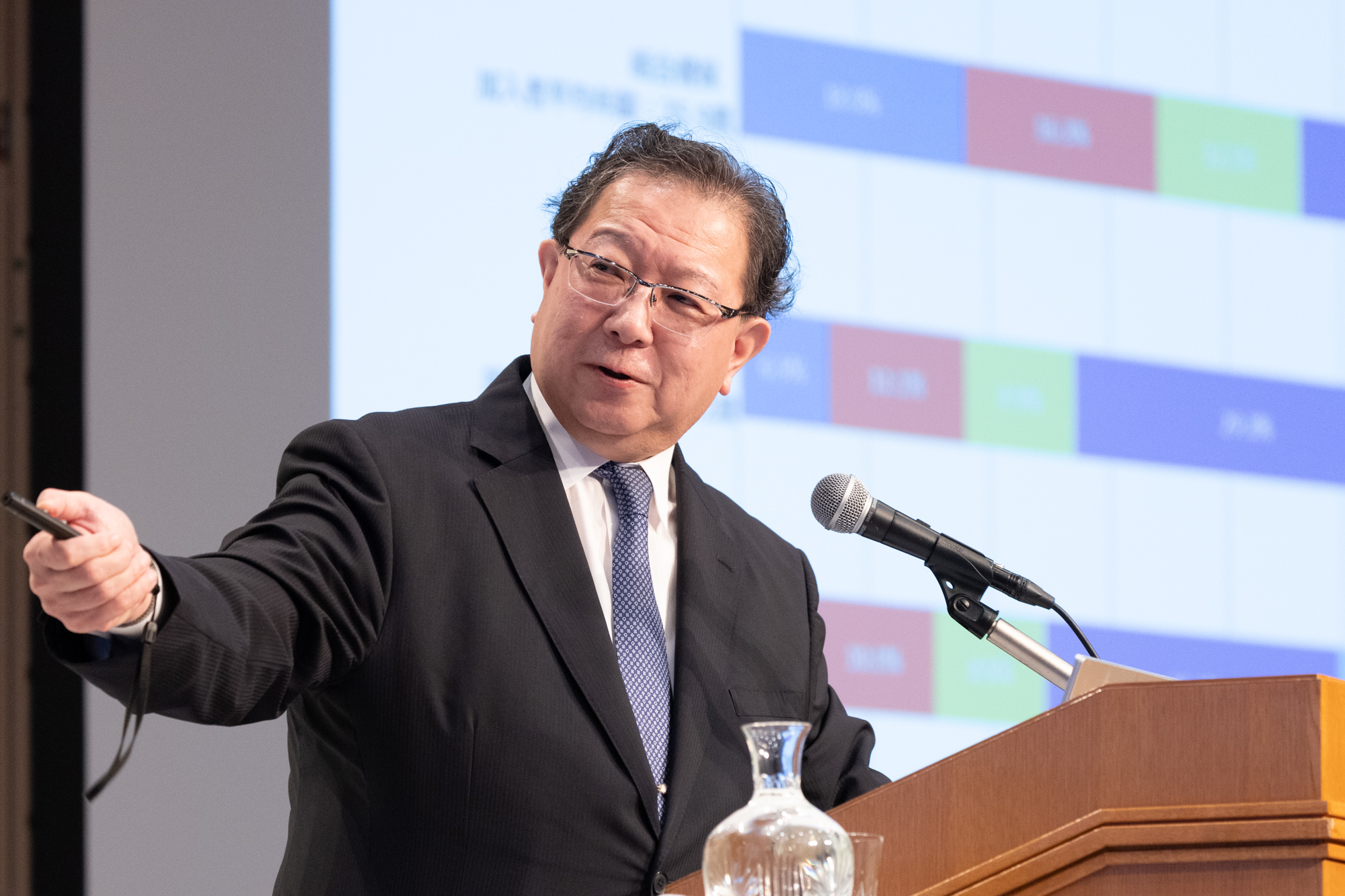
■The Advancement of Medical Technology and the Burden of Costs
While the upward pressure from population aging is gradually leveling off, the advancement of medical technology is increasingly becoming the main driver of rising costs. In the breakdown of factors behind the growth in healthcare expenditure, the contribution of technological advancement and related factors expanded from +1.2% during 2011–2017 to +1.9% during 2018–2024. When the effect of changes in care-seeking behavior is excluded, the contribution of technological advancement rises to approximately 3%. How to fund this, and how to gain public understanding of the resulting burden, remain open questions. An annual cap has now been newly established under the High-Cost Medical Expense Benefit. As a result, the cap on the burden now applies not only to those who bear healthcare costs over a long period, but also to those who undergo a one-time treatment with an extremely high-cost drug. This extends the function of health insurance, under which society as a whole bears economic burdens that individuals cannot bear alone, not only at the level of the system overall, but also at the level of individual patients.
■Drug Discovery as Industrial Policy and Drug Pricing System Reform
The approach to healthcare and drug discovery as industrial policy is also an important theme. Because Japan is one of the reference countries under the United States’ Most Favored Nation (MFN) drug pricing policy, the Ministry of Health, Labour and Welfare is approaching drug pricing with a heightened sense of tension. Internationally, the question of how to assess the “true price,” which diverges from the publicly announced price, is being raised. Another challenge is how to reconcile support for the development activities of domestic pharmaceutical companies with creating an environment in which foreign pharmaceutical companies can more easily introduce their products into Japan. In parallel, further use of the cost-effectiveness evaluation system is also under consideration.
With this awareness, the current drug pricing system reform expanded the scope of Selected Medical Care for long-listed products (raising the patient-borne portion of the price differential from one-quarter to one-half); revised the listing price of authorized generics (AG) so that it equals the price of the original branded product; and abolished the so-called “tomozure” (companion price-cut) mechanism under the market expansion repricing rule. One of the themes of this revision is to increase predictability, and the abolition of the “tomozure” mechanism, which had made forecasting difficult for companies, is positioned as part of that effort.
■Review of the Scope of Benefits and Fairness in Burden Sharing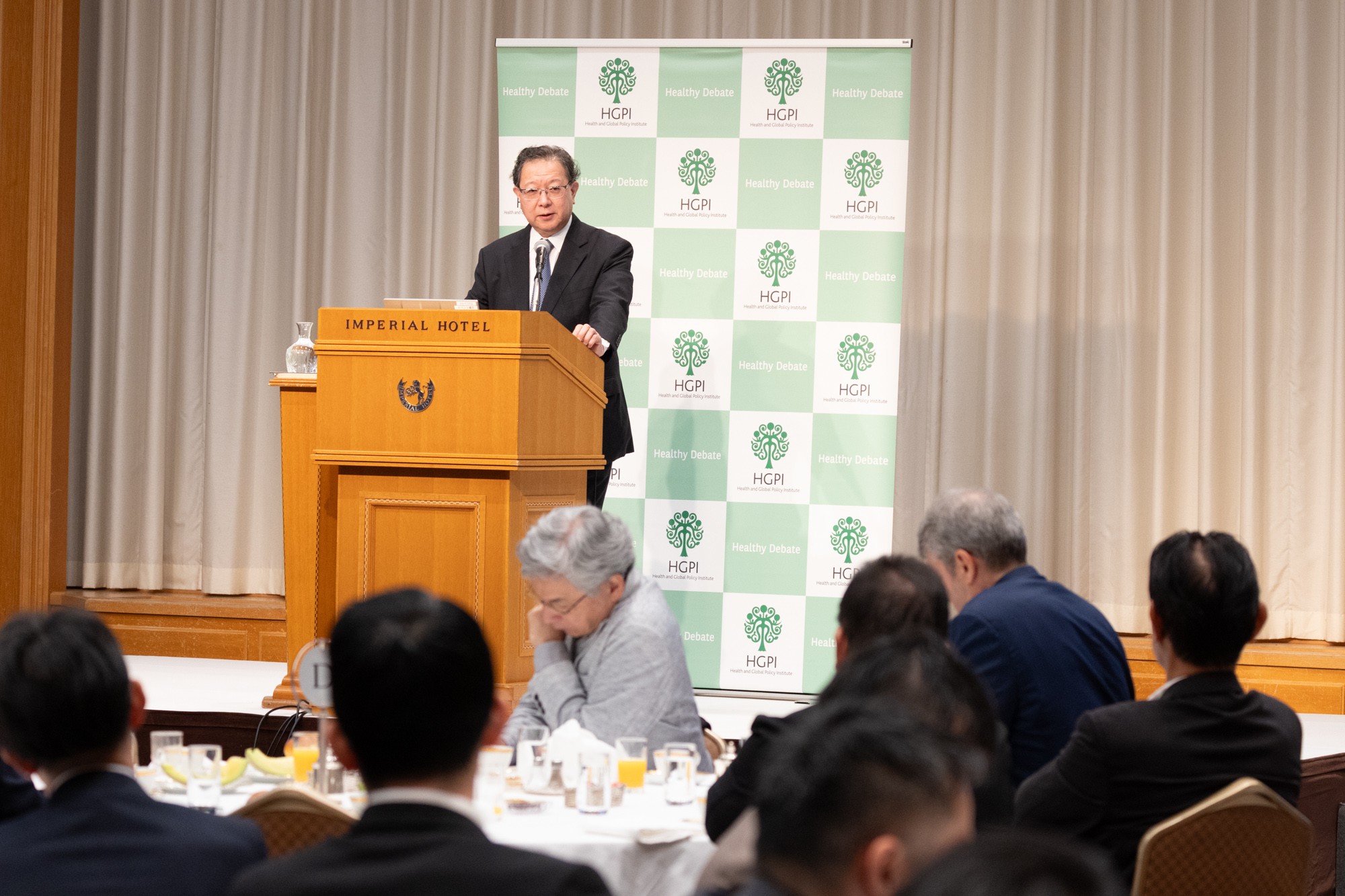
The review of benefits and burdens is another key focus. Under this revision, as a response to the declining birthrate, a new benefit method was introduced to replace the Lump-Sum Childbirth and Childcare Allowance, making childbirth-related benefits an in-kind benefit, and the scope of the reduction in the per-capita National Health Insurance premium for children was expanded from preschool-age children to those of high-school age. As a result, the number of people eligible for this reduction increased by approximately 1.4 million, to approximately 1.8 million.
From the standpoint of fairness in burden sharing, a form of partially non-covered medical care was newly established for 77 ingredients (approximately 1,100 products) considered particularly interchangeable with OTC medicines, under which one-quarter of the drug cost is charged to patients as a “special fee” (scheduled to take effect in March 2027). This measure is intended to enhance fairness between benefits and burdens by having patients bear part of the drug cost in cases such as hay fever treatment, where the number of people who visit healthcare institutions and the number who use OTC medicines are roughly equal. In addition, the scope of insurance benefits for food-like drugs was also reviewed, with the exception of those used for purposes such as enteral nutrition.
That said, the High-Cost Medical Expense Benefit continues to function as a safety net, since the multiple-instance provision and the newly established annual cap are designed to prevent excessive burdens. If increased burdens fall disproportionately on any particular group, public trust in the healthcare insurance system will be undermined. This revision, too, is consistently guided by an emphasis on gaining public understanding of the mutual-assistance mechanism. Given that there are people who currently rely on the system, careful attention to the transition to the post-revision system is also indispensable.
■The Accumulation of Political Consensus and the Enactment of the Act to Amend the Health Insurance Act, etc.
This series of policies is underpinned by an accumulation of political consensus. The tripartite agreement reached in June 2025 among the Liberal Democratic Party, Komeito, and the Japan Innovation Party called for a review of insurance coverage for drugs similar to OTC medicines and for the thorough implementation of ability-to-pay-based burden sharing. Following the coalition government agreement of October 2025 and the agreement among the policy research council chairs in December, the process of translating these into legislation moved forward. As a result, the bill for the Act to Partially Amend the Health Insurance Act, etc. was passed by the plenary session of the House of Representatives on April 28, 2026, with the support of all parliamentary groups except the Japanese Communist Party, and was passed and enacted by the plenary session of the House of Councillors on May 29, 2026. The Act (Act No. 31 of 2026) was promulgated on June 5, 2026.
Social security is a mechanism that allows people to continue their lives without giving up hope, even when facing circumstances such as illness, disability, or unemployment. For this reason, it is important to carefully build a system that can gain the support of as many parliamentary groups as possible, not only the ruling parties. This revision also identified a number of remaining issues in the form of supplementary resolutions, and it is hoped that these will be addressed sincerely, one by one, to inform the next round of reform.
In the question-and-answer session following the lecture, an active discussion took place on topics including: how to conceptualize the “flow” (income) and “stock” (asset) dimensions of social insurance premiums in the context of ability-to-pay-based burden sharing; the capture and digitalization of financial income data; the differing approaches to insurance reimbursement for pharmaceuticals versus medical devices; the importance of using evidence to understand public perceptions of the review of insurance coverage; and the ideal design of a drug pricing system that appropriately evaluates innovation in drug discovery.
(Photographed by: Kazunori Izawa)
■Profile:
Ryuichiro Hazama (Director-General, Health Insurance Bureau, Ministry of Health, Labour and Welfare, at the time of the event)
Graduated from the Faculty of Law, the University of Tokyo. Joined the Ministry of Health and Welfare in 1990. Held positions including Counselor / Deputy Director-General, Department of Public Welfare and Health, Akita City; Director, Longevity Society Promotion Division, Department of Public Welfare and Health, Wakayama Prefecture; Director-General, General Planning Department, Social Insurance Medical Fee Payment Fund; and Director-General, Planning and Coordination Department, Pharmaceuticals and Medical Devices Agency (PMDA). Within the Ministry, he served as Director, Pension Division, Pension Bureau (2015–2017); Director, General Affairs Division, Health Bureau (2017–2018); and Director, General Affairs Division, Minister’s Secretariat (2018–2020). He was appointed Assistant Minister, Minister’s Secretariat (in charge of Health Policy, Pharmaceutical and Medical Device Industry Promotion, Mental Health and Medical Care, and Disaster Countermeasures) in August 2020; Assistant Minister, Minister’s Secretariat (in charge of Oral Health Care, Collaboration between Healthcare and Long-Term Care, and Data Health Reform) in September 2021; Deputy Vice-Minister, Minister’s Secretariat in June 2022; Director-General of the Health and Welfare Bureau for the Elderly in July 2023; and Director-General of the Pension Bureau in July 2024. He was appointed to the post noted above, Director-General, Health Insurance Bureau, in July 2025, and became Vice-Minister for Policy, Ministry of Health, Labour and Welfare, in August 2026.
Related Posts
-
2026-05-01
[Event Report] The 61st Special Breakfast Meeting “The Outlook and Challenges of Japanese Healthcare as Proposed by the Chairman of All Japan Hospital Association" (March 26, 2026)
-
2026-01-28
[Event Report] The 60th Special Breakfast Meeting “Redesigning Social Security for Sustainability for a Society With Rapid Population Decline” (November 28, 2025)
-

2025-11-21
[Event Report] The 59th Special Breakfast Meeting “Connecting Technology, Opening the Future: Japan’s Potential in Global Health” (August 21, 2025)
-
2025-09-25
[Event Report] The 58th Special Breakfast Meeting "Challenges and Prospects for the 3rd Phase of AMED" (July 15, 2025)
Top Research & Recommendations Posts
Featured Posts
-
2026-05-18
[Registration Closed] Kick-off Panel Discussion “From Africa and Japan, Drawing from Perspectives Around the World:A Platform for Cultivating a Philosophical Health Dialogue Together” (June 15, 2026)
![[Registration Closed] Kick-off Panel Discussion “From Africa and Japan, Drawing from Perspectives Around the World:A Platform for Cultivating a Philosophical Health Dialogue Together” (June 15, 2026)](https://hgpi.org/en/wp-content/uploads/sites/2/HGPI_20260615_Eyecathch_panel-discussion-From-Japan-and-Africa-in-Discussion-with-the-World_2.png)
-
2026-08-28
[Announcement] The 3rd Kiyoshi Kurokawa Award: Call for Nominations (Deadline: November 30, 2026)
![[Announcement] The 3rd Kiyoshi Kurokawa Award: Call for Nominations (Deadline: November 30, 2026)](https://hgpi.org/en/wp-content/uploads/sites/2/Kiyoshi-Kurokawa-Award_3rd_nominations_eyecatch_caseB_ENG_web_20260929_v0.5.jpg)
-
2026-09-01
[Registration Closed] HGPI Salon 2025-2026 Looking Ahead to the Future of Japan’s Social Security System “Session 6: Japan’s Health Policy through the Lens of Global Security” (October 13, 2026)
![[Registration Closed] HGPI Salon 2025-2026 Looking Ahead to the Future of Japan’s Social Security System “Session 6: Japan’s Health Policy through the Lens of Global Security” (October 13, 2026)](https://hgpi.org/en/wp-content/uploads/sites/2/HGPISalon2025-20266.png)
-
2026-09-17
[Registration Open] (Webinar) The 145th HGPI Seminar “Toward Better AMR Measures at Elderly Care Facilities—Considering Infectious Disease Control in a Super-Aged Society From a Policy Perspective” (October 27, 2026)
![[Registration Open] (Webinar) The 145th HGPI Seminar “Toward Better AMR Measures at Elderly Care Facilities—Considering Infectious Disease Control in a Super-Aged Society From a Policy Perspective” (October 27, 2026)](https://hgpi.org/en/wp-content/uploads/sites/2/HGPIseminar145.png)
-
2026-10-06
[Registration Open] (Webinar) The 146th HGPI Seminar “How We Can Build a Society That Supports Choices Around Organ Donation: Exploring Decision-Making by Citizens and a Multi-Layered Approach Through Strategic Social Marketing” (November 9, 2026)
![[Registration Open] (Webinar) The 146th HGPI Seminar “How We Can Build a Society That Supports Choices Around Organ Donation: Exploring Decision-Making by Citizens and a Multi-Layered Approach Through Strategic Social Marketing” (November 9, 2026)](https://hgpi.org/en/wp-content/uploads/sites/2/HGPI_20261001_Eyecatch_HGPIseminer-146th-1.png)
