


[Event Report] The 61st Special Breakfast Meeting “The Outlook and Challenges of Japanese Healthcare as Proposed by the Chairman of All Japan Hospital Association” (March 26, 2026)
date : 5/1/2026

![[Event Report] The 61st Special Breakfast Meeting “The Outlook and Challenges of Japanese Healthcare as Proposed by the Chairman of All Japan Hospital Association” (March 26, 2026)](https://hgpi.org/en/wp-content/uploads/sites/2/1F7A4334_web-sbm-61-1-top-e1777547538182.jpg)
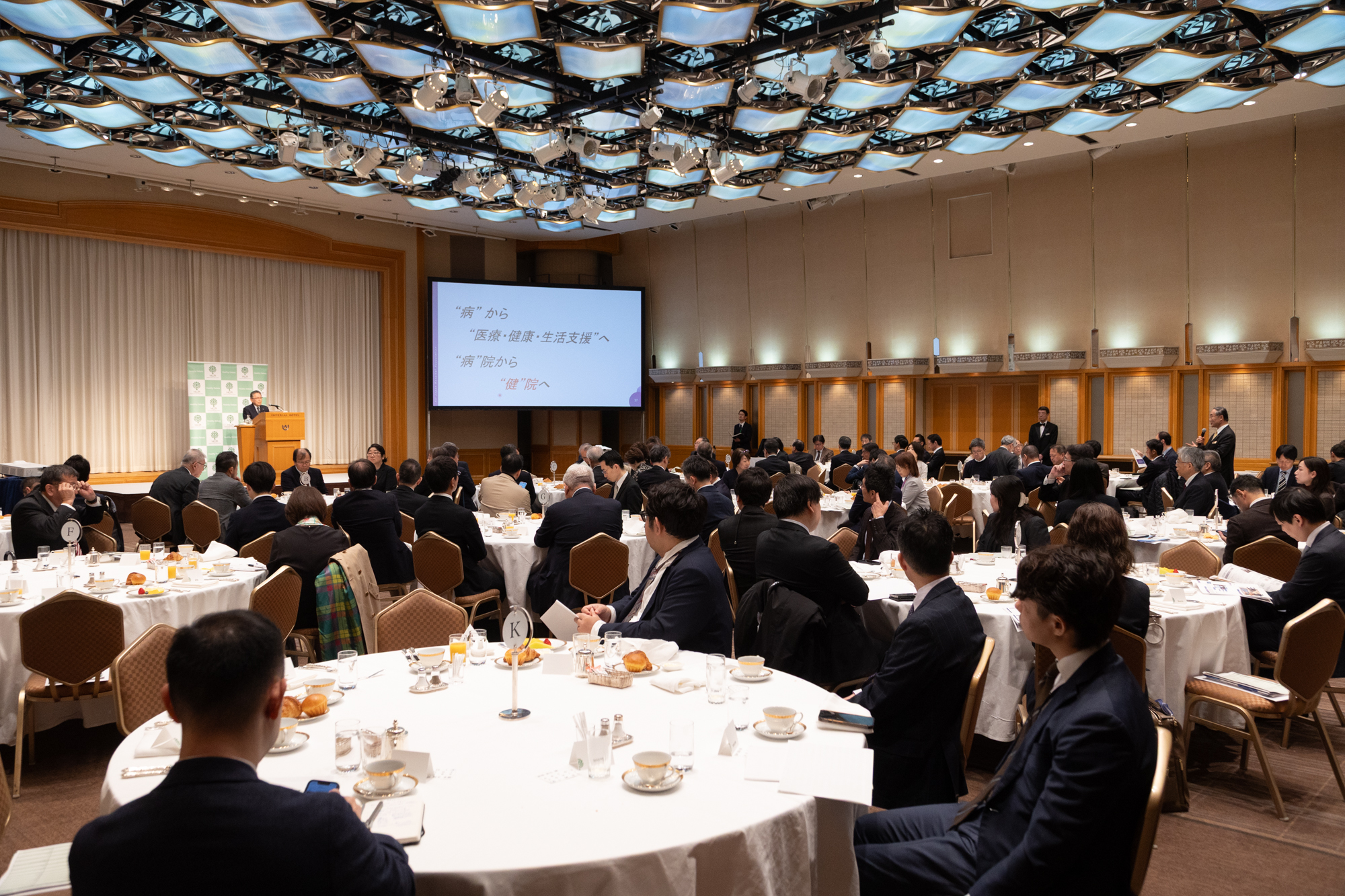
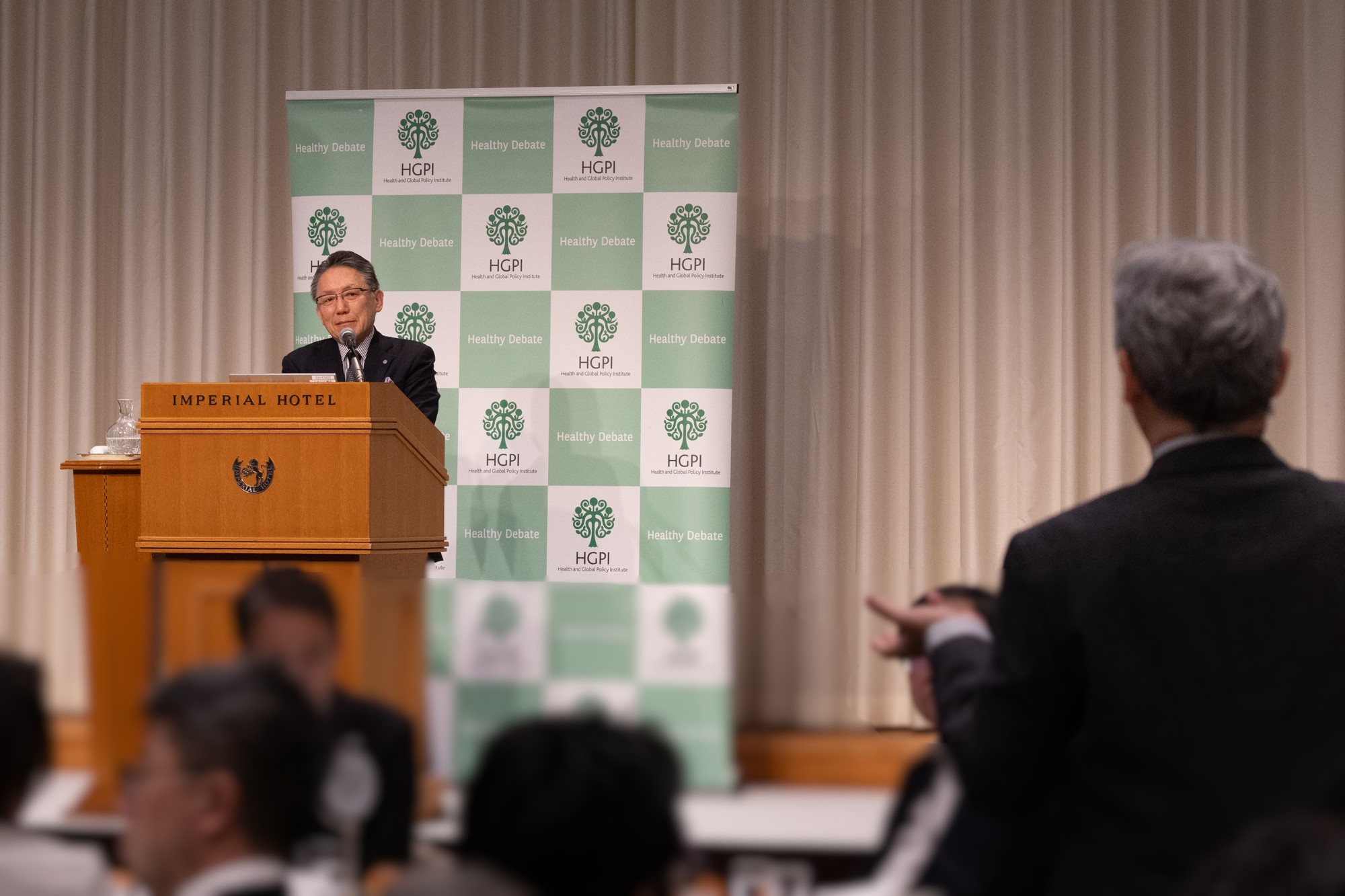
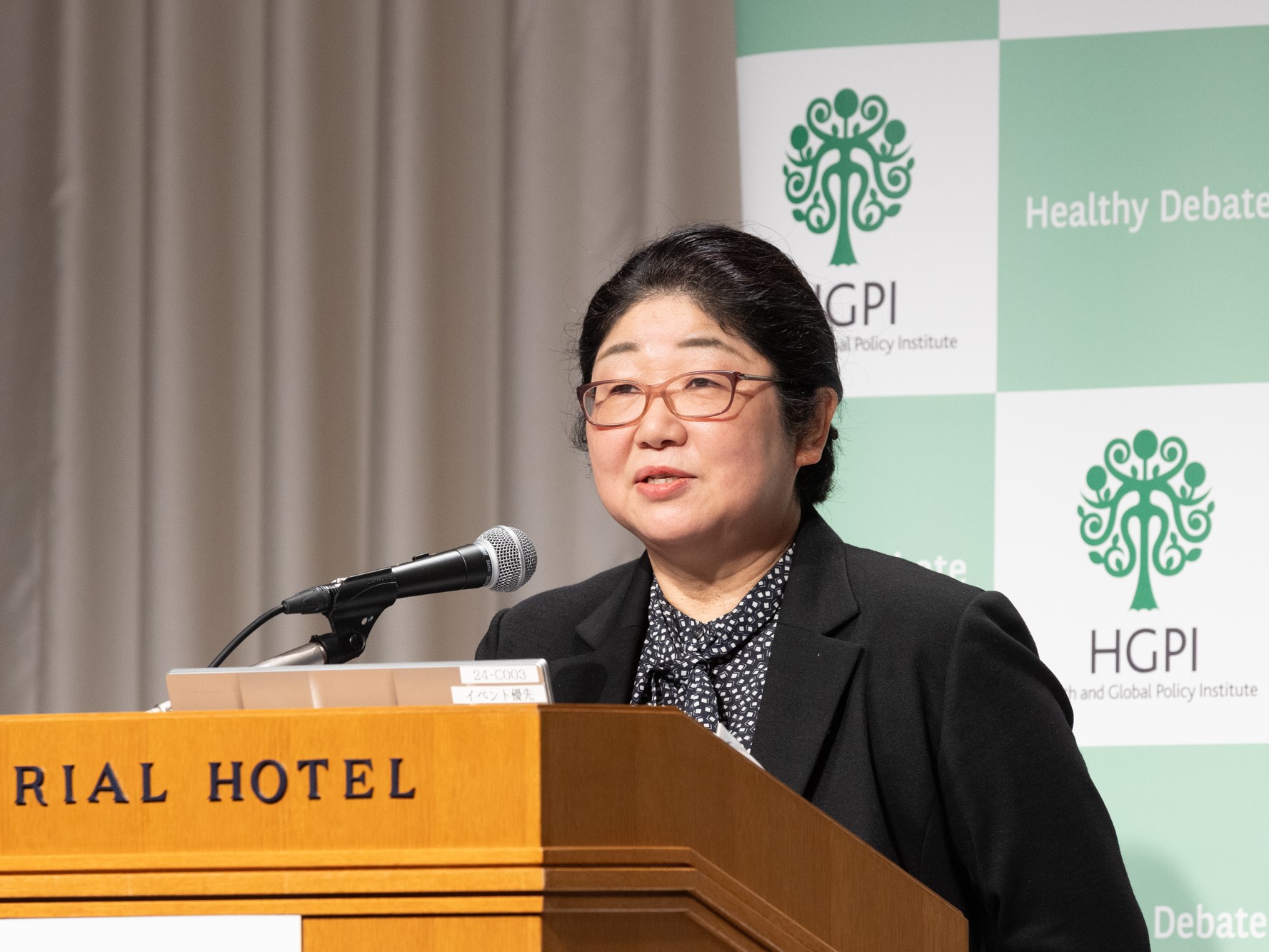
For the 61st Special Breakfast Meeting, Health and Global Policy Institute (HGPI) was honored to host Dr. Masahiro Kanno, who serves as the Chairman of All Japan Hospital Association. Dr Kanno, who is himself a hospital owner and has led hospitals nationwide, delivered a lecture on the reconstruction of the healthcare delivery system in a rapidly depopulating society, productivity improvement through DX, and the transformation from “Byo-in” (hospitals for the sick) to “Ken-in” (institutes for health).
<Key Points of the Lecture>
- Japan’s healthcare delivery system is facing multiple challenges, including changes in medical demand and the delivery system itself due to demographic shifts, as well as management issues and geopolitical risks. Consequently, providing high quality medical care with fewer personnel and less burden has become a prerequisite for management.
- As the population continues to age, hospitals are required to undergo a reform and evolve, focusing on treatment, life support, and community-based integrated care. DX and the use and implementation of AI will be the key to supporting the quality of medical care by strengthening information sharing and collaboration between facilities.
- In hospital DX, by working on the “3Rs”—Redesign of operations, Reduction of tasks, and Reskilling across job boundaries—it will become possible to build a system that achieves both a reduction in working hours and the maintenance of high-quality medical care, even with limited human resources.
- The role of medical institutions in a super-aged society is not limited to being a “Byo-in” (hospital for the sick) as a conventional place to treat illnesses. By utilizing DX and AI to build a “Community-based Integrated Ecosystem” that collaborates with “Sho-jo” (commercial support) such as life support provided by local businesses, hospitals are required to evolve into “Ken-in” (institutes for health), hubs for health promotion that are continuously involved in medicine, health, and daily life support.
■ Complex Challenges Facing Japan’s Healthcare Delivery System
As the population continues to advance in age, Japan’s healthcare delivery system must undergo changes that are not bound by past success stories. The increase in the population aged 85 and over by 2040 poses a major concern, and their long-term care insurance certification rate reaches 60%. Elderly people certified for long-term care find it difficult to go out or to be mobile on their own. As a result, if they live alone and suffer an injury or a sudden change in their physical condition at home, they cannot go to the hospital by themselves and require emergency transport. Furthermore, regular outpatient visits are becoming increasingly challenging, resulting in a heavy reliance on home medical care. At the same time, the working-age population is declining, and the shortage of medical and long-term care workers is becoming more serious. Furthermore, medical institutions are not independent of changes in the management environment, such as rising prices and wages and the recent depreciation of the yen, nor of geopolitical issues that affect crude oil prices. As the complexity of medical demand progresses, questions such as how to provide high-quality medical care with fewer personnel and less burden, has become a prerequisite for hospital management. Healthcare DX is essential not only for extending healthy life expectancy but also for work-style reform and health and productivity management through enhanced efficiency.
■ Reorganization of the Healthcare Delivery System to Meet Evolving Medical Needs
 To respond to the rapidly increasing population of those restricted mobility, a radical reformation and reorganization of the healthcare delivery system is required. While the lack of transportation, particularly in rural areas, exacerbates the burden on emergency transport, the objective should be a structure where each medical institution develops its unique functions while supporting patients throughout the entire community without gaps. It is necessary to organize the emergency medical system, including acute care hub hospitals that accept emergency transports, acute care hospitals that provide “upward transfer” for patients requiring advanced treatment, as well as community-based hospitals and community comprehensive care wards, chronic care wards, and long-term care facilities as “downward transfer” destinations after stabilization. Furthermore, the importance of initiatives, such as house calls and visiting nursing for patients returning home after stabilization, as well as transportation services, home calls, home nursing visits, and online medical care to support daily medical care for chronic disease management, is increasing.
In a healthcare delivery system with such functional differentiation, the establishment of an infrastructure for regional network collaboration and information sharing through Personal Health Records (PHR) is essential to provide care smoothly and adequately. Moreover, the provision of such comprehensive medical services in each region requires a certain population size; therefore, in depopulated rural areas, the clustering of residences will become necessary.
■ DX Supporting the Quality of Medical Care
Until now, DX in medical institutions has not only been addressed at the individual hospital level but has also been formulated as a national strategy, with discussions for implementation underway. However, the government-promoted DX focuses primarily on administrative and fiscal efficiency; from the perspective of hospital management, simply participating in government schemes is insufficient to promote DX. The objectives of DX in medical institutions include the quality of medical care, patient safety, team collaboration, operational efficiency, productivity improvement, and work-style reform. To realize the necessary transformation, namely “Redesign” to review operations, “Reduction” to decrease tasks through operational inventory, and “Reskilling” to advance the expansion of duties and career changes are required. In particular, it is difficult for hospitals to secure external ICT personnel; therefore, reskilling is required to develop personnel within medical institutions who can take on ICT-related tasks. At Keiju Medical Center, nurses, radiological technologists, and physical therapists have learned ICT skills and achieved career changes, currently working as full-time staff in the data center.
In the FY2026 revision of medical fees, a new, special provision will be established that allows for a reduction of nursing staff allocation standards by up to 10% through the utilization of ICT in three areas: (1) improving the efficiency of monitoring, (2) reducing the burden of documentation tasks, and (3) real-time information sharing. As a result, significant reductions in nurses’ movement between wards and documentation time, as well as a decrease in their psychological burden, are expected, thereby enabling appropriate personnel allocation suitable for an era of labor shortages.
■Case Study: DX Initiatives and Outcomes at Keiju Medical Center
 Keiju Medical Center, operated by the Social Medical Corporation Tosenkai and located in Nanao City, Ishikawa Prefecture, introduced an in-hospital logistics management system: Supply Processing and Distribution (SPD) in 1994 to manage pharmaceuticals and medical supplies via barcodes, reducing the burden of inventory tasks. Furthermore, the introduction of an integrated comprehensive electronic medical record (EMR) system enabled the management of medical care, long-term care, clinics, and welfare facilities under a “one patient, one record” system. Through this system, information regarding a patient’s medical, nursing, and welfare needs is managed in an integrated manner, facilitating smooth information sharing. For patients who request it, this EMR data (PHR) is provided, allowing patients themselves to store and use the information. Additionally, the introduction of 130 robots (RPA: Robotic Process Automation) at the hospital has resulted in a reduction of 12,000 working hours per year. The employment of robots has led to a reduction in workload, particularly in nursing duties. Moreover, the introduction of generative AI has reduced the time for document preparation, which was previously often performed after hours, to less than one-third, and overtime hours for doctors and nurses have decreased significantly. In particular, overtime for nurses was reduced to 1.1 hours per month due to DX. Furthermore, the introduction of business iPhones has established a medical system that is readily accessible regardless of location. Other initiatives include AI-driven medical history taking to shorten waiting times, AI-aided diagnostic imaging, AI-based schedule management for visiting nursing, and the introduction of shared shuttle buses with AI-optimized routes. DX, which places people at the center and uses technology as a means, is contributing to the work-style reform of healthcare professionals and the improvement of medical service quality.
Furthermore, the results of these DX initiatives were demonstrated during the 2024 Noto Peninsula Earthquake. The comprehensive EMR system facilitated the sharing of patient information with evacuation centers and long-term care facilities. Moreover, because the information is shared with each patient as a PHR, it was also used for information sharing when patients received medical care at hospitals in their evacuation areas. Additionally, the use of iPhones enabled treatment in locations other than hospital wards. The promotion of DX is also crucial for maintaining the continuity of medical care during disasters.
■”Destroy the ‘Byo-in’ (Hospital for the Sick)” Toward the Construction of a Community-Based Integrated Ecosystem
A super-ageing society requires the construction of a community-based integrated ecosystem that circulates life settings and hospital medical care through the employment of DX and AI. Within the community-based integrated ecosystem, it is essential for “Sho-jo” (commercial support) as a local business to collaborate with medical care, long-term care, welfare, and life support, and to share and circulate information. Within this new framework, hospitals should transform their functions from a “Byo-in” (hospital for the sick) as a place to treat illnesses to a “Ken-in” (institute for health) as a place for health promotion that is the foundation for medical care, health, and life support. The transformation of medical care into a community-based integrated ecosystem will contribute to the quality of life in an aging society.
The Q&A session after the lecture featured active discussions on topics such as the realization of “one patient, one record,” securing surge capacity in community medicine for future pandemics, incentive design through collaboration between insurers and hospitals, and the outlook for the utilization of AI in medical care.
(Photographed by: Kazunori Izawa)
■Profile:
Masahiro Kanno, M.D., Ph.D. (All Japan Hospital Association Chairman, Keiju Healthcare System CEO)
Dr. Masahiro Kanno is the Chairman of the All Japan Hospital Association and serves as CEO of the Keiju Healthcare System. He graduated from Nippon Medical School in 1980 and earned his Ph.D. in Medicine from Kanazawa University in 1986. Following his doctoral studies, he served as an Assistant Professor in the Second Department of Surgery at Kanazawa University. In 1992, Dr. Kanno was appointed Chief of Surgery at Keiju Medical Center, and in 1993 he became Hospital Director, a position he held until 2008. Since 1995, he has served as CEO of the Keiju Healthcare System. His clinical specialty is gastrointestinal surgery. At the national policy level, Dr. Kanno currently serves as a member of the Medical Care Subcommittee of the Social Security Council at the Ministry of Health, Labour and Welfare, as well as a member of the Study Group on Addressing Physician Maldistribution through the Medical Education and Training System.
Related Posts
-
2026-01-28
[Event Report] The 60th Special Breakfast Meeting “Redesigning Social Security for Sustainability for a Society With Rapid Population Decline” (November 28, 2025)
-

2025-11-21
[Event Report] The 59th Special Breakfast Meeting “Connecting Technology, Opening the Future: Japan’s Potential in Global Health” (August 21, 2025)
-
2025-09-25
[Event Report] The 58th Special Breakfast Meeting "Challenges and Prospects for the 3rd Phase of AMED" (July 15, 2025)
-
2025-05-30
[Event Report] The 57th Special Breakfast Meeting “Functional Differentiation and Collaboration in Regional Healthcare: Achieving a Reliable Medical Delivery System” (March 10, 2025)
Top Research & Recommendations Posts
Featured Posts
-
2026-05-18
[Registration Closed] Kick-off Panel Discussion “From Africa and Japan, Drawing from Perspectives Around the World:A Platform for Cultivating a Philosophical Health Dialogue Together” (June 15, 2026)
![[Registration Closed] Kick-off Panel Discussion “From Africa and Japan, Drawing from Perspectives Around the World:A Platform for Cultivating a Philosophical Health Dialogue Together” (June 15, 2026)](https://hgpi.org/en/wp-content/uploads/sites/2/HGPI_20260615_Eyecathch_panel-discussion-From-Japan-and-Africa-in-Discussion-with-the-World_2.png)
-
2026-08-28
[Announcement] The 3rd Kiyoshi Kurokawa Award: Call for Nominations (Deadline: November 30, 2026)
![[Announcement] The 3rd Kiyoshi Kurokawa Award: Call for Nominations (Deadline: November 30, 2026)](https://hgpi.org/en/wp-content/uploads/sites/2/Kiyoshi-Kurokawa-Award_3rd_nominations_eyecatch_caseB_ENG_web_20260929_v0.5.jpg)
-
2026-09-01
[Registration Closed] HGPI Salon 2025-2026 Looking Ahead to the Future of Japan’s Social Security System “Session 6: Japan’s Health Policy through the Lens of Global Security” (October 13, 2026)
![[Registration Closed] HGPI Salon 2025-2026 Looking Ahead to the Future of Japan’s Social Security System “Session 6: Japan’s Health Policy through the Lens of Global Security” (October 13, 2026)](https://hgpi.org/en/wp-content/uploads/sites/2/HGPISalon2025-20266.png)
-
2026-09-17
[Registration Open] (Webinar) The 145th HGPI Seminar “Toward Better AMR Measures at Elderly Care Facilities—Considering Infectious Disease Control in a Super-Aged Society From a Policy Perspective” (October 27, 2026)
![[Registration Open] (Webinar) The 145th HGPI Seminar “Toward Better AMR Measures at Elderly Care Facilities—Considering Infectious Disease Control in a Super-Aged Society From a Policy Perspective” (October 27, 2026)](https://hgpi.org/en/wp-content/uploads/sites/2/HGPIseminar145.png)
-
2026-10-06
[Registration Open] (Webinar) The 146th HGPI Seminar “How We Can Build a Society That Supports Choices Around Organ Donation: Exploring Decision-Making by Citizens and a Multi-Layered Approach Through Strategic Social Marketing” (November 9, 2026)
![[Registration Open] (Webinar) The 146th HGPI Seminar “How We Can Build a Society That Supports Choices Around Organ Donation: Exploring Decision-Making by Citizens and a Multi-Layered Approach Through Strategic Social Marketing” (November 9, 2026)](https://hgpi.org/en/wp-content/uploads/sites/2/HGPI_20261001_Eyecatch_HGPIseminer-146th-1.png)
