


[Event Report] The 132nd HGPI Seminar “Considering the Ideal Evidence-Based Immunization and Vaccination Policies” (April 25, 2025)
date : 8/27/2025
Tags: HGPI Seminar, Vaccinations

![[Event Report] The 132nd HGPI Seminar “Considering the Ideal Evidence-Based Immunization and Vaccination Policies” (April 25, 2025)](https://hgpi.org/en/wp-content/uploads/sites/2/hs132-top-1.png)
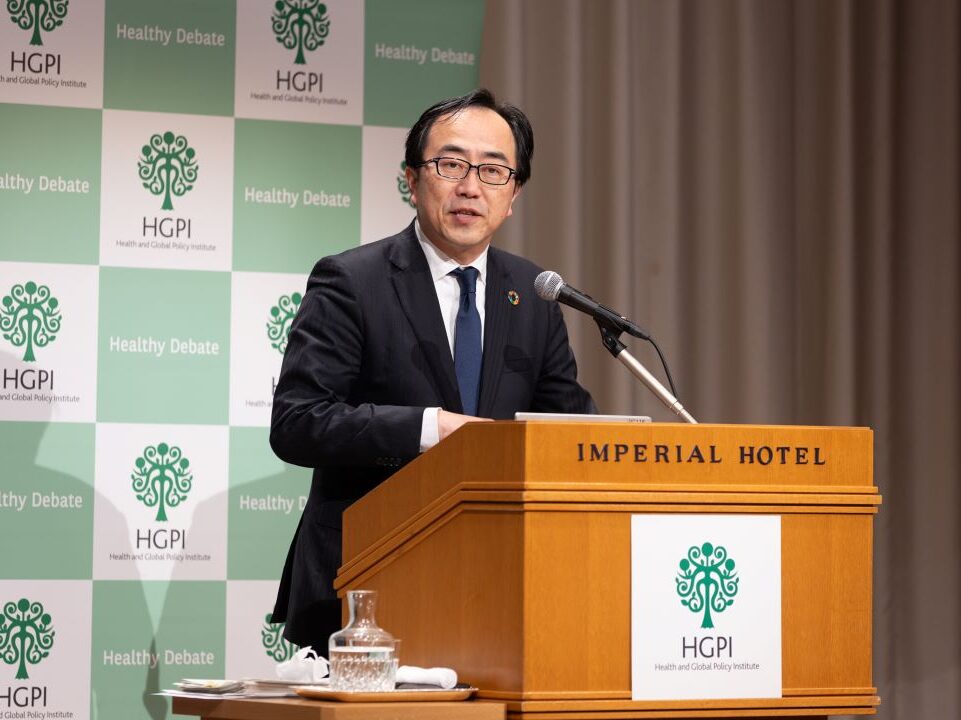
For the 132nd HGPI Seminar, we hosted Professor Hajime Kamiya (Professor, Department of Public Health, Occupational Medicine, and Applied Epidemiology, Mie University Graduate School of Medicine). In a lecture on evidence-based immunization and vaccination policies, Professor Kamiya reflected on his experiences in field epidemiological studies and this area of policy in Japan and the United States.
<POINTS>
- In the US, it is recommended that children receive a total of five doses of pertussis (whooping cough) vaccine by the time they enter elementary school, and the adult 3-in-1 Tdap vaccine is recommended as a routine vaccination for children at ages 11 to 12. The effectiveness and duration of Tdap and need for further boosters was evaluated in a field epidemiological study conducted in response to the 2012 pertussis epidemic in Washington. Policy priorities have changed in response to new evidence obtained during that study and it is now recommended that expectant mothers, their families, and healthcare workers get revaccinated to protect infants.
- Japan began tracking all cases of pertussis in 2018, which has made it possible to track infection status among infants, school-age children, and adults as well as to clarify the epidemiology of severe infections in infants. It has become clear that many patients, particularly those of school age, have completed all four routine vaccinations, so it will be necessary to use domestic evidence to encourage vaccinations for children under school age, expectant mothers, their families, and healthcare workers.
- Conducting high-quality surveillance, grasping infectious disease trends and related information, and strengthening systems that can compile evidence will be essential for implementing evidence-based immunization and vaccination policies.
- Many countries have established advisory bodies called National Immunization Technical Advisory Groups (NITAGs). NITAGs serve as expert organizations that function independently from governments to support policy by evaluating evidence and advising governments and other bodies.
- Public trust in scientific facts and experts forms the foundation for evidence-based immunization and vaccination policies. It is essential to provide vaccination professionals and citizens with accurate education and awareness-raising activities. Such initiatives are of particular importance in responding to information diversification in the age of social networking services (SNS).
■ Examining immunization and vaccination policies and evidence through the lens of pertussis control in Japan and the US
Japan has been experiencing outbreaks of pertussis (also known as whooping cough) in recent years. Pertussis is an infectious disease with symptoms that include severe coughing, difficulty breathing, fever, and vomiting. Infants are particularly at risk of developing severe pertussis, with some cases resulting in death. (The estimated fatality rate is about 1 in 1000.) Pertussis is highly contagious; an unvaccinated person in the same household as someone with pertussis has a 90% chance of becoming infected. While a vaccine that completely prevents pertussis infection does not currently exist, pertussis is regarded as an infectious disease that can be prevented by vaccinating newborns and infants, who are at greatest risk.
The US has been flexible about revising vaccination policies for pertussis based on evidence. Around ten years ago, it was recommended that citizens receive a total of six doses: four in infancy, one in childhood, and another at age 10 or 11. However, a pertussis epidemic occurred in Washington in 2012, and most of the infections were in teenagers. In response, the Centers for Disease Control and Prevention (CDC) and health department conducted a detailed epidemiological study. It discovered that the Tdap vaccine was only around 30% effective at two to four years after vaccination, despite expectations that it would protect for five to ten years. It also found that additional Tdap boosters did provide some protection against infection, but were insufficient for preventing the epidemic overall. In fact, boosters only increased the peak age of infection. In response to this new evidence, the US Advisory Committee on Immunization Practices (ACIP) shifted its policy from controlling pertussis through vaccinations to prioritizing infection prevention for infants and young children and introduced a strategy recommending that expectant mothers, their families, and healthcare professionals be revaccinated.
In Japan, the routine schedule has included four doses of pertussis vaccine administered from infancy, and coverage has always been high. The number of pertussis patients in each age group first became clear after Japan began tracking all cases in 2018. This made it possible to detect an increase in cases among school-age children, to discover that about 80% of school-age patients had completed all four routine vaccinations, to track the number of infections among infants, to identify sources of infection (in particular, that there are many cases of transmission from siblings to infants), and to grasp circumstances surrounding severe cases. Based on this new evidence which reflects the real state of pertussis in Japan, Japan must also take a proactive stance in reviewing policies and considering new approaches. Specifically, Japan should introduce additional boosters for children below school age and actively encourage vaccinations for expectant mothers, their families, and healthcare professionals. In addition, transitioning to tracking all cases of pertussis means that surveillance has been expanded to include adults when it had been limited to fixed-point surveillance at pediatric institutions in the past. This expansion allows for a more detailed and comprehensive understanding of pertussis outbreaks, and expectations are high that it will lead to the creation of evidence for pertussis in adults.
■ Systems that support evidence-based immunization and vaccination policies
Essential elements for evidence-based decision making (EBDM) include a foundation for building reliable evidence and systems that correctly evaluate that evidence and reflect it in policy.
The US uses high-quality surveillance to accurately grasp the number of patients or track changes in that number. This system is underpinned by adequately-staffed health departments that carry out vaccination programs and by ample budgets provided with management from the CDC. When an outbreak occurs, the CDC is able to rapidly allocate funding and conduct on-site investigations, and this rapid response contributes greatly to the generation of evidence.
ACIP provides a representative example of a system for correctly evaluating these forms of evidence and linking it to policy. ACIP is an expert organization that serves as an independent advisory body for the US Government, the US Department of Health and Human Services (HHS), and the CDC. Using the Grading of Recommendations, Assessment, Development and Evaluation (GRADE) system, ACIP evaluates the quality of evidence rigorously and transparently to produce highly reliable recommendations. ACIP meeting days are carefully planned several years in advance, with draft agendas made available to the public. Such an environment makes it easier for researchers and the private sector to engage in the systematic creation of evidence. In addition, participants in ACIP include representatives of societies and organizations related to vaccination who centralize relevant information and are called liaisons. In this role, liaisons can contribute to lowering the risk that misinformation is created or shared as well as to enhancing the effectiveness of policies.
The World Health Organization (WHO) defines such independent expert organizations that advise governments as National Immunization Technical Advisory Committees (NITAGs). NITAGs have already been established in over 120 countries. The establishment of a NITAG is expected to contribute to clarifying routine vaccination processes, identifying future vaccine requirements, and accelerating progress in immunization and vaccination policies. Japan recently joined the Global NITAG Network, and there is great interest in future developments.
■ The necessary societal understanding for evidence-based immunization and vaccination policies
Essential elements for successfully adopting evidence-based immunization and vaccination policies include a strong will and society’s trust in scientific evidence and experts. Due to the modern proliferation of social networks, anecdotes or personal episodes sometimes have greater influence than scientific evidence and facts. This means it will be important to provide education, raise awareness, and support training to deepen understanding of scientific evidence.
Trust in a nation’s scientific evidence and experts and understanding of its immunization policy have a major impact on how its national immunization policy takes shape. For example, there are countries where national governments manage financial resources for vaccination systems or vaccine provision systems, such as the immunization and vaccination policy in Finland, or the Vaccines For Children (VFC) Program in the US. In such programs, governments utilize national financial resources to negotiate effective prices through pricing based on cost-effectiveness and bulk purchasing, making it possible to provide citizens with vaccines in a stable and efficient manner. Having whole-of-society understanding of immunization and vaccination and establishing such systems are key conditions for successfully creating an environment in which all citizens can benefit equally from immunization and vaccination policies.
At the same time, it is also necessary for recognition toward prevention to be elevated throughout society. In the US, public health departments work continuously to provide easy-to-understand information on vaccines to households with children and are responsible for educating young children. They also have e-learning materials to educate the healthcare professionals who actually administer vaccines and provide ample education for medical residents and other vaccination professionals. Education on immunization and vaccination at medical universities and other institutions in Japan is often lacking, and there is an urgent need to improve the systems used to educate vaccination professionals. Mie University has prepared educational materials for vaccination professionals and is currently advancing efforts to educate medical students and graduate students on various aspects of immunization and vaccination through recurrent education and the use of e-learning materials.
The types of vaccines people can receive in Japan has reached a level comparable to global standards thanks to efforts to expand their introduction in recent years. However, Japan does not have systems for providing children with mandatory vaccinations by the time they enter school or frameworks to increase coverage through compulsory vaccinations, like in other countries. Japan also faces lingering challenges for achieving and maintaining coverage, even for vaccines on the routine schedule. It is vital that Japan establish an educational system that ensures vaccination professionals can acquire correct knowledge and skills in a manner that complements existing systems.
[Event Overview]
- Speaker:
Dr. Hajime Kamiya (Professor, Department of Public Health, Occupational Medicine, and Applied Epidemiology, Mie University Graduate School of Medicine)
- Date & Time: Friday, April 25, 2025; 18:30-19:45 JST
- Format: Online (Zoom webinar)
- Language: Japanese
- Participation Fee: Free
- Capacity: 500 participants
■Profile:
Hajime Kamiya (Professor, Department of Public Health, Occupational Medicine, and Applied Epidemiology, Mie University Graduate School of Medicine)
Dr. Hajime Kamiya graduated from the Mie University School of Medicine in March 1999, earned his medical license, and undertook his residency at the Pediatric Department of St. Luke’s International Hospital. From September 2004, he continued his training and began serving at the Immunization Branch of the County of San Diego Health and Human Services Agency. In May 2008, he earned a Master’s Degree in Public Health from Rollins School of Public Health at Emory University in Atlanta, Georgia, USA. He has served as a researcher at the National Institute of Infectious Diseases (NIID) Infectious Disease Surveillance Center since August 2008. In March 2012, he earned a doctorate in rotavirus epidemiology from the Department of Virology and Parasitology at Fujita Health University and then joined the Epidemic Intelligence Service (EIS) at the U.S. Centers for Disease Control and Prevention (CDC).
In August 2014, Dr. Kamiya was appointed as Chief Researcher at the NIID Center for Surveillance, Immunization and Epidemiologic Research (CSIER), and in April 2021, he became Chief Researcher at NIIDs Center for Field Epidemic Intelligence, Research and Professional Development (CFEIR). In April 2022, he was appointed Chief Researcher at CSIER and also took on the role of FETP facilitator at CFEIR. He assumed his current position in February 2024.
His areas of expertise include infectious disease epidemiology, immunization, infectious disease surveillance, and pediatrics. In addition to his current position, his other roles include Member, Committee on Vaccination and Infectious Disease Control, Japan Pediatric Society; Board Member, Japanese Society for Vaccinology; and Member, Committee on Vaccination, Society of Ambulatory and General Pediatrics of Japan. He also serves as a pediatrician and specialist and instructor in social medicine.

![[Event Report] The 132nd HGPI Seminar “Considering the Ideal Evidence-Based Immunization and Vaccination Policies”](/assets/img/katsudo/icon_pdf_l.png)
Related Posts
-
2025-07-22
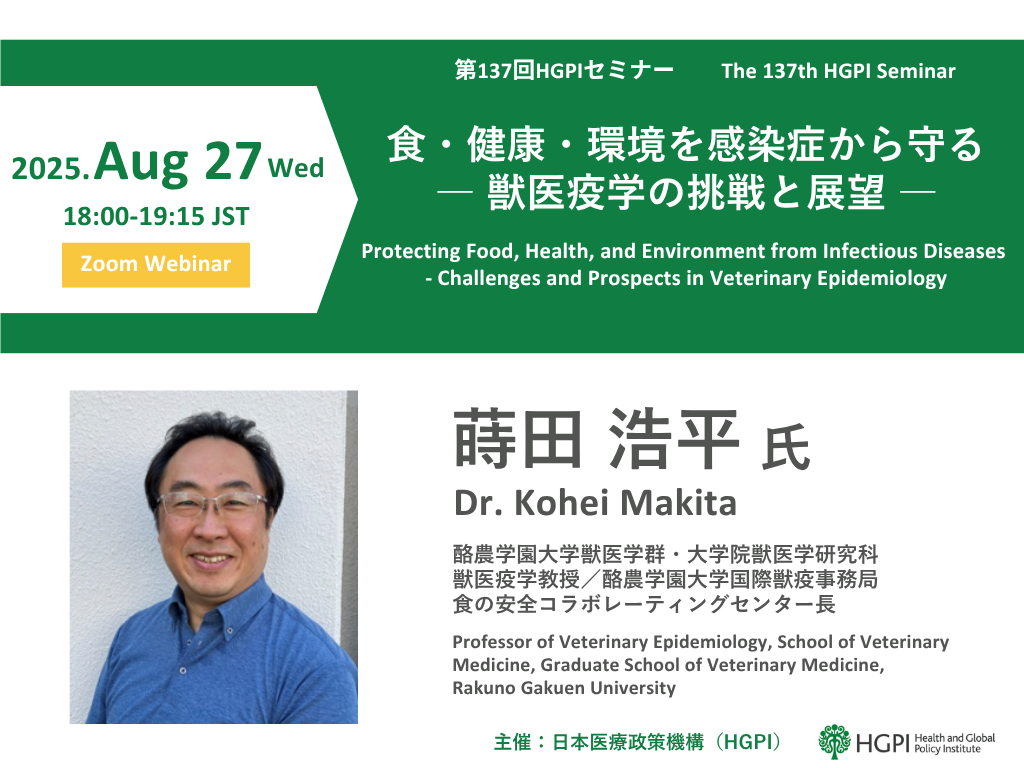
[Registration Closed] (Webinar) The 137th HGPI Seminar "Protecting Food, Health, and Environment from Infectious Diseases - Challenges and Prospects in Veterinary Epidemiology" (August 27, 2025)
-
2025-07-22
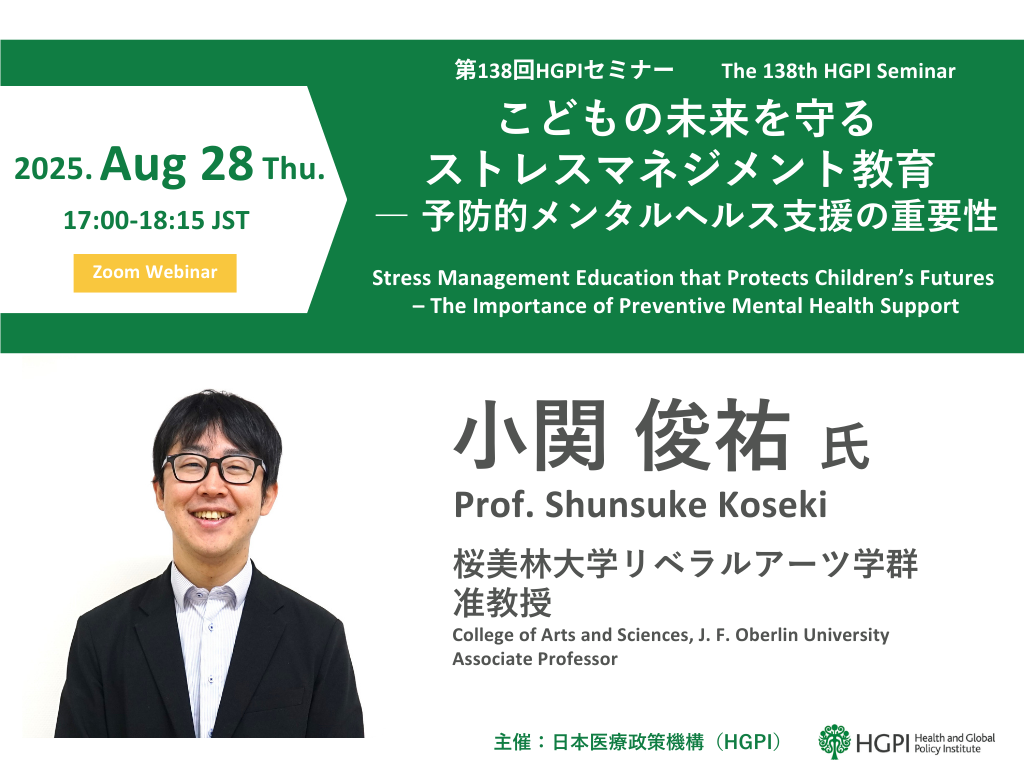
[Registration Closed] (Webinar) The 138th HGPI Seminar “Stress Management Education that Protects Children’s Futures – The Importance of Preventive Mental Health Support” (August 28, 2025)
-
2025-09-02
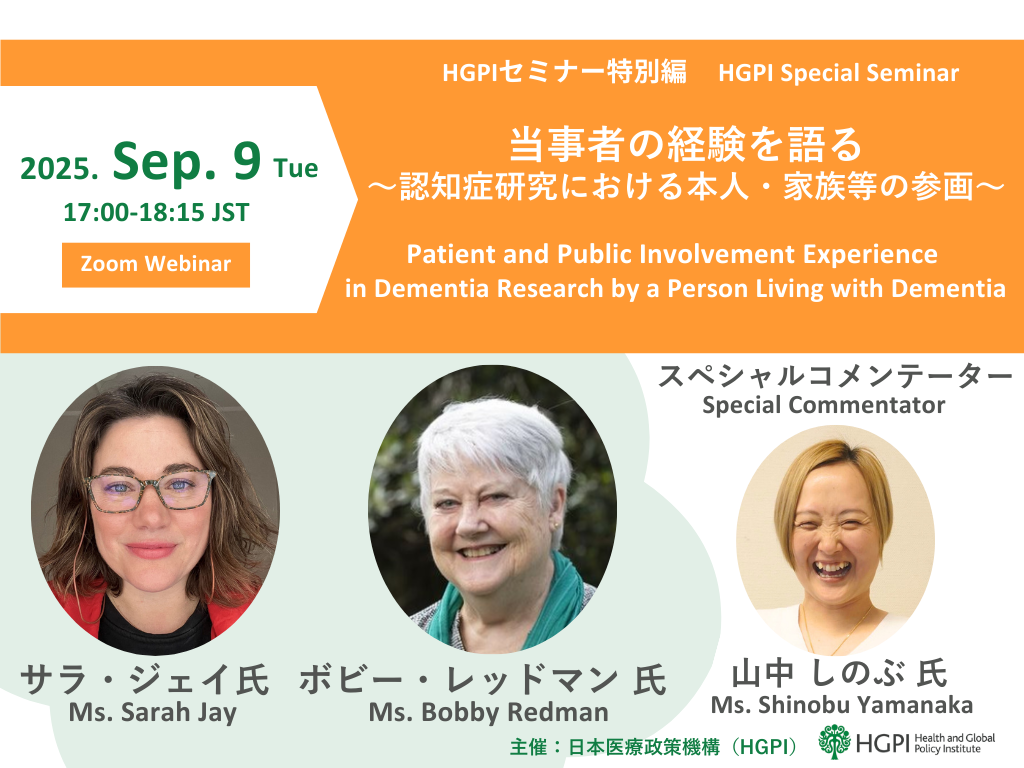
[Registration Closed] (Webinar) HGPI Special Seminar Commemorating Dementia Month and World Alzheimer’s Month “Patient and Public Involvement Experience in Dementia Research by a Person Living with Dementia" (September 9, 2025)
-
2025-05-12
[Event Report] The 131st HGPI Seminar “The Policy Process of the Kyoto City Caregiver Support Ordinance” (March 19, 2025)
-
2026-01-26
[Policy Recommendations] Reshaping Japan’s Immunization Policy for Life Course Coverage and Vaccine Equity: Challenges and Prospects for an Era of Prevention and Health Promotion (April 25, 2025)
-
2024-07-03
[Event Report] The 124th HGPI Seminar "Reconsidering Infectious Disease Control Strategies Centering on Vaccination and Immunization - From the Experiences of the COVID-19 Pandemic and a Life Course Approach" (April 26, 2024)
-
2024-06-03
[Public Comment Submission] "National Action Plan for Pandemic Influenza and New Infectious Diseases (Draft)" (May 7, 2024)
-
2024-04-30
[Event Report] The 53rd Special Breakfast Meeting "Shaping Global Health Rules from the Perspective of Japan's chief negotiator: A Look into 'pandemic accord'" (January 31, 2024)
Top Research & Recommendations Posts
Featured Posts
-
2026-05-18
[Registration Closed] Kick-off Panel Discussion “From Africa and Japan, Drawing from Perspectives Around the World:A Platform for Cultivating a Philosophical Health Dialogue Together” (June 15, 2026)
![[Registration Closed] Kick-off Panel Discussion “From Africa and Japan, Drawing from Perspectives Around the World:A Platform for Cultivating a Philosophical Health Dialogue Together” (June 15, 2026)](https://hgpi.org/en/wp-content/uploads/sites/2/HGPI_20260615_Eyecathch_panel-discussion-From-Japan-and-Africa-in-Discussion-with-the-World_2.png)
-
2026-08-28
[Announcement] The 3rd Kiyoshi Kurokawa Award: Call for Nominations (Deadline: November 30, 2026)
![[Announcement] The 3rd Kiyoshi Kurokawa Award: Call for Nominations (Deadline: November 30, 2026)](https://hgpi.org/en/wp-content/uploads/sites/2/Kiyoshi-Kurokawa-Award_3rd_nominations_eyecatch_caseB_ENG_web_20260929_v0.5.jpg)
-
2026-09-01
[Registration Closed] HGPI Salon 2025-2026 Looking Ahead to the Future of Japan’s Social Security System “Session 6: Japan’s Health Policy through the Lens of Global Security” (October 13, 2026)
![[Registration Closed] HGPI Salon 2025-2026 Looking Ahead to the Future of Japan’s Social Security System “Session 6: Japan’s Health Policy through the Lens of Global Security” (October 13, 2026)](https://hgpi.org/en/wp-content/uploads/sites/2/HGPISalon2025-20266.png)
-
2026-09-17
[Registration Open] (Webinar) The 145th HGPI Seminar “Toward Better AMR Measures at Elderly Care Facilities—Considering Infectious Disease Control in a Super-Aged Society From a Policy Perspective” (October 27, 2026)
![[Registration Open] (Webinar) The 145th HGPI Seminar “Toward Better AMR Measures at Elderly Care Facilities—Considering Infectious Disease Control in a Super-Aged Society From a Policy Perspective” (October 27, 2026)](https://hgpi.org/en/wp-content/uploads/sites/2/HGPIseminar145.png)
-
2026-10-06
[Registration Open] (Webinar) The 146th HGPI Seminar “How We Can Build a Society That Supports Choices Around Organ Donation: Exploring Decision-Making by Citizens and a Multi-Layered Approach Through Strategic Social Marketing” (November 9, 2026)
![[Registration Open] (Webinar) The 146th HGPI Seminar “How We Can Build a Society That Supports Choices Around Organ Donation: Exploring Decision-Making by Citizens and a Multi-Layered Approach Through Strategic Social Marketing” (November 9, 2026)](https://hgpi.org/en/wp-content/uploads/sites/2/HGPI_20261001_Eyecatch_HGPIseminer-146th-1.png)
