


[In the Media] Association between physician characteristics and payments from industry in 2015–2017: observational study (BMJ Open, September 23, 2019)
date : 10/17/2019

![[In the Media] Association between physician characteristics and payments from industry in 2015–2017: observational study (BMJ Open, September 23, 2019)](https://hgpi.org/en/wp-content/uploads/sites/2/eyecatch_tsugawa-4.jpg)
U.K. academic journal the BMJ Open publishes research results from a team led by HGPI Board Member Dr. Yusuke Tsugawa.
The U.S. enacted the Physician Payment Sunshine Act in 2010 to increase transparency in the medical industry by making it mandatory for drug and medical device makers to disclose financial relationships with doctors. Since 2012, this data has been available online. A research team at UCLA analyzed payments made to 54 thousand physicians from 2015 to 2017 to identify the characteristics of physicians with strong economic ties to drug makers and similar entities.
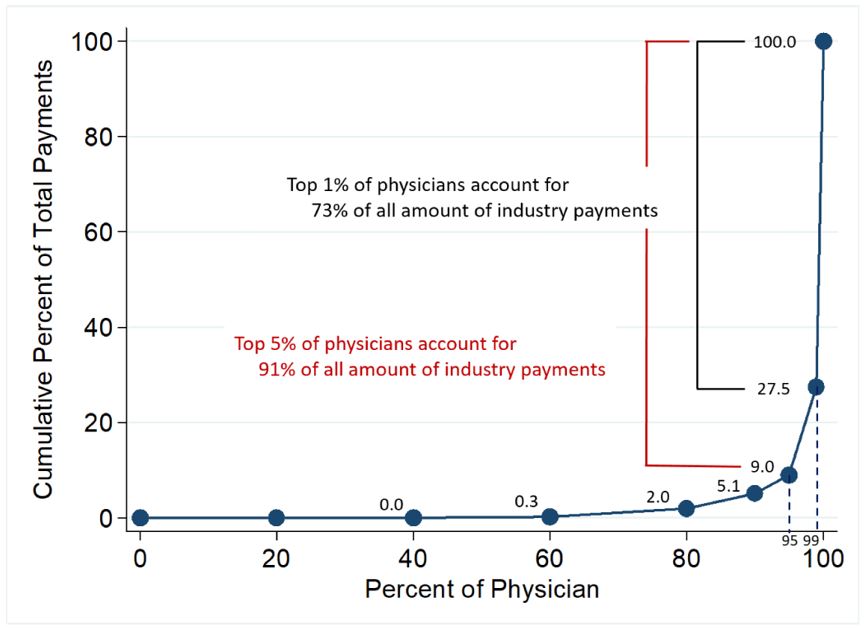
Their research revealed that most of the payments made by drug makers and similar entities were concentrated on a small number of physicians. 73% of industry payments went to the top 1% of physicians and 91% of the payments went to the top 5%.
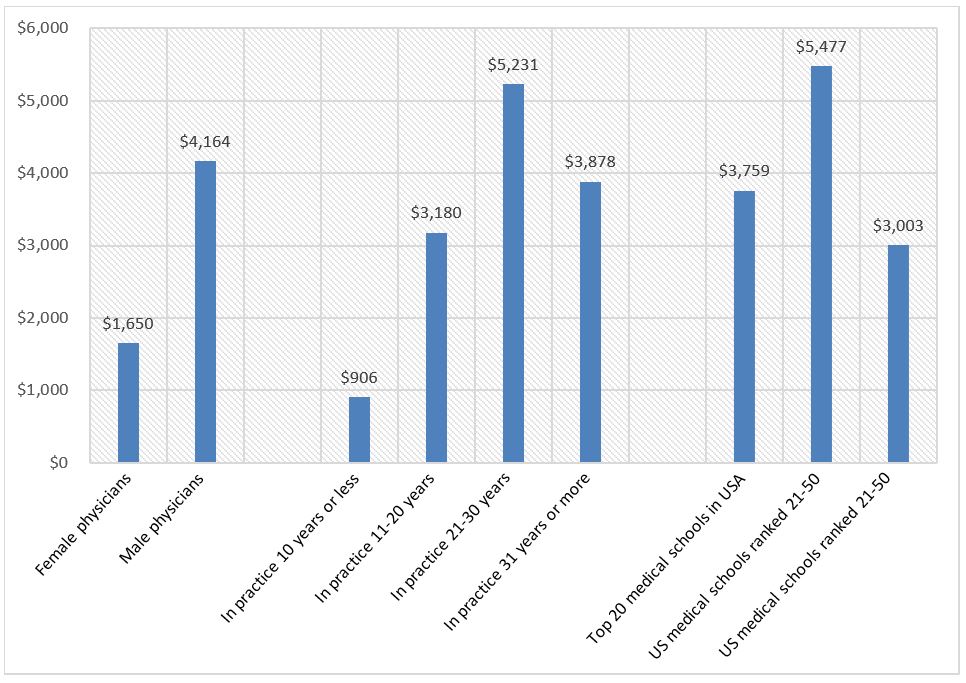
As for the characteristics of the physicians that received the most payments, the team discovered that male physicians, physicians with 21 to 30 years of clinical experience who form the backbone of the medical industry, and physicians who graduated from one of the top fifty medical schools had higher compensation levels. By specialty, higher payments were made to orthopaedic surgeons, neurosurgeons, and endocrinologists.
Please note that the payments referred to above are not limited to monetary payments provided to physicians. A significant portion of the payments were in the form of lunches and drinks at academic meetings, amenities such as stationery, and travel expenses. Please understand that “payments” does not only refer to cash payments like many people might imagine. However, it has been indicated that even general payments can affect what prescriptions physicians write and this is recognized as a problem in the U.S.
Top Research & Recommendations Posts
Featured Posts
-
2026-05-18
[Registration Closed] Kick-off Panel Discussion “From Africa and Japan, Drawing from Perspectives Around the World:A Platform for Cultivating a Philosophical Health Dialogue Together” (June 15, 2026)
![[Registration Closed] Kick-off Panel Discussion “From Africa and Japan, Drawing from Perspectives Around the World:A Platform for Cultivating a Philosophical Health Dialogue Together” (June 15, 2026)](https://hgpi.org/en/wp-content/uploads/sites/2/HGPI_20260615_Eyecathch_panel-discussion-From-Japan-and-Africa-in-Discussion-with-the-World_2.png)
-
2026-08-28
[Announcement] The 3rd Kiyoshi Kurokawa Award: Call for Nominations (Deadline: November 30, 2026)
![[Announcement] The 3rd Kiyoshi Kurokawa Award: Call for Nominations (Deadline: November 30, 2026)](https://hgpi.org/en/wp-content/uploads/sites/2/Kiyoshi-Kurokawa-Award_3rd_nominations_eyecatch_caseB_ENG_web_20260929_v0.5.jpg)
-
2026-09-01
[Registration Closed] HGPI Salon 2025-2026 Looking Ahead to the Future of Japan’s Social Security System “Session 6: Japan’s Health Policy through the Lens of Global Security” (October 13, 2026)
![[Registration Closed] HGPI Salon 2025-2026 Looking Ahead to the Future of Japan’s Social Security System “Session 6: Japan’s Health Policy through the Lens of Global Security” (October 13, 2026)](https://hgpi.org/en/wp-content/uploads/sites/2/HGPISalon2025-20266.png)
-
2026-09-17
[Registration Open] (Webinar) The 145th HGPI Seminar “Toward Better AMR Measures at Elderly Care Facilities—Considering Infectious Disease Control in a Super-Aged Society From a Policy Perspective” (October 27, 2026)
![[Registration Open] (Webinar) The 145th HGPI Seminar “Toward Better AMR Measures at Elderly Care Facilities—Considering Infectious Disease Control in a Super-Aged Society From a Policy Perspective” (October 27, 2026)](https://hgpi.org/en/wp-content/uploads/sites/2/HGPIseminar145.png)
-
2026-10-06
[Registration Open] (Webinar) The 146th HGPI Seminar “How We Can Build a Society That Supports Choices Around Organ Donation: Exploring Decision-Making by Citizens and a Multi-Layered Approach Through Strategic Social Marketing” (November 9, 2026)
![[Registration Open] (Webinar) The 146th HGPI Seminar “How We Can Build a Society That Supports Choices Around Organ Donation: Exploring Decision-Making by Citizens and a Multi-Layered Approach Through Strategic Social Marketing” (November 9, 2026)](https://hgpi.org/en/wp-content/uploads/sites/2/HGPI_20261001_Eyecatch_HGPIseminer-146th-1.png)
