

[Event Report] The 56th Special Breakfast Meeting “From Insights to Impact: How Do We Ensure Health Policy and Systems Research and Learning Accelerates Achievement of the Sustainable Development Goals (SDGs)?” (November 26, 2024)
date : 1/26/2025
Tags: Global Health Human Resources Development, Special Breakfast Meeting

![[Event Report] The 56th Special Breakfast Meeting “From Insights to Impact: How Do We Ensure Health Policy and Systems Research and Learning Accelerates Achievement of the Sustainable Development Goals (SDGs)?” (November 26, 2024)](https://hgpi.org/en/wp-content/uploads/sites/2/1F7A8483_web-e1768120067457.jpg)
On November 26, 2024, Health and Global Policy Institute (HGPI) hosted the 56th Special Breakfast Meeting, titled “From Insights to Impact: How Do We Ensure Health Policy and Systems Research and Learning Accelerates Achievement of the Sustainable Development Goals (SDGs)?” The event was held shortly after the launch of the Alliance for Health Policy and Systems Research’s 2024-28 strategy, “Aiming for Impact.”
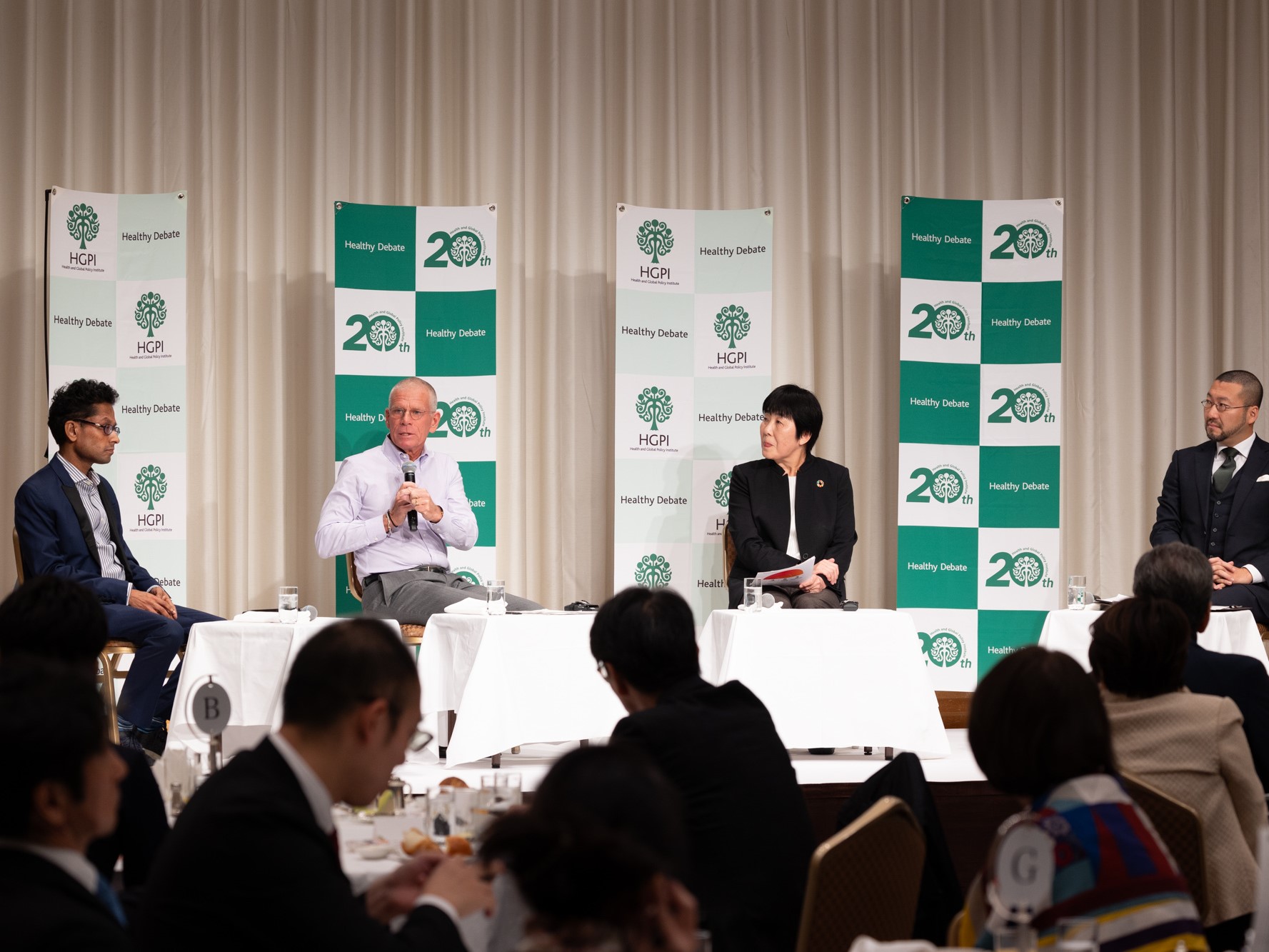
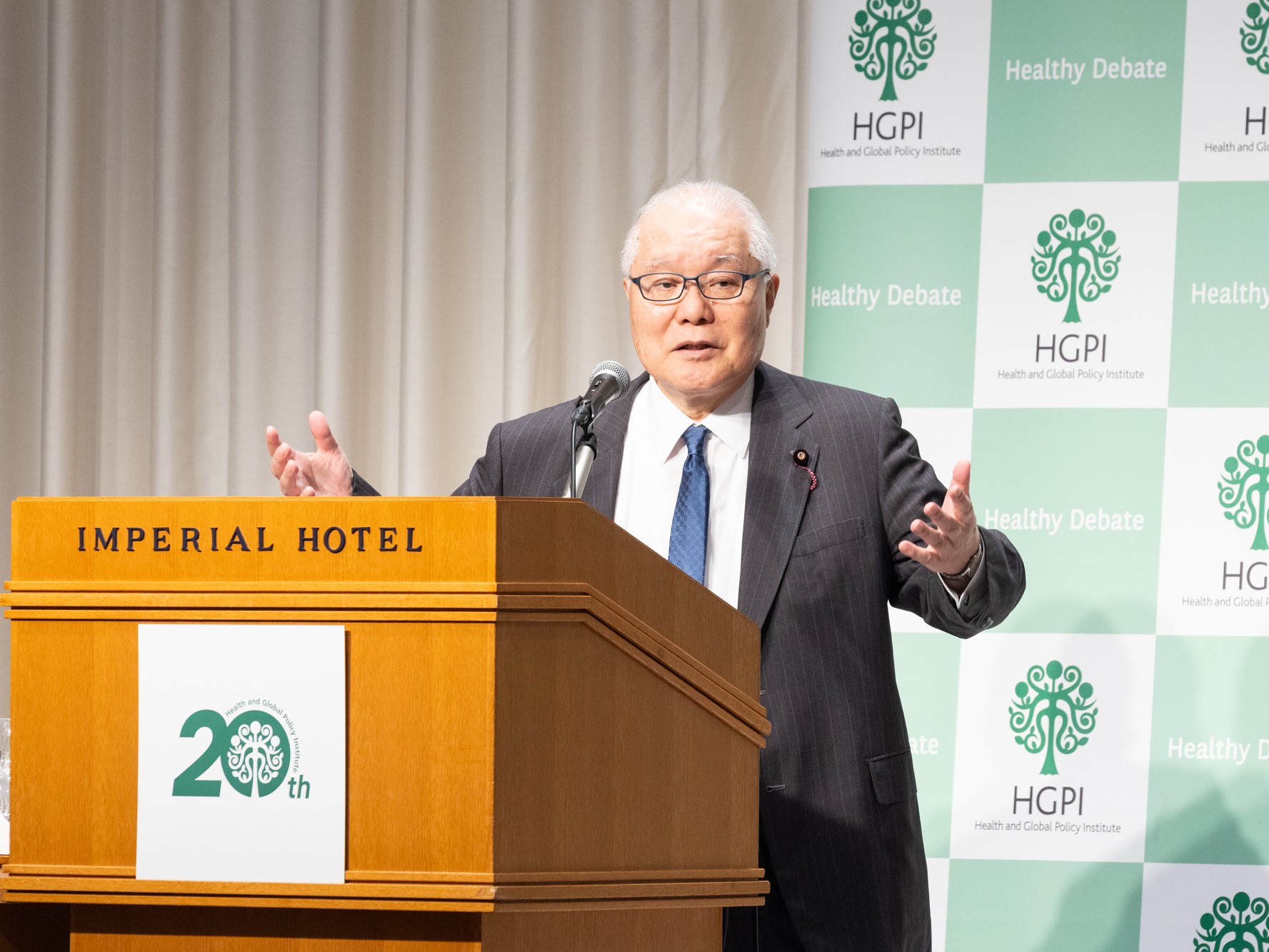
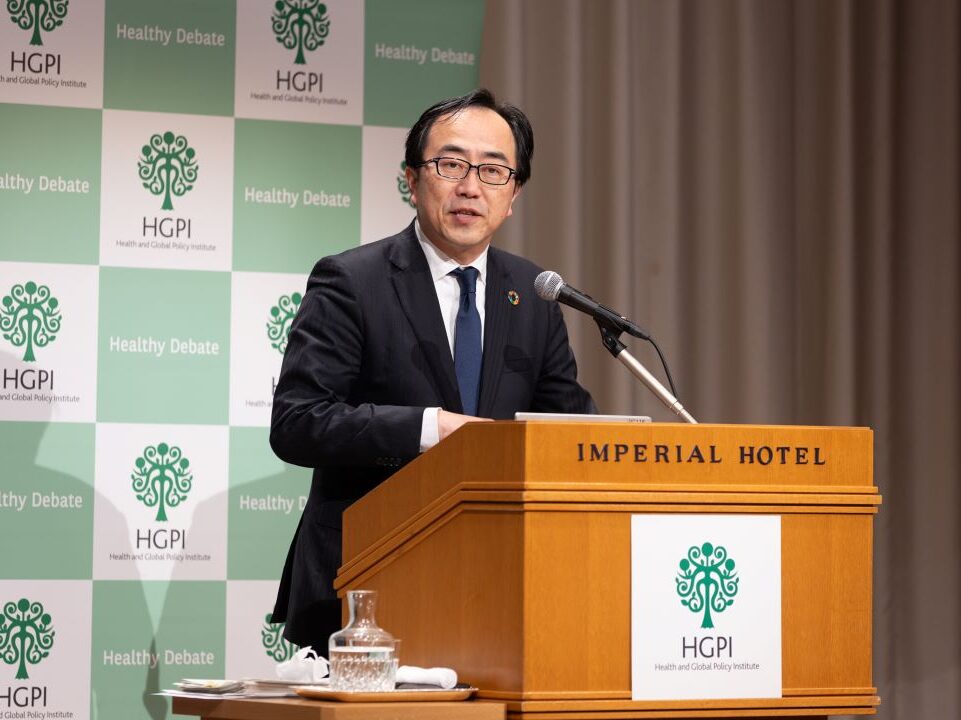
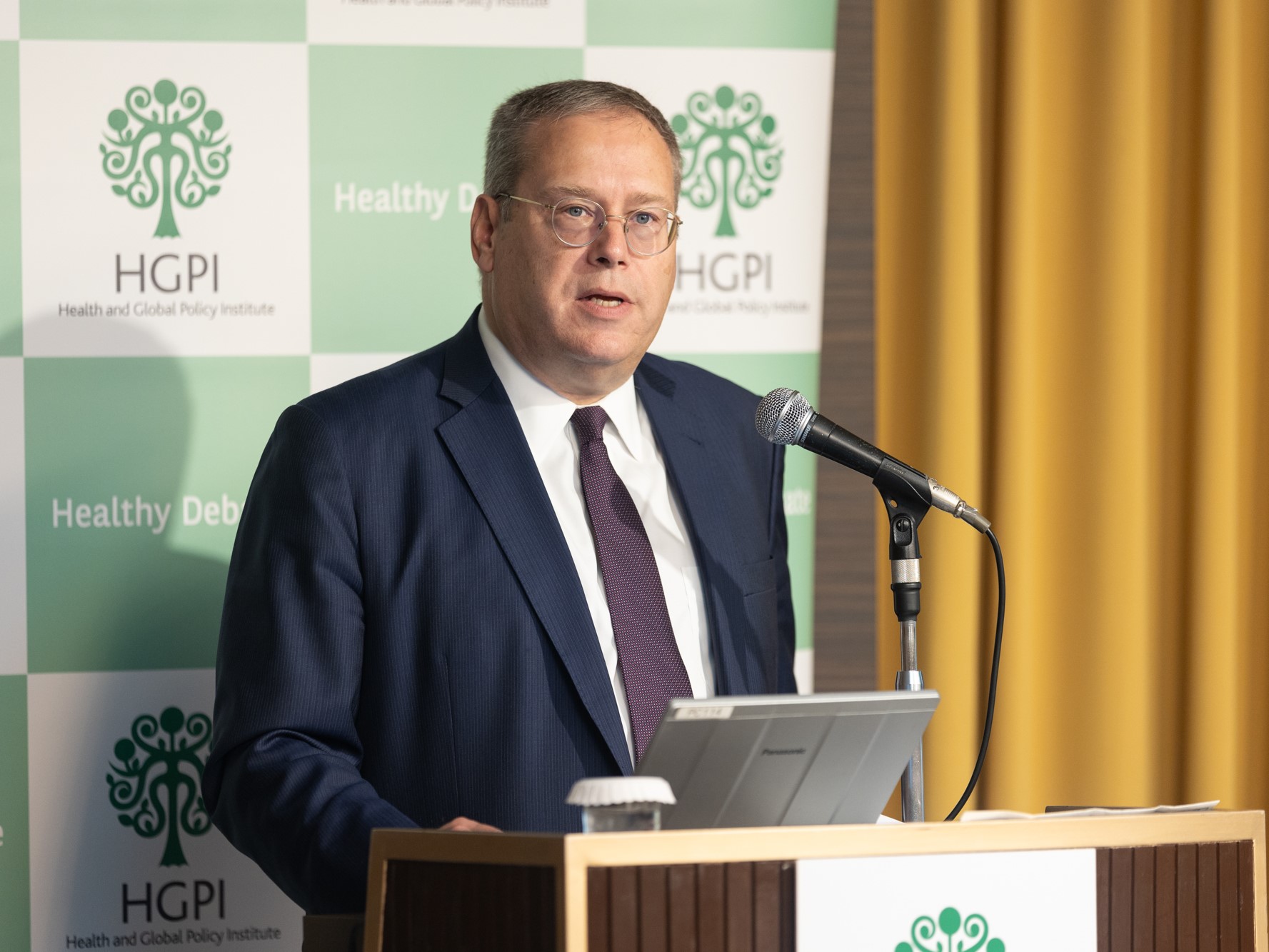
We were honored to welcome the Honorable Helen Clark, Chair of the Alliance for Health Policy and Systems Research Board, former Prime Minister of New Zealand, and former Administrator of the United Nations Development Programme (UNDP), as our keynote speaker. The keynote was followed by a panel discussion featuring global experts, including Anders Nordström (Former Swedish Ambassador for Global Health), Dr. Naoko Yamamoto (Professor, International University of Health and Welfare / Director, Global Medical Cooperation Center), and Mr. Ryoji Noritake (Chair, HGPI), moderated by Dr. Kumanan Rasanathan (Executive Director, Alliance for Health Policy and Systems Research, WHO).
The meeting provided a unique platform for high-level dialogue on how health policy and systems research (HPSR) can effectively contribute to SDG achievement, and how to overcome the barriers that prevent research from being translated into actionable policies and improved health outcomes.
■Key Takeaways:
- Evidence-based research is fundamental to strengthening health systems globally. It is a strategic investment that can address current global health challenges and contribute to building stronger, more efficient, and more equitable systems.
- The focus should not only be on the “what” but also on the “how.” A clear understanding and articulation of both are essential for impactful policy formulation and implementation.
- A strong commitment is required to leverage health policy and systems research to improve health outcomes by fostering interdisciplinary and cross-sectoral collaboration.
- The panel highlighted the need to bridge gaps between researchers and policymakers by establishing common language and shared objectives, while acknowledging differences in time horizons and incentive structures.
- Discussions emphasized the importance of fostering mutual understanding, especially between those who generate evidence and those who shape policies.
- Promoting continuous dialogue and knowledge-sharing among diverse experts, practitioners, and communities is crucial. It is equally important to listen to and amplify the voices of under-represented regions and groups.
- The role of international organizations was also discussed, with calls for them to play a more active role in supporting HPSR, strengthening country-level capacities, and promoting equity in global health research and policy.
■ Keynote Speech
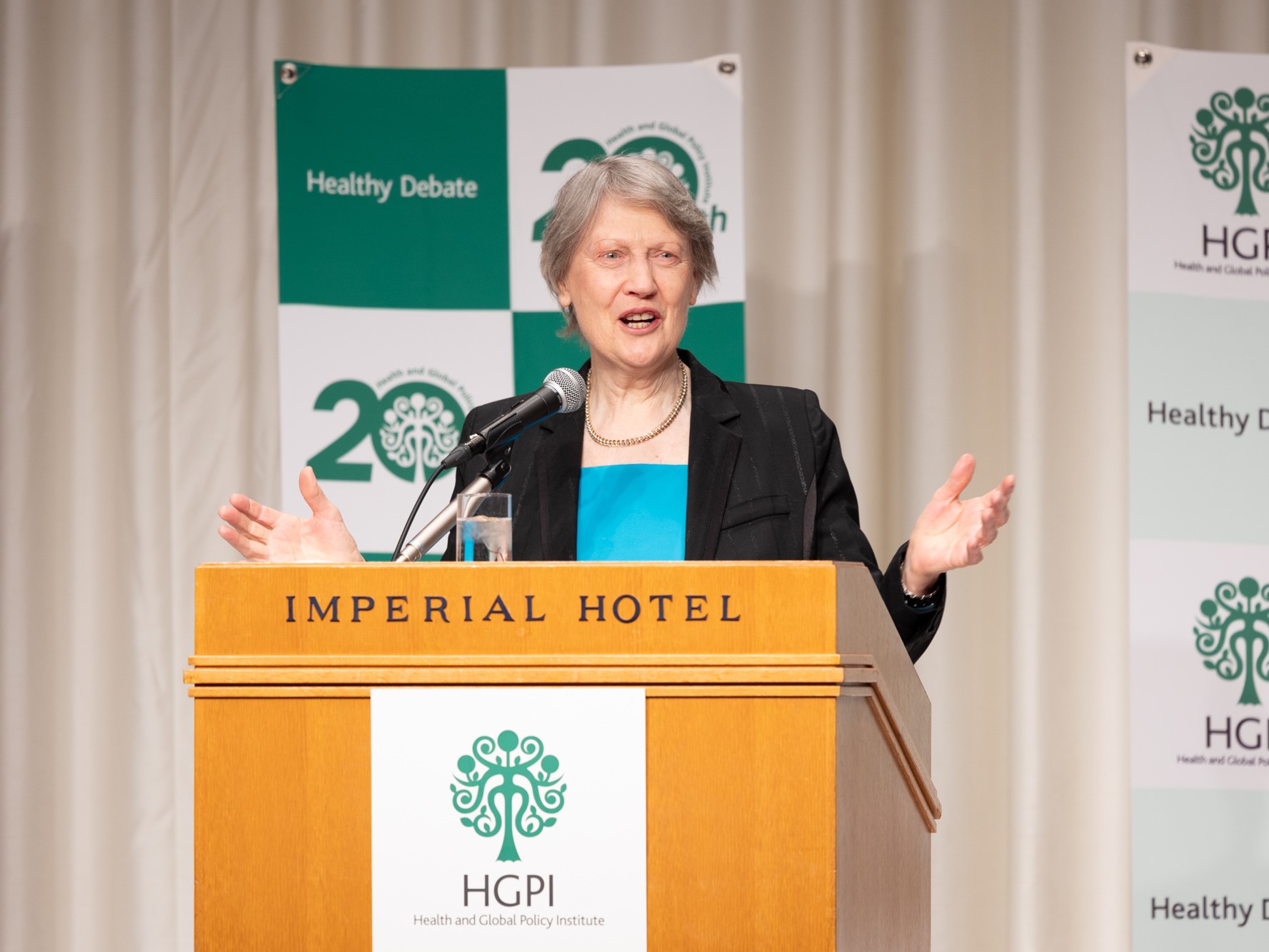
In her keynote address, the Honorable Helen Clark called on health systems and researchers to “do business unusually” by stepping away from outdated practices that fail to deliver meaningful results. She stressed that the COVID-19 pandemic exposed both the strengths and weaknesses of health systems globally and highlighted the urgent need to apply these lessons to build more resilient and responsive systems capable of withstanding future crises.
Ms. Clark emphasized that collaboration between researchers and policymakers is critical to translating evidence into impact. Without strong political will and alignment, even the most robust research risks being left unused. She cited Japan as a positive example where collaboration between researchers and policymakers has been institutionalized, providing a valuable model for other nations.
She further highlighted that research is not a luxury, but a strategic investment essential for creating more effective, equitable, and sustainable health systems worldwide. Concluding her remarks, Ms. Clark expressed her vision of a future where health policy and systems research drives real solutions to global challenges through broad, interdisciplinary cooperation.
■ Main Themes from the Panel Discussion
Barriers Faced by Health Systems
There are different barriers but one of the main barriers is bringing different people from different backgrounds and fields to leverage solutions. It is not always simple to bring people together, however, it is necessary in this context to generate global solutions. Moreover, the fact is that up until now, health systems have been focusing on the ‘whats’ and not on the ‘hows’, this is another barrier. This is mainly because we believe in evidence and research and this is how we function as researchers; however, when it comes to policy making, we need to know the ‘hows’ and to focus on the ‘hows’. The reality is that politicians do not believe in research and we that work in health systems lack understanding on the ‘whats’ and the ‘hows’. We must develop our understanding of decision-making on both a private and a public level because policy learns from evidence, but it is essential to comprehend the evidence and how best to use it to bring solutions.
Additional barriers for health system research are language, concept, and definition. Research uses academic language and concepts that are ambiguous to the layman; a common language and a common understanding is necessary for health system research to be successful and effective. Research is mainly conducted for non-researchers and the outcome of research is also aimed at non-researchers; therefore, it is crucial that researchers learn to communicate simply without academic jargon that is cryptic to the non-researchers.
Timeframe is another barrier as policy makers need to have a long-term vision to plan policies ahead of time, they also need to consider time and how best to use their time. This is different for researchers as their concept of time and the way that they use time is specific to the research context. Therefore, researchers need to learn to understand their timeframe in the political context. Additionally, there is also a lack of collaboration between different groups of experts in health systems, and this is required to have effective outcome measures and to be able to share those outcome measures.
The main barrier for health system research in Japan is that the concept of evidence needs to be clearly defined and more polished. Seeing as humans are more emotional than rational, there is a need for more granularity in research because politicians operate rationally. As a result, there is a disparity; however, the cause of the granularity differs. Therefore, there is a need for ethnographic research in health system research to understand why this granularity occurs. Mr. Noritake gave the example of the Cancer Act in Japan to explain his point on granularity. When the Cancer Basic Act went into effect, the government set the goal for 47 prefectures to have regional cancer control act. However, the reality to this approach is that each prefecture is different and will implement the act differently and therefore will obtain different results. Thus, it is necessary for the government to make a concrete plan that each local government can appropriate. By doing this, prefectures can learn from each other, and prefectures that are similar in size or that have the same context may be able to collaborate and measure the outcomes together.
Essential Ingredients for Impactful Health Systems Research
The research question and the methodology must be correct, and different disciplines need to be incorporated from the beginning. It is imperative to understand the research question to establish the right methodology. Practitioners need to be incorporated from the very beginning once the research question has been adequately defined. Research will become more relevant and effective once those implementing and practicing the results of research outcomes are involved from the onset because they can provide their perspective and share their experiences, which will enrich the research and especially the methodological approach employed. Moreover, people’s values are important, and researchers must comprehend this and conduct research that delves into people’s behaviour in order to properly understand what causes people to change their behaviour. If people’s values and experiences are at the forefront of research, it becomes easier to conduct research that speaks to these values.
Timeliness is a key factor for health systems to have a meaningful impact on health and development. Making significant impact in policy development needs momentum and time is essential for momentum. Moreover, health policy and system researchers need to be visionary and dialogue with diverse communities; by doing this, they will be able to employ the data obtained from these communities to depict the reality as accurately as possible. Collaborating with diverse communities not only enriches research but it also makes a difference in the communities because they see how essential their voice is to research. Policy development and implementation must be evidence-based, using evidence sourced from the existing reality in a balanced way. Comprehending the existing reality will facilitate the identification of the steps necessary to effectively ameliorate the current reality.
Additionally, the ‘hows’ needs to be persuasive for health policy and system research to be impactful because without the ‘hows’, we cannot achieve the ‘whats’; without the ‘hows’, the evidence would be in vain. Moreover, the level of evidence is important; the level of evidence is important because there is a need to understand that the decision-making process depends on the power of politics and the power dynamics in politics. For example, when building bridges, the resources and the raw materials required to build bridges are like the evidence that we provide. However, where to build the bridge is political and it is the decision makers that make this decision not the researchers. Therefore, it is essential that researchers comprehend the power dynamics in decision-making relating to health policy and provide evidence that can influence the way that the decision is made. The source of this evidence will not be from the researchers alone, but the people for whom research is being conducted, those who benefit from the research outcomes. This is one of the main foci of the HGPI; to promote the voice of the public in policy-making.
The Role of Global Institutions
Research must be in the DNA of international organisations. Moreover, it is important to focus on the ‘hows’, not just the ‘whats’ and to understand how the ‘hows’ work and whether they work or not by examining the outcomes of health policies. Foresight is also imperative in health system research; research often tends to look back; however international organisations need to stimulate foresight in research to be able to predict and prepare for unexpected circumstances and potential scenarios. In addition, organisations like the WHO need to return and focus on their core mandate and work closer with countries on advancing health system research.
Furthermore, international organisations need to encourage and focus on voices from under-represented regions and established a balanced representation as voices from Western countries are often too loud, leaving voices from Asian or African countries are neglected resulting in an imbalance and polarisation. It is also essential that international organisations like the UN to continue to advocate human rights that promote safe, free, and ethical research; the reality is that research often reveals unethical facts that need to be addressed, and adequate support must be provided to researchers to promote fair science.
Additionally, international organisations need to continue to broaden their knowledge scope by collecting best practices from other regions to learn from them. For example, in the cardiovascular disease (CVD) project conducted by the HGPI, the HGPI collaborated with Thailand and this collaboration was enrichening for the HGPI as they learned how to promote policies regarding CVD even with limited resources from Thailand. Moreover, organisations like the UN need to encourage granularity across regions, countries, and diseases. Cross-disease granularity is especially primordial as lessons learned from policies made for one disease can be useful for another disease. For example, the discussions that are currently occurring in Japan regarding dementia and how people with dementia can still contribute to society, are the same discussions that took place 20 years ago. Therefore, there is a cross-disease discussion with dementia and cancer currently occurring in Japan, which is enrichening as different dementia patients can learn from cancer patients and vice versa.
It is also essential for international organisations need to think about the specific stories that move people, understand these stories and evoke the right change using people’s stories, not just their own agendas. There must be an alignment to budget cycles in international organisations, as well as an understanding of the values that drive policies. Without understanding the values and the driving forces behind health policies, it would be tasking to evoke change. International organisations need to continue to promote quality health systems research and bring countries together to learn from each other in a balanced manner, in which every country’s voice is heard and valued. It is imperative that organisations like the UN remain humble about their work and continue to promote this type of attitude in health systems research.
Making a Difference with Health Systems Research
The process of the research needs to be used to encourage people to live well not only to focus on the outcomes; health system research should be about encouraging people to live well by first helping people to understand why it is important to live well and by reaching an agreement. Research also needs to focus on helping society develop the understanding that the most important outcome measures is the number of healthy years we live, not necessarily the number of years; it is more important to add health to life not necessarily years to life. It is necessary that the focus must change to adding health to life because adding years to life without health is futile.
For health systems to be effective, and for health system research to be impactful, we must not ignore what motivates and what drives people intrinsically; it is the intrinsic drive that will result in long-lasting behavioural change. For example, the contribution of art to health is important and it is a fact that cannot be neglected by science. Art has a significant impact on mental well-being and this is often overlooked by science. It is necessary that scientists comprehend the importance of factors like art and the impact that it has on health and focus on promoting these factors with health to encourage durable health behaviour changes.
In addition, to make a difference with health system research, we need to embrace the fact that we fail and that we need to take risks; a reform can only occur when we take risks, and we learn from these risks. Furthermore, it is imperative to promote knowledge development and continuous dialogue with different people with different expertise from different backgrounds, and to value and listen to the voices of these individuals with precision and accuracy.
To make a difference with health systems research, there must be a balanced focus on both outcomes and health equities, and a contribution to building trust so that research becomes a part of societal dialogue. Moreover, a paradigm shift from involvement to co-creation is essential, in which ongoing collaboration with health services users and the public is continuously encouraged and promoted.
We need to understand that health systems differ from one country to another, and countries can learn from each other; however, there needs to be balanced alignment in our healthcare systems to bring global solutions to the global challenges that we are facing. The global challenges that we are experiencing in the world today are significant challenges; however, we have the tools through research to generate solutions and to play a part in addressing these challenges.
■Q&A
A dynamic and lively discussion took place during the Q&A session. Topics include the role of each individual in appropriating the SDGs for themselves to achieve the SDG goals, the contribution of art to science and health, and learning how to fail well in research. Building trust in pharmaceutical companies, developing research literacy and learning how to adequately assess health systems were also discussed during this session.
(Photographed by: Kazunori Izawa)
■Profile:
Helen Clark (Chair of the Alliance for Health Policy and Systems Research Board/ Former Prime Minister of New Zealand/ Former Administrator of the United Nations Development Programme (UNDP))
Helen Clark was Prime Minister of New Zealand from 1999–2008 and a Member of Parliament for 27 years. She advocated strongly for economic and social justice, sustainability and climate action as well as for multilateralism. Helen served two terms as Administrator of the United Nations Development Programme (UNDP) and as Chair of the United Nations Development Group from 2009-2017. Earlier, Helen taught in the Political Studies Department of the University of Auckland, from which she had graduated with BA and MA (Hons) degrees. Helen advocates for sustainable development, climate action, gender equality and women’s leadership, peace and justice, and action on pressing global health issues. In July 2020, she was appointed by the Director-General of the World Health Organisation as Co-Chair of the Independent Panel for Pandemic Preparedness and Response. Amongst others, she chairs the boards of the Extractive Industries Transparency Organisation, the Partnership for Maternal, Newborn and Child Health.
Anders Nordström (Member of the Alliance for Health Policy and Systems Research Board/ Former Ambassador for Global Health, Ministry of Foreign Affairs, Sweden)
Anders Nordström is the former Swedish Ambassador for Global Health. He is a medical doctor. Today he is associated with the Karolinska Institute and the Stockholm School of Economics. He is currently a member of the Alliance for Health Systems Research’s board, the SUN-Lancet PRIME Commission, the International Vaccine Institute Global Advisory Group of Experts, and the Virchow Foundation for Global Health Council. Recently he headed the Secretariat for the Independent Panel for Pandemic Preparedness and Response (2020-21). He served as Acting Director-General for WHO (May 2006 – January 2007) and as Assistant Director General for General Management (2003-2006), Assistant Director General for Health Systems and Services (2007) and Head of the WHO Country Office in Sierra Leone (2015-17). As the Interim Executive Director, he established the Global Fund to Fight AIDS, Tuberculosis and Malaria as a legal entity in 2002. He has previously served as board member of the Global Fund to fight AIDS, TB and Malaria, GAVI, UNAIDS and PMNCH and chaired a number of international working groups and processes. He was the Director-General for the Swedish International Development Cooperation Agency (2007-2010).
Kumanan Rasanathan (Executive Director, Alliance for Health Policy and Systems Research, World Health Organization (WHO))
Dr Rasanathan is the Executive Director of the Alliance for Health Policy and Systems Research at the World Health Organization in Geneva, Switzerland. He is a public health physician with a strong background in health policy and systems research and extensive experience working at different levels of the World Health Organization and within the wider UN system. During his almost 25 years working in health systems, career highlights have included serving as Incident Manager for WHO for the COVID-19 response in Cambodia, helping to drive the development of the Sustainable Development Goal health agenda while at UNICEF, contributing to the work of the WHO Commission on Social Determinants of Health, co-writing the 2008 WHO World Health Report on primary health care, and running meningococcal vaccine trials that enabled vaccine licensure and roll-out in New Zealand. Dr Rasanathan served as an elected board member of Health Systems Global from 2016-2020, was a Rockefeller Foundation Global Fellow in Social Innovation from 2013-2014 and was a member of the Forum on Microbial Threats of the US National Academy of Medicine from 2017-2023.
Naoko Yamamoto (Professor, International University of Health and Welfare / Director, Global Medical Cooperation Center)
Dr. Naoko Yamamoto brings nearly 30 years of experience working on health-related issues. She served as Senior Assistant Minister for Global Health in Japan’s Ministry of Health, Labour and Welfare (MoHLW). In this capacity, she was heavily involved in Japan’s global health leadership hosting and organizing the International Conference on Universal Health Coverage (UHC) in 2015, and supporting the compilation of the G7 Ise-Shima Vision for Global Health and Kobe Communique of the G7 Health Ministers’ Meeting in 2016. Both of which highlighted the importance of promoting UHC. Prior to this role, she served in numerous health-related positions within the government of Japan, including as Director General of the Hokkaido Regional Bureau of Health and Welfare, Director of Diseases Control Division at MoHLW, Director of the Health and Medical Division at the Ministry of Defense, and Counsellor to the Permanent Mission of Japan to the United Nations. From 2017 to 2022, she served as the Assistant Director-General of Division of UHC/Health Systems (in 2017) and Division of UHC/Healthier Populations (2018-2022) in the World Health Organization (WHO). She retired from the WHO at the end of November 2022 and has held her current position since December 2022. She holds a medical degree, a Ph.D. in epidemiology, and a Master’s degree in Public Health.
![[Event Report] The 56th Special Breakfast Meeting “From Insights to Impact: How Do We Ensure Health Policy and Systems Research and Learning Accelerates Achievement of the Sustainable Development Goals (SDGs)?”](/assets/img/katsudo/icon_pdf_l.png)
Related Posts
-
2025-05-30
[Event Report] The 57th Special Breakfast Meeting “Functional Differentiation and Collaboration in Regional Healthcare: Achieving a Reliable Medical Delivery System” (March 10, 2025)
-
2024-08-31
[Event Report] The 54th Special Breakfast Meeting "Future of Health and Welfare Administration" (June 28, 2024)
-
2024-04-30
[Event Report] The 53rd Special Breakfast Meeting "Shaping Global Health Rules from the Perspective of Japan's chief negotiator: A Look into 'pandemic accord'" (January 31, 2024)
-
2024-02-02
[Event Report] The 52nd Special Breakfast Meeting – US-China Competition and Healthcare Industry: New Frontier of Economic Security (October 23, 2023)
Top Research & Recommendations Posts
Featured Posts
-
2026-05-18
[Registration Closed] Kick-off Panel Discussion “From Africa and Japan, Drawing from Perspectives Around the World:A Platform for Cultivating a Philosophical Health Dialogue Together” (June 15, 2026)
![[Registration Closed] Kick-off Panel Discussion “From Africa and Japan, Drawing from Perspectives Around the World:A Platform for Cultivating a Philosophical Health Dialogue Together” (June 15, 2026)](https://hgpi.org/en/wp-content/uploads/sites/2/HGPI_20260615_Eyecathch_panel-discussion-From-Japan-and-Africa-in-Discussion-with-the-World_2.png)
-
2026-08-28
[Announcement] The 3rd Kiyoshi Kurokawa Award: Call for Nominations (Deadline: November 30, 2026)
![[Announcement] The 3rd Kiyoshi Kurokawa Award: Call for Nominations (Deadline: November 30, 2026)](https://hgpi.org/en/wp-content/uploads/sites/2/Kiyoshi-Kurokawa-Award_3rd_nominations_eyecatch_caseB_ENG_web_20260929_v0.5.jpg)
-
2026-09-01
[Registration Closed] HGPI Salon 2025-2026 Looking Ahead to the Future of Japan’s Social Security System “Session 6: Japan’s Health Policy through the Lens of Global Security” (October 13, 2026)
![[Registration Closed] HGPI Salon 2025-2026 Looking Ahead to the Future of Japan’s Social Security System “Session 6: Japan’s Health Policy through the Lens of Global Security” (October 13, 2026)](https://hgpi.org/en/wp-content/uploads/sites/2/HGPISalon2025-20266.png)
-
2026-09-17
[Registration Open] (Webinar) The 145th HGPI Seminar “Toward Better AMR Measures at Elderly Care Facilities—Considering Infectious Disease Control in a Super-Aged Society From a Policy Perspective” (October 27, 2026)
![[Registration Open] (Webinar) The 145th HGPI Seminar “Toward Better AMR Measures at Elderly Care Facilities—Considering Infectious Disease Control in a Super-Aged Society From a Policy Perspective” (October 27, 2026)](https://hgpi.org/en/wp-content/uploads/sites/2/HGPIseminar145.png)
-
2026-10-06
[Registration Open] (Webinar) The 146th HGPI Seminar “How We Can Build a Society That Supports Choices Around Organ Donation: Exploring Decision-Making by Citizens and a Multi-Layered Approach Through Strategic Social Marketing” (November 9, 2026)
![[Registration Open] (Webinar) The 146th HGPI Seminar “How We Can Build a Society That Supports Choices Around Organ Donation: Exploring Decision-Making by Citizens and a Multi-Layered Approach Through Strategic Social Marketing” (November 9, 2026)](https://hgpi.org/en/wp-content/uploads/sites/2/HGPI_20261001_Eyecatch_HGPIseminer-146th-1.png)
