


[Presentation Report] The Antimicrobial Resistance Summit Asia (December 5, 2019, Singapore)
date : 12/17/2019
Tags: AMR

![[Presentation Report] The Antimicrobial Resistance Summit Asia (December 5, 2019, Singapore)](https://hgpi.org/en/wp-content/uploads/sites/2/lecture-media-94-1-1.jpg)
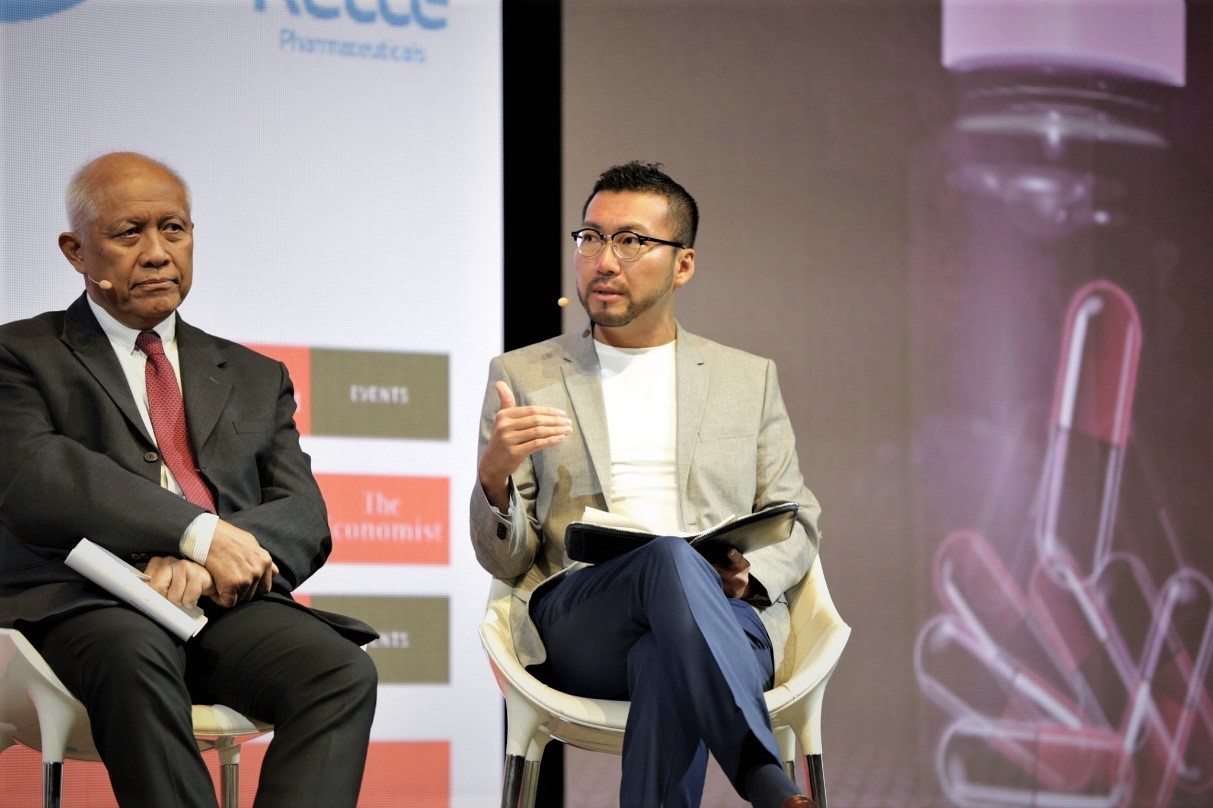
On December 5, 2019, Health and Global Policy Institute (HGPI) CEO and Board Member Mr. Ryoji Noritake attended the Antimicrobial Resistance Summit Asia held by The Economist in Singapore.
Antimicrobial Resistance, or AMR, refers to the phenomena by which bacteria become immune to antimicrobial treatments over time as those treatments are used more and more. Infectious diseases brought on by antimicrobial resistant bacteria can be difficult to treat, and can even be fatal in worst case scenarios.
The problem of AMR is worsening across the world. If current trends continue, it is estimated that by 2050, as many as 10 million people could potentially die of AMR-related causes globally every year.
Mr. Noritake spoke at the panel discussion on AMR and the Sustainable Development Goals in Asia. His remarks included an introduction of the activities of AMR Alliance Japan, established in November 2018 by HGPI and key infectious disease stakeholders in Japan.
AMR Alliance Japan has worked with Alliance members and partner organizations to deepen policy debate around AMR. This work resulted in the July 2019 release of “AMR Alliance Japan Policy Recommendations: The Japanese Government’s Role in Promoting AMR Countermeasures.” Moving forward, the Alliance will take every opportunity to explain these recommendations to AMR policy stakeholders toward concrete policy action on AMR.
HGPI has hosted a number of meetings related to AMR over the past few years. HGPI is committed to promoting further, healthy debate on this pressing global issue.
Top Research & Recommendations Posts
Featured Posts
-
2026-05-18
[Registration Closed] Kick-off Panel Discussion “From Africa and Japan, Drawing from Perspectives Around the World:A Platform for Cultivating a Philosophical Health Dialogue Together” (June 15, 2026)
![[Registration Closed] Kick-off Panel Discussion “From Africa and Japan, Drawing from Perspectives Around the World:A Platform for Cultivating a Philosophical Health Dialogue Together” (June 15, 2026)](https://hgpi.org/en/wp-content/uploads/sites/2/HGPI_20260615_Eyecathch_panel-discussion-From-Japan-and-Africa-in-Discussion-with-the-World_2.png)
-
2026-08-28
[Announcement] The 3rd Kiyoshi Kurokawa Award: Call for Nominations (Deadline: November 30, 2026)
![[Announcement] The 3rd Kiyoshi Kurokawa Award: Call for Nominations (Deadline: November 30, 2026)](https://hgpi.org/en/wp-content/uploads/sites/2/Kiyoshi-Kurokawa-Award_3rd_nominations_eyecatch_caseB_ENG_web_20260929_v0.5.jpg)
-
2026-09-01
[Registration Closed] HGPI Salon 2025-2026 Looking Ahead to the Future of Japan’s Social Security System “Session 6: Japan’s Health Policy through the Lens of Global Security” (October 13, 2026)
![[Registration Closed] HGPI Salon 2025-2026 Looking Ahead to the Future of Japan’s Social Security System “Session 6: Japan’s Health Policy through the Lens of Global Security” (October 13, 2026)](https://hgpi.org/en/wp-content/uploads/sites/2/HGPISalon2025-20266.png)
-
2026-09-17
[Registration Open] (Webinar) The 145th HGPI Seminar “Toward Better AMR Measures at Elderly Care Facilities—Considering Infectious Disease Control in a Super-Aged Society From a Policy Perspective” (October 27, 2026)
![[Registration Open] (Webinar) The 145th HGPI Seminar “Toward Better AMR Measures at Elderly Care Facilities—Considering Infectious Disease Control in a Super-Aged Society From a Policy Perspective” (October 27, 2026)](https://hgpi.org/en/wp-content/uploads/sites/2/HGPIseminar145.png)
-
2026-10-06
[Registration Open] (Webinar) The 146th HGPI Seminar “How We Can Build a Society That Supports Choices Around Organ Donation: Exploring Decision-Making by Citizens and a Multi-Layered Approach Through Strategic Social Marketing” (November 9, 2026)
![[Registration Open] (Webinar) The 146th HGPI Seminar “How We Can Build a Society That Supports Choices Around Organ Donation: Exploring Decision-Making by Citizens and a Multi-Layered Approach Through Strategic Social Marketing” (November 9, 2026)](https://hgpi.org/en/wp-content/uploads/sites/2/HGPI_20261001_Eyecatch_HGPIseminer-146th-1.png)
