

[In the Media] “Hospital ZEB Transition as a Crisis Management Investment: The National Strategic Value Demonstrated by the Pioneering Cases of the Japanese Red Cross Society” (Monthly Magazine ‘Shuchu’, September 30, 2026)
date : 11/6/2026
Tags: Planetary Health

Mr. Yusuke Sakurai, Secretary General of the Japan Zero Carbon Welfare Council, and Mr. Joji Sugawara, Vice President of Health and Global Policy Institute (HGPI), co-authored an article that appears in the “Special Contributions” section of the October 2026 issue of the monthly magazine ‘Shuchu’ (published on September 30, 2026). The article is titled “Hospital ZEB Transition as a Crisis Management Investment: The National Strategic Value Demonstrated by the Pioneering Cases of the Japanese Red Cross Society.” ‘Shuchu’ is written mainly for hospital and clinic administrators. It covers the challenges facing today’s hospitals and medical systems, along with broader societal issues beyond healthcare.
The article looks at the “triple constraint” holding back hospitals across Japan: declining revenues, soaring construction costs, and a lack of investment funds. The authors argue that converting hospitals to Net Zero Energy Buildings (ZEB) is a “crisis management investment.” A ZEB conversion protects hospitals against rising energy costs, keeps care running during disasters, and can be carried out together with the renewal of aging facilities. The article covers four key points.
Key Points:
- Stalled hospital renewal due to aging facilities and rising construction costs
- The climate footprint of healthcare and the risk of rising energy costs
- The Japanese Red Cross Society’s initiatives and the spread of good practices
- Links to policy and wider adoption across the healthcare sector, including:
- alignment with the new Regional Healthcare Vision
- one-stop, cross-ministerial support
- restructuring the Medical Facility Modernization Program with ZEB-level performance requirements
The authors hope the article will encourage people to stop seeing hospital reconstruction as passive renewal and to see it instead as green investment. Such investment can address climate change, energy security, economic resilience, and continuity of care during disasters all at once. As facility restructuring under the new Regional Healthcare Vision gathers pace, they also hope the article will help spread these practices across the healthcare sector, supported by policies that work across ministries.
For more details, please click here (Japanese only)
Top Research & Recommendations Posts
Featured Posts
-
2026-08-28
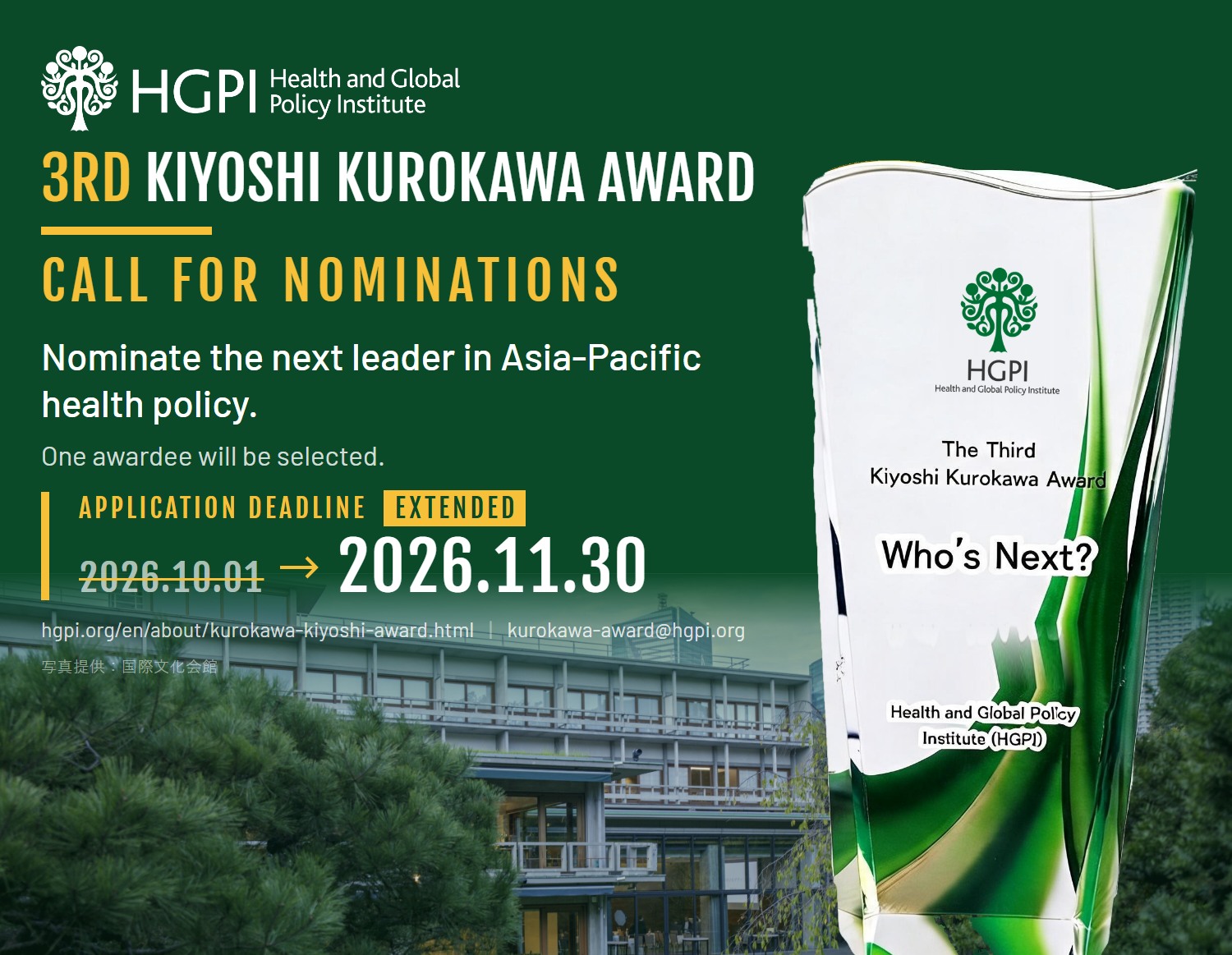
[Announcement] The 3rd Kiyoshi Kurokawa Award: Call for Nominations (Deadline: November 30, 2026)
-
2026-10-06
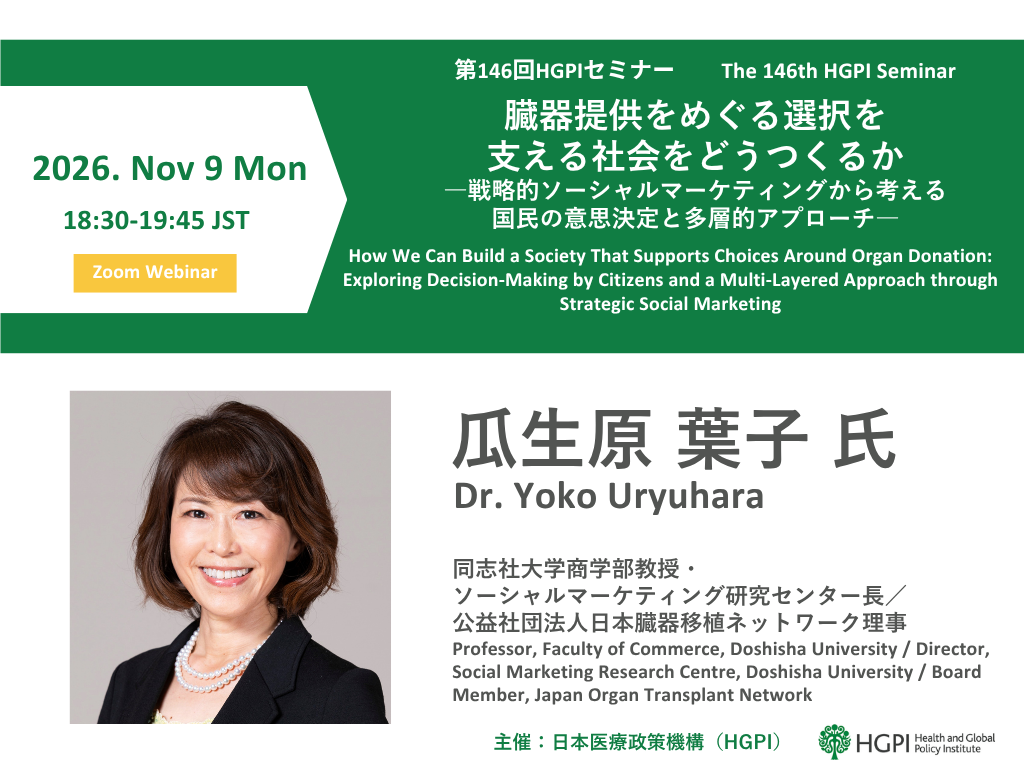
[Registration Open] (Webinar) The 146th HGPI Seminar “How We Can Build a Society That Supports Choices Around Organ Donation: Exploring Decision-Making by Citizens and a Multi-Layered Approach Through Strategic Social Marketing” (November 9, 2026)
-
2026-10-28
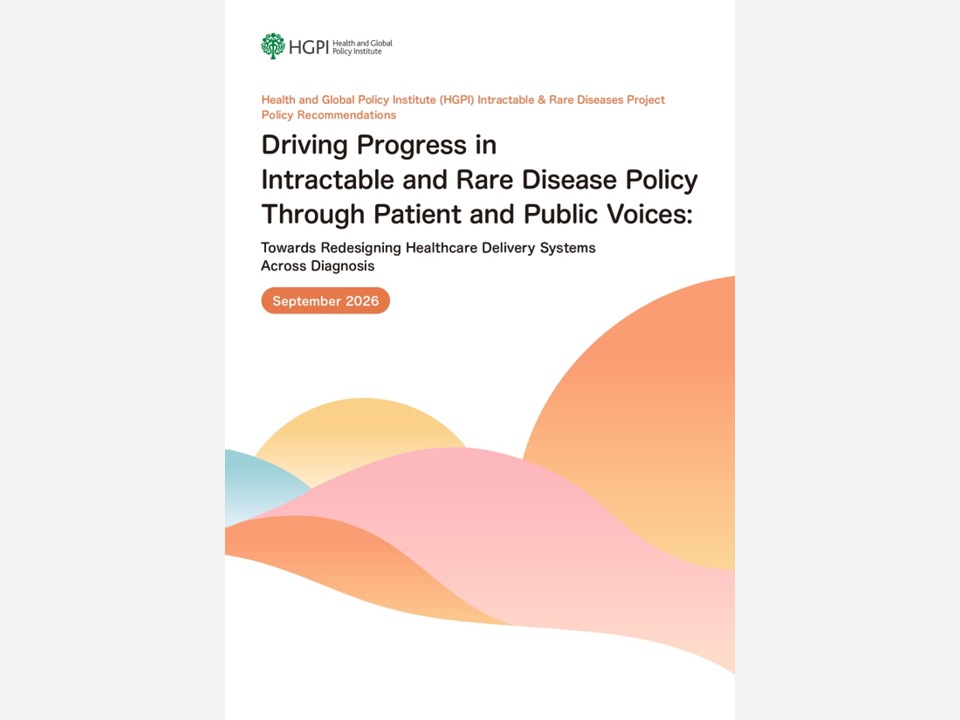
[Policy Recommendations] Driving Progress in Intractable and Rare Disease Policy Through Patient and Public Voices: Towards Redesigning Healthcare Delivery Systems Across Diagnosis (September 29, 2026)
-
2026-11-05
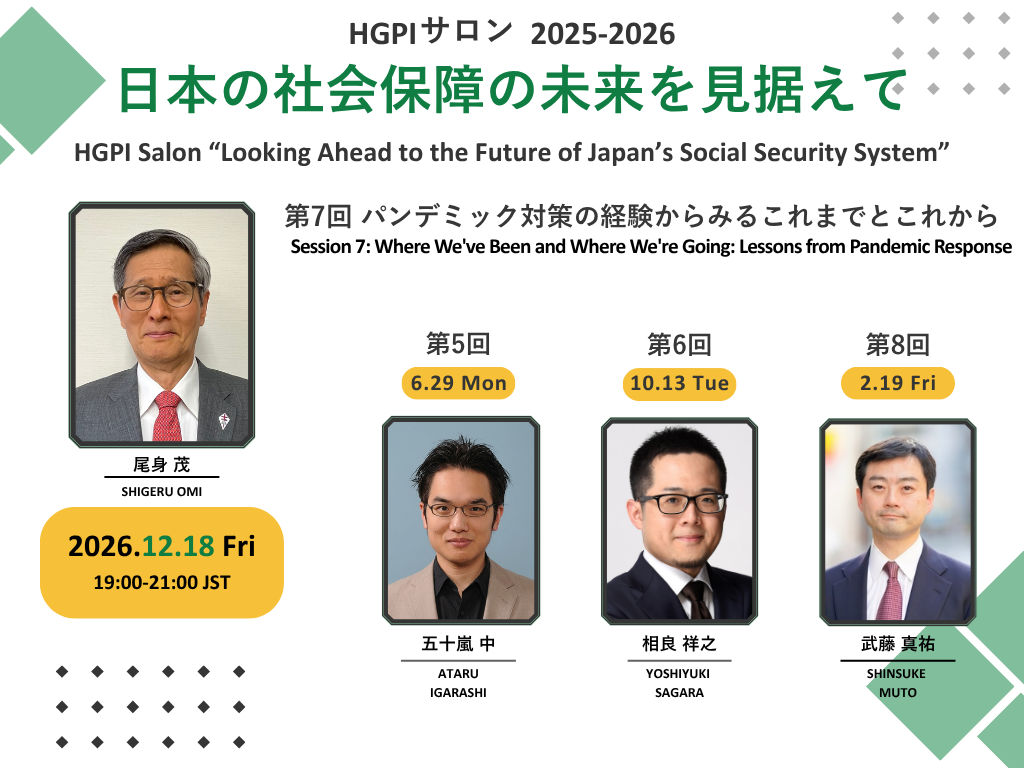
[Registration Open] HGPI Salon 2025-2026 Looking Ahead to the Future of Japan’s Social Security System “Session 7: Where We’ve Been and Where We’re Going: Lessons from Pandemic Response” (December 18, 2026)