


[Policy Recommendations] Towards Strengthening Microbiological Diagnostics as a Foundation for AMR Control (November 24, 2026)
date : 11/20/2026
Tags: AMR

AMR Alliance Japan (Secretariat: Health and Global Policy Institute (HGPI)) has published policy recommendations titled “Towards Strengthening Microbiological Diagnostics as a Foundation for AMR Control.” These recommendations call for strengthening microbiological testing systems to advance antimicrobial resistance (AMR) control.
Microbiological testing identifies causative microorganisms and confirms drug susceptibility. Microbiological testing supports both surveillance and monitoring of AMR bacteria and antimicrobial stewardship, and serves as the foundation for AMR control.
In addition, strengthening testing systems during non-emergency periods also contributes to infectious disease crisis preparedness. The number of tests that a laboratory can perform during an emergency is determined by the levels of staffing, equipment, and quality control that it maintains during non-emergency periods. In light of these roles, microbiological testing systems should be designed as shared infrastructure for society rather than left solely to the efforts of individual facilities.
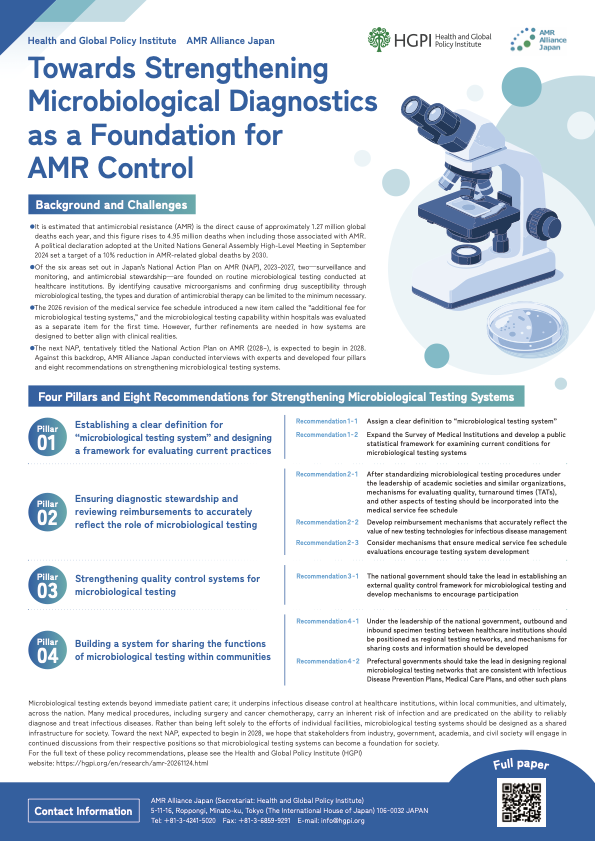
The 2026 revision of the medical service fee schedule introduced the “additional fee for microbiological testing systems,” marking the first time the importance of in-house microbiological testing was recognized through a dedicated item in the medical service fee schedule. However, the staffing and equipment that a microbiological testing system should have are not clearly defined in the medical service fee schedule or other frameworks. Reimbursements that sustain in-house testing systems, mechanisms for external parties to evaluate testing accuracy, and frameworks for sharing testing functions among healthcare institutions in each region are also insufficient. Therefore, based on interviews with experts, HGPI developed four pillars and eight recommendations to address these challenges.
Pillar 1: Establishing a clear definition for “microbiological testing system” and designing a framework for evaluating current practices
- Recommendation 1-1: Assign a clear definition to “microbiological testing system”
- Recommendation 1-2: Expand the Survey of Medical Institutions and develop a public statistical framework for examining current conditions for microbiological testing systems
Pillar 2: Ensuring diagnostic stewardship and reviewing reimbursements to accurately reflect the role of microbiological testing
- Recommendation 2-1: After standardizing microbiological testing procedures under the leadership of academic societies and similar organizations, mechanisms for evaluating quality, turnaround times (TATs), and other aspects of testing should be incorporated into the medical service fee schedule
- Recommendation 2-2: Develop reimbursement mechanisms that accurately reflect the value of new testing technologies for infectious disease management
- Recommendation 2-3: Consider mechanisms that ensure medical service fee schedule evaluations encourage testing system development
Pillar 3: Strengthening quality control systems for microbiological testing
- Recommendation 3-1: The national government should take the lead in establishing an external quality control framework for microbiological testing and develop mechanisms to encourage participation
Pillar 4: Building a system for sharing the functions of microbiological testing within communities
- Recommendation 4-1: Under the leadership of the national government, outbound and inbound specimen testing between healthcare institutions should be positioned as regional testing networks, and mechanisms for sharing costs and information should be developed
- Recommendation 4-2: Prefectural governments should take the lead in designing regional microbiological testing networks that are consistent with Infectious Disease Prevention Plans, Medical Care Plans, and other such plans
With Japan’s next National Action Plan on AMR expected to come into effect in 2028, stakeholders from industry, government, academia, and civil society are encouraged to engage in continued discussions from their respective positions.
For details on the recommendations, please see the PDF below.
Contributors (Titles Omitted; in Japanese syllabary order. Affiliations are current as of the time of participation.)
Kohei Uechi (Deputy Chief Medical Technologist, Department of Clinical Laboratory and Deputy Director, Department of Infection Control, Kanazawa University Hospital)
Yuki Uehara (Professor, Department of Clinical Laboratory Medicine, Graduate School of Medicine, Juntendo University)
Yoshifumi Uwamino (Assistant Professor, Department of Laboratory Medicine, School of Medicine, Keio University)
Yoshihito Otsuka (Director, Clinical Laboratory Management Department, Medical Administration Headquarters, Medical Corporation Tesshokai / Director, Clinical Laboratory Department, Kameda General Hospital, Medical Corporation Tesshokai / Director and Club Vice President, Orca Kamogawa FC Co., Ltd. / Clinical Professor, Tsukuba International University / Clinical Professor, Tokyo University of Technology)
Maki Kitagawa (Section Chief, Product Development Department, Kyokuto Pharmaceutical Industrial Co., Ltd.)
Yoshiaki Gu (Professor, Department of Infectious Diseases, Graduate School of Medical and Dental Sciences, Institute of Science Tokyo / Director, Center for Infectious Disease Education and Analysis (TCIDEA), Institute of Science Tokyo / Department of Infectious Diseases and Division of Infection Prevention and Control, Institute of Science Tokyo Hospital)
Miki Nagao (Professor, Department of Clinical Laboratory Medicine, Graduate School of Medicine, Kyoto University / Director, Department of Clinical Laboratory and Department of Infection Control and Prevention, Kyoto University Hospital)
Yasushi Nakazawa (Director, Infection Control Department, The Jikei University Hospital)
Itaru Nishizuka (Director, Division of Infectious Disease Control Coordination, Bureau of Public Health, Tokyo Metropolitan Government)
Nobuaki Matsunaga (Deputy Director and Chief, Division of Clinical Epidemiology, AMR Clinical Reference Center, National Center for Global Health and Medicine, Japan Institute for Health Security)
Supporting organizations and companies (in Japanese syllabary order)
Japan Association of Clinical Reagents Industries
Eiken Chemical Co., Ltd.
Sysmex Corporation
Please note that this policy recommendation was compiled by Health and Global Policy Institute in its capacity as an independent health policy think tank and is based on discussions at meetings and interviews held for this project. It does not, in any capacity, represent the opinions of participating experts or speakers, or the organizations to which they are affiliated.
 [Policy Recommendations] Towards Strengthening Microbiological Diagnostics as a Foundation for AMR Control |
 [Policy Recommendations] Towards Strengthening Microbiological Diagnostics as a Foundation for AMR Control |
Top Research & Recommendations Posts
Featured Posts
-
2026-08-28
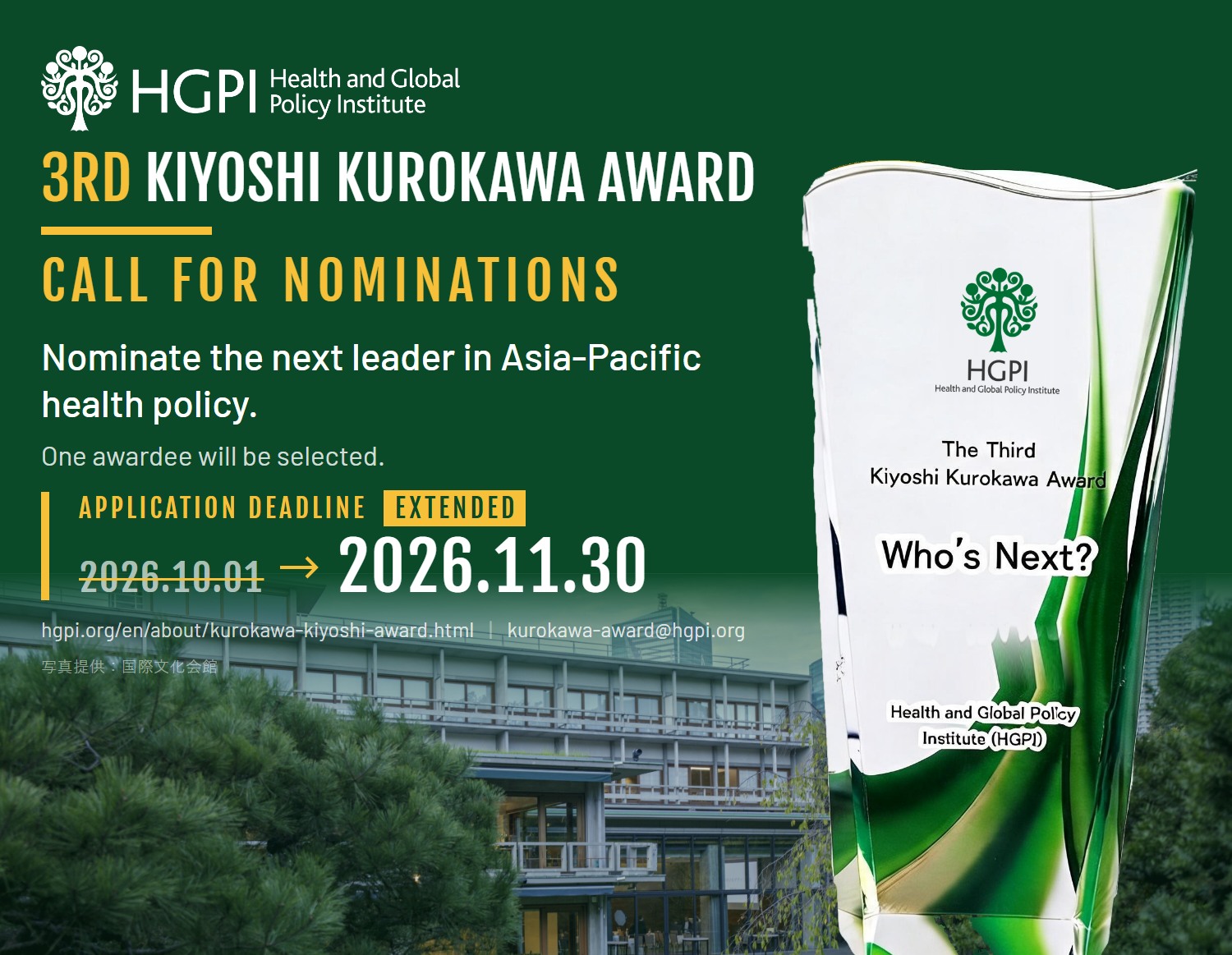
[Announcement] The 3rd Kiyoshi Kurokawa Award: Call for Nominations (Deadline: November 30, 2026)
-
2026-11-05
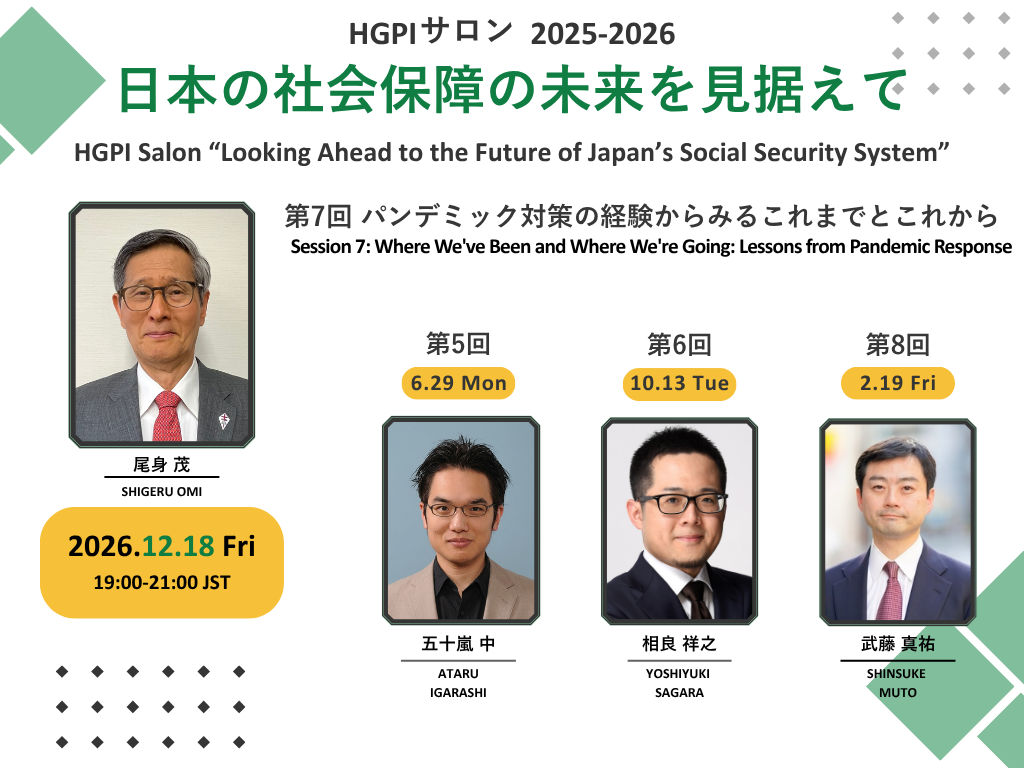
[Registration Open] HGPI Salon 2025-2026 Looking Ahead to the Future of Japan’s Social Security System “Session 7: Where We’ve Been and Where We’re Going: Lessons from Pandemic Response” (December 18, 2026)
-
2026-11-13
[Discussion Points] Addressing AMR Measures for an Era of Healthy Longevity: Ensuring Safety and Security for Older Adults in a Super-Aged Society (October 23, 2026)
-
2026-11-20
[Policy Recommendations] Towards Strengthening Microbiological Diagnostics as a Foundation for AMR Control (November 24, 2026)
