


[In the Media] “Asu e no Kangae (Reflections for Tomorrow)” (The Yomiuri Shimbun, August 10, 2026)
date : 8/24/2026
Tags: Women's Health

![[In the Media] “Asu e no Kangae (Reflections for Tomorrow)” (The Yomiuri Shimbun, August 10, 2026)](https://hgpi.org/en/wp-content/uploads/sites/2/eyecatch_sakamoto-11.jpg)
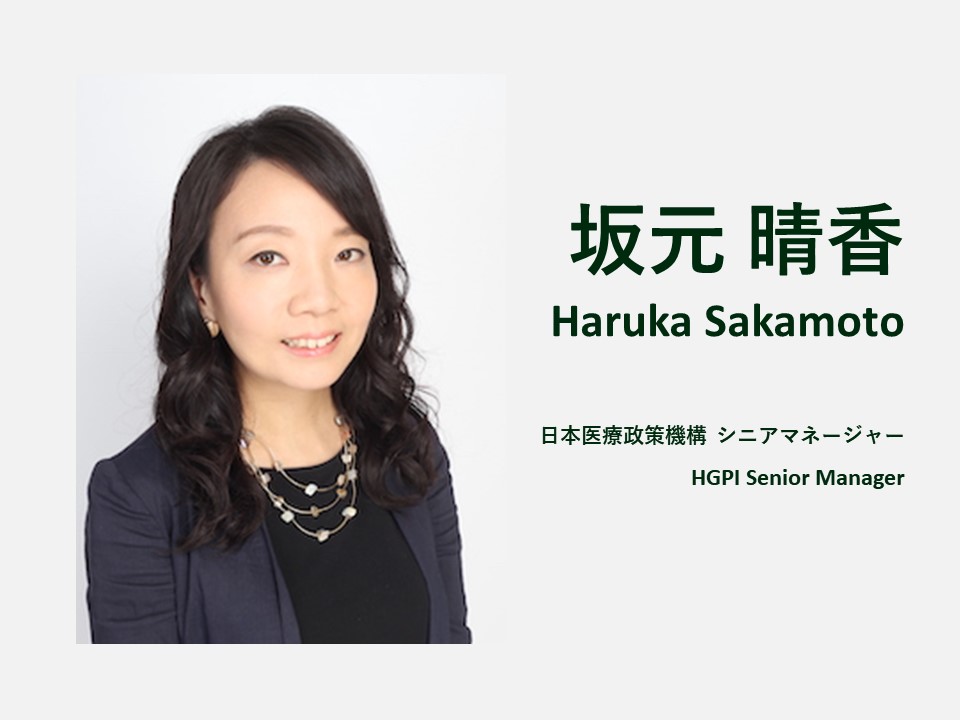
On August 10, 2026, an interview with Dr. Haruka Sakamoto, Senior Manager at Health and Global Policy Institute (HGPI), was published in “Asu e no Kangae (Reflections for Tomorrow),” an opinion feature in the morning edition of The Yomiuri Shimbun.
According to the preliminary vital statistics released by the Ministry of Health, Labour and Welfare in June 2026, 671,236 Japanese children were born in 2025, marking the tenth consecutive year in which the figure has fallen to a record low. Drawing on her research on marriage and family from a public health perspective, as well as her earlier experience as a medical officer responsible for child-rearing policy at the Ministry of Health, Labour and Welfare, Dr. Sakamoto examines the structural drivers of Japan’s declining birth rate and the policy responses required.
Dr. Sakamoto identifies the rise in the number of people who never marry as the single largest driver of the declining birth rate. Because the overwhelming majority of children in Japan are born to married couples, a decline in marriage translates directly into fewer births. The National Fertility Survey conducted by the National Institute of Population and Social Security Research in 2021 found that roughly 80 percent of unmarried respondents intend to marry at some point. Yet the proportion of people who have never married by the age of 50 reached 28.3 percent for men and 17.8 percent for women as of 2020, suggesting that a substantial number of people who wish to marry are unable to do so.
She further shows, drawing on studies based on the same survey, that income, employment status, and educational attainment shape both the likelihood of marriage and the likelihood of having children. Among men, those in lower income brackets are far more likely to have no partner and to report no interest in a relationship, and marriage rates differ markedly by income. Among women above a certain income threshold, higher earnings are likewise associated with higher rates of marriage. Across both sexes, stable employment and an economic foundation emerge as decisive factors. The same pattern holds for childbearing, with the share of men without children rising as income falls.
The article also questions the view that society should simply be redesigned around an assumption of population decline. Dr. Sakamoto argues that it would be irresponsible for the current working generation, which has benefited from Japan’s population size, to pass on a diminished society to the next generation without taking adequate measures. She notes that child-rearing support and measures to address the declining birth rate are distinct policy objectives, and that expanding child allowances alone is unlikely to change reproductive decisions. What is needed, she argues, is an environment in which people can have and raise children with confidence, encompassing stable employment and income, regular wage increases, adequate housing, and security in old age.
Related Posts
-
2025-07-30
[In the Media] “Long-Distance Childbirth Accelerates in Rural Areas as Maternity Facilities Decline by 20% Over Nine Years” (Nikkei, July 26, 2025)
-
2024-11-11
[Discussion Points] Women’s Health Project Expert Meeting “The Ideal System for Perinatal Medical Care in Japan in the Era of Declining Birth Rates” (November 11, 2024)
-
2024-08-13
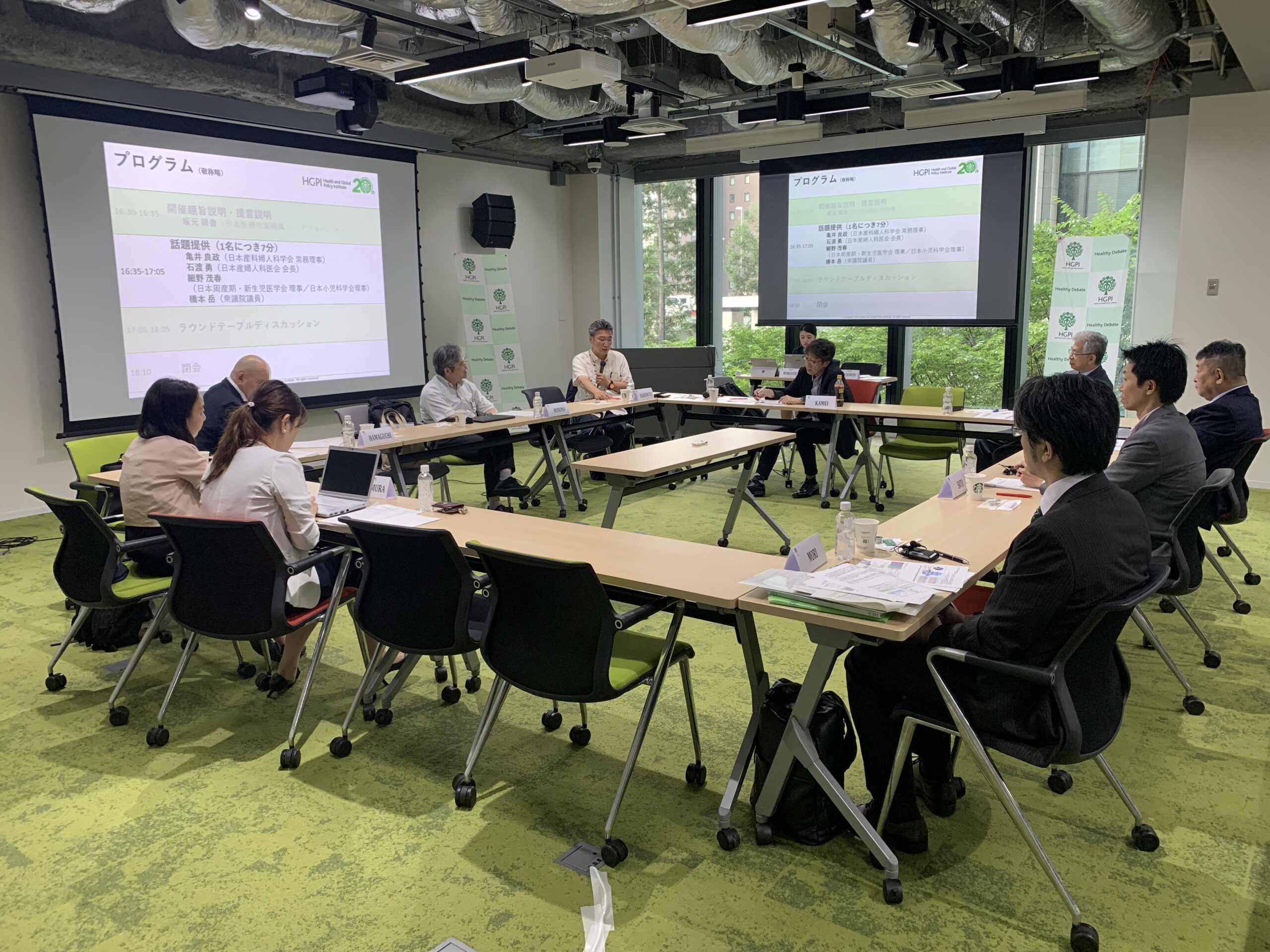
[Event Report] Expert Meeting on The Ideal System for Perinatal Medical Care in Japan in the Era of Declining Birth Rates (July 17, 2024)
-
2023-09-15
[Urgent Recommendations] The Ideal System for Obstetric Care in Japan in the Era of Birthrate Decline (September 15, 2023)
Top Research & Recommendations Posts
Featured Posts
-
2026-05-18
[Registration Closed] Kick-off Panel Discussion “From Africa and Japan, Drawing from Perspectives Around the World:A Platform for Cultivating a Philosophical Health Dialogue Together” (June 15, 2026)
![[Registration Closed] Kick-off Panel Discussion “From Africa and Japan, Drawing from Perspectives Around the World:A Platform for Cultivating a Philosophical Health Dialogue Together” (June 15, 2026)](https://hgpi.org/en/wp-content/uploads/sites/2/HGPI_20260615_Eyecathch_panel-discussion-From-Japan-and-Africa-in-Discussion-with-the-World_2.png)
-
2026-08-28
[Announcement] The 3rd Kiyoshi Kurokawa Award: Call for Nominations (Deadline: November 30, 2026)
![[Announcement] The 3rd Kiyoshi Kurokawa Award: Call for Nominations (Deadline: November 30, 2026)](https://hgpi.org/en/wp-content/uploads/sites/2/Kiyoshi-Kurokawa-Award_3rd_nominations_eyecatch_caseB_ENG_web_20260929_v0.5.jpg)
-
2026-09-01
[Registration Closed] HGPI Salon 2025-2026 Looking Ahead to the Future of Japan’s Social Security System “Session 6: Japan’s Health Policy through the Lens of Global Security” (October 13, 2026)
![[Registration Closed] HGPI Salon 2025-2026 Looking Ahead to the Future of Japan’s Social Security System “Session 6: Japan’s Health Policy through the Lens of Global Security” (October 13, 2026)](https://hgpi.org/en/wp-content/uploads/sites/2/HGPISalon2025-20266.png)
-
2026-09-17
[Registration Open] (Webinar) The 145th HGPI Seminar “Toward Better AMR Measures at Elderly Care Facilities—Considering Infectious Disease Control in a Super-Aged Society From a Policy Perspective” (October 27, 2026)
![[Registration Open] (Webinar) The 145th HGPI Seminar “Toward Better AMR Measures at Elderly Care Facilities—Considering Infectious Disease Control in a Super-Aged Society From a Policy Perspective” (October 27, 2026)](https://hgpi.org/en/wp-content/uploads/sites/2/HGPIseminar145.png)
-
2026-10-06
[Registration Open] (Webinar) The 146th HGPI Seminar “How We Can Build a Society That Supports Choices Around Organ Donation: Exploring Decision-Making by Citizens and a Multi-Layered Approach Through Strategic Social Marketing” (November 9, 2026)
![[Registration Open] (Webinar) The 146th HGPI Seminar “How We Can Build a Society That Supports Choices Around Organ Donation: Exploring Decision-Making by Citizens and a Multi-Layered Approach Through Strategic Social Marketing” (November 9, 2026)](https://hgpi.org/en/wp-content/uploads/sites/2/HGPI_20261001_Eyecatch_HGPIseminer-146th-1.png)
