


[Activity Report] Participation in the Prince Mahidol Award Conference 2026 (January 29, 2026)
date : 3/6/2026
Tags: Global Health, Global Health Strategy, Planetary Health

![[Activity Report] Participation in the Prince Mahidol Award Conference 2026 (January 29, 2026)](https://hgpi.org/en/wp-content/uploads/sites/2/HGPI_20260129_PMAC-scaled-2.jpg)
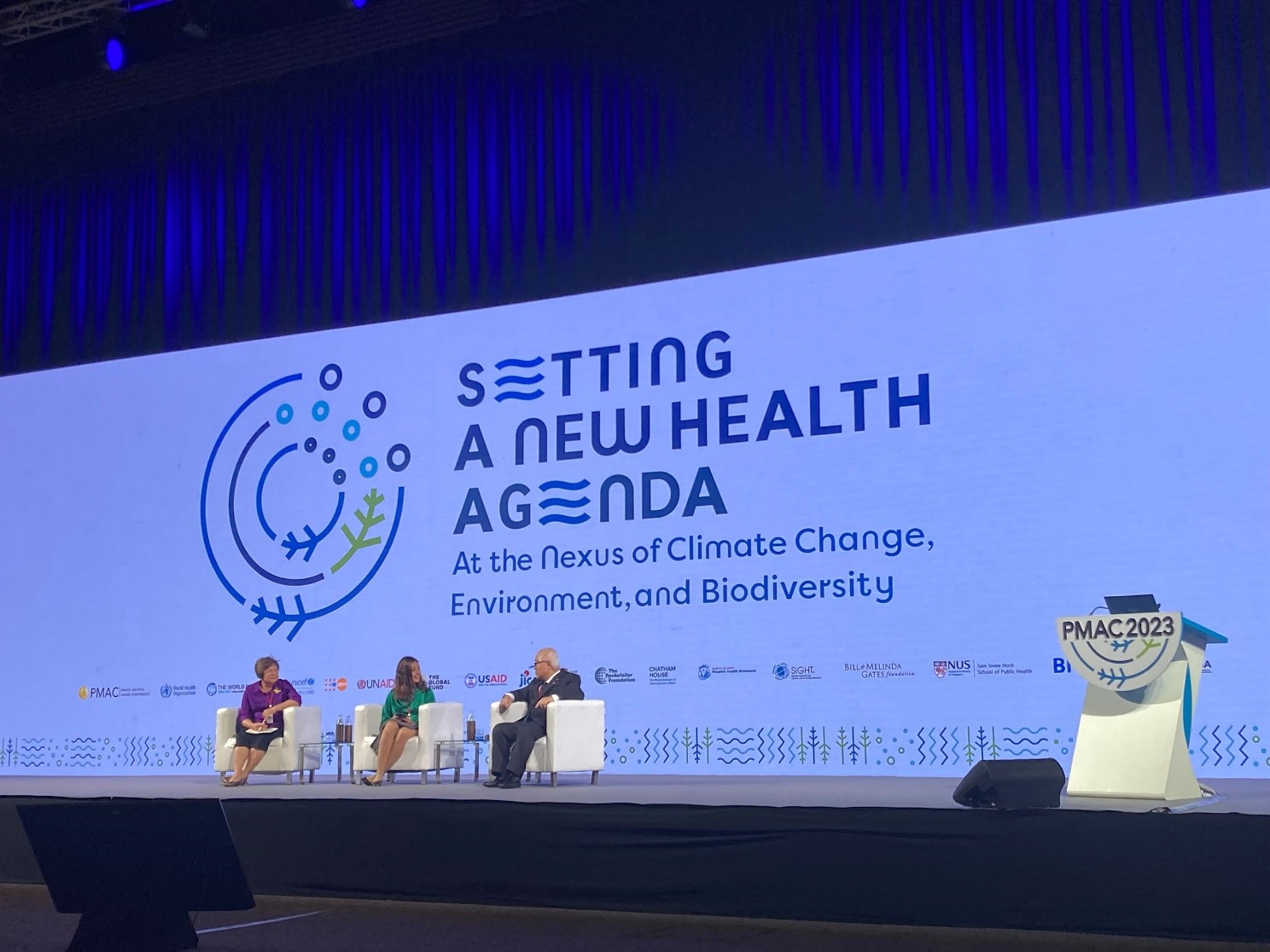
From January 26 to 31, 2026, the Global Health Strategy Team of Health and Global Policy Institute (HGPI) participated in the Prince Mahidol Award Conference 2026 (PMAC 2026), held in Bangkok, Thailand. PMAC is one of the leading international conferences in the field of global health, hosted by the Royal Thai Government and the Prince Mahidol Award Foundation, and co-organized by partner institutions including the Japan International Cooperation Agency (JICA).
The conference is held annually to recognize individuals and organizations that have contributed to global health, while convening stakeholders from governments, international organizations, academia, the private sector, NGOs, and patient and community groups from around the world. Through the sharing of country experiences and multi-stakeholder dialogue, the conference provides a platform to address key global health challenges.
The theme of PMAC 2026 was “Navigating Global Demographic Transition through Innovative Policy: An Equity-Centered Approach.” Against the backdrop of global demographic shifts—including population aging, declining fertility, changes in migration, growth in youth populations, and urbanization—the conference aimed to examine their impacts on health, economies, societies, and the environment, and to share and discuss feasible policy solutions across the life course.
Discussions emphasized the importance of reframing demographic change not as a social or economic “burden,” but as an “opportunity” through appropriate policies and investments. Key perspectives included strategic investment in human capital such as education, vocational training, and lifelong learning; the development of social and urban infrastructure that supports intergenerational collaboration; and the transformation of health systems to address noncommunicable diseases and long-term care needs. One example highlighted was bottom-up investment in human capital to realize a “silver dividend” in aging society. The silver dividend refers to the economic and social benefits generated when healthy and experienced older adults actively contribute to society—through work, consumption, and the sharing of knowledge and experience—thereby supporting economic growth and social development. Rather than concentrating resources on a limited elite, this approach strengthens foundational systems such as universal literacy and primary health care, generating high returns on investment (ROI), advancing human rights, and serving as an effective economic strategy that can also gain support from fiscal authorities.
The conference also addressed inclusive policy design and innovative interventions to ensure equity for populations disproportionately affected by demographic change, including women, persons with disabilities, migrants, Indigenous peoples, and gender minorities. Participants noted that insufficient data on these vulnerable and at-risk populations makes them difficult to capture in systems and statistics, contributing to delays in policy responses and resource allocation. The importance of strengthening basic population data, including birth and death registration, and using disaggregated data by disability status, migration status, and other characteristics to make challenges visible was widely shared. In addition, to challenge the fixed view of older persons as passive “dependents,” discussions highlighted the need to generate and publish data that captures older people’s social contributions, such as caring for grandchildren and supporting family members. Producing and sharing such evidence was identified as key to avoiding intergenerational and intergroup tensions and strengthening solidarity based on mutual support, thereby transforming demographic change into a social and economic opportunity.
Overall, discussions at PMAC 2026 underscored that demographic change should not be viewed as an unavoidable crisis, but as an opportunity to rebuild equitable societies by “counting everyone and investing in everyone.” This approach supports long-term economic sustainability while ensuring access to health care and social protection without exclusion based on age or other characteristics. As a civil society organization from Japan, HGPI will continue to contribute through international dialogue and knowledge sharing so that these global discussions lead to concrete policy development and implementation, ultimately improving the quality of life of citizens and patients.
- SUB-THEME 1: Demographic Transitions, Social Equity, and Population Diversity
- SUB-THEME 2: Demographic Shifts and Health System Transformation
- SUB-THEME 3: Governing Health for People and Planet: Geopolitics in Flux
For more details, please see the following link.
https://pmac-2026.com/
Top Research & Recommendations Posts
Featured Posts
-
2026-05-18
[Registration Closed] Kick-off Panel Discussion “From Africa and Japan, Drawing from Perspectives Around the World:A Platform for Cultivating a Philosophical Health Dialogue Together” (June 15, 2026)
![[Registration Closed] Kick-off Panel Discussion “From Africa and Japan, Drawing from Perspectives Around the World:A Platform for Cultivating a Philosophical Health Dialogue Together” (June 15, 2026)](https://hgpi.org/en/wp-content/uploads/sites/2/HGPI_20260615_Eyecathch_panel-discussion-From-Japan-and-Africa-in-Discussion-with-the-World_2.png)
-
2026-08-28
[Announcement] The 3rd Kiyoshi Kurokawa Award: Call for Nominations (Deadline: November 30, 2026)
![[Announcement] The 3rd Kiyoshi Kurokawa Award: Call for Nominations (Deadline: November 30, 2026)](https://hgpi.org/en/wp-content/uploads/sites/2/Kiyoshi-Kurokawa-Award_3rd_nominations_eyecatch_caseB_ENG_web_20260929_v0.5.jpg)
-
2026-09-01
[Registration Closed] HGPI Salon 2025-2026 Looking Ahead to the Future of Japan’s Social Security System “Session 6: Japan’s Health Policy through the Lens of Global Security” (October 13, 2026)
![[Registration Closed] HGPI Salon 2025-2026 Looking Ahead to the Future of Japan’s Social Security System “Session 6: Japan’s Health Policy through the Lens of Global Security” (October 13, 2026)](https://hgpi.org/en/wp-content/uploads/sites/2/HGPISalon2025-20266.png)
-
2026-09-17
[Registration Open] (Webinar) The 145th HGPI Seminar “Toward Better AMR Measures at Elderly Care Facilities—Considering Infectious Disease Control in a Super-Aged Society From a Policy Perspective” (October 27, 2026)
![[Registration Open] (Webinar) The 145th HGPI Seminar “Toward Better AMR Measures at Elderly Care Facilities—Considering Infectious Disease Control in a Super-Aged Society From a Policy Perspective” (October 27, 2026)](https://hgpi.org/en/wp-content/uploads/sites/2/HGPIseminar145.png)
-
2026-10-06
[Registration Open] (Webinar) The 146th HGPI Seminar “How We Can Build a Society That Supports Choices Around Organ Donation: Exploring Decision-Making by Citizens and a Multi-Layered Approach Through Strategic Social Marketing” (November 9, 2026)
![[Registration Open] (Webinar) The 146th HGPI Seminar “How We Can Build a Society That Supports Choices Around Organ Donation: Exploring Decision-Making by Citizens and a Multi-Layered Approach Through Strategic Social Marketing” (November 9, 2026)](https://hgpi.org/en/wp-content/uploads/sites/2/HGPI_20261001_Eyecatch_HGPIseminer-146th-1.png)
