

[Event Report] HGPI-IHJ International Health Security Dialogue (IHS Dialogue) 1st Meeting: “Biosecurity” (November 16, 2026)
date : 11/20/2026
Tags: Other Activities

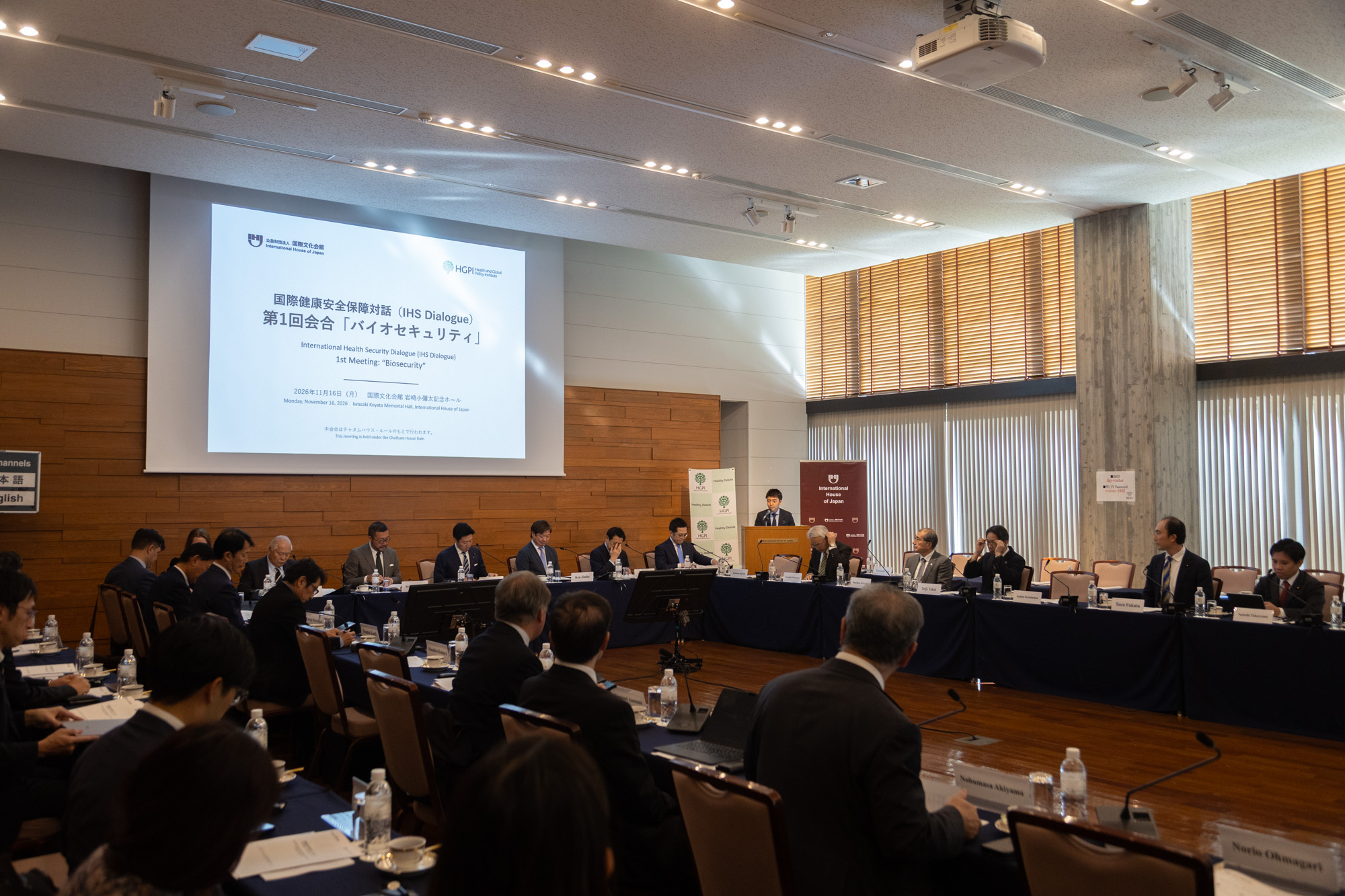
Health and Global Policy Institute (HGPI), in collaboration with International House of Japan (IHJ), launched the International Health Security Dialogue (IHS Dialogue), a new policy dialogue framework connecting Japan’s health and security communities. Its first meeting, on the theme of “Biosecurity,” was held on November 16, 2026.
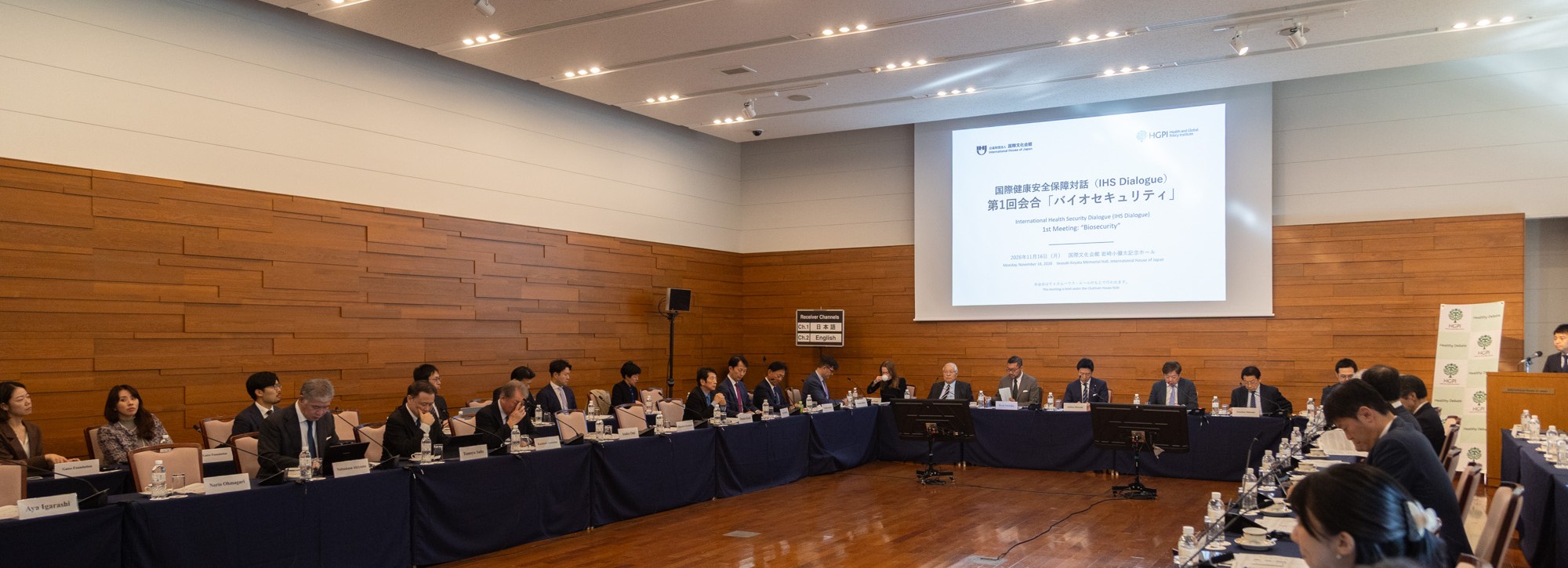
The COVID-19 pandemic showed that health crises threaten not only lives and health but also the economy, society, diplomacy, and national security. Rapid advances in synthetic biology and AI have also heightened the risk that artificially modified or edited biological agents could threaten human life. In Japan, however, people working on health policy and on security policy have had few opportunities to talk across organizational and policy boundaries. The IHS Dialogue was created as a forum where both communities can discuss global health issues from the perspective of international health security.
The meeting was an invitation-only roundtable held under the Chatham House Rule. Participants included Diet members, policymakers, experts, and representatives from industry and the media. The discussion was organized into three sessions:
- Session 1: “AI and Biosecurity: Opportunities and Threats”
- Session 2: “Leveraging Foreign Assistance in an Era of National Security: Aid within the Security Apparatus and Investments that Build Soft Power” (organized by the Council on Foreign Relations [CFR])
- Session 3: “Japan’s Security and Biosecurity: The International Environment Surrounding Japan, Revision of the Three Security Documents, and Cooperation with the United States and Like-minded Countries”
In his opening remarks, Prof. Ken Jimbo (Managing Director, IHJ) explained why the dialogue focuses on “international health security.” He acknowledged that sovereign states pursue their own national health security. Even so, the dialogue aims to explore where countries, particularly allies and like-minded partners, can cooperate. He also noted that biosafety (preventing unintended pathogen releases from laboratories) and biodefense (preparing for deliberate attacks) have long been discussed separately, and that both risks are now rising simultaneously as AI and synthetic biology advance. He expressed hope for candid discussion across disciplines.
Mr. Fumio Kishida (Member of the House of Representatives / Former Prime Minister of Japan) then delivered a video message, and Mr. Akihisa Shiozaki (State Minister for Digital Transformation and State Minister of the Cabinet Office) gave guest remarks.
Session 1 started from the point that advances in AI and synthetic biology now allow even small actors to create serious biological threats. Participants discussed a shift toward pathogen-agnostic preparedness and exchanged views on:
- Governance of synthetic DNA and related materials in coordination with allied and like-minded countries
- Strengthening surveillance systems and intelligence capabilities
- Building systems for research and development, manufacturing, and stockpiling of medicines and vaccines
- Communication with civil society
- Joint threat assessment by the security and public health communities, and coordination across ministries
Session 2 was organized by CFR and drew on the questions raised in CFR’s strategic review of foreign policy approaches to global health. Many donor governments are cutting foreign assistance while integrating their remaining, limited aid into broader foreign policy strategies. Yet these shifts have not always been accompanied by a clear outline of the diplomatic, economic, or security goals they are meant to achieve. Against this backdrop, experts from Japan and the United States exchanged views on:
- Opportunities created by the securitization of foreign aid, and concerns that areas with less visible short-term returns, such as universal health coverage (UHC), may be deprioritized
- Rigorous evaluation of aid effectiveness, and designing mechanisms that donor countries themselves would rely on
- Building soft power by responding to partner countries’ needs, and explaining its value to citizens both at home and in partner countries
- Integrating a biosecurity perspective, including the management of dual-use materials and export controls, into international public health cooperation
- Strengthening Japan’s own health security capabilities through human resource development, clinical trial networks, and partnerships with the private sector
- The transition from aid dependence toward health sovereignty, and balancing immediate security responses with long-term investment
Session 3 looked ahead to the revision of Japan’s three security documents: the National Security Strategy, the National Defense Strategy, and the Defense Buildup Program. Participants discussed:
- Strengthening medical capabilities for contingencies, including cooperation with civilian hospitals and with allied and like-minded countries
- First response to CBRNE (chemical, biological, radiological, nuclear, and explosive) incidents
- Addressing dependence on specific countries in pharmaceutical supply chains, including active pharmaceutical ingredients for antimicrobials
- Civil protection and strengthening societal resilience
- Engagement in international frameworks such as the Coalition for Epidemic Preparedness Innovations (CEPI)
In his closing remarks, Mr. Ryoji Noritake (Chair, HGPI) drew on his experience in medical humanitarian assistance, where aid went beyond humanitarian relief and was guided by strategic thinking. He noted that bringing different sectors together had shown that many policy options are available. He also emphasized the important role private think tanks can play. Under the banner of “forward-looking pacifism” and “strategic pacifism,” he said HGPI will continue the dialogue with IHJ so that Japan’s international cooperation benefits both partner countries and Japan.
IHJ and HGPI will organize the issues raised at this meeting and carry them forward into future dialogues.
[Overview]
- Date & Time: Monday, November 16, 2026; 13:30-18:00 JST
- Format: Invitation-only roundtable (Chatham House Rule)
- Venue: Iwasaki Koyata Memorial Hall, International House of Japan (5-11-16 Roppongi, Minato-ku, Tokyo)
- Language: Japanese and English (with interpretation)
- Organized by: International House of Japan, Health and Global Policy Institute
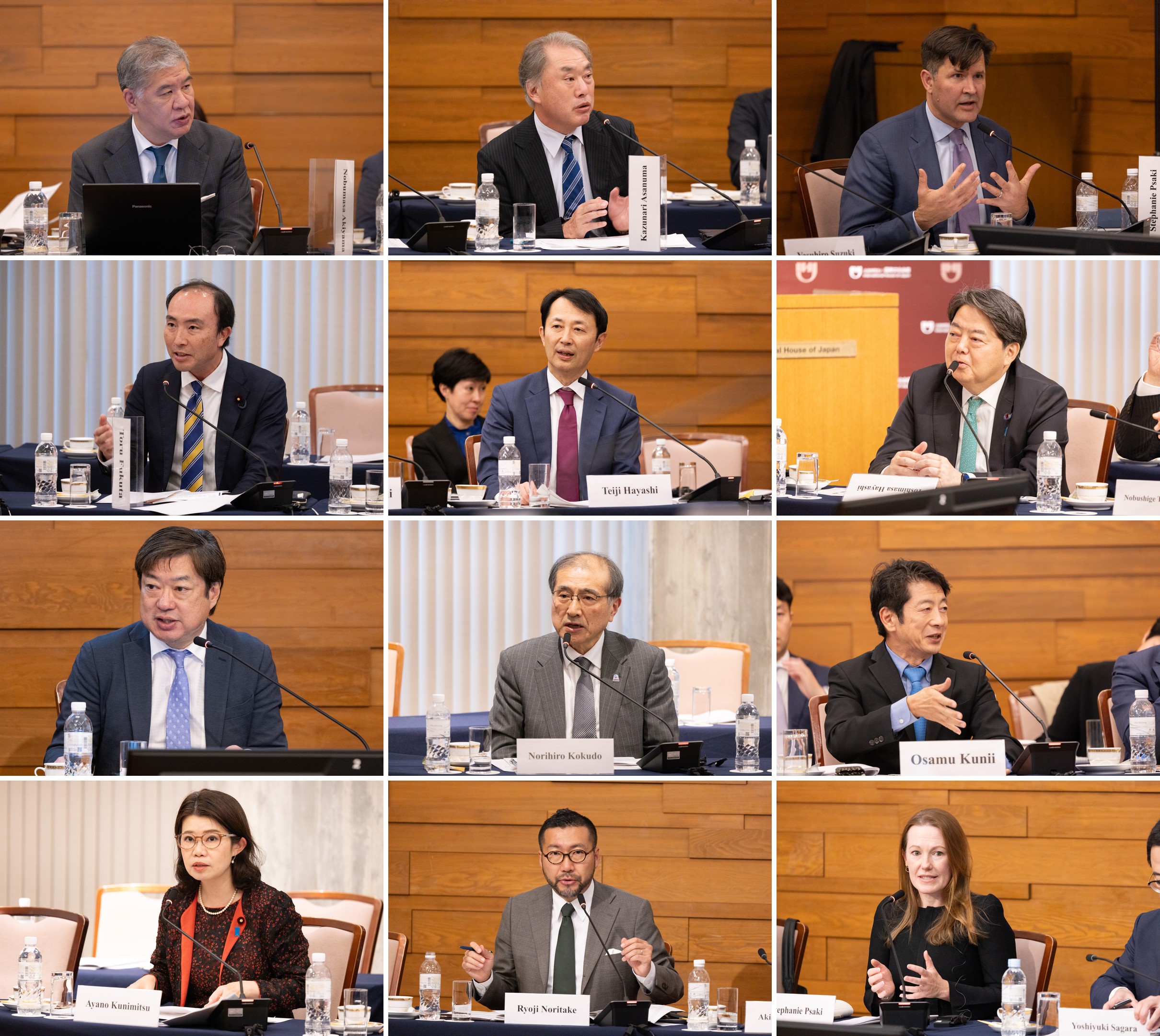
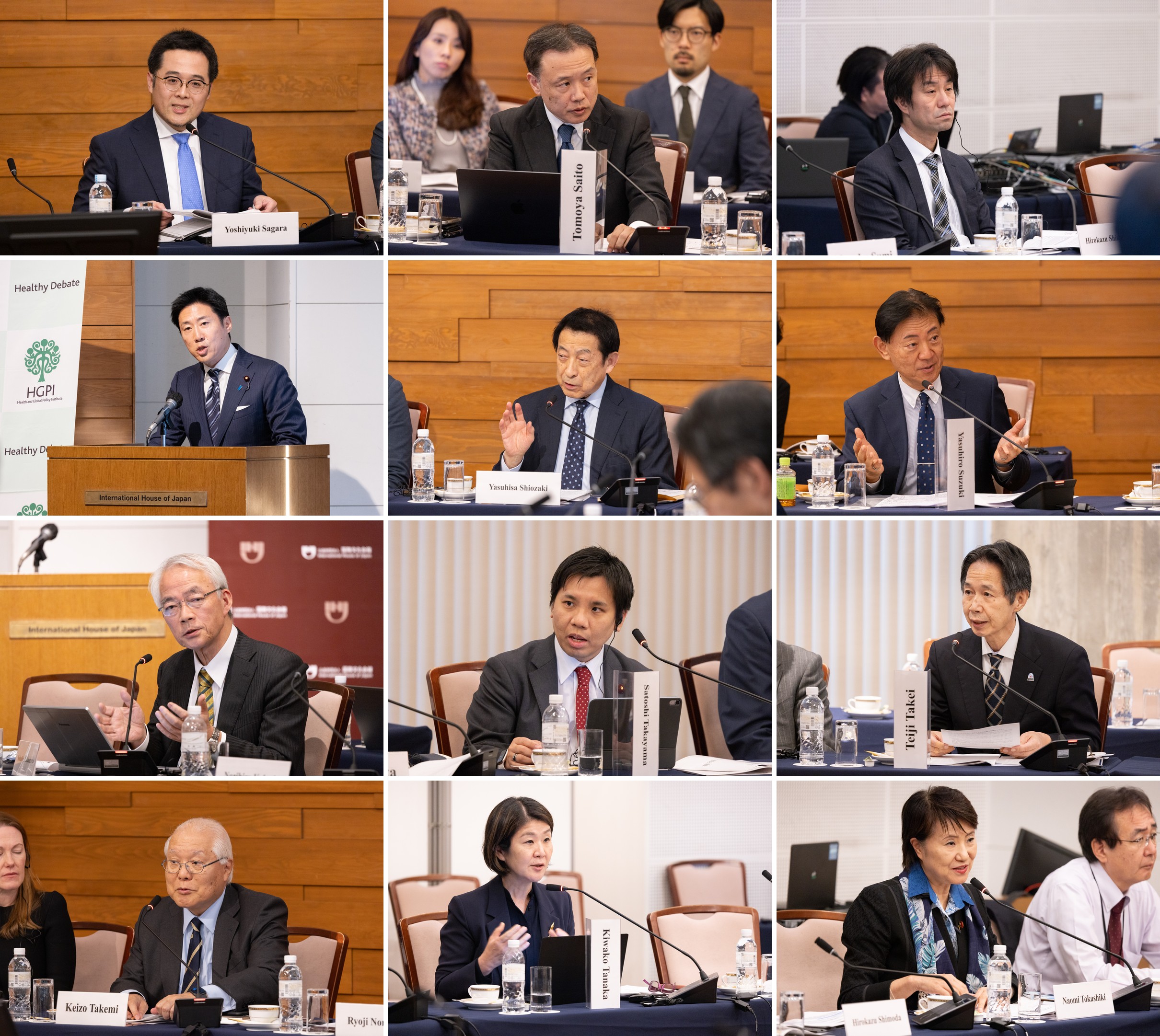
(Photographed by: Kazunori Izawa)
Top Research & Recommendations Posts
Featured Posts
-
2026-08-28
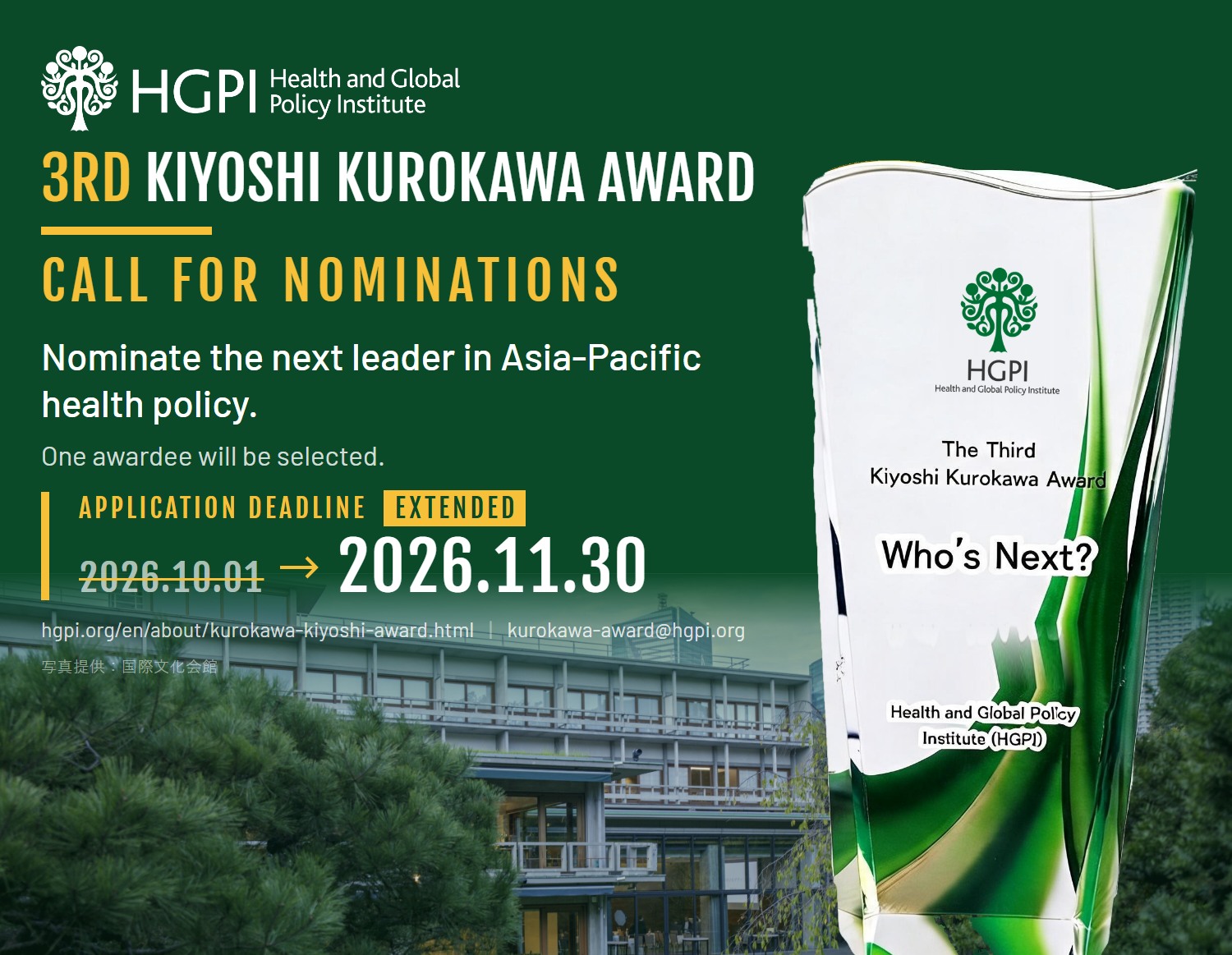
[Announcement] The 3rd Kiyoshi Kurokawa Award: Call for Nominations (Deadline: November 30, 2026)
-
2026-11-05
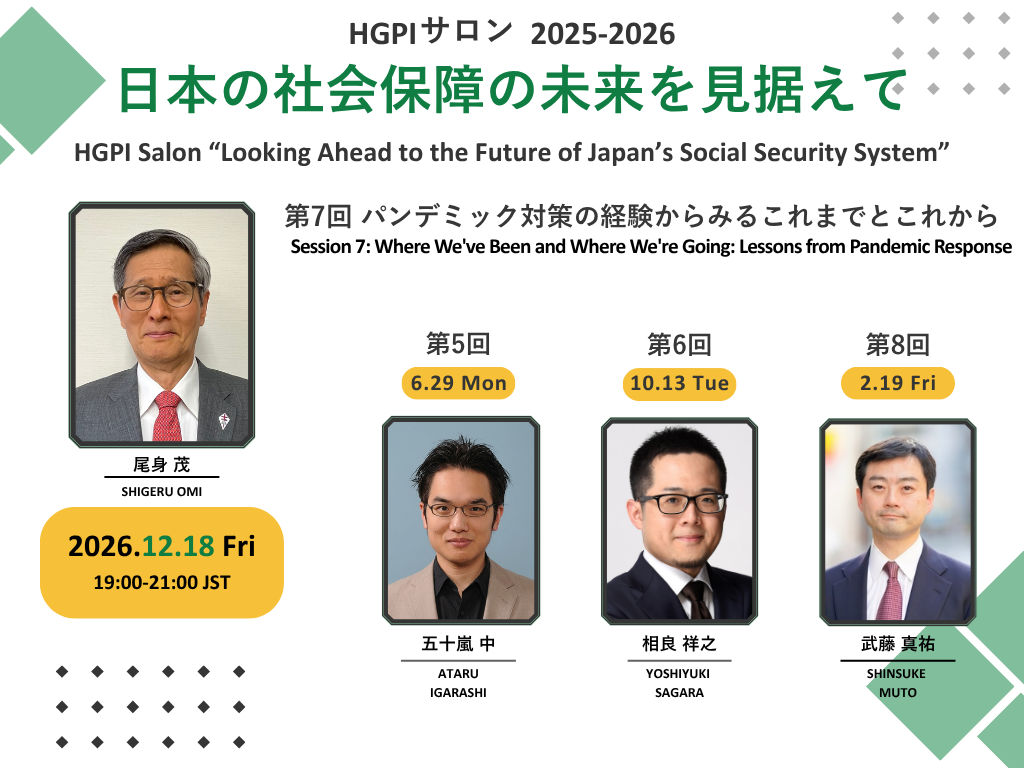
[Registration Open] HGPI Salon 2025-2026 Looking Ahead to the Future of Japan’s Social Security System “Session 7: Where We’ve Been and Where We’re Going: Lessons from Pandemic Response” (December 18, 2026)
-
2026-11-13
[Discussion Points] Addressing AMR Measures for an Era of Healthy Longevity: Ensuring Safety and Security for Older Adults in a Super-Aged Society (October 23, 2026)
-
2026-11-20
[Policy Recommendations] Towards Strengthening Microbiological Diagnostics as a Foundation for AMR Control (November 24, 2026)