

[Research Report] AMR Policy Update #12: Lessons Learned from the Norwegian Cancer Society (Part 2): Cancer Control and AMR (November 24, 2026)
date : 11/24/2026
Tags: AMR

The Norwegian Cancer Society (NCS), which has long been an active group in cancer control, has in recent years placed particular emphasis on tackling antimicrobial resistance (AMR). Roughly one in five cancer patients needs antibiotics during the course of their treatment, and every form of effective cancer care—from chemotherapy to surgery—can be affected by AMR. Even Norway’s world-leading cancer survival rates could be at risk. For this reason, the NCS has positioned AMR as a direct and serious threat to its mission of “a life without cancer,” and has been an active voice on the importance of confronting it.
Part 1 examined the public trust that the NCS has built through its cancer control work, its collaboration with patients, and its partnerships across the public and private sectors. This second part begins with an overview of the One Health approach that underpins Norway’s response to AMR, and then examines how the knowledge and experience accumulated by the NCS are being applied to this emerging threat.
Norway’s One Health Approach
The NCS’s work on AMR rests on Norway’s systematic national approach to the issue, grounded in a One Health perspective. The Norwegian Institute of Public Health (NIPH) describes One Health as an approach in which multiple sectors communicate and work together to achieve better public health outcomes.
This way of thinking has produced major results in agriculture and aquaculture in particular. Antibiotic use in Norwegian food production is kept low, and the salmon farming that is one of the country’s key industries stands out especially in this regard. Since the late 1980s, a nationwide push to develop effective vaccines and improve rearing conditions has enabled a more than 99% reduction in antibiotic use, even as production grew substantially. The term “One Health” had not yet taken hold at the time, but the idea of treating human, animal, and environmental health as one and coordinating action across government, industry, academia, and civil society was already being put into practice in a pioneering way. The results of this national effort against AMR are also evident in human medicine: antibiotic use in Norway is low by international standards, and rates of resistant bacteria are kept low.
Yet even with such robust domestic measures, AMR cannot be fully contained. It spreads across borders, and its sources are often not fully traceable. Methicillin-resistant Staphylococcus aureus (MRSA), for instance, is a leading example of a resistant bacterium that poses problems worldwide, especially in health care settings. Although the incidence of MRSA within Norway remains low, 2024 data indicate that, among people reported with MRSA, only about 26% of cases were estimated to have been contracted domestically and about 20% abroad, while the source of the remaining 55% could not be identified. With many cases untraceable and their precise causes unexplained, the data point to the need for continued monitoring.
More recently, cases of AMR linked to geopolitical risk have also come to the fore. Data on 73 wounded soldiers treated at civilian hospitals in north-eastern Ukraine between January and April 2024 revealed an extremely serious situation, with 84.6% of the bacteria detected being resistant to multiple antibiotics (multidrug-resistant). Within Norway, the number of people carrying or infected with carbapenemase-producing bacteria rose by around 39% from 2022 to 2023; this increase is attributed mainly to foreign travel and migration, with the medical evacuation of patients from Ukraine also noted as a contributing factor. These bacteria neutralize even carbapenems, the antibiotics regarded as a “last resort” when others fail, leaving few effective treatment options once infection occurs. Against this backdrop, the NIPH is leading efforts to strengthen the resilience of Ukraine’s health care system, with work planned from 2024 to 2027 around the pillars of AMR and infection control, rehabilitation, and mental health.
Norway’s National One Health Strategy 2024–2033, formulated in 2024, likewise makes clear the need for continued monitoring and international cooperation on AMR, and further developments are anticipated.
The NCS’s Strategic Role in Connecting Multiple Sectors
However often the need for stronger domestic measures and international cooperation on AMR is stressed, translating that need into real action across society requires actors capable of connecting diverse stakeholders across fields, organizations, and national borders.
Having advanced effective collaboration through its cancer control work, the NCS also plays a major role in AMR advocacy. Domestically, it has focused on laying the groundwork to move policy forward—for example, directly encouraging Norway’s Ministry of Foreign Affairs to help establish international legal frameworks for AMR. It has also extended this work across the Nordic region and the wider international community, lending strong support to global dialogue by taking part in key gatherings such as the UN General Assembly.
Its partners are not limited to government bodies. To generate impact beyond the boundaries of any single organization, the NCS actively pursues collaboration with others. It is equally active in partnerships across the non-governmental sector, working with Doctors Without Borders, regional think tanks on food policy, and other cancer-related organizations to build the communications and partnerships needed to convey the importance of AMR to society as a whole.
The Importance of Patient Narratives
A distinctive feature of the NCS’s communications is that they place patients’ lived experiences and narratives at the center. In the “Give AMR a Face” initiative, for instance, the threat of AMR—which tends to become abstract when reduced to numbers and technical jargon—was made visible through the lived experience of an individual. Dr. Kristin Molven, a physician who faced an AMR infection during cancer treatment, worked with the NCS to share her experience publicly in parliament and the media. For citizens and legislators who had regarded AMR as a distant or abstract threat, her experience made the issue immediate and personal, creating a point of connection between AMR and society.
Ahead of the 2025 parliamentary election, the NCS ran a campaign called “Last Vote.” At the time, rising prices and armed conflict had become the central issues of the campaign, and interest in health policy had fallen to a relatively low level. In response, the NCS shared the voices and feelings of people for whom illness might make this the last vote of their lives, making the case for the importance of debating health policy. The initiative struck a chord and led to a public debate on health policy between the then prime minister and the leader of the opposition.
Communication that starts from patients’ voices is one effective way to reframe policy debates—which can appear opaque and difficult—from the perspective of ordinary citizens, and the idea can be applied in other countries. The NCS, however, does not simply present individual stories. It maintains its own patient panel of 1,500 to 2,000 people, through which it continuously surveys and understands patients’ genuine needs. Its communications are grounded in data from patients’ voices and carefully designed to reflect the community’s reality as accurately as possible.
A Trusted Steward of Health Information
Beyond patient narratives, the NCS takes great care in how it communicates with the public. As part of its awareness-raising work, it runs wide-ranging campaigns that make effective use of social media. Its melanoma prevention campaign, which communicates the importance of protecting against sun exposure, has demonstrated considerable reach—a single Facebook post, for instance, reached more than 1.2 million people.
Precisely because it wields such influence, the NCS is keenly aware of its position and responsibility in communicating online. It actively takes part in online discussions to spread accurate and timely health information, but deciding when and how to respond to misinformation or extreme views is far from straightforward. At times, a cautious approach is called for—deliberately choosing not to engage, so as not to lend undue legitimacy to a claim or draw unnecessary attention to it. It is precisely this measured conduct that sustains the NCS’s greatest asset: its unwavering credibility.
International Lessons from Norway
The NCS’s practice is a case study in how NGOs and the civil society sector can engage with health policy and generate social impact. Japan, too, has a wide range of efforts underway, but the NCS’s work shows that NGOs can play three important roles.
As advocates who use narratives systematically: By re-examining health care challenges from the perspective of patients, NGOs can help close the gap between the expectations and concerns that patients and citizens hold about health care and the policy priorities and awareness of government, thereby raising society’s interest in health policy.
As hubs connecting multiple sectors: NGOs can function as hubs linking diverse fields. The NCS connects with medicine through its research funding, with politics through its advocacy, and with local communities through patient narratives. As the domain of health care continues to expand, the role of coordinating cross-sectoral collaboration so that the expertise of each sector can be brought to bear will only grow in importance.
As stewards of health information: In a digital environment where misinformation is common, neutral and highly reliable sources of information are indispensable. NGOs and academic societies are expected to take a more proactive role in ensuring that citizens can access accurate information.
Conclusion
The Norwegian Cancer Society pursues a wide range of activities in service of “a life without cancer.” Even now, having achieved a high rate of cancer survival, it continues to strive for even better health outcomes, guided by its four core values of credibility, transparency, respect, and engagement. Challenges such as AMR are difficult to solve through any single actor or field alone; they demand multi-sectoral collaboration connecting patients, citizens, policymakers, health care professionals, and researchers, and NGOs such as the NCS have a vital role to play. This integrated approach offers many insights for how Japan might shape its own response to AMR and its policymaking more broadly.
References
- Norwegian Institute of Public Health [NIPH]. (2020). One Health. Folkehelseinstituttet. https://www.fhi.no/en/in/smitte-fra-mat-vann-og-dyr/artikler/one-health/
- European Medicines Agency [EMA]. (2023). Sales of veterinary antimicrobial agents in 31 European countries in 2022: Trends from 2010 to 2022 (Thirteenth ESVAC report). European Medicines Agency. https://www.ema.europa.eu/en/documents/report/sales-veterinary-antimicrobial-agents-31-european-countries-2022-trends-2010-2022-thirteenth-esvac-report_en.pdf
- Sommerfelt, I., Lium, B., & Larsen, S. (2022). NORM/NORM-VET 2021: Usage of antimicrobial agents and occurrence of antimicrobial resistance in Norway. Norwegian Veterinary Institute. https://www.vetinst.no/en/surveillance-programmes/norm-norm-vet
- NORM/NORM-VET. (2025). NORM/NORM-VET 2024: Usage of antimicrobial agents and occurrence of antimicrobial resistance in Norway. Norwegian Institute of Public Health & Norwegian Veterinary Institute. https://www.fhi.no/en/publ/2025/norm-og-norm-vetusage-of-antimicrobial-agents-and-occurrence-of-antimicrobial-resistance-in-norway/
- Rønning, T. G., Enger, H., Afset, J. E., & Ås, C. G. (2024). Insights from a decade of surveillance: Molecular epidemiology of methicillin-resistant Staphylococcus aureus in Norway from 2008 to 2017. PLOS ONE, 19(3), e0297333. https://doi.org/10.1371/journal.pone.0297333
- Holubnycha, V. M., & Kholodylo, O. V. (2025). War impact on antimicrobial resistance and bacteriological profile of wound infections in Ukraine. Communications Medicine, 5, Article 394. https://doi.org/10.1038/s43856-025-01056-6
- Folkehelseinstituttet [FHI]. (2024). Occurrence of resistant bacteria and fungi with special significance for infection control in the Norwegian health service.
- Norwegian Institute of Public Health [NIPH]. (2024). Ukraine and Norway: institutional cooperation 2024–2027. https://www.fhi.no/en/globalhealth/countries-and-key-partners/innhold/ukraine/
Acknowledgments (in no particular order)
Jorunn Valle Nilsen (Norwegian Cancer Society)
Øyvind Rolland (Norwegian Cancer Society)
In preparing this report, we were given the opportunity to exchange views with the staff of the Norwegian Cancer Society, as well as to tour the Varde Centre and speak with its volunteers. We would like to express our sincere gratitude for the generous support of everyone at the Society.
Authors
Clara Isabella Ann Lim (Program Specialist, Health and Global Policy Institute)
Yui Kohno (Manager, Health and Global Policy Institute)
Top Research & Recommendations Posts
Featured Posts
-
2026-08-28
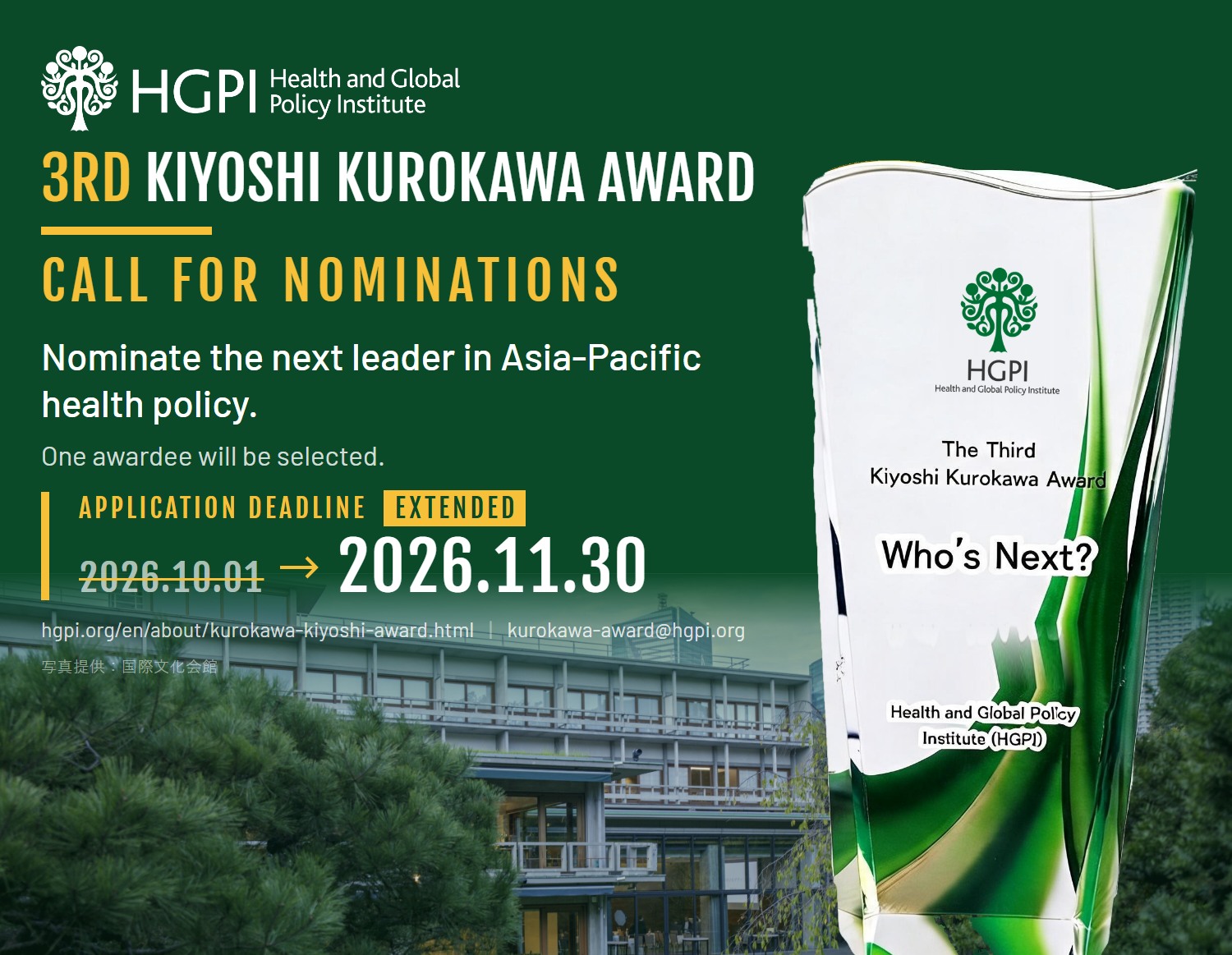
[Announcement] The 3rd Kiyoshi Kurokawa Award: Call for Nominations (Deadline: November 30, 2026)
-
2026-11-05
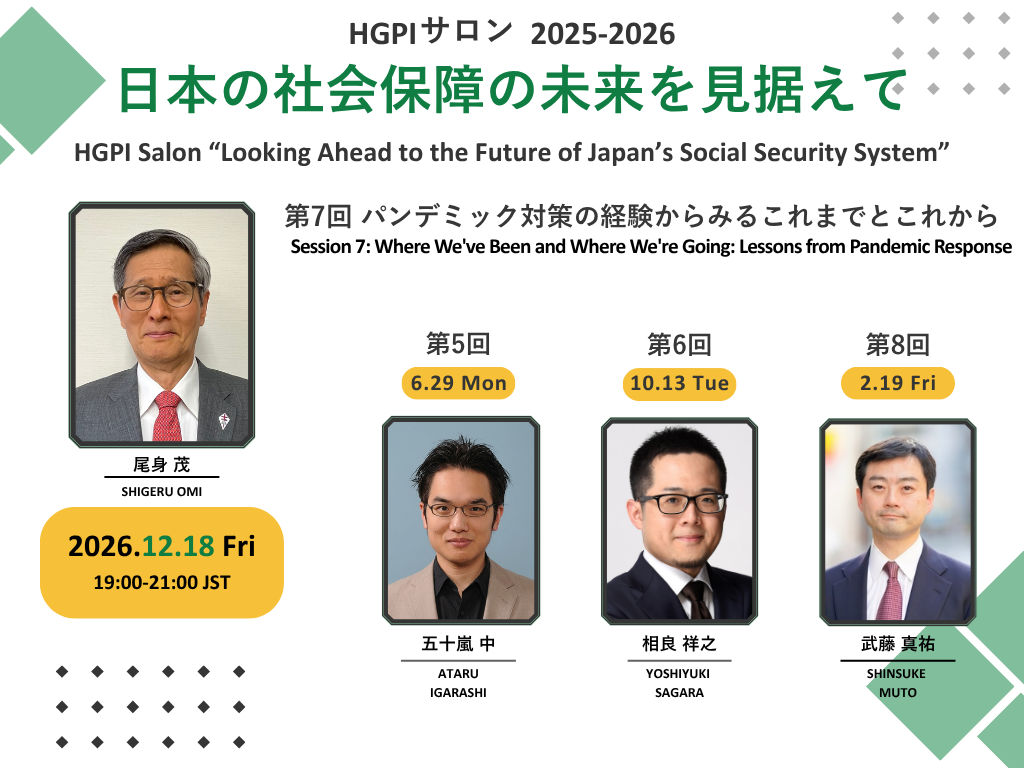
[Registration Open] HGPI Salon 2025-2026 Looking Ahead to the Future of Japan’s Social Security System “Session 7: Where We’ve Been and Where We’re Going: Lessons from Pandemic Response” (December 18, 2026)
-
2026-11-13
[Discussion Points] Addressing AMR Measures for an Era of Healthy Longevity: Ensuring Safety and Security for Older Adults in a Super-Aged Society (October 23, 2026)
-
2026-11-20
[Policy Recommendations] Towards Strengthening Microbiological Diagnostics as a Foundation for AMR Control (November 24, 2026)