


[Research Paper] HGPI Planetary Health Project’s Research on the Knowledge, Attitudes, and Practices of Japanese Physicians Relating to Climate Change and Health published in the Journal of Public Health (July 15, 2024)
date : 8/28/2024
Tags: Planetary Health

![[Research Paper] HGPI Planetary Health Project’s Research on the Knowledge, Attitudes, and Practices of Japanese Physicians Relating to Climate Change and Health published in the Journal of Public Health (July 15, 2024)](https://hgpi.org/en/wp-content/uploads/sites/2/5b9a3ee5451733ed51bbd8f718e73ed1.jpg)
The article titled, “Knowledge, attitudes, and practices of Japanese physicians relating to climate change impacts on health, delivery of climate-specific advice, and advocacy for climate change policies” has been published in the Springer Nature Journal of Public Health.
Health and Global Policy Institute (HGPI)’s Planetary Health Project and the SPRING GX project of the University of Tokyo conducted a cross-sectional study to gather opinions from Japanese physicians on climate change and health, sustainable healthcare systems, and climate change policies. Data were collected online from November 21 to 27, 2023, using an self-administered questionnaire, and responses were received from 1,100 physicians practicing throughout Japan.
Key Findings
- There is limited access to education on climate change and health
• Only 6.5% of the physicians responded to having attended classes on climate change and health during medical school, and 11.6% reported having received specialized training on climate change and health.
- Healthcare facilities lack environmentally sustainable healthcare practices
• When asked if their facility currently supports sustainable healthcare practices, only 37.5% responded that their facility did.
- Physicians are willing to engage in advocating for climate-specific policy changes
• 73.9% responded that they would personally consider participating in advocacy campaigns led by health professionals to support more robust climate change policy.
Globally, the health community has a vital part to play in accelerating progress to address climate change, and physicians are well-positioned to understand and communicate the implications of climate change and the necessity of taking action to protect the health of humans and the environment. Moreover, physicians can use their influence and scientific knowledge to facilitate climate-specific health education to the public through their patients, which will be good for both patient health and mitigating climate change. Additionally, physicians can advocate for more systems-level policy changes to promote sustainable healthcare practices within their facilities.
The majority of the physicians from this study (87.9%) are aware of the impact climate change has on human health; with 51.4% recognizing this impact among their patients in Japan. Moreover, many of the physicians also recognize the responsibility that physicians have to educate their patients on the impact climate change has on their health. More than half (56.7%) agreed that physicians should advise their patients on the links climate change has on their health, equally 59.7% agreed that physicians can contribute to helping their patients change their behaviors to engage in a more sustainable lifestyle.
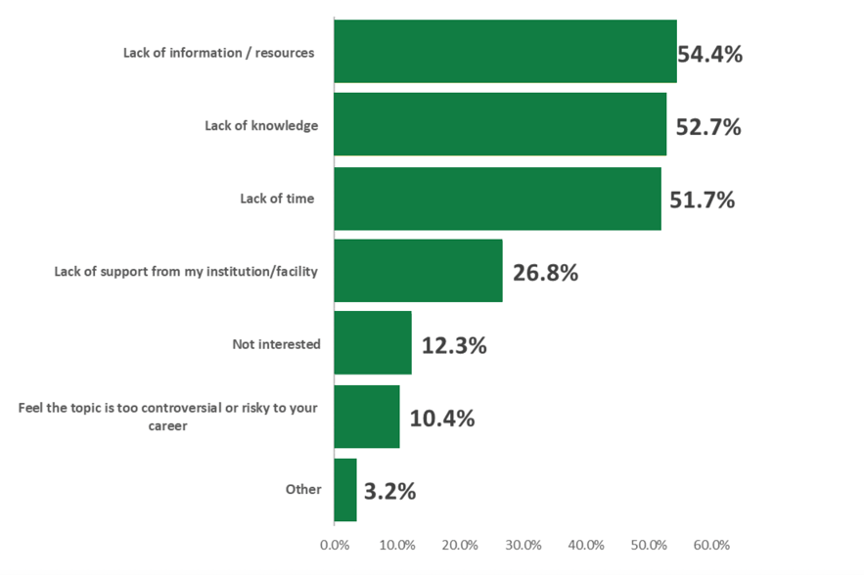
However, there is a significant gap between the physicians’ willingness and what happens in practice. When asked about some of the factors that reduce their action to engage in delivering climate-specific health advice and advocacy, the physicians responded with the main factors as lack of information/resources (54.4%), lack of knowledge (52.7%), and lack of time (51.7%), followed by lack of support from their facility (26.8%).
Physicians can apply their expertise and influence to combat climate change at various levels. Still, they will need to be better equipped with the education, materials, and support to do so. Physicians counsel patients daily and have gained society’s recognition and trust, giving them a significant amount of personal and political influence; as such, physicians should become more aware of their essential role in being change agents to achieve a sustainable future.
This study is based on the efforts of the Planetary Health Project of HGPI. Niaya Harper Igarashi, Program Specialist; Shu Suzuki, Senior Associate; Eri Cahill, Program Specialist; Akira Shimabukuro, Adjunct Fellow; Joji Sugawara, Vice President; and Masahiro Hashizume, Planetary Health Advisory Board Member and Professor, Department of Global Health Policy, Graduate School of Medicine, The University of Tokyo.
You can read the article here.
Related Posts
-
2023-12-03
[Research Report] Survey of Japanese Physicians Regarding Climate Change and Health (December 3, 2023)
-
2024-09-11
[Research Report] Survey of Japanese Nursing Professionals Regarding Climate Change and Health (Preliminary Version) (September 11, 2024)
-
2024-06-26
[Policy Recommendations] Developing a National Health and Climate Strategy for Japan (June 26, 2024)
-
2023-05-10
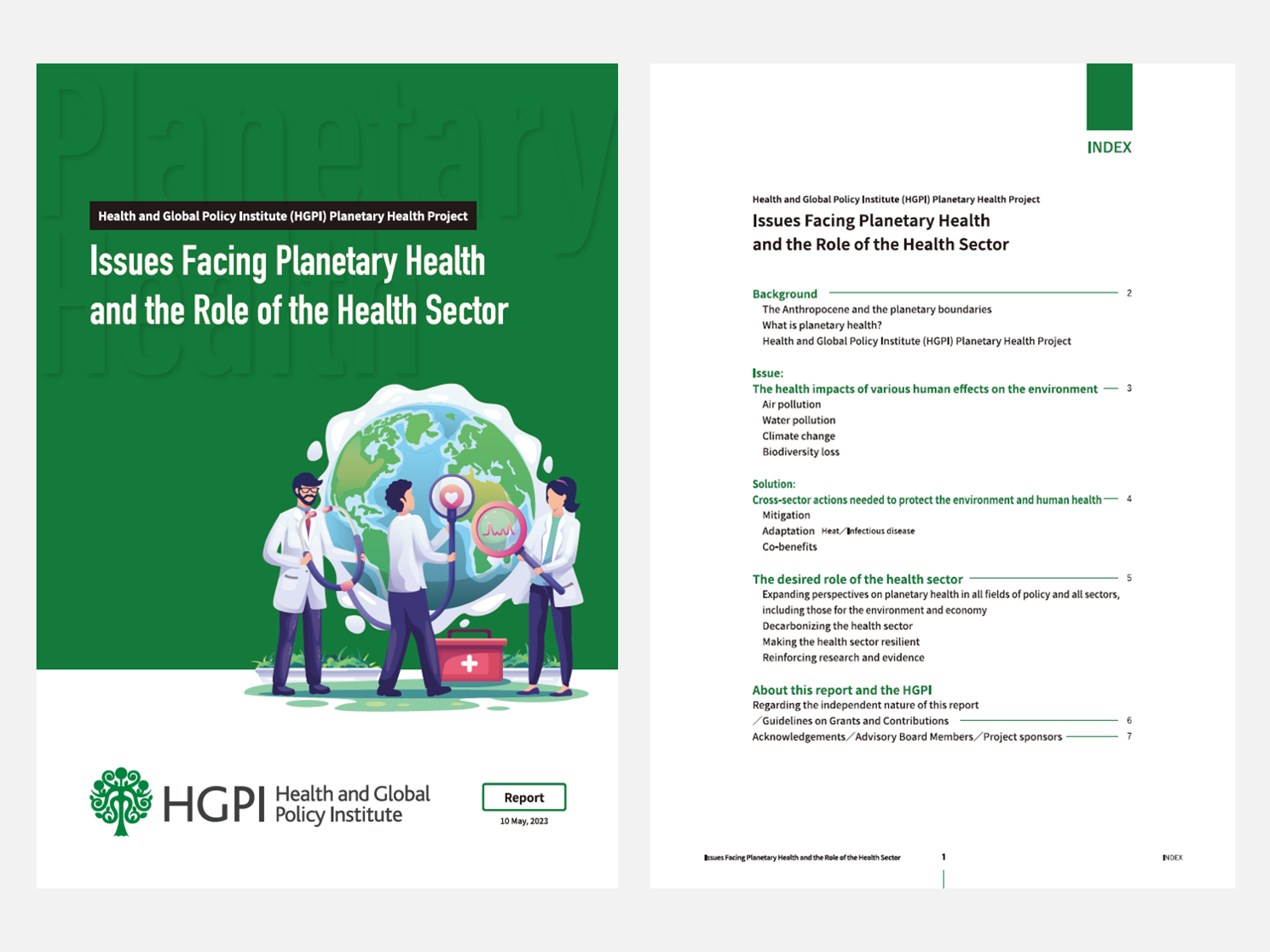
[Publication Report] Planetary Health Promotion Project “Issues Facing Planetary Health and the Role of the Health Sector” (May 10, 2023)
Top Research & Recommendations Posts
Featured Posts
-
2026-05-18
[Registration Closed] Kick-off Panel Discussion “From Africa and Japan, Drawing from Perspectives Around the World:A Platform for Cultivating a Philosophical Health Dialogue Together” (June 15, 2026)
![[Registration Closed] Kick-off Panel Discussion “From Africa and Japan, Drawing from Perspectives Around the World:A Platform for Cultivating a Philosophical Health Dialogue Together” (June 15, 2026)](https://hgpi.org/en/wp-content/uploads/sites/2/HGPI_20260615_Eyecathch_panel-discussion-From-Japan-and-Africa-in-Discussion-with-the-World_2.png)
-
2026-08-28
[Announcement] The 3rd Kiyoshi Kurokawa Award: Call for Nominations (Deadline: November 30, 2026)
![[Announcement] The 3rd Kiyoshi Kurokawa Award: Call for Nominations (Deadline: November 30, 2026)](https://hgpi.org/en/wp-content/uploads/sites/2/Kiyoshi-Kurokawa-Award_3rd_nominations_eyecatch_caseB_ENG_web_20260929_v0.5.jpg)
-
2026-09-01
[Registration Closed] HGPI Salon 2025-2026 Looking Ahead to the Future of Japan’s Social Security System “Session 6: Japan’s Health Policy through the Lens of Global Security” (October 13, 2026)
![[Registration Closed] HGPI Salon 2025-2026 Looking Ahead to the Future of Japan’s Social Security System “Session 6: Japan’s Health Policy through the Lens of Global Security” (October 13, 2026)](https://hgpi.org/en/wp-content/uploads/sites/2/HGPISalon2025-20266.png)
-
2026-09-17
[Registration Open] (Webinar) The 145th HGPI Seminar “Toward Better AMR Measures at Elderly Care Facilities—Considering Infectious Disease Control in a Super-Aged Society From a Policy Perspective” (October 27, 2026)
![[Registration Open] (Webinar) The 145th HGPI Seminar “Toward Better AMR Measures at Elderly Care Facilities—Considering Infectious Disease Control in a Super-Aged Society From a Policy Perspective” (October 27, 2026)](https://hgpi.org/en/wp-content/uploads/sites/2/HGPIseminar145.png)
-
2026-10-06
[Registration Open] (Webinar) The 146th HGPI Seminar “How We Can Build a Society That Supports Choices Around Organ Donation: Exploring Decision-Making by Citizens and a Multi-Layered Approach Through Strategic Social Marketing” (November 9, 2026)
![[Registration Open] (Webinar) The 146th HGPI Seminar “How We Can Build a Society That Supports Choices Around Organ Donation: Exploring Decision-Making by Citizens and a Multi-Layered Approach Through Strategic Social Marketing” (November 9, 2026)](https://hgpi.org/en/wp-content/uploads/sites/2/HGPI_20261001_Eyecatch_HGPIseminer-146th-1.png)
