

[HGPI Policy Column] (No.78) — From the Blood Disorders Project “Quality of Life in Long-Term Blood Cancer Care: Insights from Canada”
date : 10/19/2026
Tags: Blood Disorders, Cancer, HGPI Policy Column, NCDs

<POINTS>
- Advances in blood cancer treatment have improved survival, transforming many blood cancers into long-term, chronic conditions that must be managed over the long term.
- In Japan, blood cancer care remains highly specialized and treatment-centered, while it has been pointed out that shared decision-making (SDM) with patients and the integration of patient-reported outcomes (PROs) into routine practice remain limited.
- Canada’s experience demonstrates how multidisciplinary care, active patient advocacy and structured dialogue between physicians and patients can make quality of life (QOL) priorities more visible within the system.
- Building on these insights, Japan could strengthen blood cancer care by placing greater importance on patient perspectives, strengthening collaboration across care teams, and creating more open dialogue among physicians, patients, patient organizations, and policy makers.
A New Challenge in Blood Cancer Care
Advances in cancer therapeutics, including molecularly targeted agents, bispecific antibodies, and Chimeric Antigen Receptor T-cell (CAR-T) therapy have transformed many blood cancers from acute conditions requiring intensive treatment into chronic conditions that must be managed over the long term. As a result, the challenge for healthcare is increasingly shifting from “curative medicine” toward “medicine that supports living with illness.”
Improved survival resulting from advances in treatment has in turn reshaped the landscape of blood cancer care. Patients often undergo prolonged treatment trajectories involving repeated hospitalizations, frequent outpatient visits, and ongoing management of treatment-related side effects, while also living with uncertainty regarding relapse or disease progression. These experiences can substantially affect the physical functioning, psychological well-being, social participation, and daily lives of patients, including disruptions to employment, education, and family life. As a result, not just survival but maintaining QOL throughout the disease course has emerged as a challenge in blood cancer care.
Current Challenges in Japan
Japan’s blood cancer care maintains a high level of specialized treatment performance. Designated cancer centers and university hospitals handle many of the complex treatments. However, as survival improves and more patients live for extended periods with disease or its consequences, supporting QOL and long-term well-being has become an increasingly important component of blood cancer care. Yet, the integration of patient-centered perspectives into routine care remains limited in several aspects.
In a nationwide survey of Chronic Myeloid Leukemia (CML) patients and families conducted by “Izumi” (The Association of Chronic Myeloid Leukemia Patients and Families), avoiding side effects ranked among patients’ highest priorities when evaluating treatment (8.86 out of 10), yet satisfaction with how well this priority was being met scored lower (6.44 out of 10), which is a substantial gap between what matters most to patients and what they are experiencing. The same survey found that when asked what information patients wanted most, 55.4% responded information about their prognosis, well ahead of the next most common response. This suggests that, from the patient’s perspective, patient-centered treatment has yet to be meaningfully integrated into routine clinical care.
This gap is reflected in how care is structured in Japan. Patient-reported outcomes (PROs) and structured QOL assessments are not routinely used in blood cancer care in Japan. Consultations remain largely focused on laboratory results and disease control, and symptoms such as fatigue, cognitive impairment, anxiety, and challenges in daily life may receive less attention. The need for sustained psychosocial and survivorship support has become more visible as patients live longer with the disease. The same survey found that 73% of patients had never consulted anyone other than their primary physician about difficulties related to their disease or treatment, such as a nurse, pharmacist or medical social worker (MSW). In particular, structured support for return to work, long-term side-effect management, and balancing treatment with everyday life remains an area for ongoing policy discussion in the field of blood cancer care.
As blood cancers increasingly resemble chronic conditions requiring long-term management, Japan faces a structural challenge: how to further strengthen care systems to support not only disease control but also living well with disease.
A Global Gap and Canada’s Response
- The Global Gap Revealed by the CML SUN Survey
This gap between what matters most to patients and the care they actually receive is not unique to Japan. It emerges clearly in the CML Survey on Unmet Needs (CML SUN), a large-scale patient and physician survey conducted across 11 countries including Japan and Canada, involving 361 patients and 198 physicians. The survey assessed priorities and lived experiences of individuals with CML, and identified a substantial gap between physician assumptions and patient priorities.
While physicians often linked treatment success with survival outcomes, many patients placed comparatively greater importance on QOL, including fatigue management and daily functioning. Only approximately 25% of patients reported that treatment decisions were discussed and decided together with their physician, while 74% of physicians considered themselves the ultimate treatment decision-maker. This points to a broader gap in SDM between physicians and patients. Moreover, one in five patients did not inform their doctor about side effects unless specifically asked, and fewer than half of patients felt their physician showed empathy or asked sufficient questions about how side effects affected their lives.
By quantifying this gap between physicians’ assumptions and patient priorities, the survey provided concrete evidence that survival metrics alone are insufficient indicators of care quality. Importantly, the survey’s impact extended beyond CML: it created legitimacy to QOL discussions across cancer communities and demonstrated the value of systematically measuring and sharing patient priorities. This growing legitimacy of QOL as a measure of care quality is reflected in how Canada has approached patient-centered care, developed through coordinated efforts among physicians, patient organizations, and policymakers.
- Communication as a Structural Element of Care
In CML and other blood cancers, communication has been increasingly recognized as an important component of quality care in Canada. Rather than focusing exclusively on laboratory results, consultations increasingly include discussions of daily life, work, family responsibilities, and treatment burden. One practice supporting this shift is encouraging physicians to establish clear expectations with each patient early on, asking directly what kind of relationship they want rather than assuming a single approach fits everyone, reflecting a broader commitment to SDM. Some patients want to be closely involved in decisions, while others are more comfortable leaving decisions to their physician. This shift has also been supported by multidisciplinary models. Nurse practitioners, pharmacists and physician assistants complement physician consultations, helping identify patient concerns and integrate them into decision-making. This approach helps address time constraints in consultations while preserving patient-centered practice.
- Patient Empowerment and Advocacy
Patient advocacy organizations play an active role in educating patients on how to communicate effectively with healthcare providers. By encouraging patients to share how treatment side effects affect their daily life rather than naming symptoms alone, patient organizations help align clinical decisions with personal priorities. This distinction gives physicians the information needed to weigh treatment side effects against a patient’s actual priorities, rather than treating a symptom as a minor detail. Patient organizations in Canada also engage in reimbursement discussions, awareness campaigns, and policy dialogue. This has contributed to broader recognition that survival alone is an insufficient measure of care quality.
- Bringing Physicians and Patients Together
Canada’s experience also demonstrates that patient-centered care is reinforced by forums that facilitate dialogue between clinicians and patients outside of the examination room. For example, patient advocacy groups such as the Canadian CML Network host annual conferences where physicians participate alongside patients rather than only being invited as speakers, creating opportunities for patients to discuss experiences and challenges that are not always raised in the examination room. These kinds of initiatives allow physicians to better understand patient priorities and normalize discussions about QOL over time.
Together, these developments suggest that patient-centered care in Canada has advanced through layered reform: greater physician awareness, multidisciplinary teams, empowered patient communities, and sustained stakeholder engagement.
Implications for Japan
Japan’s blood cancer care achieves high standards when it comes to treatment. As the CML SUN survey showed, recognizing and responding to patient priorities remains a broader challenge. Canada’s experience suggests that patient-centered care advances most effectively when patient perspectives are measured, shared, and built into the system. Building on these insights, several policy considerations emerge for Japan.
- Making Patient Priorities Visible
In Canada, patient advocacy organizations have played a role in establishing that survival alone is an insufficient measure of care quality, helping give QOL legitimacy as a clinical priority. A similar shift in Japan could start with making existing patient priorities more visible in practice. As the nationwide survey discussed above by “Izumi” showed, patients most wanted information about their own future prognosis (55.4%). This suggests that structured QOL assessment in Japan should not simply gesture at general patient-reported outcome measures, but specifically ensure that patients’ desire for clear information about what lies ahead is being met. Building on this, Japan could consider incorporating QOL assessment into blood cancer care more broadly.
- Supporting Multidisciplinary Care
Canada’s use of multidisciplinary teams demonstrates how communication gaps can be mitigated even under time constraints. As the same survey by “Izumi” showed, 73% of patients had never consulted anyone other than their physician when facing difficulties with their illness or treatment. Strengthening coordination between hematology departments, primary care providers, rehabilitation professionals, and social services could support patients in managing long-term side effects and balancing treatment with daily life, rather than relying on only their physician or navigating challenges without any professional support. Encouraging multidisciplinary collaboration may also help address fatigue, cognitive symptoms, and challenges with returning to work that usually are not included in laboratory-based evaluation.
- Dialogue Between Stakeholders
Finally, Canada’s conferences and active patient advocacy networks demonstrate that change is reinforced when dialogue occurs outside of the routine consultations physicians have with patients. Japan may consider supporting similar opportunities for dialogue that bring together physicians, patients, patient organizations, and policymakers in the field of blood cancers. This could help lived experience emerge and help ensure that future policy development reflects patient priorities more.
Conclusion
Japan’s blood cancer care has achieved high standards in treatment and technological advancement. However, as survival improves and long-term management becomes the norm, care systems need to increasingly reflect the realities of living with the disease, not only treating it. Canada’s experience shows that patient-centered care advances by making patient perspectives visible, measurable, and open to discussion. Through patient surveys, multidisciplinary practice, and dialogue forums, discussions of QOL have become more common and are taken more seriously among clinicians.
For Japan, the challenge is not that treatment standards are insufficient, but how to better support patients living with blood cancer over the long term. By incorporating patient-reported perspectives more consistently, strengthening multidisciplinary collaboration, and creating opportunities for dialogue among physicians, patients, patient organizations, and policy makers, Japan could gradually evolve from a model centered primarily on treatment toward one that also supports long-term QOL for people living with blood cancer. Health and Global Policy Institute will continue to contribute to this discussion through its Blood Disorders Project by advancing policy dialogue on strengthening QOL for patients living with blood cancer.
References
- Canadian Partnership Against Cancer. (2019). Canadian Strategy for Cancer Control 2019–2029. https://s22457.pcdn.co/wp-content/uploads/2019/06/Canadian-Strategy-Cancer-Control-2019-2029-EN.pdf
- Health and Global Policy Institute. (2026). Policy recommendations in the field of blood disorders: Building a healthcare ecosystem centered on patients and those affected. https://hgpi.org/en/wp-content/uploads/sites/2/HGPI_Policy-Recommendations_20260529_Blood-Disorders_EN.pdf
- (2021). 2021 Chronic Myeloid Leukemia patients survey report. https://www.izumi-cml.jp/pdf/2021_CMLsurvey_izumi.pdf
- Lang, F., Pemberton-Whiteley, Z., Clements, J., Ruiz, C., Rea, D., Machado, L., Takahashi, N., Moon, S. H., Grigg, A., Borowczak, C., Schuld, P., Frank, P., Constantinescu, C., Boquimpani, C., & Cortes, J. E. (2025). Improving chronic myeloid leukemia management and quality of life: Patient and physician survey on unmet needs from the CML SUN survey. https://doi.org/10.3324/haematol.2025.287772
- LLS Canada. (2021). Communicating with your healthcare team. Bloodcancers.ca. https://www.bloodcancers.ca/sites/default/files/2021-11/LLS1160-F-FS-Comm-With-Health-Team-E01.pdf
- LLS Canada. (2022). Achieving shared care: A fact sheet for patients. Bloodcancers.ca. https://www.bloodcancers.ca/sites/default/files/2022-12/2022-LLSC-Fact-Sheet-Treatment-Shared-Decision-Making_Patient_Final-en.pdf
- Machado, L. (2024). Survival and quality of life. Patient Voice. https://www.patientvoice.io/perspectives/survival-and-quality-of-life
Authors
Selina Geerlings (Program Specialist, Health and Global Policy Institute)
Daichi Watanabe (Manager, Health and Global Policy Institute)
Related Posts
-
2026-05-29
[Policy Recommendations] Policy Recommendations in the Field of Blood Disorders "Building a Healthcare Ecosystem Centered on Patients and Those Affected" (April 13, 2026)
-
2026-10-09
[HGPI Policy Column] (No. 77) — From the Blood Disorders Project "Bringing Cancer Care Closer to Home: Lessons for Japan's Blood Cancer Care"
-
2026-08-07
[HGPI Policy Column] (No.76) - From the Planetary Health Project “No. 19: Heat and Health - The Health Risks of Climate Change and Society's Preparedness”
-
2026-07-29
[HGPI Policy Column] (No. 75) What Is the WHO Civil Society Commission? — The Institutionalization of Civil Society Participation in WHO and Japan’s Engagement
-
2026-08-24
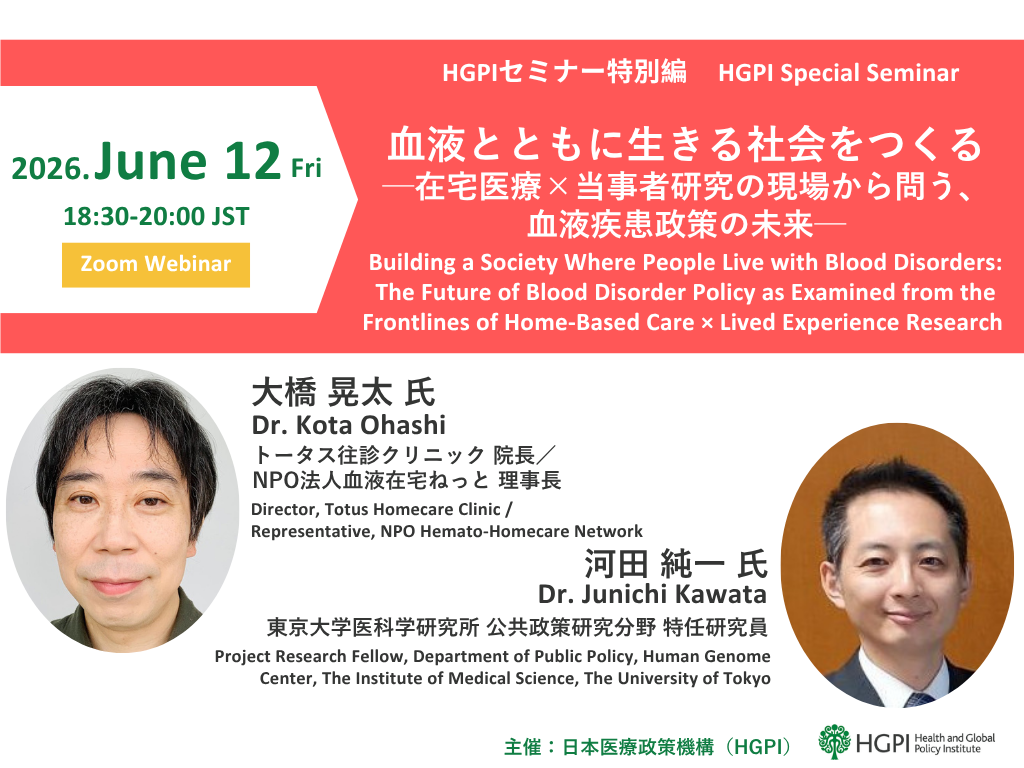
[Event Report] HGPI Special Seminar “Building a Society Where People Live with Blood Disorders: The Future of Blood Disorder Policy as Examined from the Frontlines of Home-Based Care × Lived Experience Research” (June 12, 2026)
-
2025-09-01
[Discussion Points] Blood Disorders Measures Promotion Project “Current Issues and Prospects for Advancing Blood Disorders Control Promotion” (July 23, 2025)
Top Research & Recommendations Posts
Featured Posts
-
2026-08-28
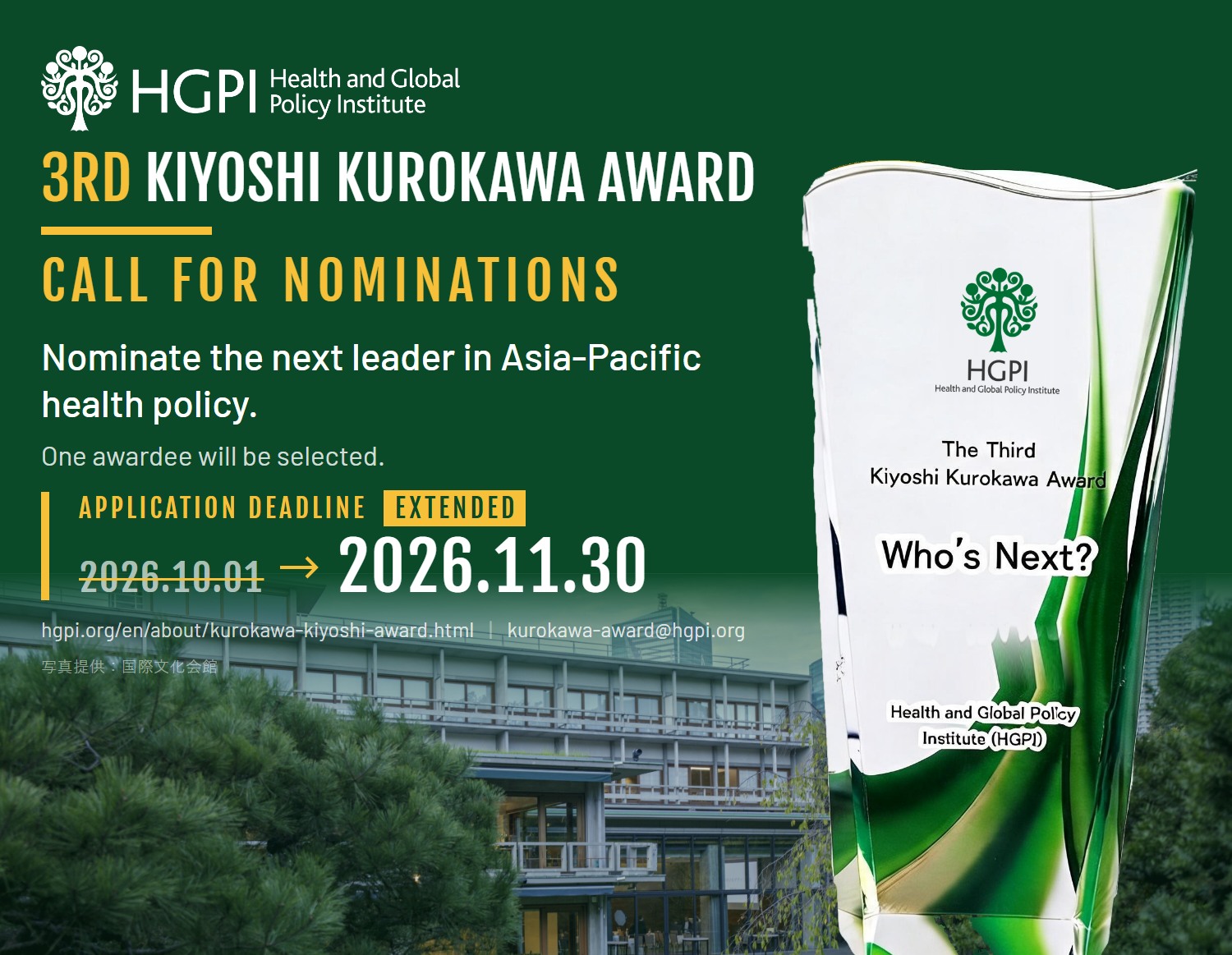
[Announcement] The 3rd Kiyoshi Kurokawa Award: Call for Nominations (Deadline: November 30, 2026)
-
2026-09-17
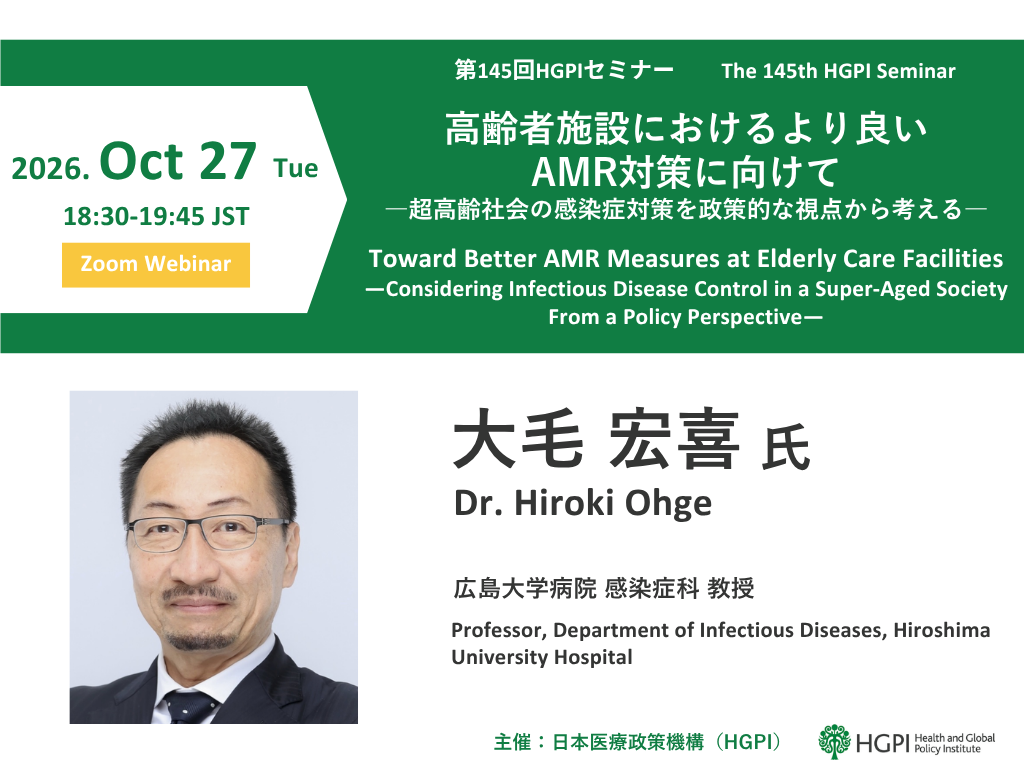
[Registration Open] (Webinar) The 145th HGPI Seminar “Toward Better AMR Measures at Elderly Care Facilities—Considering Infectious Disease Control in a Super-Aged Society From a Policy Perspective” (October 27, 2026)
-
2026-10-06
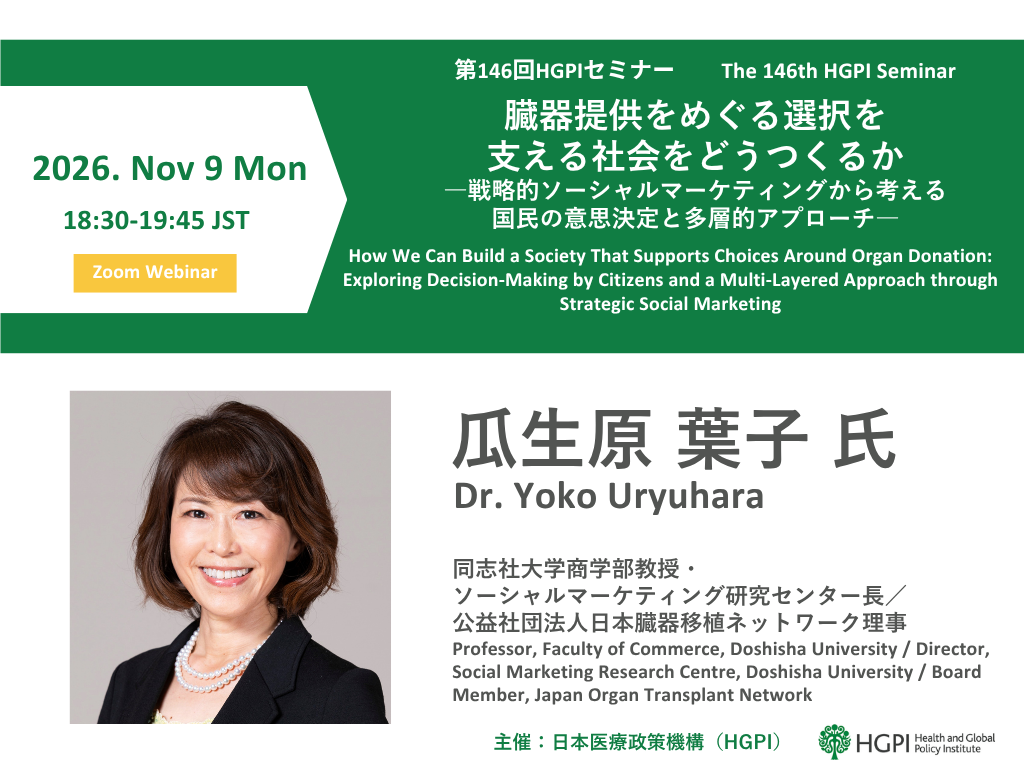
[Registration Open] (Webinar) The 146th HGPI Seminar “How We Can Build a Society That Supports Choices Around Organ Donation: Exploring Decision-Making by Citizens and a Multi-Layered Approach Through Strategic Social Marketing” (November 9, 2026)
-
2026-10-19
[HGPI Policy Column] (No.78) — From the Blood Disorders Project “Quality of Life in Long-Term Blood Cancer Care: Insights from Canada”
