

[Research Report] AMR Policy Update #11: Lessons Learned from the Norwegian Cancer Society: Cancer Control, Patient, and Public Participation in Health Policy (November 19, 2026)
date : 11/19/2026
Tags: AMR

Today, three out of four people diagnosed with cancer in Norway survive—one of the highest survival rates in the world. Behind this achievement lies not only the work of national and local governments and medical institutions, but also the significant role played by a non-profit organization, the Norwegian Cancer Society (NCS). In this two-part series, we focus on two areas within the NCS’s ongoing work: cancer control and action against antimicrobial resistance (AMR). This first part explores, through concrete examples, how the NCS engages with citizens, patients, and national health policy as it works towards a better society.
The Work of the Norwegian Cancer Society
Established in 1938, the Norwegian Cancer Society (NCS) is a vital presence in Norway’s public health landscape. Guided by its mission of “a life without cancer,” the organization works towards three main objectives: reducing the incidence of cancer, increasing survival rates, and improving quality of life both with and after cancer. NCS does this through a number of ways: supporting research, services for persons affected by cancer, policy efforts, information work, research dissemination, voluntary efforts and international work.
At the heart of the organization are four core values—credibility, transparency, respect, and engagement. These values have made the NCS a widely recognized and trusted presence within Norway, and its work is carried out through an extensive network supported by eight locations across the country and a large body of volunteers.
Science Center: Creating Points of Contact with the Public
The NCS’s work rests on the trust of the public. One of the places where that trust is cultivated is the publicly accessible science center (public gallery) attached to the NCS headquarters. Located in central Oslo and free to enter, this experiential facility features infographics tracing the history of medicine in Norway alongside interactive exhibits where visitors can learn about cancer, how cells work, and the latest treatments. The public spaces within the center are primarily used for educational purposes, including teaching upper secondary school classes, as well as a variety of community events, functioning as a venue for open communication with the public and for building layered relationships of trust.
Varde Center: Public and Non-Profit Sectors Working Together on Patient Support
As the population ages, the NCS is also investing in building a “future-proof” system of patient support designed to anticipate the changing health care needs of the years ahead. A prime example is the Varde Center (Vardesenteret), a patient support facility located within Oslo University Hospital. Requiring neither an appointment nor a referral, the center is a free space that any patient, family member, or relative can visit. There, they can talk with peer supporters who have experienced cancer themselves, as well as professionals such as nurses, dietitians, and psychologists, and take part in classes on exercise, nutrition, and stress management. Opened in 2010, the center was created as a place to step away from the treatment-focused routine of medical institutions and realize a more human-centered form of care.
It is operated jointly under a formal agreement between the NCS, a non-profit organization, and the public health authority that runs the hospital. The name derives from the Norwegian word varde—a cairn, or stack of stones, used to mark hiking trails. Telling travelers where they are, confirming that others have safely passed this way before, and pointing the way forward, cairns have long served as markers at sea and along boundaries. The name reflects the wish for the center to be “a signpost that lights the way” for patients and families who, facing cancer, may feel lost in the dark. Although opening the very first center at Oslo University Hospital required years of coordination, the model—a pioneering approach to patient support built on collaboration between the public and non-profit sectors—has since spread to eight centers in six cities across the country as of July 2026.
This accumulation of collaboration has also become embedded in national policy. The Varde Center was cited in Norway’s 2013 National Cancer Strategy as one of the measures for strengthening rehabilitation and support. In addition to the Vardesenteret cancer support centers located at hospitals, the Norwegian Cancer Society offers a range of other support services for cancer patients and their families. These include a cancer support helpline, legal advice services, dedicated support services for children and young people, as well as community-based support services at the municipal level.
User Councils: Reflecting the Voices of Patients and the Public in Health Policy
The depth of collaboration between the state and the NCS is grounded in an institutional foundation in Norway that reflects the voices of patients and citizens in health policy. Under Norway’s health enterprise legislation, health institutions are required to incorporate the voices of patients and users into how they are run. To this end, each institution has a User Council (Brukerutvalg) made up of representatives of patients and users. These councils advise on the planning and evaluation of the services the institution provides, and one or two of their members serve on the institution’s board as observers, with the right to express opinions and make proposals.
The council system extends beyond individual institutions and is built into regional decision-making as well. Norway’s specialist health services are, as a rule, owned and operated by the state, and are overseen at the regional level by regional health authorities. Each of the country’s four regional authorities has a Regional User Council (Regionalt Brukerutvalg) in which representatives of patients and users take part.
To help make these councils more effective forums for dialogue, the NCS invites patients and family members who have supported loved ones through cancer to volunteer, providing them with training and recommending candidates to the councils. Building on its individual patient support and cancer control work, the NCS is also working to embed the patient perspective into decision-making within the health care system.
References
- Norwegian Institute of Public Health [NIPH]. (2020). One Health. Folkehelseinstituttet. https://www.fhi.no/en/in/smitte-fra-mat-vann-og-dyr/artikler/one-health/
- European Medicines Agency [EMA]. (2023). Sales of veterinary antimicrobial agents in 31 European countries in 2022: Trends from 2010 to 2022 (Thirteenth ESVAC report). European Medicines Agency. https://www.ema.europa.eu/en/documents/report/sales-veterinary-antimicrobial-agents-31-european-countries-2022-trends-2010-2022-thirteenth-esvac-report_en.pdf
- Sommerfelt, I., Lium, B., & Larsen, S. (2022). NORM/NORM-VET 2021: Usage of antimicrobial agents and occurrence of antimicrobial resistance in Norway. Norwegian Veterinary Institute. https://www.vetinst.no/en/surveillance-programmes/norm-norm-vet
- NORM/NORM-VET. (2025). NORM/NORM-VET 2024: Usage of antimicrobial agents and occurrence of antimicrobial resistance in Norway. Norwegian Institute of Public Health & Norwegian Veterinary Institute. https://www.fhi.no/en/publ/2025/norm-og-norm-vetusage-of-antimicrobial-agents-and-occurrence-of-antimicrobial-resistance-in-norway/
- Rønning, T. G., Enger, H., Afset, J. E., & Ås, C. G. (2024). Insights from a decade of surveillance: Molecular epidemiology of methicillin-resistant Staphylococcus aureus in Norway from 2008 to 2017. PLOS ONE, 19(3), e0297333. https://doi.org/10.1371/journal.pone.0297333
- Holubnycha, V. M., & Kholodylo, O. V. (2025). War impact on antimicrobial resistance and bacteriological profile of wound infections in Ukraine. Communications Medicine, 5, Article. https://doi.org/10.1038/s43856-025-01056-6
- Folkehelseinstituttet [FHI]. (2024). Occurrence of resistant bacteria and fungi with special significance for infection control in the Norwegian health service.
- Norwegian Institute of Public Health [NIPH]. (2024). Ukraine and Norway: institutional cooperation 2024–2027. https://www.fhi.no/en/globalhealth/countries-and-key-partners/innhold/ukraine/
Acknowledgements (in no particular order)
Jorunn Valle Nilsen (Norwegian Cancer Society)
Øyvind Rolland (Norwegian Cancer Society)
In preparing this report, we were given the opportunity to exchange views with the staff of the Norwegian Cancer Society, as well as to tour the Varde Center and speak with its volunteers. We would like to express our sincere gratitude for the generous support of everyone at the Society.
Authors
Clara Isabella Ann Lim (Program Specialist, Health and Global Policy Institute)
Yui Kohno (Manager, Health and Global Policy Institute)
Top Research & Recommendations Posts
Featured Posts
-
2026-08-28
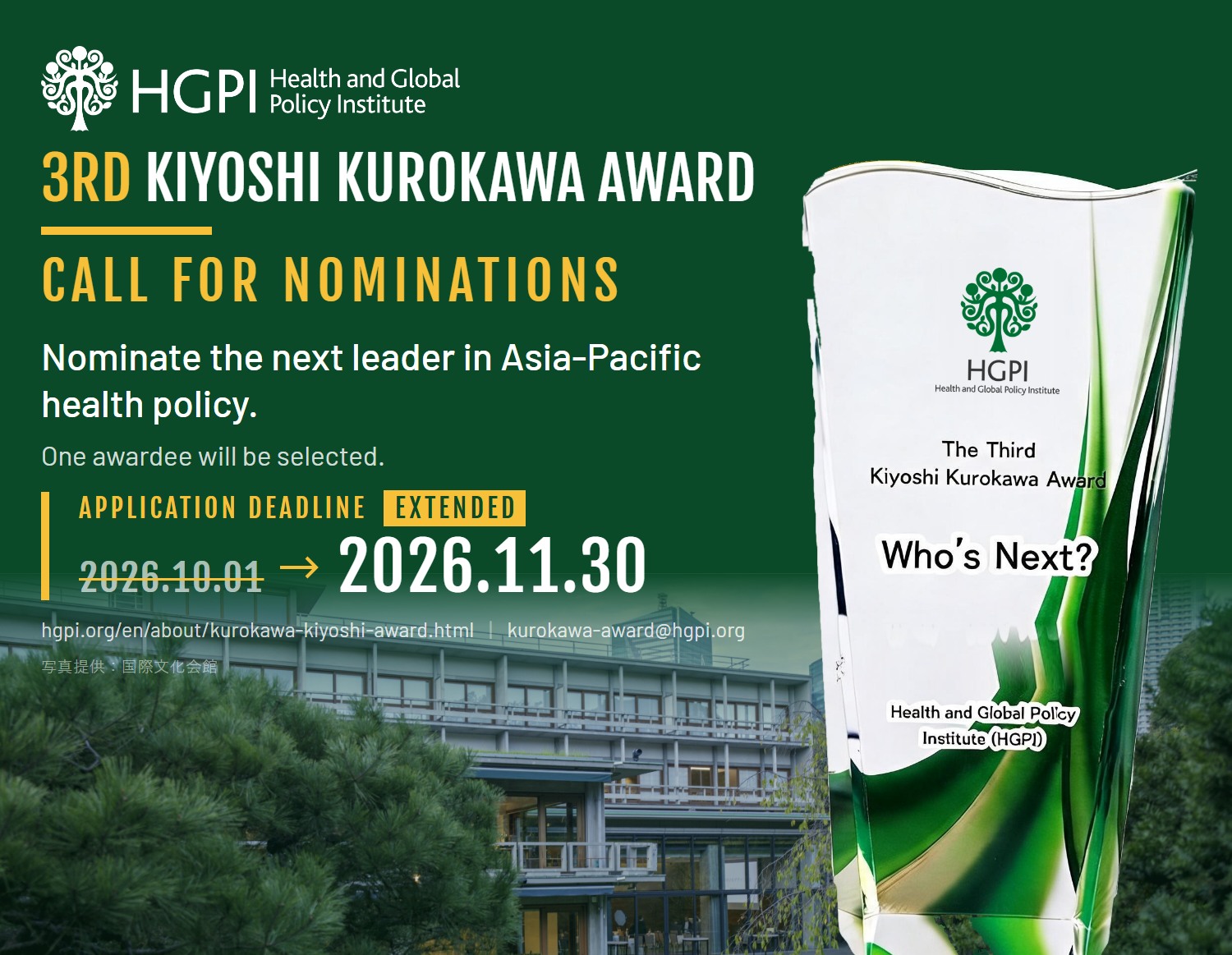
[Announcement] The 3rd Kiyoshi Kurokawa Award: Call for Nominations (Deadline: November 30, 2026)
-
2026-11-05
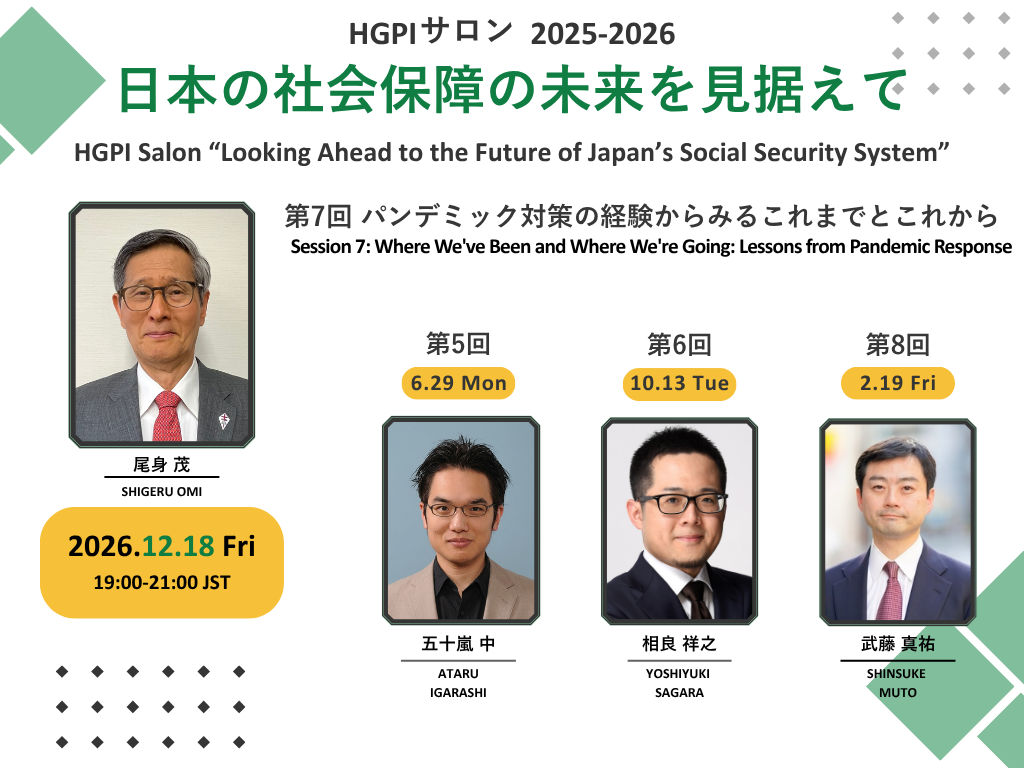
[Registration Open] HGPI Salon 2025-2026 Looking Ahead to the Future of Japan’s Social Security System “Session 7: Where We’ve Been and Where We’re Going: Lessons from Pandemic Response” (December 18, 2026)
-
2026-11-13
[Discussion Points] Addressing AMR Measures for an Era of Healthy Longevity: Ensuring Safety and Security for Older Adults in a Super-Aged Society (October 23, 2026)